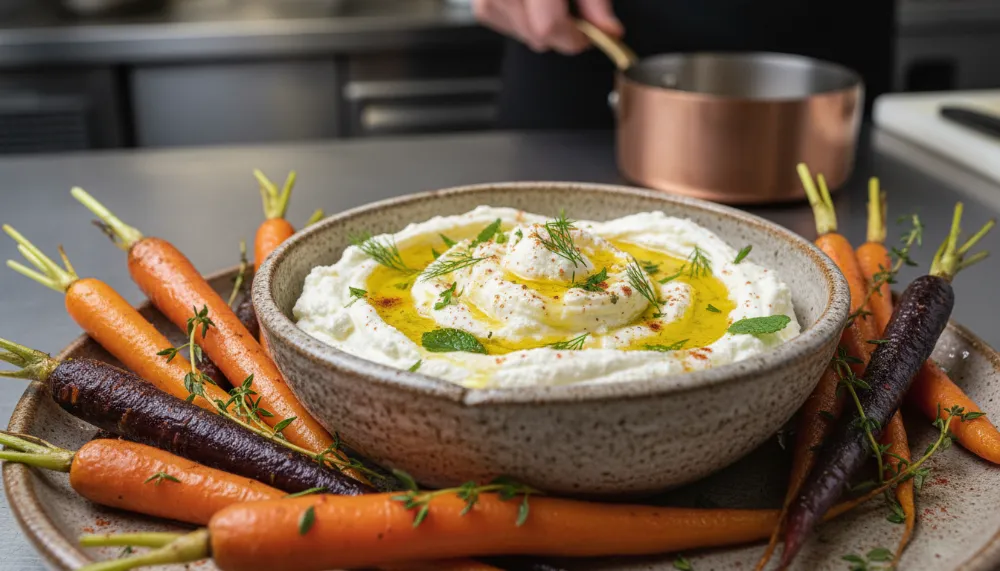

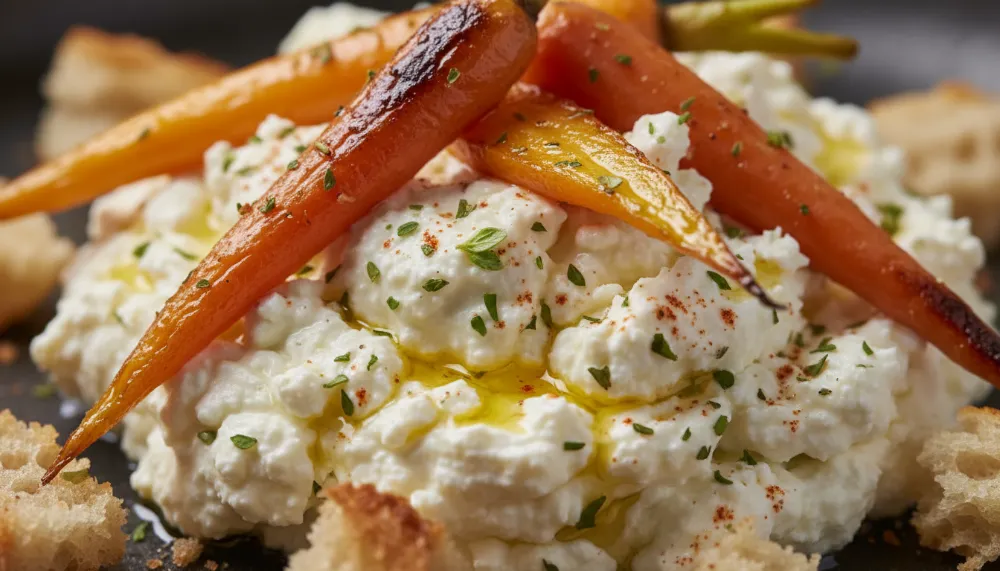
Experience the perfect harmony of salty, creamy dairy and earth-sweet root vegetables with this sophisticated Whipped Feta with Roasted Carrots. This dish transforms humble ingredients into a restaurant-quality centerpiece that is as visually stunning as it is delicious.
Whipped Feta with Roasted Carrots
INGREDIENTS
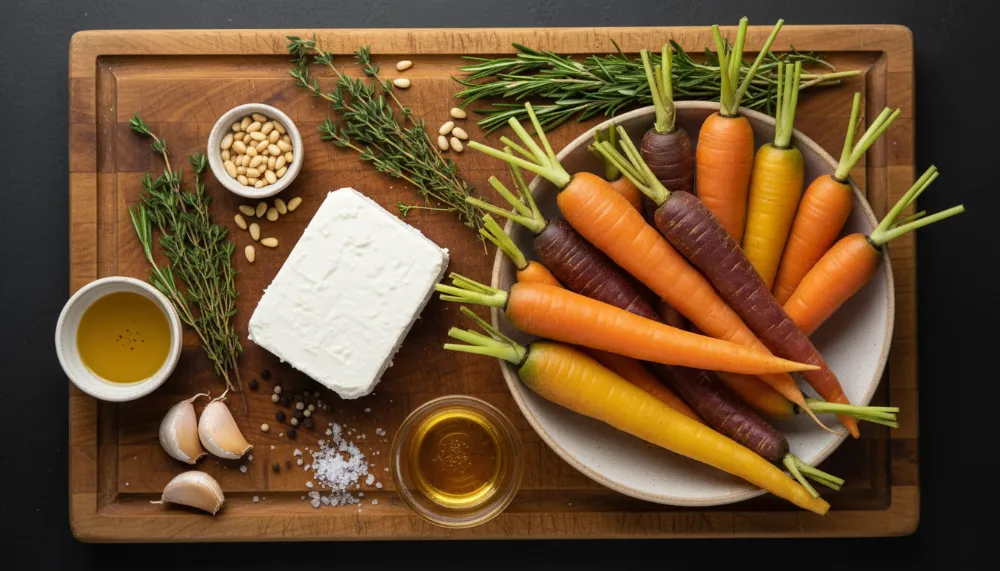
- ✓ 1 lb Baby Carrots (scrubbed, tops trimmed)
- ✓ 2 tbsp Olive Oil
- ✓ 1 tbsp Honey (or Maple Syrup)
- ✓ 1 tsp Ground Cumin
- ✓ 8 oz High-Quality Feta Cheese
- ✓ 1/2 cup Plain Greek Yogurt
- ✓ 1 Garlic Clove (minced)
- ✓ 1 tbsp Lemon Juice
- ✓ 1/4 cup Roasted Pistachios (chopped)
- ✓ Fresh Mint and Chili Flakes for garnish
INSTRUCTIONS
- Roast the Carrots: Preheat oven to 400°F. Toss carrots with olive oil, honey, cumin, and salt. Roast for 25, 30 minutes until tender and caramelized.
- Whip the Feta: Place feta, yogurt, garlic, and lemon juice in a food processor. Process until completely smooth and airy.
- Assemble: Spread the whipped feta on a large platter. Top with warm roasted carrots.
- Garnish: Sprinkle with chopped pistachios, fresh mint, and a drizzle of honey.
The Historical Journey of Whipped Feta with Roasted Carrots
To truly appreciate the depth of Whipped Feta with Roasted Carrots, one must understand the ancient lineages of its primary components. Feta cheese, originating in Ancient Greece, is one of the world’s oldest recorded cheeses. Its earliest mentions date back to the 8th century BC, and it is famously referenced in Homer’s Odyssey as a staple of the Mediterranean diet. Traditionally made from sheep’s or goat’s milk and preserved in brine, its transformation into “whipped feta” is a modern culinary evolution. This trend began in the late 20th century as chefs sought to soften the cheese’s aggressive saltiness and crumbly texture into something more elegant and spreadable.
Carrots, on the other hand, have a history rooted in Central Asia, specifically modern-day Afghanistan, where they were first domesticated around the 10th century. Interestingly, these early carrots were not the bright orange we know today but were instead deep purple or yellow. Arab traders introduced these root vegetables to the Mediterranean region, where they were quickly adopted by Roman and Greek cooks. The Ancient Romans often roasted root vegetables with cumin, honey, and vinegar, creating a flavor profile nearly identical to the modern version of Whipped Feta with Roasted Carrots we enjoy today.
The convergence of these two ancient elements into a single dish is a hallmark of the modern Mediterranean movement. This culinary style emphasizes the balance of rich, salty dairy with the natural sugars released during the caramelization of vegetables. It is a dish that bridges thousands of years of human agricultural history in a single bite.
The Science of Flavor and Texture: Why This Dish Works
The success of Whipped Feta with Roasted Carrots lies in the fundamental principles of food science, specifically the Maillard reaction and the emulsification of dairy. When you roast carrots at high temperatures, the natural sugars (sucrose and glucose) undergo caramelization, while the proteins and sugars react to create complex, savory-sweet flavor compounds. This provides a deep, earthy contrast to the sharp, acidic profile of the feta cheese.
When creating the whipped feta, using a high-powered tool like the Ninja BN751 Professional Plus DUO Blender is essential. The 1000W motor ensures that the crumbly proteins of the feta are fully broken down and emulsified with the Greek yogurt, resulting in a cloud-like consistency. Without sufficient power, the feta remains grainy, losing that luxurious mouthfeel that defines the dish. For those who prefer a more controlled chop for their garnishes or carrots, the Cuisinart 8 Cup Food Processor is a meal prep essential that handles the workload with ease.
Nutritional Deep Dive
A professional serving of Whipped Feta with Roasted Carrots is a nutritional powerhouse. It is exceptionally high in Vitamin A, often providing over 150% of the recommended daily intake due to the high beta-carotene content in the roasted carrots. This vitamin is crucial for eye health and immune function. Furthermore, the feta and yogurt base provide between 8g and 15g of protein per serving, while the inclusion of olive oil and nuts offers healthy monounsaturated fats. Depending on the amount of honey used, a serving typically ranges from 220 to 450 calories, making it a satiating yet balanced option.
Professional Variations and Protein Substitutes
In high-end culinary environments, chefs often look for ways to add more “umami” and texture without relying on restricted ingredients. Since we are avoiding pork, we look toward other savory alternatives that provide a satisfying crunch.
Savory Toppings (Pork Alternatives)
- Crispy Spiced Beef: Sauté lean ground beef with cinnamon, allspice, and cumin until it is deeply browned and nearly crispy. This provides a rich, meaty texture that complements the sweetness of the carrots beautifully.
- Shredded Harissa Chicken: Slow-roast chicken thighs, then pull the meat and toss it in a spicy pepper paste. This adds a level of heat and substance that turns the appetizer into a full meal.
- Crispy Chickpeas: For a vegetarian option, roast chickpeas with smoked paprika and garlic until they are crunchy. They provide an earthy, bacon-like snap. For the best results, use the Cosori 9-in-1 TurboBlaze Air Fryer 6 Qt, which roasts chickpeas perfectly and is a great family capacity tool.
Alcohol-Free Glazes and Reductions
Many traditional recipes call for wine reductions to glaze the carrots, but you can achieve even more complex flavors using fruit-based acids and vinegars. A Pomegranate-Balsamic reduction, made by simmering pomegranate juice with balsamic vinegar and honey, provides the deep ruby color and sophisticated acidity usually associated with red wine. Alternatively, an Apple Cider and Honey glaze mimics the sweetness of a dessert wine, adding a bright autumnal note to the roasted carrots.
Gourmet Seasoning Profiles for Whipped Feta with Roasted Carrots
You can take your Whipped Feta with Roasted Carrots across the globe by simply adjusting the spice profile. The Levantine style utilizes Za’atar (a blend of thyme, sesame, and sumac) to season the carrots, finished with a drizzle of date molasses. A North African approach might involve seasoning the carrots with Ras el Hanout and folding a touch of preserved lemon peel into the whipped feta. For a nutty and floral finish, top the dish with Dukkah, an Egyptian hazelnut and spice blend, and fresh mint leaves for a bright, aromatic punch.
Storage and Longevity
One of the best aspects of Whipped Feta with Roasted Carrots is its suitability for meal prep. The whipped feta actually develops better flavor after sitting for a few hours. However, to maintain the best quality, store the components separately. Use the Rubbermaid Brilliance Glass Storage Set of 9 for your fridge storage, as these leak-proof, stackable containers keep the feta from absorbing other fridge odors. For long-term preservation of raw carrots or individual portions of the spiced beef topping, the FoodSaver Vacuum Sealer Machine is indispensable for keeping ingredients fresh longer and preventing freezer burn.
Frequently Asked Questions
Can I make whipped feta in advance?
Yes, you can make the whipped feta up to 3 days in advance. Keep it in an airtight container in the refrigerator. Before serving, give it a quick whisk to restore its airy texture.
How do I keep the carrots from getting mushy?
The key is high heat and not overcrowding the pan. Ensure your oven is fully preheated to 400°F and that the carrots have enough space to roast rather than steam. If you use an air fryer, the circulated air will help ensure a crisp exterior.
What can I serve with this?
This dish pairs perfectly with warm pita bread, cucumber slices, or even as a side to a grilled chicken breast. It is versatile enough to be a dip or a plated salad component.