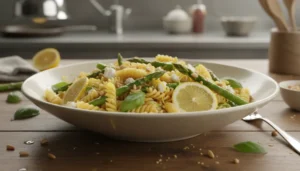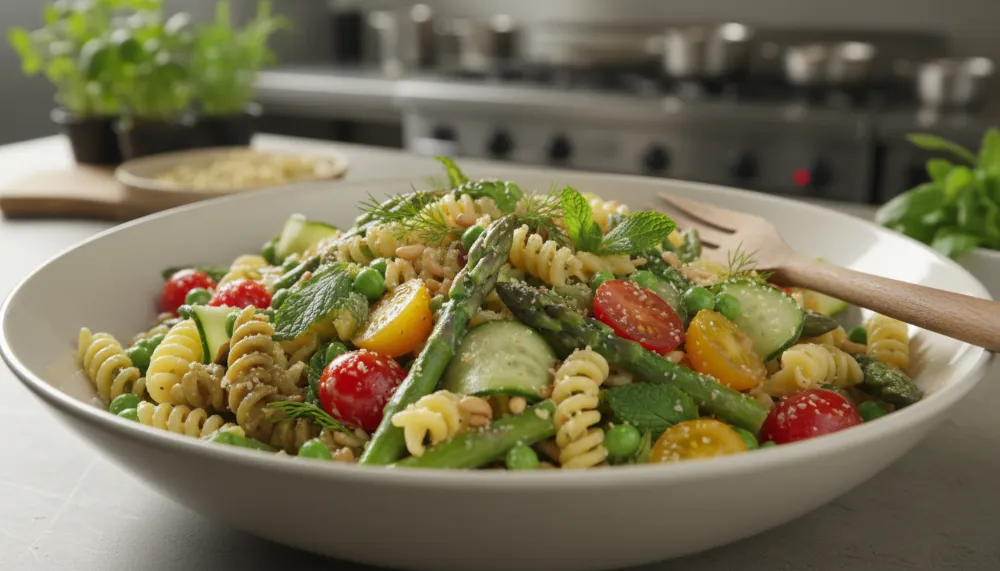

This vegan spring pasta salad is a vibrant explosion of seasonal textures and bright citrus notes, designed to be the ultimate centerpiece for your next garden gathering. It combines the crunch of farm-fresh radishes with the tender snap of young asparagus, all tied together by a velvety, herb-infused dressing.
Ultimate Vegan Spring Pasta Salad
INGREDIENTS
- 1 lb Fusilli or Rotini Pasta (Gluten-free if desired)
- 1 bunch fresh asparagus, trimmed and cut into 1-inch pieces
- 1 cup frozen or fresh English peas
- 1 bunch radishes, thinly sliced
- 1 can (15 oz) chickpeas, drained and rinsed
- 1/2 cup extra virgin olive oil
- 1/4 cup fresh lemon juice
- 2 tablespoons apple cider vinegar
- 2 cloves garlic, minced
- 1/2 cup fresh parsley and dill, chopped
- Salt and black pepper to taste
INSTRUCTIONS
- Bring a large pot of salted water to a boil. Cook pasta according to package directions, but add the asparagus and peas during the last 2 minutes of boiling.
- Drain the pasta and vegetables, then immediately shock them in a bowl of ice water to stop the cooking process and preserve the vibrant green color.
- In a small bowl or blender, whisk together olive oil, lemon juice, apple cider vinegar, minced garlic, and salt.
- In a large mixing bowl, combine the chilled pasta and vegetables with the sliced radishes, chickpeas, and fresh herbs.
- Pour the dressing over the salad and toss well to coat. Let it sit for at least 30 minutes before serving to allow flavors to meld.
The Historical Journey of Chilled Pasta
The vegan spring pasta salad we enjoy today is the result of a fascinating culinary evolution. While many associate pasta exclusively with steaming bowls of marinara, the tradition of serving noodles cold has deep roots in Mediterranean history. Specifically, the Italian concept of pasta fredda emerged as a practical response to the sweltering heat of Southern Italian summers. In regions like Sicily and Campania, farmers and workers needed a portable, calorie-dense meal that wouldn’t spoil in the sun, leading to the early iterations of pasta tossed with olive oil, fresh herbs, and seasonal legumes.
Interestingly, historical research into Italian Jewish traditions reveals that these communities played a pivotal role in the dish’s development. Because cooking is prohibited on the Sabbath, pasta was often prepared on Friday and served at room temperature the following day. This cultural necessity transformed pasta from a strictly hot staple into a versatile canvas for preserved vegetables and oils. As these traditions crossed the Atlantic, the American “pasta salad” craze of the mid-20th century began, originally rooted in mayonnaise-heavy macaroni salads. However, the modern movement toward plant-based health has steered the dish back to its Mediterranean roots, prioritizing light vinaigrettes over heavy dressings.
Nutritional Excellence in Every Bite
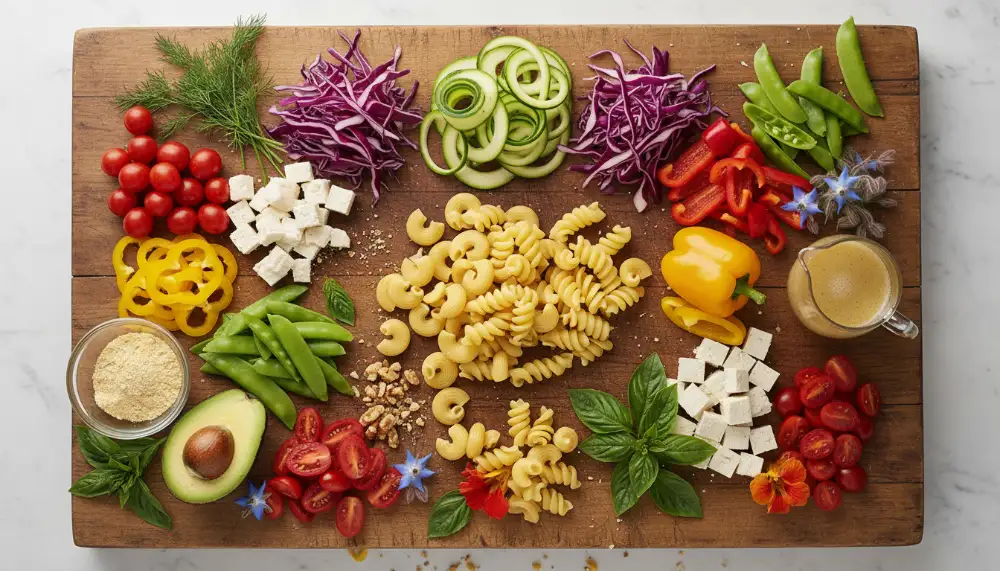
When you prepare a vegan spring pasta salad, you aren’t just making a meal, you are constructing a dense matrix of micro and macro-nutrients. The base of the salad, traditionally wheat pasta, provides essential complex carbohydrates for sustained energy. For those seeking a higher protein density, modern alternatives like chickpea or lentil pasta can offer up to 25 grams of protein per serving, making this a complete nutritional powerhouse.
The spring vegetables are the real stars of the show. Asparagus is a nutritional titan, providing a high concentration of Vitamin K, which is essential for bone health and blood clotting. It also contains folate, a B-vitamin crucial for DNA synthesis. The inclusion of radishes adds a peppery bite along with a significant dose of Vitamin C, while the peas contribute both fiber and plant-based protein. By using extra virgin olive oil as the primary fat source, you are incorporating monounsaturated fats that support heart health and help the body absorb the fat-soluble vitamins (A, D, E, and K) found in the vegetables.
Professional Flavor Variations
To truly master the vegan spring pasta salad, one must understand the balance of acidity, salt, and texture. Here are three professional-grade variations to elevate your culinary game.
1. The Lemony Green Goddess
This variation focuses on high-impact aromatics and creaminess without the use of dairy. Instead of a traditional vinaigrette, use a high-powered blender like the Ninja BN751 Professional Plus DUO Blender (https://amzn.to/3LCDyNR) to emulsify silken tofu with a massive amount of fresh basil, mint, and lemon juice. The 1000W motor ensures the herbs are completely broken down, creating a vibrant green sauce that clings to every crevice of your pasta. This replaces the need for cream or cheese, offering a luxurious mouthfeel that is entirely plant-based.
2. Smoked Mushroom and Asparagus
For those who crave a savory, meaty depth in their salads, this variation is the answer. Since we are avoiding pork, we rely on the power of umami-rich mushrooms. Thinly slice shiitake or cremini mushrooms and roast them until crispy using the Cosori 9-in-1 TurboBlaze Air Fryer 6 Qt (https://amzn.to/4hRWmVq). The air fryer roasts them perfectly, giving them a texture reminiscent of bacon bits. When combined with wood-fired asparagus and a splash of apple cider vinegar, the result is a complex, smoky salad that satisfies even the most dedicated meat-eaters.
3. Tahini-Miso Spring Medley
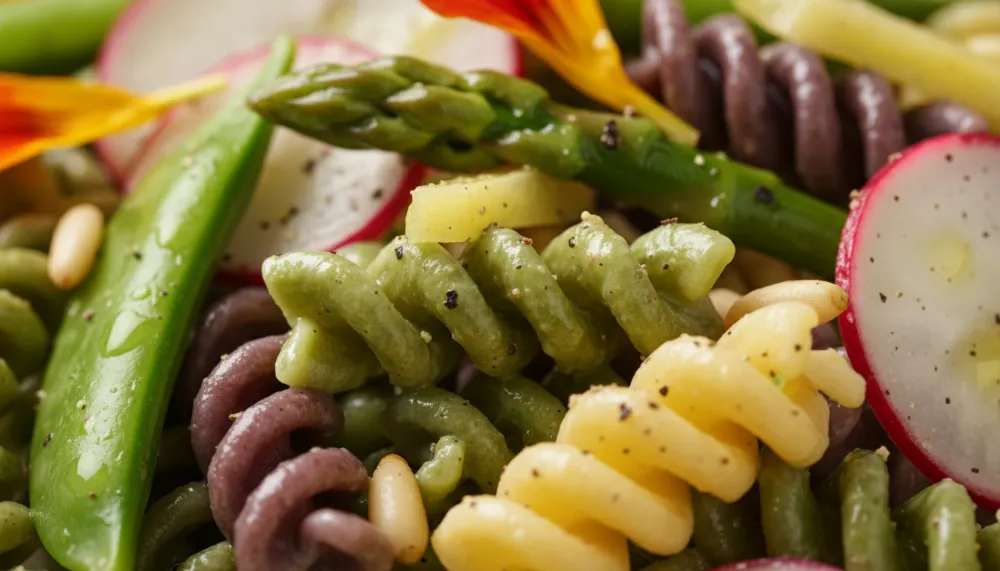
This variation utilizes fermented ingredients to create a deep flavor profile. By whisking white miso paste into a tahini base, you achieve a salty, fermented kick that mimics the tang of aged cheeses. Use the Cuisinart 8 Cup Food Processor (https://amzn.to/47Nhbg8) to quickly slice snap peas and radishes into uniform slivers, ensuring a perfect crunch in every forkful. The creaminess of the tahini balances the sharp acidity of the lemon, creating a sophisticated profile suitable for high-end dinner parties.
Chef’s Tips for Texture and Prep
The most common mistake in making a vegan spring pasta salad is the texture of the noodle. Cold pasta has a tendency to firm up significantly. To combat this, professional chefs often cook the pasta approximately 90 seconds past the al dente stage. When the pasta is shocked in an ice bath, it tightens up to the perfect consistency. If you cook it only to al dente while hot, it will likely be too hard and rubbery once chilled.
Another tip involves the “marination” phase. While many believe pasta salad should be served immediately, it actually benefits from a few hours in the refrigerator. This allows the pasta to absorb the dressing, which prevents it from tasting dry. However, save half of your fresh herbs to garnish right before serving to maintain their bright green color and aromatic punch.
Storage and Meal Prep Mastery
This salad is a meal prep champion. Because it lacks dairy and meat, it stays fresh and safe in the refrigerator for longer than traditional salads. To keep your ingredients as crisp as possible, use the Rubbermaid Brilliance Glass Storage Set of 9 (https://amzn.to/4oD0YkY). These leak-proof, stackable containers are perfect for maintaining the integrity of the vegetables. If you are preparing components like the chickpeas or blanched asparagus days in advance, consider using the FoodSaver Vacuum Sealer Machine (https://amzn.to/4qWgVnS) to remove oxygen and prevent the vegetables from oxidizing or becoming water-logged.
Sourcing Your Spring Produce
The success of a vegan spring pasta salad depends entirely on the quality of the produce. When shopping at farmers markets, look for asparagus stalks that are firm, not limp, with tightly closed tips. For radishes, ensure the greens are still attached and look fresh, as this is a primary indicator of how recently they were harvested. If you cannot find fresh English peas, high-quality frozen peas are actually a superior choice to canned varieties, as they are flash-frozen at the peak of ripeness and retain their structural integrity during the tossing process.
In conclusion, this vegan spring pasta salad is more than just a side dish, it is a celebration of seasonal renewal. By combining ancient Mediterranean techniques with modern kitchen technology and high-quality plant-based ingredients, you can create a meal that is as nutritious as it is delicious. Whether you are hosting a large event or simply meal prepping for the week ahead, this recipe provides the flexibility and flavor profile to become a permanent fixture in your culinary repertoire.