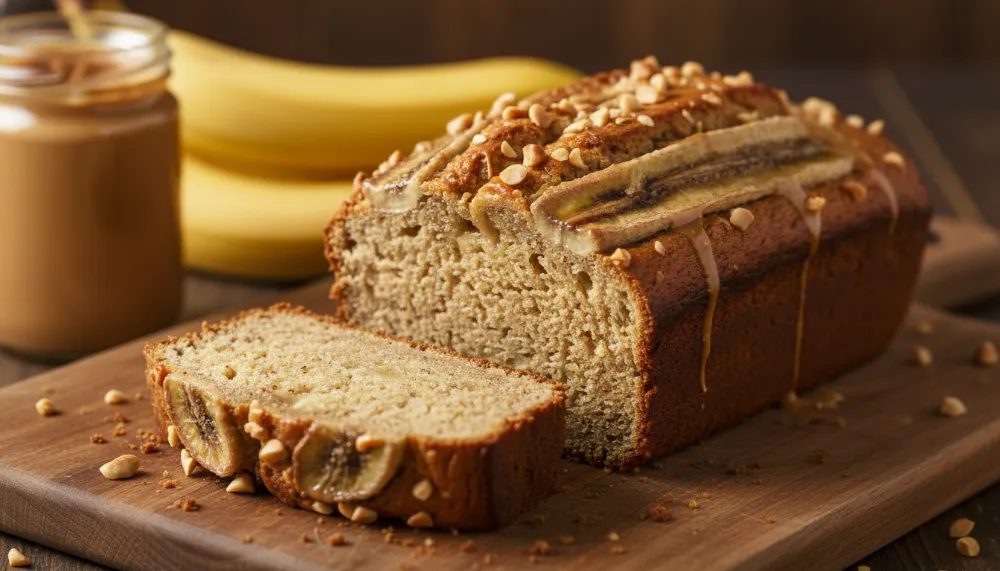

This incredibly moist Peanut Butter Banana Bread takes a beloved classic and elevates it with rich, creamy peanut butter for an irresistible, protein-packed twist. Get ready to transform those overripe bananas into your family’s new favorite morning treat!
Peanut Butter Banana Bread
Ingredients
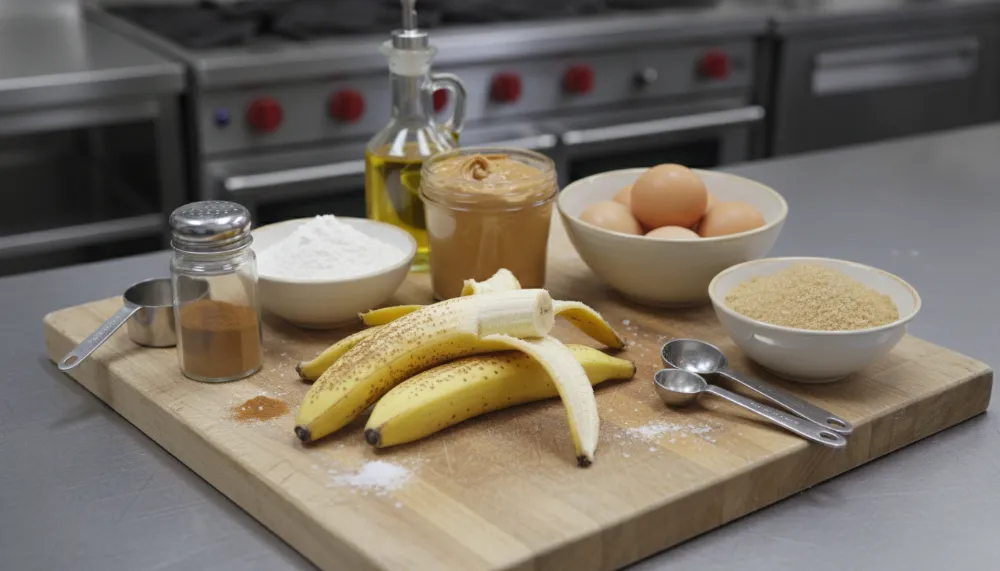
- 1 3 large overripe bananas, heavily mashed
- 2 1/2 cup creamy peanut butter
- 3 1/3 cup melted butter, slightly cooled
- 4 3/4 cup packed light brown sugar
- 5 2 large eggs, room temperature
- 6 1 teaspoon alcohol-free vanilla bean paste
- 7 1/4 cup sour cream or plain Greek yogurt
- 8 1 and 1/2 cups all-purpose flour
- 9 1 teaspoon baking soda
- 10 1/2 teaspoon kosher salt
Instructions
- 1 Preheat your oven to 350°F (175°C). Grease a standard 9×5 inch loaf pan and line it with parchment paper for easy removal.
- 2 In a large mixing bowl, whisk together the mashed bananas, melted butter, and peanut butter until perfectly smooth and well combined.
- 3 Add the brown sugar, eggs, alcohol-free vanilla bean paste, and sour cream. Whisk vigorously until the mixture is cohesive and slightly aerated.
- 4 In a separate medium bowl, whisk the all-purpose flour, baking soda, and salt.
- 5 Gently fold the dry ingredients into the wet ingredients using a rubber spatula. Mix only until just combined to avoid a tough loaf.
- 6 Pour the batter into the prepared loaf pan, smoothing the top. For an artisan look, swirl an extra tablespoon of peanut butter on top.
- 7 Bake for 55 to 65 minutes, or until a toothpick inserted into the center comes out clean.
- 8 Let the bread cool in the pan for 15 minutes before transferring it to a wire rack to cool completely before slicing.
The Ultimate Comfort Bake: Peanut Butter Banana Bread
Peanut Butter Banana Bread is an absolute triumph of home baking, seamlessly merging two of the most popular pantry staples into a single, nutrient-dense loaf. It is a brilliant contemporary evolution of a classic American quick bread. If you have ever stared at a bunch of overripe, spotted bananas on your kitchen counter and wondered how to give them new life, this recipe is your ultimate answer. Adding peanut butter does not just introduce an incredible nutty flavor, it fundamentally improves the texture, moisture, and protein content of the bake. This is a recipe that works brilliantly for a decadent weekend breakfast, an energizing afternoon snack, or a wholesome dessert.
As you dive into the world of creative quick breads, you will quickly realize that peanut butter is a magical ingredient. It acts as an additional fat source, providing an unbelievably tender crumb. When combined with the natural sweetness of ripe bananas, the result is a beautifully balanced loaf that avoids being overly sugary. To further expand your baking repertoire, be sure to explore our complete guide at Revealed Recipe’s baking index for more inspiration and culinary secrets.
A Fascinating Historical Origin
The history of Peanut Butter Banana Bread is a convergence of two distinct culinary timelines that tell a compelling story of American ingenuity. While bananas were first introduced to North America in the 1870s, they remained a rare luxury until the advent of commercial refrigeration at the turn of the 20th century. Banana bread as we know it today truly emerged during the Great Depression of the 1930s. During this challenging era, resourceful home bakers vehemently refused to discard overripe, blackened fruit. Instead, they began mashing them into sweet batters.
This period perfectly coincided with the mass production of chemical leaveners, specifically baking powder and baking soda. These affordable innovations allowed for the creation of “quick breads” that did not require yeast, extensive kneading, or long fermentation times. Simultaneously, peanut butter was gaining massive traction. Popularized in the late 1890s by John Harvey Kellogg as an easily digestible, plant-based protein source, peanut butter had become an essential pantry staple by the 1930s due to its long shelf life and undeniable affordability. The combination of peanut butter and bananas, already famously favored in classic sandwiches, naturally transitioned into the realm of baking as a practical way to add essential fat, protein, and moisture to the traditional fruit loaf.
The Powerful Nutritional Profile
Beyond its exceptional taste, Peanut Butter Banana Bread offers a surprisingly robust nutritional profile. A standard thick slice, weighing approximately 60 to 80 grams, provides a beautifully balanced mix of crucial macronutrients. Because creamy peanut butter replaces or supplements traditional fats like standard butter or vegetable oil, the protein content is notably higher than what you would find in a standard fruit bread.
In a typical serving, you can expect between 180 and 280 calories, making it a highly satiating snack. The protein clocks in at a respectable 5 to 9 grams, heavily depending on the exact ratio of peanut butter used in the batter. The total fat ranges from 8 to 15 grams, but it is important to note that these are primarily heart-healthy monounsaturated fats derived directly from the roasted peanuts. Furthermore, the bread delivers 25 to 40 grams of carbohydrates for sustained energy, and 2 to 4 grams of dietary fiber.
The micronutrient benefits are equally impressive. The heavy use of ripe bananas provides exceptionally high levels of potassium, which is absolutely essential for maintaining cardiovascular health and proper muscle function. You will also benefit from magnesium and Vitamin B6, both crucial for efficient energy metabolism and optimal brain health. Finally, a moderate amount of iron is provided by both the peanuts and the enriched all-purpose flour.
Professional Flavor Variations and Techniques
While the standard recipe is undeniably delicious, professional pastry chefs often elevate this humble loaf by focusing intensely on texture, crumb structure, and sophisticated flavor pairings. One popular approach is known in culinary circles as the “Ansel Method”, heavily inspired by legendary pastry chef Dominique Ansel. This specific technique uses melted butter rather than traditional creamed butter, creating a slightly denser, pound-cake-like crumb with a signature crackly, deeply caramelized exterior.
Another brilliant technique involves a specific moisture enhancement. A trick often utilized by experts like Martha Stewart involves gently folding in sour cream or plain Greek yogurt into the wet ingredients. This brilliant addition provides a very subtle tang that perfectly balances the intense sweetness of the spotted bananas, ensuring the bread remains exceptionally moist for several days at room temperature. For those interested in mastering more advanced baking techniques, our comprehensive guides at Revealed Recipe offer endless inspiration.
Decadent Additions
To create a truly professional aesthetic, chefs often reserve a small portion of the peanut butter to physically swirl into the top of the batter just before baking. A light finishing sprinkle of flaky sea salt cuts beautifully through the richness. For a more decadent twist, consider a cocoa infusion. High-quality cocoa powder can be sifted directly into the dry ingredients to create a “double-dark” variation that perfectly mimics the iconic flavor profile of a peanut butter cup, all while flawlessly retaining the structural integrity of a quick bread.
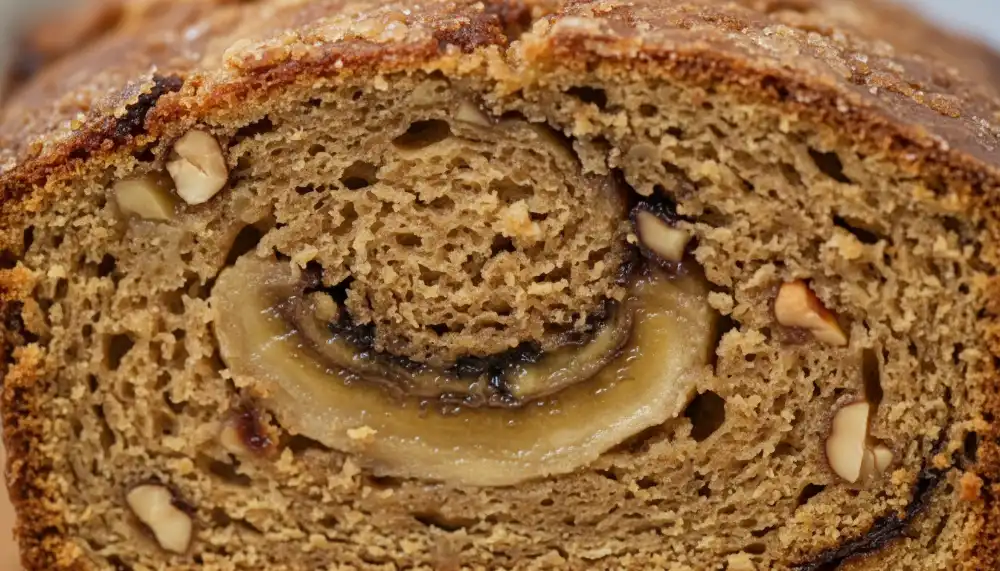
Crunchy elements are also highly encouraged. Many high-end bakeries incorporate roughly chopped roasted peanuts or toasted pecans directly into the batter. This provides a necessary structural contrast to the soft, velvety mashed fruit. Finally, a professional finishing touch often includes a decadent peanut butter glaze made with powdered sugar, a splash of milk, and smooth peanut butter, generously drizzled over the loaf once it has fully cooled.
Essential Kitchen Tools for Professional Results
To achieve absolute perfection with your Peanut Butter Banana Bread, investing in the right kitchen equipment is paramount. Having the proper tools not only streamlines the preparation process but fundamentally improves the final texture of your bake.
If you decide to craft that luxurious peanut butter glaze we mentioned earlier, the Ninja BN751 Professional Plus DUO Blender is absolutely spectacular. Why is it perfect? With its dominant 1000W motor, it pulverizes ingredients into silky smooth perfection, making it ideal for everything from glazes to savory tahini sauce and spicy harissa paste.
For those who prefer adding a crunchy textural element by roasting their own raw nuts, the Cosori 9-in-1 TurboBlaze Air Fryer 6 Qt is highly recommended. Why is it perfect? It roasts chickpeas, nuts, and vegetables perfectly with even heat distribution, and its large family capacity means you can prep massive batches of toppings in minutes.
Prepping your mix-ins requires precision. The Cuisinart 8 Cup Food Processor is a phenomenal asset in the kitchen. Why is it perfect? It provides incredibly fast chopping and slicing, making it an absolute meal prep essential when breaking down large quantities of walnuts or pecans for your batter.
Expert Storage and Freezing Strategies
Because Peanut Butter Banana Bread is incredibly moist, proper storage is absolutely critical to prevent spoiling and maintain that fresh-from-the-oven texture. At room temperature, this bread will stay perfectly soft for up to four days if kept in an airtight container.
For everyday storage on your kitchen counter, we strongly recommend the Rubbermaid Brilliance Glass Storage Set of 9. Why is it perfect? These containers are perfect for meal prep storage, highly durable, leak-proof, and easily stackable, ensuring your beautiful loaf is protected from ambient air and humidity.
If you bake in bulk, freezing is an excellent option. This bread freezes beautifully for up to three months. To maintain the absolute highest quality, the FoodSaver Vacuum Sealer Machine is unmatched. Why is it perfect? It expertly removes all excess oxygen, keeping ingredients fresh longer and completely preventing devastating freezer burn. Simply slice the bread, seal the individual portions, and you will have a ready-to-eat breakfast pastry waiting in the freezer whenever a craving strikes.
Frequently Asked Questions
Can I use crunchy peanut butter instead of creamy?
Absolutely. Substituting crunchy peanut butter is a fantastic way to introduce texture without needing to chop additional nuts. The chunks of peanuts will distribute evenly throughout the batter, providing a satisfying bite. However, ensure the peanut butter is well-stirred, especially if you are using a natural variety where oil separation occurs.
Why did my banana bread sink in the middle?
A sunken center is usually the result of two common errors. The first is underbaking. Because the mashed bananas and sour cream add so much moisture, the bread requires a full hour in the oven to establish its structure. Always use the toothpick test. The second error is overmixing the batter. Once the dry ingredients meet the wet ingredients, fold them together gently. Overmixing develops gluten rapidly, which causes the bread to rise aggressively in the oven and then collapse as it cools. For more troubleshooting tips, browse our expert articles at Revealed Recipe.
What can I use instead of vanilla extract?
To maintain a rich, aromatic depth without using traditional alcohol-based extracts, professional recipes often utilize high-quality alcohol-free vanilla bean paste. Alternatively, a tiny splash of apple cider vinegar can be used to brilliantly brighten the fruit notes and activate the baking soda for a superior rise.