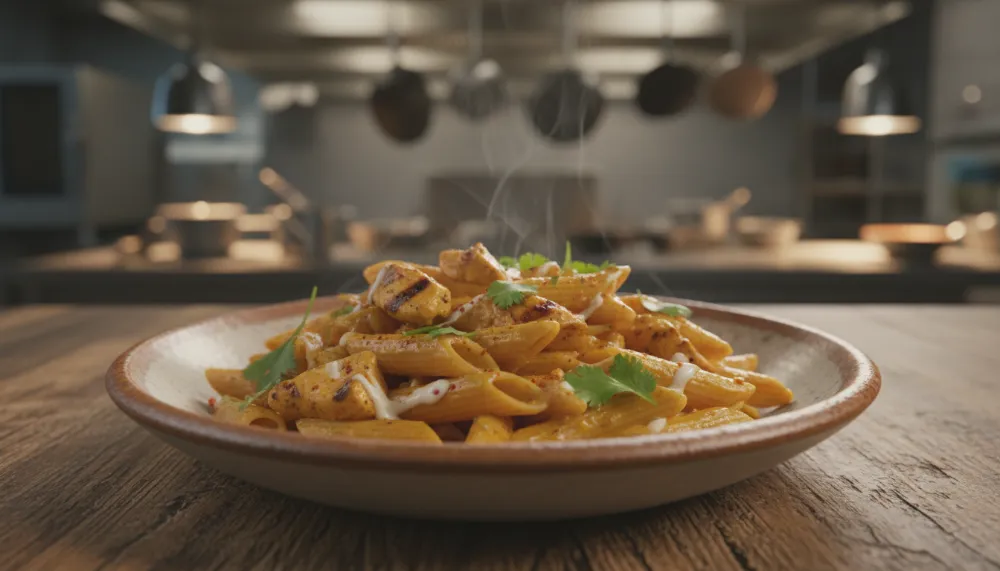

Experience the ultimate comfort food fusion with this rich, velvety Butter Chicken Pasta that marries traditional North Indian spices with tender Italian noodles. It is a bold, flavor-packed meal that transforms your kitchen into a world-class bistro.
Gourmet Butter Chicken Pasta
Ingredients
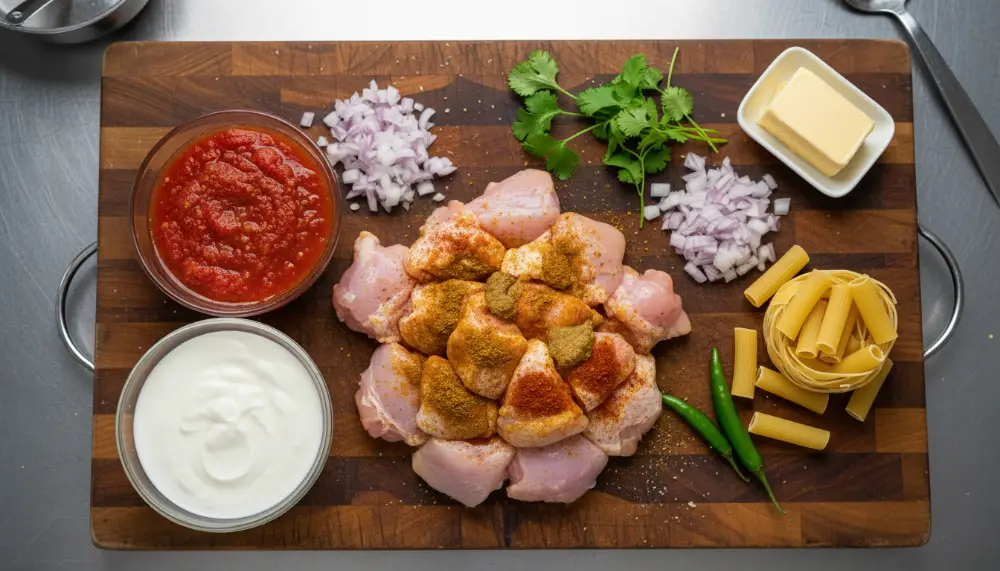
- 1 1 lb Boneless Skinless Chicken Thighs (cubed)
- 2 1 lb Penne or Rigatoni Pasta
- 3 4 tbsp Unsalted Butter
- 4 1 cup Tomato Puree (Passata)
- 5 1.5 cups Heavy Cream
- 6 1 large Onion (finely diced)
- 7 2 tbsp Ginger-Garlic Paste
- 8 2 tsp Garam Masala & 1 tsp Turmeric
- 9 1/2 cup Chicken Broth (for deglazing)
- 10 1 tbsp Kasuri Methi (Dried Fenugreek Leaves)
Instructions
- 1 Marinate the chicken in yogurt, turmeric, and ginger-garlic paste for 30 minutes.
- 2 Boil the pasta in salted water until al dente, reserve 1 cup of pasta water.
- 3 Sauté the chicken in butter until browned, then remove and set aside.
- 4 In the same pan, sauté onions until translucent, add spices, and deglaze with chicken broth.
- 5 Add tomato puree and simmer for 10 minutes, then stir in heavy cream and cooked chicken.
- 6 Toss the cooked pasta into the sauce, sprinkle with crushed kasuri methi, and serve.
The Evolution of Butter Chicken Pasta: A Culinary Fusion
Butter Chicken Pasta is a prominent example of “Global Fusion” cuisine, bridging the gap between North Indian Mughlai traditions and Italian culinary techniques. This dish reimagines the classic Murgh Makhani (Butter Chicken) as a rich, creamy pasta sauce, replacing traditional sides like naan or rice with various pasta shapes. The transition into Butter Chicken Pasta is a modern culinary development fueled by the South Asian diaspora in countries like Canada, Australia, and the UK. It evolved from home-style “recycling” of leftover curry into a deliberate fusion menu item. By the early 21st century, it gained traction in global metropolitan food scenes as a popular “East meets West” comfort food.
Historical Roots: From Delhi to the World
The roots of the dish lie in Delhi, India, during the late 1940s and 1950s. The original dish, Butter Chicken, was famously created by Kundan Lal Gujral, Kundan Lal Jaggi, and Thakur Dass at the Moti Mahal restaurant. Following the partition of India, they migrated from Peshawar to Delhi and sought a way to repurpose leftover tandoori chicken, which tended to dry out. They simmered the chicken in a luxurious gravy made of tomatoes, butter, and cream. Today, that same essence is captured in Butter Chicken Pasta, where the silkiness of the sauce provides the perfect coating for penne or fettuccine.
Professional Techniques for the Perfect Sauce
To achieve a restaurant-grade Butter Chicken Pasta, one must understand the chemistry of the sauce. It is not merely a mixture of cream and tomato, it is an emulsion. Professionals often use specific flourishes to balance the richness and add complexity. One such technique is the Smoky Tandoori Infusion. Instead of simply sautéing the meat, professional recipes often involve marinating the chicken in yogurt and spices, then charring it in a high-heat oven to mimic the traditional tandoor flavor before adding it to the sauce. This adds a layer of depth that contrasts beautifully with the sweet acidity of the tomatoes.
The “Pink Sauce” Hybrid
This variation leans closer to an Italian Penne alla Vecchia Bettola. It uses a base of slow-roasted tomatoes and aromatics. Where a traditional Italian recipe might use a splash of wine for acidity, professional fusion chefs use apple cider vinegar or a splash of chicken broth to deglaze the pan and brighten the heavy cream. This technique ensures the Butter Chicken Pasta remains vibrant rather than heavy and cloying. For those looking to achieve a perfectly smooth base, the Ninja BN751 Professional Plus DUO Blender is a game-changer, its 1000W motor ensures the tomato and onion base is pulverized into a silky texture before the cream is added.
Choosing the Right Ingredients for Butter Chicken Pasta
The quality of your ingredients will dictate the final outcome of your Butter Chicken Pasta. Start with high-quality chicken thighs rather than breasts, as thighs remain succulent during the simmering process. If you prefer a beef variation, thinly sliced beef sirloin can be used, seared at high heat to maintain tenderness within the spiced tomato-cream base. For the aromatics, fresh ginger and garlic are non-negotiable. Using a Cuisinart 8 Cup Food Processor allows you to create a fine paste of onions, ginger, and garlic in seconds, which is essential for a sauce that clings to the pasta without large chunks.
The Role of Kasuri Methi
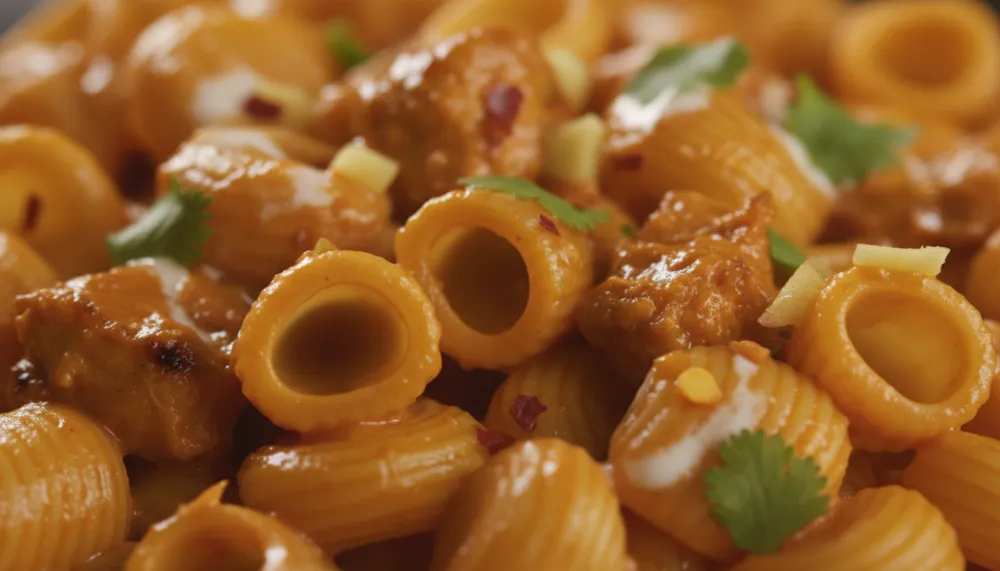
If there is one “secret ingredient” that separates home cooks from professional chefs in making Butter Chicken Pasta, it is Kasuri Methi, or dried fenugreek leaves. This herb provides a distinct, maple-like aroma and a slightly bitter back-note that cuts through the fat of the butter and cream. Always toast the leaves slightly in a dry pan and crush them between your palms before sprinkling them over the finished pasta. This releases the essential oils and elevates the dish to a sensory experience.
Essential Tools for Gourmet Results
Cooking a high-level fusion dish requires the right equipment to maintain consistency and flavor. Here are our top professional recommendations:
- Ninja BN751 Professional Plus DUO Blender: https://amzn.to/3LCDyNR (Why Perfect: 1000W motor, perfect for creating a silky smooth tomato base).
- Cosori 9-in-1 TurboBlaze Air Fryer 6 Qt: https://amzn.to/4hRWmVq (Why Perfect: Roasts chicken or chickpeas perfectly for that smoky tandoori-style char).
- Cuisinart 8 Cup Food Processor: https://amzn.to/47Nhbg8 (Why Perfect: Fast chopping and slicing, meal prep essential for fine aromatics).
- Rubbermaid Brilliance Glass Storage Set of 9: https://amzn.to/4oD0YkY (Why Perfect: Perfect for meal prep storage, leak-proof, and stackable).
- FoodSaver Vacuum Sealer Machine: https://amzn.to/4qWgVnS (Why Perfect: Keeps marinated chicken fresh longer and prevents freezer burn).
Nutritional Profile of Butter Chicken Pasta
A typical professional serving, approximately 350g to 400g, of Butter Chicken Pasta is calorie-dense and rich in macronutrients. It provides between 500 and 650 kcal, with a robust protein count of 30g to 40g, primarily from the chicken or beef used. While it is high in total fat (20g to 35g) due to the butter and heavy cream, it also offers significant micronutrients, including Vitamin A and Lycopene from the tomato base, and Calcium from the dairy components. For those looking to balance the macros, substituting a portion of the heavy cream with a fine paste of raw cashews adds earthiness and stabilizes the sauce while providing healthy fats.
Vegetarian and Protein Variations
While chicken is the standard, Butter Chicken Pasta is remarkably versatile. For a vegetarian option, cubed paneer or roasted chickpeas serve as the protein substitute. When using chickpeas, roasting them in the Cosori TurboBlaze Air Fryer creates a crunchy texture that provides a delightful contrast to the creamy sauce. Adding baby spinach at the final minute of cooking also boosts the nutritional value with iron and fiber without altering the fundamental flavor profile of the dish.
Meal Prep and Storage Tips
Butter Chicken Pasta is an excellent candidate for meal prep, as the flavors often deepen after a day in the refrigerator. To maintain the best quality, store the sauce and the pasta separately if possible, though tossing them together is fine for short-term storage. Use the Rubbermaid Brilliance Glass Storage Set to prevent staining and ensure an airtight seal. When reheating, add a splash of chicken broth or water to loosen the sauce, as the pasta will naturally absorb moisture over time. Avoid high-heat microwaving, which can cause the cream to separate, instead, heat gently on the stovetop for the best results.
Common Pitfalls to Avoid
The most common mistake when making Butter Chicken Pasta is curdling the sauce. This usually happens when the heat is too high when adding the heavy cream or if the tomato base is too acidic. To prevent this, ensure your cream is at room temperature and lower the heat to a simmer before stirring it in. Another pitfall is overcooking the pasta. Since the pasta will spend a minute or two finishing in the hot sauce, always boil it for two minutes less than the package instructions for a true al dente bite. This ensures the Butter Chicken Pasta maintains its structural integrity and doesn’t become mushy.