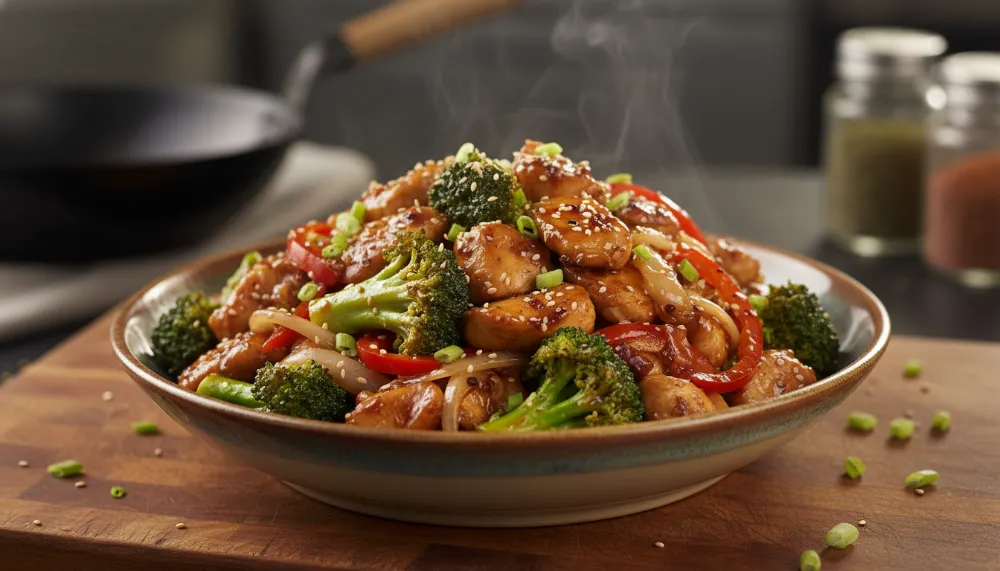

Experience the perfect balance of tender velveting chicken and crisp, vibrant broccoli in this restaurant-quality Chicken and Broccoli Stir Fry that comes together in under 30 minutes. This dish masterfully combines traditional stir-frying techniques with a rich, alcohol-free savory brown sauce that rivals any takeout favorite.
Chicken and Broccoli Stir Fry
Ingredients
- 1 1 lb chicken breast, thinly sliced into bite-sized pieces
- 2 4 cups broccoli florets, cut into uniform bite-sized pieces
- 3 2 tbsp cornstarch (divided for velveting and sauce thickening)
- 4 1/2 cup chicken broth (alcohol-free base)
- 5 3 tbsp soy sauce (low sodium preferred)
- 6 1 tbsp rice vinegar and 1 tsp brown sugar
- 7 3 cloves garlic, finely minced
- 8 1 tbsp fresh ginger, grated
- 9 2 tbsp vegetable oil and 1 tsp toasted sesame oil
Instructions
- 1 Toss sliced chicken with 1 tbsp cornstarch and 1 tbsp water, marinate for 15 minutes to velvet.
- 2 Blanch broccoli in boiling water for 60 seconds, then shock in ice water for color and snap.
- 3 Whisk broth, soy sauce, rice vinegar, sugar, and remaining 1 tbsp cornstarch in a small bowl.
- 4 Heat vegetable oil in a wok or large skillet over high heat until just smoking.
- 5 Sear chicken in batches until golden and cooked through, then remove and set aside.
- 6 Sauté garlic and ginger for 30 seconds, add sauce, chicken, and broccoli, tossing until thickened.
- 7 Drizzle with sesame oil and serve immediately over hot steamed rice.
The Cultural Evolution of Chicken and Broccoli Stir Fry
While many home cooks associate Chicken and Broccoli Stir Fry with ancient Chinese traditions, the dish as we recognize it today is a fascinating product of American-Chinese culinary evolution. The underlying technique of stir-frying, known as chǎo, dates back over two thousand years to the Han dynasty, where it was originally a method for drying grains. However, the specific combination of chicken breast and florets of broccoli gained popularity in the mid-20th century within the United States.
Early Chinese immigrants adapted their recipes to suit local palates and available produce. In China, gai lan (Chinese broccoli) or bok choy would have been the standard greens. However, the Western variety of broccoli, Calabrese, became the vegetable of choice due to its wide availability and satisfying crunch. The term “stir-fry” itself wasn’t even introduced to the English language until 1945, when Buwei Yang Chao used it in her seminal work, How to Cook and Eat in Chinese. This dish represents a bridge between cultures, combining ancient heat management with modern, nutrient-dense ingredients.
The Science Behind the Perfect Chicken and Broccoli Stir Fry
To achieve a professional-grade result, one must understand the Maillard reaction and heat transfer. Stir-frying is a high-heat, low-moisture technique designed to cook food quickly while maintaining its structural integrity. When the wok or skillet is heated to the correct temperature, the natural sugars and proteins in the chicken undergo a chemical transformation that creates a complex, savory crust without drying out the interior of the meat.
Achieving Wok Hei at Home
Professional chefs often talk about “wok hei,” which translates to “breath of the wok.” This is the elusive smoky, charred aroma that defines restaurant cooking. It occurs when oil droplets are atomized in the air over intense flames, or when the sauce hits the searing metal of the pan and caramelizes instantly. While difficult to replicate on a standard home stove, you can mimic this by cooking in small batches and using a heavy-bottomed pan like a cast-iron skillet or a carbon-steel wok that retains heat exceptionally well.
Mastering the Technique: Velveting Chicken
Have you ever wondered why restaurant chicken is so incredibly soft and silky? The secret is a technique called velveting. By coating the chicken in a mixture of cornstarch, oil, and sometimes liquid, you create a protective barrier. This barrier prevents the fibers of the chicken from tightening and becoming tough when exposed to high heat. It also helps the chicken retain its natural juices, ensuring every bite is succulent and tender.
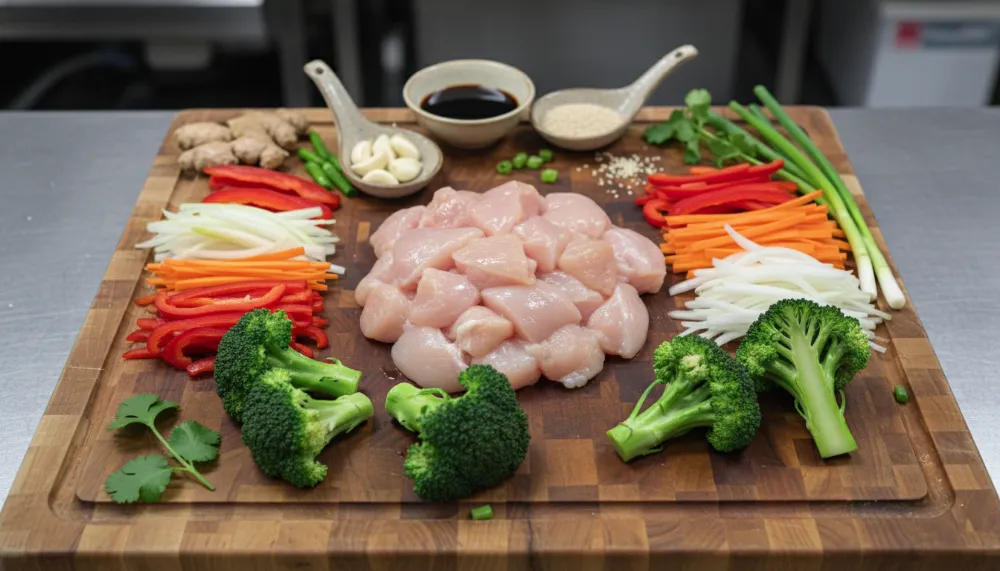
To velvet your chicken for the Chicken and Broccoli Stir Fry, ensure your slices are thin and consistent. Slice the meat against the grain, which further breaks down the muscle fibers for maximum tenderness. Allow the chicken to marinate for at least 15 to 20 minutes before it hits the pan. This small investment in time makes a massive difference in the final texture of the dish.
Why You Should Always Blanch Your Broccoli
Throwing raw broccoli directly into a stir-fry often results in one of two problems: the broccoli is either burnt on the outside and raw in the middle, or the chicken is overcooked by the time the broccoli is tender. The professional solution is blanching. By par-boiling the broccoli for 60 seconds and then immediately cooling it in ice water, you accomplish two goals. First, you stabilize the chlorophyll, ensuring the broccoli stays a vibrant, electric green. Second, you soften the dense stalks just enough so that a quick 30-second toss in the wok is all they need to reach the perfect “crisp-tender” state.
Crafting the Ultimate Stir-Fry Sauce Without Alcohol
Traditional stir-fry sauces often rely on Shaoxing wine for depth and acidity. However, a high-authority version of Chicken and Broccoli Stir Fry can achieve even better results using a sophisticated blend of alcohol-free substitutes. By combining high-quality chicken broth with rice vinegar and a touch of sugar, you mimic the fermented profile and acidity of cooking wine perfectly. The addition of a concentrated umami source, such as a drop of miso or mushroom powder, can add that extra layer of complexity often missing from home recipes.
Essential Aromatics: The Holy Trinity of Stir Fry
The foundation of any great stir-fry sauce lies in the aromatics: garlic, ginger, and scallions. For the best flavor, use fresh ingredients rather than pre-minced jars. Freshly grated ginger provides a sharp, peppery bite that balances the saltiness of the soy sauce, while minced garlic provides the savory backbone. When adding these to the pan, do so only after the chicken and broccoli have been par-cooked, as garlic and ginger can burn in seconds at high stir-frying temperatures.
Professional Kitchen Equipment for Stir-Fry Success
To elevate your Chicken and Broccoli Stir Fry to a professional standard, having the right tools is essential for prep and execution. We recommend the following high-performance tools for your kitchen:
- Ninja BN751 Professional Plus DUO Blender: https://amzn.to/3LCDyNR (Why Perfect: 1000W motor, perfect for creating smooth sauces and emulsifying ginger-based marinades).
- Cosori 9-in-1 TurboBlaze Air Fryer 6 Qt: https://amzn.to/4hRWmVq (Why Perfect: Excellent for roasting side vegetables if you want to diversify your plate with a roasted component).
- Cuisinart 8 Cup Food Processor: https://amzn.to/47Nhbg8 (Why Perfect: Fast slicing of chicken and broccoli, making meal prep for large families incredibly easy).
- Rubbermaid Brilliance Glass Storage Set of 9: https://amzn.to/4oD0YkY (Why Perfect: The ultimate way to store your stir-fry leftovers, keeping the broccoli crisp and preventing leaks).
- FoodSaver Vacuum Sealer Machine: https://amzn.to/4qWgVnS (Why Perfect: Keeps your bulk chicken and fresh broccoli fresh longer, preventing freezer burn).
Nutritional Breakdown of Chicken and Broccoli Stir Fry
One of the reasons Chicken and Broccoli Stir Fry is a perennial favorite is its exceptional nutritional profile. It is widely considered one of the leanest options in Asian-influenced cuisine. A standard serving contains between 280 and 380 calories, making it a fantastic choice for those monitoring their caloric intake. It is incredibly high in protein, providing 25-35g per serving from the lean chicken breast, which is essential for muscle repair and satiety.
The broccoli adds a powerhouse of micronutrients. It is rich in Vitamin C, which supports immune function, and Vitamin K, which is vital for bone health. Additionally, the fiber content in the broccoli helps regulate digestion and promotes long-lasting fullness. By using a low-sodium broth and controlling the amount of added sugar in the sauce, you can maintain a very healthy balance that avoids the excess sodium and fat often found in restaurant versions of this dish.
Professional Variations and Protein Swaps
While chicken is the traditional protein, this recipe is highly versatile. For a beef variation, consider using thinly sliced flank or skirt steak. Just like the chicken, beef benefits immensely from the velveting process, ensuring the meat remains tender despite the intense heat of the pan. For those seeking a vegetarian alternative, extra-firm tofu that has been pressed and seared until golden is an excellent substitute, as it absorbs the savory brown sauce beautifully.
You can also experiment with flavor profiles. For a Garlic-Ginger Blast, double the amount of minced aromatics and finish the dish with a generous amount of sliced scallions and a pinch of white pepper. If you prefer a bit of heat, add a tablespoon of chili garlic sauce or crushed red pepper flakes to the sauce mixture before pouring it into the pan. These simple adjustments allow you to tailor the Chicken and Broccoli Stir Fry to your specific cravings every time you cook.
Meal Prep and Storage Secrets
Chicken and Broccoli Stir Fry is an ideal candidate for meal prepping. Because the sauce is thickened with cornstarch, it holds up remarkably well when reheated. To keep the broccoli from becoming mushy, store the stir-fry in airtight containers like the Rubbermaid Brilliance Glass set. When reheating, a splash of water or chicken broth can help loosen the sauce and restore its original glossy texture. We recommend reheating on the stovetop or in a microwave in 30-second intervals to ensure the chicken doesn’t become overcooked and rubbery.