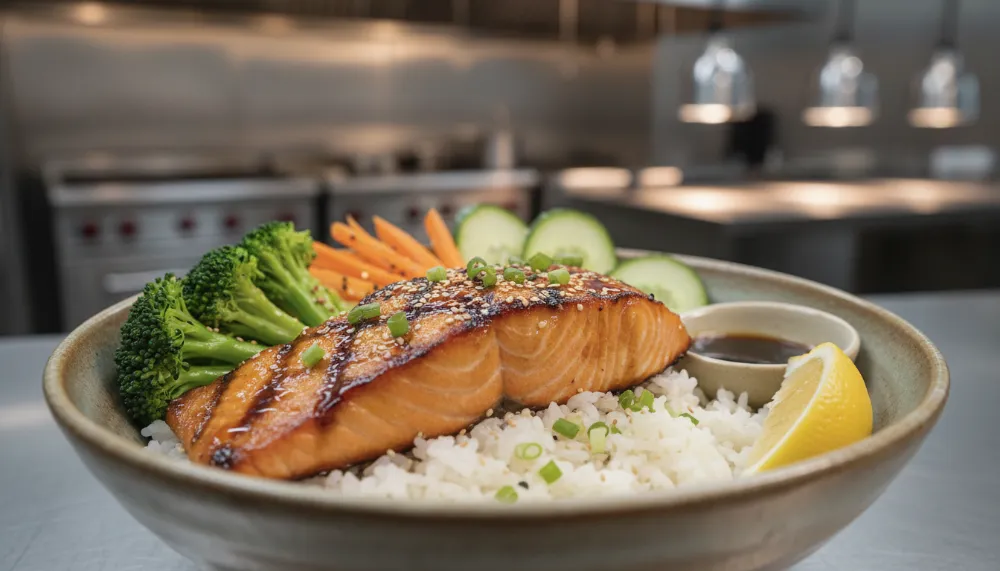

Experience the perfect balance of sweet, savory, and nutrient-dense flavors with this ultimate Teriyaki Salmon Bowl, a vibrant, easy-to-make dinner that brings professional Japanese-inspired techniques straight to your home kitchen.
Ultimate Teriyaki Salmon Bowl
Ingredients
- 1 1.5 lbs Fresh Salmon Fillet, cut into 1-inch cubes
- 2 1/2 cup Soy Sauce (low sodium preferred)
- 3 1/4 cup Unsweetened Pineapple Juice
- 4 3 tbsp Raw Honey or Maple Syrup
- 5 1 tbsp Rice Vinegar
- 6 1 tbsp Fresh Ginger, minced
- 7 2 cloves Garlic, crushed
- 8 2 cups Cooked Brown Rice or Quinoa
- 9 2 cups Broccoli Florets, lightly steamed
- 10 1 large Carrot, julienned
- 11 1/2 cup Shelled Edamame
- 12 1 tbsp Toasted Sesame Seeds and sliced Green Onions for garnish
Instructions
- 1 In a small bowl, whisk together soy sauce, pineapple juice, honey, vinegar, ginger, and garlic until smooth.
- 2 Place the salmon cubes in a shallow dish and pour half of the marinade over them. Let sit for 15 minutes.
- 3 Heat a large non-stick skillet over medium-high heat. Add the salmon and cook for 2 to 3 minutes per side until caramelized.
- 4 Pour the remaining marinade into a small saucepan and simmer over low heat until thickened into a glossy glaze.
- 5 Assemble the bowls by dividing rice, broccoli, carrots, and edamame. Top with salmon and drizzle with extra glaze.
- 6 Garnish with sesame seeds and green onions. Serve immediately.
The Evolution of the Teriyaki Salmon Bowl
The Teriyaki Salmon Bowl is a quintessential “East-meets-West” dish that blends traditional Japanese glazing techniques with modern nutritional trends. While many perceive teriyaki as a simple bottled sauce, it is actually an ancient culinary method. The word is derived from teri, meaning luster or shine, and yaki, meaning grill or broil. It originated during the Edo period in Japan, where cooks used the technique primarily for seafood, glazing local catches like yellowtail or salmon with a mixture of soy sauce and sugar to create a glossy, preservative finish. In the 20th century, Japanese immigrants in Hawaii adapted the recipe by incorporating local ingredients like pineapple juice. This addition provided the necessary sweetness and acidity to replace traditional fermented liquids, resulting in the thicker, sweeter glaze common today. The rise of the bowl format was popularized in the Pacific Northwest during the 1970s, making it a global staple for healthy, efficient dining. This specific recipe honors those traditions while providing a modern, alcohol-free alternative that emphasizes fresh, whole ingredients.
Mastering the Alcohol-Free Teriyaki Glaze
Traditional teriyaki recipes often rely on mirin or sake to provide the necessary acidity and depth of flavor. However, achieving a professional result without alcohol is entirely possible by understanding the chemistry of your ingredients. We use unsweetened pineapple juice as the primary liquid base. Pineapple contains bromelain, an enzyme that acts as a natural tenderizer for the salmon, while its natural sugars contribute to a superior Maillard reaction, the chemical process that creates that iconic browned, savory crust. When combined with rice vinegar, you achieve the perfect pH balance that cuts through the richness of the fish. For the smoothest consistency, we recommend using the Ninja BN751 Professional Plus DUO Blender. Its 1000W motor is perfect for emulsifying the honey, ginger, and garlic into a perfectly uniform sauce that coats the salmon evenly without leaving large chunks of aromatics.
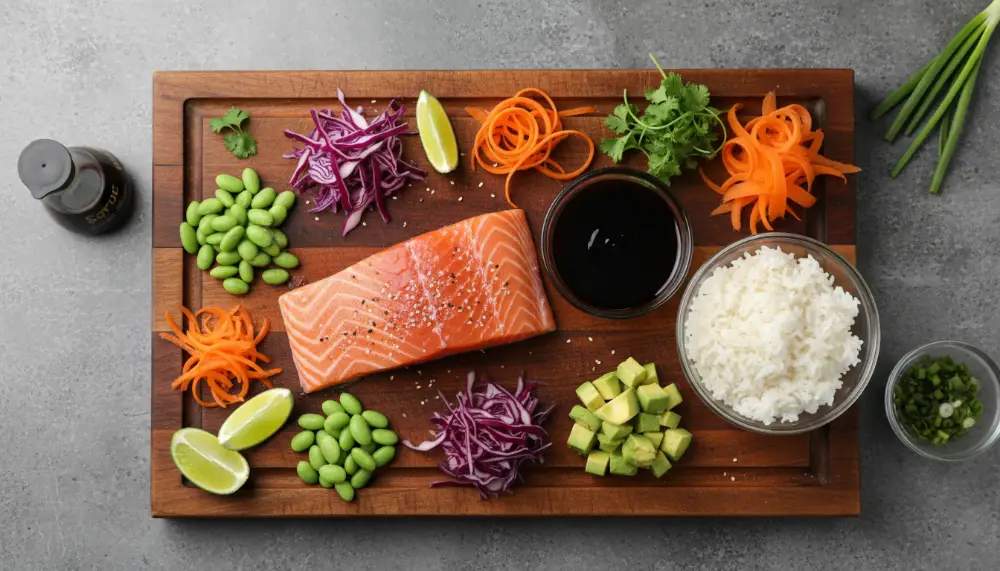
Salmon Selection: Sourcing the Best Fish for Your Bowl
The success of your Teriyaki Salmon Bowl starts with the quality of the protein. Salmon is a nutritional powerhouse, widely regarded as a power meal due to its high-quality protein and heart-healthy Omega-3 fatty acids. When shopping, look for fillets that are firm to the touch and have a vibrant, consistent color. If you are using wild-caught salmon, keep in mind that it tends to be leaner and may cook faster than farmed varieties. To ensure your fish stays fresh from the market to the pan, we highly recommend using the FoodSaver Vacuum Sealer Machine. This is an essential tool for any home chef, as it prevents freezer burn and keeps your salmon at peak quality for much longer than standard plastic wrap or freezer bags. When preparing the salmon, cutting it into uniform one-inch cubes ensures that every piece cooks at the same rate and maximizes the surface area for the glaze to adhere to, creating a flavor-packed bite every time.
Professional Cooking Techniques: Pan-Sear vs. Air Fryer
While the traditional method involves a high-heat skillet to achieve a glossy finish, modern kitchen technology offers excellent alternatives. For those who want a hands-off approach with consistent results, the Cosori 9-in-1 TurboBlaze Air Fryer 6 Qt is a game-changer. The TurboBlaze technology roasts the salmon and vegetables perfectly, utilizing rapid air circulation to create a crispy exterior while keeping the center of the salmon moist. If you choose the air fryer method, toss your salmon cubes in a light coating of the glaze and air fry at 400 degrees Fahrenheit for about 8 to 10 minutes. This method also allows you to roast your broccoli and carrots simultaneously, saving time and ensuring your entire dinner is ready at once. Regardless of the method, the goal is to reach an internal temperature of 145 degrees Fahrenheit, resulting in a flakey, tender texture.
The Art of the Bowl: Base and Vegetable Pairings
A truly great Teriyaki Salmon Bowl is about the harmony of textures and colors. The base of your bowl provides the foundation for the sauce to soak into. While white rice is traditional, switching to brown rice or quinoa adds a nutty texture and significantly increases the fiber content, which helps with digestion and sustained energy levels. To streamline your vegetable preparation, the Cuisinart 8 Cup Food Processor is an essential meal prep companion. It makes fast work of julienning carrots and slicing purple cabbage, allowing you to create professional-grade garnishes in seconds. For the vegetables, we recommend a mix of steamed broccoli for crunch, edamame for extra protein, and fresh radishes or cucumbers for a cooling contrast to the warm, glazed salmon. The inclusion of these colorful elements ensures a wide range of vitamins, including Vitamin A, C, and K, making this a truly balanced Japanese-inspired dinner.
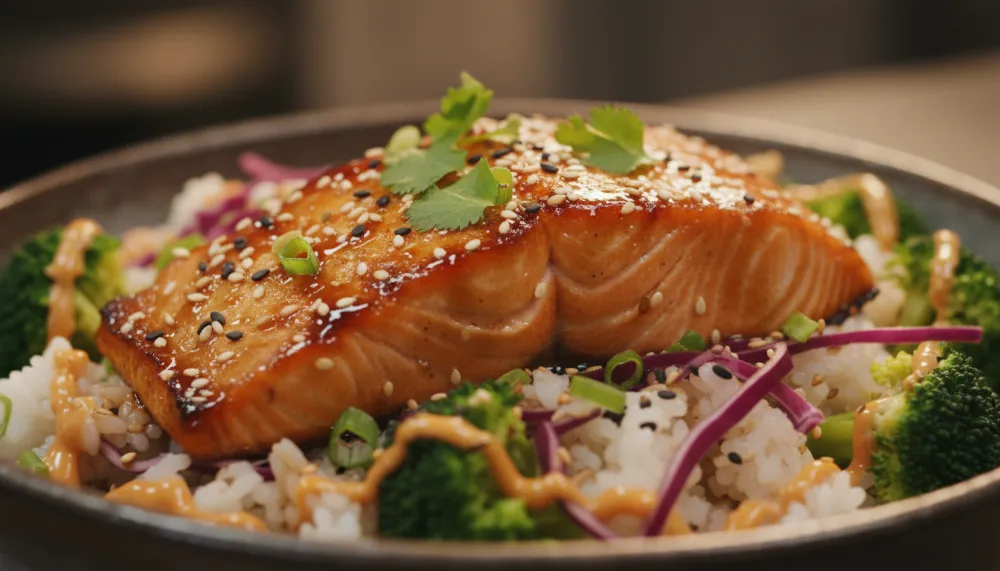
Meal Prep and Long-Term Storage Tips
The Teriyaki Salmon Bowl is one of the best recipes for meal prepping because the flavors actually improve as they sit. If you are preparing multiple portions for the week, storage is key to maintaining texture. We recommend the Rubbermaid Brilliance Glass Storage Set of 9. These containers are leak-proof and stackable, making them perfect for keeping your rice, vegetables, and salmon organized in the fridge. Because they are glass, they don’t retain odors from the garlic and ginger, and they are safe for reheating in the microwave or oven. When reheating, add a small splash of water or extra sauce to the rice to keep it from drying out. By spending an hour on Sunday using your Cuisinart and Ninja tools, you can have a week’s worth of healthy, gourmet-quality dinners ready to go.
Alternative Proteins: Beef, Chicken, and Vegetarian Swaps
While salmon is the star of this recipe, the alcohol-free teriyaki glaze is incredibly versatile and works with many other proteins. To respect the strict dietary focus of this guide, you can easily substitute the salmon with thinly sliced flank steak or boneless, skinless chicken thighs. Beef absorbs the soy and ginger notes beautifully, while chicken thighs remain juicy under high heat. For a meat-free alternative, thick-cut King Oyster mushrooms or smoked tofu provide a satisfying, savory texture that mimics the “meatiness” of the fish. Simply glaze them using the same process as the salmon. The key is to maintain that balance of umami and sweetness, which is achieved through the soy sauce and honey, ensuring that no matter the protein, the result is a high-quality Japanese-inspired meal that everyone can enjoy.