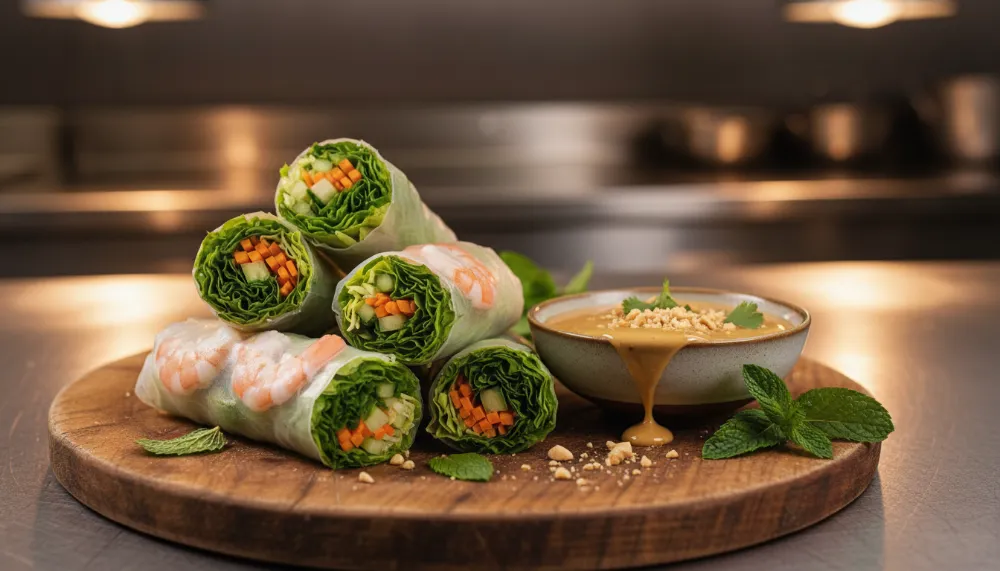

Experience the vibrant textures and explosive flavors of authentic Spring Rolls with Peanut Dipping Sauce, a dish that perfectly balances crunchy garden vegetables with a rich, velvety nut-based dressing. Whether you are seeking a light appetizer or a nutrient-dense main course, these hand-rolled delicacies represent the pinnacle of fresh, sophisticated Asian-inspired cuisine.
Signature Spring Rolls with Peanut Dipping Sauce
Ingredients
- 12 Large Rice Paper Wrappers
- 1 lb Thinly Sliced Beef Sirloin or Poached Chicken Breast
- 4 oz Cooked Vermicelli Rice Noodles
- 2 Large Carrots, Julienne Cut
- 1 English Cucumber, Julienne Cut
- 1 cup Fresh Mint Leaves
- 1/2 cup Creamy Peanut Butter (for sauce)
- 2 tbsp Soy Sauce and 1 tbsp Lime Juice (for sauce)
- 1 tsp Chili Garlic Sauce (optional for sauce)
Instructions
- 1 Prepare the sauce by whisking peanut butter, soy sauce, lime juice, and warm water in a Ninja Blender until smooth.
- 2 Dip one rice paper wrapper in warm water for 5 seconds until pliable, then lay flat on a clean surface.
- 3 Layer noodles, beef or chicken, carrots, cucumber, and mint in the center of the wrapper.
- 4 Fold the bottom edge over the filling, tuck in the sides, and roll tightly toward the top.
- 5 Repeat for all rolls and serve immediately with the prepared peanut dipping sauce.
The Rich History of Spring Rolls with Peanut Dipping Sauce
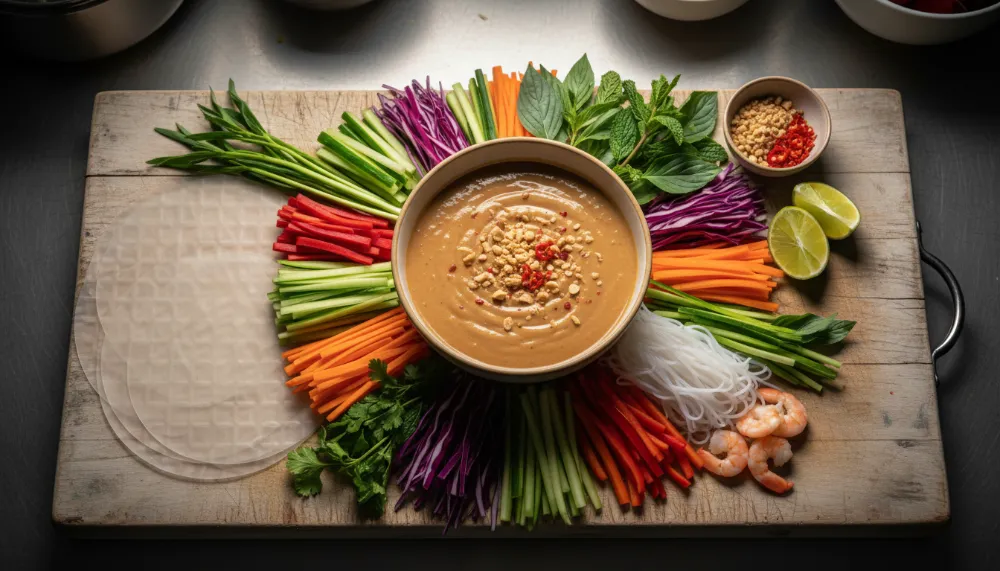
To truly appreciate Spring Rolls with Peanut Dipping Sauce, one must look back over 1,500 years to the Eastern Jin Dynasty (317, 420 AD). Originally known as “spring pancakes” or chūn bǐng, these early iterations were consumed to celebrate the arrival of the spring season. People would gather the first fresh greens appearing from the thawing soil and wrap them in thin flour skins, symbolizing a fresh start and a connection to the earth’s renewal. By the Tang Dynasty, this evolved into the elaborate “Spring Plate,” where vegetables were beautifully arranged alongside cured meats, though never pork in our modern refined versions, to signify wealth and vitality.
The transition from a pancake to the cylindrical roll we recognize today occurred during the Ming and Qing Dynasties. Chefs began frying these rolls to a golden crisp, creating a visual metaphor for gold bars. This evolution meant that Spring Rolls with Peanut Dipping Sauce became a staple of imperial banquets, representing prosperity for the coming year. As trade routes expanded into Southeast Asia, the Vietnamese adapted the recipe into Gỏi cuốn, utilizing translucent rice paper instead of wheat flour, which allowed the vibrant colors of the ingredients to shine through.
The Evolution of Peanut Sauce
While the rolls themselves have ancient roots, the peanut dipping sauce is a fascinating example of culinary fusion. Peanuts are native to South America and were introduced to the region by explorers in the 16th century. Southeast Asian cultures, particularly in Indonesia and Vietnam, integrated these nuts into their traditional sauces. The Vietnamese Tương Đậu Phộng combined the depth of fermented soy pastes with the creamy richness of peanuts, creating a high-protein, energy-dense accompaniment that has become inseparable from the spring roll experience. This synergy of a light, fresh roll and a heavy, savory sauce provides a nutritional and sensory balance that few other dishes can match.
Nutritional Deep Dive: Why This Dish is a Powerhouse
Understanding the macros of Spring Rolls with Peanut Dipping Sauce allows you to customize your meal prep for maximum efficiency. Below is a detailed breakdown of the nutritional profile per serving (approximately two rolls with sauce).
| Component | Beef (Sirloin) | Chicken (Breast) | Vegetarian (Tofu) |
|---|---|---|---|
| Calories | 325 kcal | 285 kcal | 250 kcal |
| Protein | 18g | 22g | 12g |
| Total Fat | 14g | 10g | 12g |
| Fiber | 3g | 3g | 5g |
Spring Rolls with Peanut Dipping Sauce are exceptionally rich in Vitamin A, thanks to the heavy use of carrots, and Vitamin K from fresh mint and cilantro. The inclusion of peanuts provides healthy monounsaturated fats, which are vital for heart health and hormone production. By using lean beef or chicken, you ensure a high protein intake without the saturated fats found in other meats.
Professional Filling Variations
To master the art of Spring Rolls with Peanut Dipping Sauce, one must experiment with textures and aromatics. Here are three professional-grade variations that strictly follow our dietary standards:
1. The “Bulgogi” Beef Twist
For a deep, savory profile, use thinly sliced beef sirloin marinated in a mixture of grated Nashi pear, soy sauce, and fresh ginger. The Nashi pear acts as a natural enzymatic tenderizer, replacing the need for any alcohol-based marinades. When combined with the peanut sauce, the sweetness of the beef creates a complex flavor profile that is both sophisticated and satisfying. Use a Cuisinart 8 Cup Food Processor to quickly shred your vegetable accompaniments for this version.
2. Lemongrass Citrus Chicken
Poach your chicken breast in a liquid infused with bruised lemongrass, lime leaves, and black peppercorns. This technique ensures the meat remains succulent and aromatic without the use of oils. The bright citrus notes of the chicken provide a sharp contrast to the earthy richness of the peanut dipping sauce. For the best results, use a FoodSaver Vacuum Sealer Machine to store your prepped lemongrass and herbs, keeping them fresh for weeks.
3. Shiitake Umami (Vegetarian)
Sauté sliced shiitake mushrooms with liquid aminos and white pepper. The mushrooms provide a meaty texture and a profound umami flavor that rivals any animal protein. To add extra crunch, roast some chickpeas in a Cosori 9-in-1 TurboBlaze Air Fryer 6 Qt and tuck them inside the roll. This adds a layer of texture that keeps the vegetarian version exciting and filling.
Essential Kitchen Tools for Success
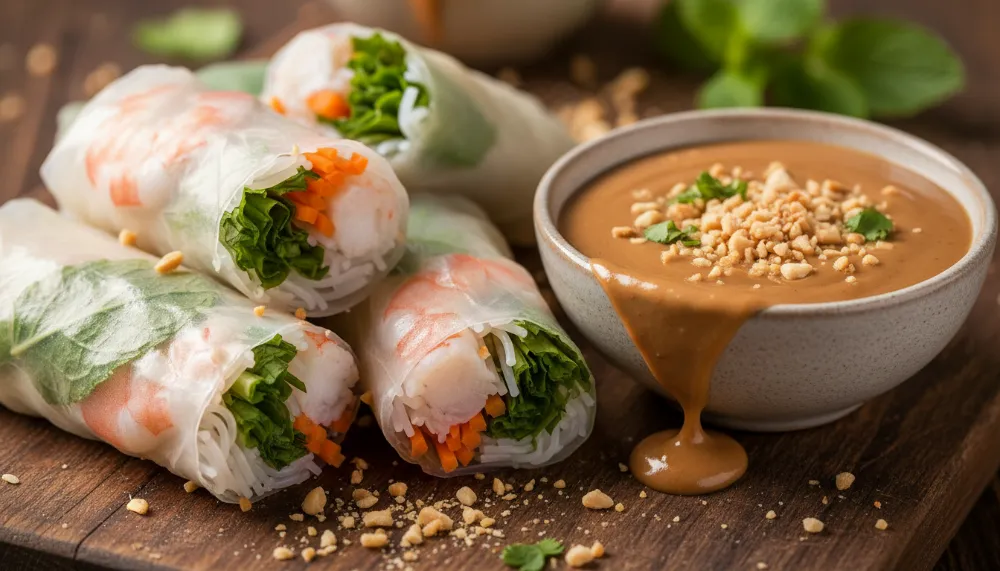
Creating professional-grade Spring Rolls with Peanut Dipping Sauce requires precision. Here are our top recommendations for equipment that will elevate your cooking:
- Ninja BN751 Professional Plus DUO Blender: https://amzn.to/3LCDyNR – This is the gold standard for emulsifying your peanut sauce. The 1000W motor ensures that even the chunkiest peanut butter becomes a silk-smooth dip.
- Cosori 9-in-1 TurboBlaze Air Fryer: https://amzn.to/4hRWmVq – Perfect for roasting your proteins or even lightly crisping the outside of the finished rolls if you prefer a warm appetizer.
- Cuisinart 8 Cup Food Processor: https://amzn.to/47Nhbg8 – Essential for the julienne work. Manually cutting matchstick carrots and cucumbers can be tedious, this machine does it in seconds.
- Rubbermaid Brilliance Glass Storage: https://amzn.to/4oD0YkY – Since spring rolls are best served fresh, prep your ingredients ahead of time and store them in these leak-proof containers to maintain crispness.
- FoodSaver Vacuum Sealer: https://amzn.to/4qWgVnS – Keep your delicate herbs like mint and cilantro from wilting, ensuring every roll has that fresh-picked taste.
Mastering Non-Alcoholic Culinary Substitutes
Many traditional Asian recipes suggest using Shaoxing wine or Mirin, but high-level chefs know how to replicate those flavors without alcohol. In your Spring Rolls with Peanut Dipping Sauce preparation, follow these simple swaps:
- Instead of Shaoxing Wine: Use an equal part of high-quality beef or chicken broth mixed with a splash of apple cider vinegar. This provides the necessary acidity and fermented depth.
- Instead of Mirin: Mix white grape juice with a teaspoon of rice vinegar. This mimics the sugar content and acidic brightness that Mirin usually provides to marinades.
- General Deglazing: If you are pan-searing your beef or tofu, use ginger ale or pomegranate juice. These liquids add a bright, fruity complexity that enhances the natural sugars in the vegetables.
Common Pitfalls and Pro Tips
Even seasoned chefs can struggle with rice paper. To ensure your Spring Rolls with Peanut Dipping Sauce are perfect every time, keep these tips in mind. First, never over-soak the rice paper. It should still feel slightly firm when you remove it from the water, as it will continue to soften on the board. Second, keep your workspace damp, a dry cutting board will cause the wrapper to stick and tear. Finally, do not overstuff. It is tempting to pile in the fillings, but a tighter, smaller roll is much easier to eat and won’t fall apart when dipped into the heavy peanut sauce.