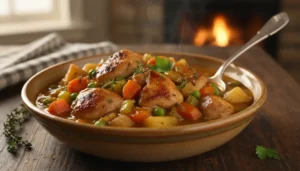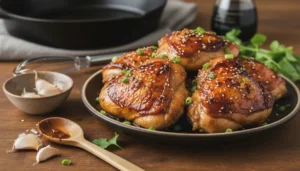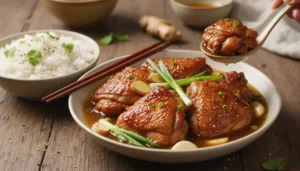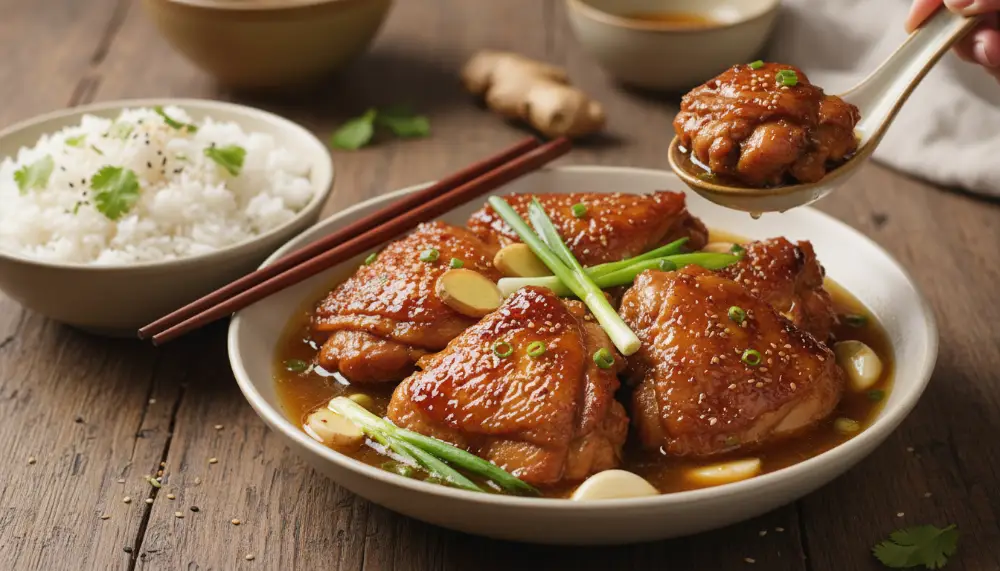

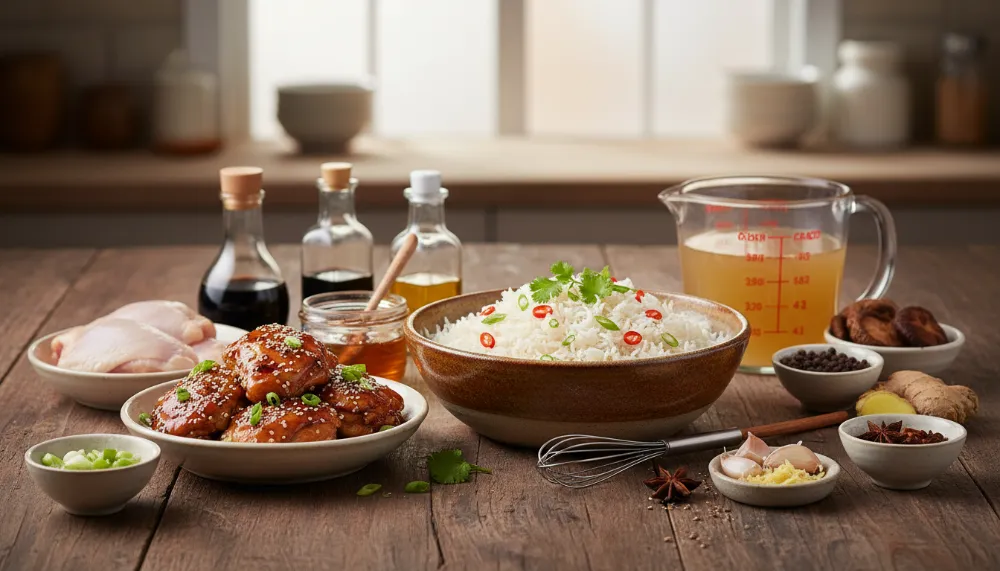
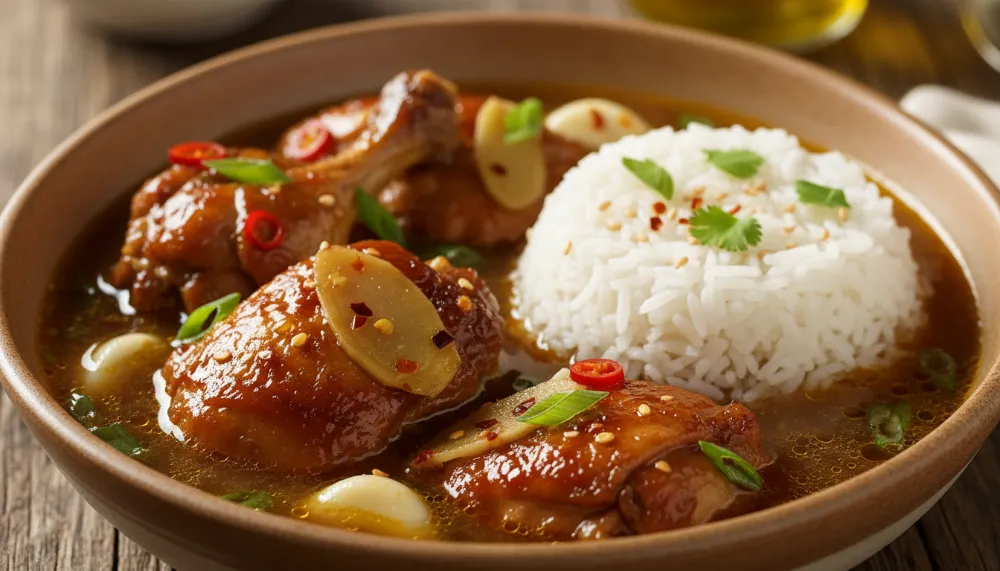
Experience the soul-soothing harmony of sticky, sweet-savory chicken paired with a fragrant, warming aromatic liquid. This Caramelised Soy Chicken in Garlic Ginger Broth with Rice: A Savory Comfort Meal is the ultimate upgrade to your weeknight dinner routine.
Caramelised Soy Chicken in Garlic Ginger Broth
Ingredients
- 1 1.5 lbs Boneless Chicken Thighs, cut into bite-sized pieces
- 2 1/2 cup Dark Soy Sauce
- 3 1/3 cup Brown Sugar or Coconut Sugar
- 4 4 cups Low-Sodium Chicken Broth
- 5 3-inch knob Fresh Ginger, sliced into coins
- 6 6 cloves Garlic, smashed
- 7 2 tbsp Apple Juice mixed with 1 tsp Rice Vinegar (substitution for rice wine)
- 8 2 cups Jasmine Rice, rinsed
- 9 2 tbsp Neutral Oil (Avocado or Grapeseed)
- 10 Sliced Green Onions and Sesame Seeds for garnish
Instructions
- 1 Rinse jasmine rice until water runs clear, then cook according to package instructions. Set aside.
- 2 In a small saucepan, combine chicken broth, half the ginger coins, and 3 smashed garlic cloves. Simmer for 15 minutes to infuse, then keep warm.
- 3 Heat oil in a heavy skillet over medium-high heat. Sear chicken pieces until golden brown and crispy on the edges. Remove chicken and set aside.
- 4 In the same skillet, add remaining garlic and ginger. Sauté for 1 minute. Add brown sugar and stir until it begins to melt and bubble.
- 5 Carefully pour in the soy sauce and apple juice mixture. Return chicken to the pan and toss until the liquid reduces into a thick, glossy glaze coating the chicken.
- 6 To serve, place a mound of rice in a deep bowl. Arrange caramelized chicken on top. Pour a generous ladle of the hot ginger-garlic broth around the rice. Garnish with green onions and sesame seeds.
The Evolution of Caramelised Soy Chicken: A Culinary History
The origins of Caramelised Soy Chicken in Garlic Ginger Broth with Rice: A Savory Comfort Meal are a beautiful tapestry of Southeast Asian and East Asian culinary traditions. At its core, this dish is a tribute to the Vietnamese technique of Kho, or clay-pot braising. Historically, Vietnamese home cooks would create a dark, bittersweet caramel base known as Nước Màu. This was achieved by patiently melting sugar until it reached a deep amber hue, providing both color and a complex sweetness that counters the saltiness of fish sauce or soy sauce. This technique, while seemingly simple, requires precision and an understanding of the chemical transition of sugars into complex carbonized flavor compounds.
Parallel to the Vietnamese influence is the Cantonese tradition of soy sauce chicken. In Chinese kitchens, “red cooking” or braising in a soy-based liquid has been a staple for centuries. By combining these two philosophies, the thick, glossy caramelization of the Vietnamese style with the aromatic depth of Chinese soy-based aromatics, we arrive at a modern fusion that prioritizes texture and depth of flavor. The addition of a separate, clear broth is a more recent innovation, often seen in high-end Asian fusion restaurants that seek to provide the warmth of a soup without diluting the intense glaze of the protein.
The Science of Caramelization and Umami
What makes this dish so addictive is the interplay between the Maillard reaction and caramelization. When we sear the chicken, we are initiating the Maillard reaction, where amino acids and reducing sugars create that savory, browned crust. However, when we add the brown sugar to the pan, we transition into caramelization. This process breaks down the sugar into hundreds of new compounds, creating notes of butterscotch, rum, and nuttiness. When soy sauce is introduced to this bubbling sugar, it brings a massive hit of umami, fermented depth, and salinity.
To achieve this at home, you need consistent heat. If your prep involves a lot of vegetables or multiple proteins, the Cuisinart 8 Cup Food Processor is essential for fast chopping and slicing during meal prep, ensuring your aromatics like ginger and garlic are uniform in size and release their oils simultaneously. Consistency in your aromatic base ensures that no single piece of garlic burns while the rest are still raw, preserving the integrity of your caramel base.
The Garlic Ginger Broth: The Unsung Hero
While the chicken is the star, the garlic ginger broth is the soul of this meal. In professional kitchens, this isn’t just a side thought, it is a concentrated infusion. The broth serves several purposes: it provides a “wet” contrast to the sticky chicken, it hydrates the rice, and it delivers a punch of medicinal heat from the ginger. Ginger contains gingerol, which has potent anti-inflammatory effects, making this dish particularly popular during the colder months when comfort and immunity are top of mind.
For a truly silky broth, some chefs use a high-powered blender to emulsify roasted garlic directly into the liquid. The Ninja BN751 Professional Plus DUO Blender is perfect for creating smooth bases or even a side of tahini sauce or harissa paste with its 1000W motor if you decide to veer toward a Middle Eastern fusion profile. For this specific recipe, using the blender to pulse the ginger and garlic before simmering can maximize surface area, leading to a much more potent and aromatic broth in a shorter amount of time.
Protein Alternatives: Beef and Tofu Variations
While chicken thighs are the traditional choice due to their high fat content and ability to stay moist under high heat, this recipe is incredibly versatile. For those preferring a richer, heartier experience, beef is an excellent alternative. Using thinly sliced flank steak or even high-quality ground beef can work wonders. When using beef, the caramelization process creates a “crispy beef” texture that is synonymous with high-end bistro cooking. The beef’s natural iron content complements the deep notes of the soy sauce perfectly.
For a vegetarian version, extra-firm tofu or king oyster mushrooms are the gold standard. Tofu should be pressed to remove all moisture, then seared until the exterior is almost “glassy” before being tossed in the soy-caramel glaze. To get that perfect, even crisp on tofu or even to pre-roast chicken wings for a different take on this recipe, the Cosori 9-in-1 TurboBlaze Air Fryer 6 Qt is a game changer. It roasts chickpeas and vegetables perfectly with a large family capacity, and it can give your protein that initial crunch without the need for excessive oil, allowing the glaze to adhere better.
Deglazing Without Alcohol: A Professional Secret
Many traditional recipes call for rice wine to deglaze the pan and add acidity. However, you can achieve an even more complex flavor profile without using alcohol. The combination of apple juice and rice vinegar is a professional-grade substitution. The apple juice provides natural malic acid and sugars that aid in the caramelization, while the rice vinegar brings the necessary sharpness to cut through the heavy salt of the soy sauce. This combination mimics the fermented complexity of traditional cooking liquids while keeping the dish accessible for all households.
Nutritional Breakdown: More Than Just Comfort
Caramelised Soy Chicken in Garlic Ginger Broth with Rice: A Savory Comfort Meal is surprisingly balanced from a nutritional standpoint. A single serving provides between 35g and 45g of protein, which is essential for muscle repair and satiety. The use of jasmine rice provides quick-burning carbohydrates for energy, while the garlic and ginger offer micronutrients like allicin and selenium. Selenium is a powerful antioxidant that supports thyroid function and protects the body from oxidative stress.
To further enhance the nutritional profile, many professional variations include a “green” element. Bok choy, gai lan (Chinese broccoli), or even simple spinach can be blanched in the garlic ginger broth for 30 seconds before serving. This adds fiber, Vitamin K, and Vitamin A to the dish without altering the flavor profile significantly.
Texture Profiles and Final Garnishes
The hallmark of a great dish is the contrast of textures. In this meal, you have the softness of the jasmine rice, the silkiness of the broth, the chew of the chicken, and the stickiness of the glaze. To elevate this further, consider the “crunch” element. Professional chefs often top this dish with fried garlic chips or toasted sesame seeds. If you have the Cosori Air Fryer, you can quickly crisp up some shallots to use as a topping, adding a sweet, oniony crunch that contrasts beautifully with the ginger-heavy broth.
Common Pitfalls to Avoid
1. Burning the Sugar: The transition from caramel to burnt carbon happens in seconds. Stay vigilant. If the sugar smells acrid or looks black, start over. It should be a deep, dark brown like a penny.
2. Crowding the Pan: If you put too much chicken in the skillet at once, the temperature will drop, and the chicken will steam rather than sear. Work in batches to ensure that crispy, golden-brown crust.
3. Under-rinsing the Rice: Excess starch on jasmine rice leads to a gummy, sticky texture that won’t absorb the broth properly. Rinse your rice until the water is crystal clear.
This Caramelised Soy Chicken in Garlic Ginger Broth with Rice: A Savory Comfort Meal is more than just a recipe, it is a technique-driven approach to flavor. By mastering the balance of sweet, salty, and aromatic, you can transform simple pantry staples into a restaurant-quality feast that warms the body and soul. Whether you choose the traditional chicken or opt for beef or tofu, the principles of caramelization and infusion remain your keys to success.