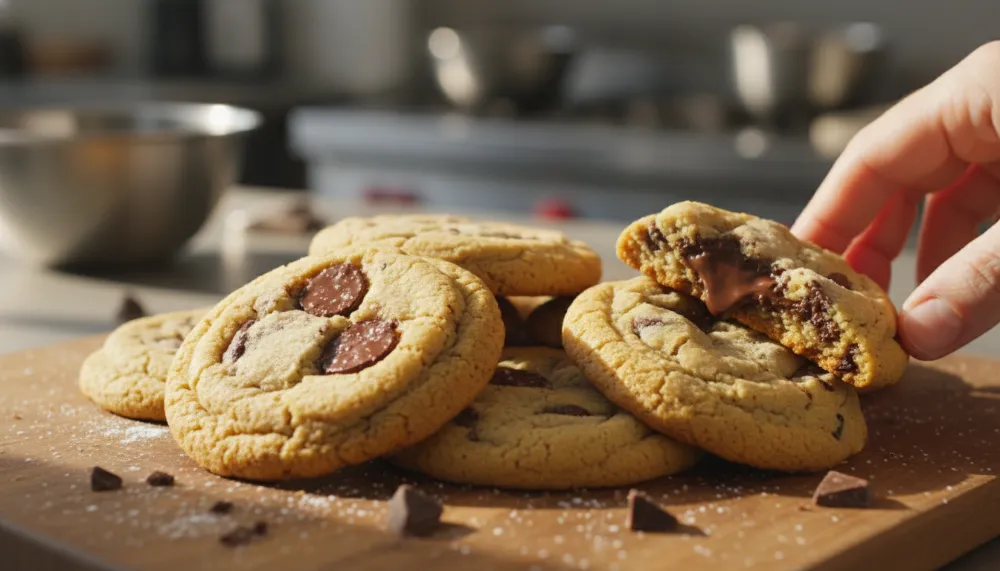

Mastering the art of the perfect Soft and Chewy Chocolate Chip Cookies requires a delicate balance of high-quality ingredients and precise baking techniques. This comprehensive guide reveals how to achieve that coveted dense, tender texture that stays soft for days.
Soft and Chewy Chocolate Chip Cookies
Ingredients
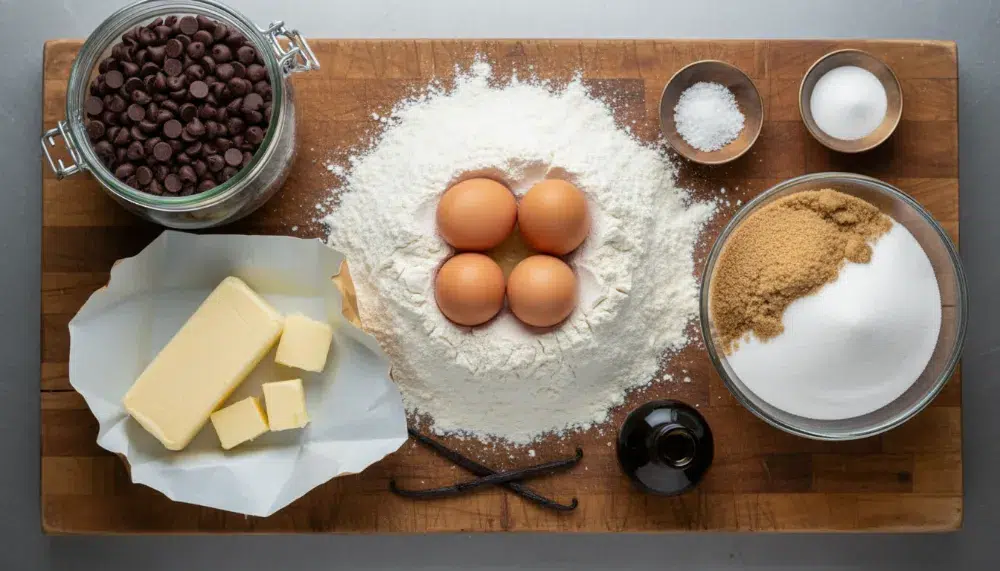
- 1 cup Unsalted Butter, softened
- 2 1 cup Packed Dark Brown Sugar
- 3 1/2 cup Granulated White Sugar
- 4 2 Large Eggs plus 1 Egg Yolk, room temperature
- 5 1 tbsp Alcohol-Free Vanilla Extract
- 6 2 3/4 cups All-Purpose Flour
- 7 1 tsp Baking Soda and 1/2 tsp Sea Salt
- 8 2 cups Semi-Sweet Chocolate Chips
Instructions
- 1 Cream together the softened butter, brown sugar, and white sugar in a large bowl until the mixture is light and fluffy.
- 2 Beat in the eggs one at a time, followed by the extra egg yolk and the alcohol-free vanilla extract, ensuring each is fully incorporated.
- 3 Sift together the flour, baking soda, and salt, then gradually mix into the wet ingredients until just combined.
- 4 Fold in the chocolate chips by hand, then chill the dough for at least 2 hours to enhance the chewy texture.
- 5 Preheat oven to 350F and bake rounded tablespoons of dough for 9 to 11 minutes until edges are barely golden.
The Historical Journey of the Chocolate Chip Cookie
The history of Soft and Chewy Chocolate Chip Cookies is as rich as the dough itself. The chocolate chip cookie was invented by Ruth Graves Wakefield in 1938. Wakefield, a trained dietitian and educator, owned and operated the Toll House Inn in Whitman, Massachusetts, with her husband Kenneth. This iconic American treat was not the result of a happy accident, as many myths suggest, but rather the product of careful culinary experimentation. The most famous legend suggests the invention was an accident: Wakefield supposedly ran out of baker’s chocolate for a “Butter Drop Do” cookie and instead used chopped pieces of a semi-sweet chocolate bar, expecting them to melt and color the dough. Instead, the chocolate pieces held their shape, creating the first “Toll House Chocolate Crunch Cookie.” However, culinary historians often point out that Wakefield was a meticulous professional who likely developed the recipe through deliberate experimentation.
In 1939, Wakefield reached a deal with a major chocolate manufacturer, allowing them to print her recipe on their packaging in exchange for a lifetime supply of chocolate and $1.00. During World War II, soldiers from Massachusetts received these cookies in care packages and shared them with others, rapidly turning the regional specialty into a national icon. Today, the quest for the ultimate Soft and Chewy Chocolate Chip Cookies continues to drive bakers toward perfecting ratios and finding the best kitchen tools, such as the Cuisinart 8 Cup Food Processor, which is a meal prep essential for chopping large blocks of chocolate into the perfect chunks.
The Science Behind Soft and Chewy Chocolate Chip Cookies
Why do some cookies turn out like crackers while others are soft and pillow-like? The answer lies in the moisture content and the interaction of sugars. Soft and chewy chocolate chip cookies are characterized by their high moisture content and dense, tender texture. Unlike their crispy counterparts, these cookies rely on specific ingredient ratios and techniques, such as a higher proportion of brown sugar and a shorter baking time, to maintain their signature consistency. Brown sugar is hygroscopic, meaning it attracts and holds onto water, keeping the cookies moist long after they have cooled. Additionally, the inclusion of an extra egg yolk increases the fat content, leading to a richer, more tender crumb.
Essential Tools for Baking Success
To achieve professional results, you need reliable equipment. For instance, the Ninja BN751 Professional Plus DUO Blender with its 1000W motor is surprisingly useful in a baker’s kitchen for creating smooth pastes or grinding nuts to incorporate into doughs. When it comes to roasting add-ins like pecans for your cookies, the Cosori 9-in-1 TurboBlaze Air Fryer 6 Qt roasts chickpeas and vegetables perfectly, and can toast a batch of nuts in minutes with its large family capacity. Proper storage is also vital to maintaining that softness, making the Rubbermaid Brilliance Glass Storage Set of 9 a perfect choice for keeping your treats leak-proof and fresh. For long-term preservation of your dough balls, the FoodSaver Vacuum Sealer Machine keeps ingredients fresh longer and prevents freezer burn.
Nutritional Profile of a Classic Cookie
Understanding the nutritional breakdown of your Soft and Chewy Chocolate Chip Cookies helps in managing dietary goals. The following is a representative nutritional profile for one standard-sized (approx. 35g to 40g) soft and chewy chocolate chip cookie: Calories: 170 to 190 kcal; Total Fat: 8g to 9g (Saturated Fat: 4g to 5g, Trans Fat: 0g); Cholesterol: 10mg to 15mg; Sodium: 95mg to 120mg; Total Carbohydrates: 22g to 24g (Dietary Fiber: 1g, Sugars: 13g to 15g); Protein: 2g. It also contains small amounts of Iron (approx. 6 to 10% DV), Calcium, and Potassium. Note that profiles vary based on specific fat sources and the type of chocolate used. To ensure your cookies adhere to dietary guidelines, always avoid lard or pork-derived fats, substituting them with high-quality butter or vegetable shortening.
Professional Flavor Variations
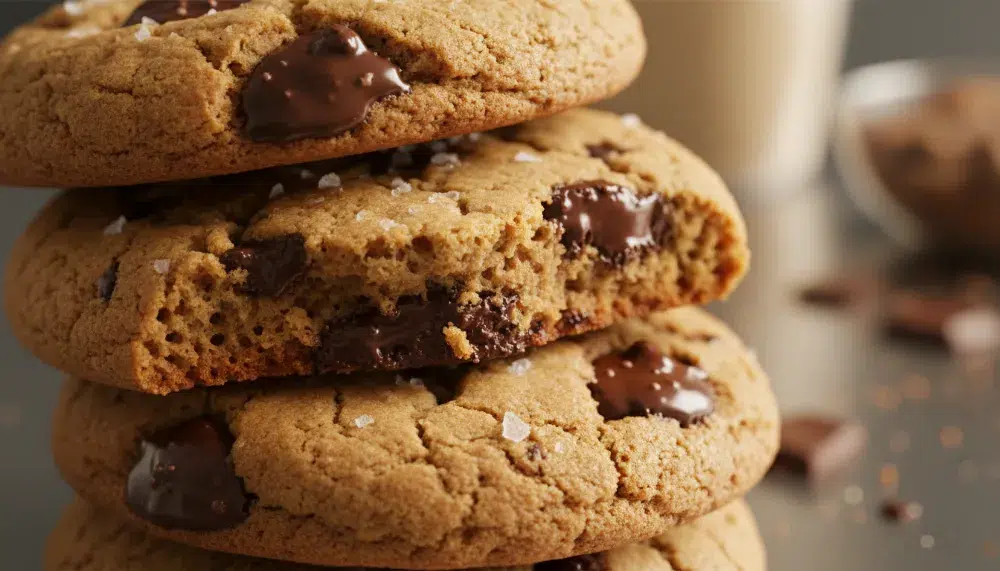
Once you have mastered the base for Soft and Chewy Chocolate Chip Cookies, you can experiment with professional variations that elevate the flavor profile. 1. Smoked Sea Salt & Dark Chocolate: Use 70% dark chocolate chunks instead of standard chips. Before baking, top each cookie with a pinch of smoked sea salt to enhance the cocoa’s depth. 2. Espresso & Cardamom: Infuse the dough with finely ground espresso beans and a half-teaspoon of ground cardamom. This provides a floral, aromatic warmth and a “grown-up” bitterness that balances the sugar. 3. Cinnamon & Pecan: Add toasted, chopped pecans and a teaspoon of ground cinnamon to the dough. Pecans provide a buttery crunch that contrasts with the soft center, while cinnamon mimics the flavor profile of a spiced cake. 4. Matcha & White Chocolate: Incorporate culinary-grade matcha powder into the flour mixture for an earthy, green tea base. Pair with white chocolate chips for a creamy, sweet finish. 5. Brown Butter & Honey: Gently brown the butter, cooking until milk solids turn golden and smell nutty, before cooling and mixing. Replace a small portion of the sugar with honey to increase the chewiness and add a floral sweetness.
Technical Tips for Lasting Softness
To ensure the cookies remain soft, professional recipes often include a small amount of cornstarch, which softens the flour’s proteins, or replace one whole egg with two egg yolks to increase the fat and moisture content. Always use alcohol-free flavorings or fresh citrus zest as substitutes for standard extracts to adhere to alcohol-free requirements. Another critical factor is the “pan banging” method made popular in recent years, where you gently drop the baking sheet on the oven rack mid-bake to deflate the cookies and create those beautiful, chewy ripples around the edges.