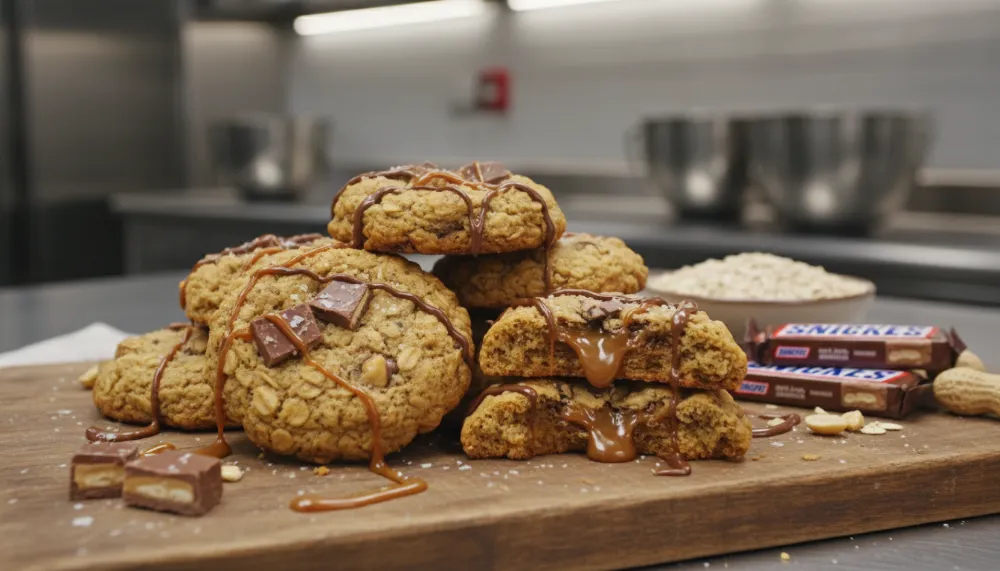

Experience the perfect marriage of chewy oats and tangy cinnamon sugar with these irresistible Snicker Oat Cookies. This hybrid treat offers a nostalgic crunch with a sophisticated flavor profile that satisfies every sweet craving.
Signature Snicker Oat Cookies
Ingredients
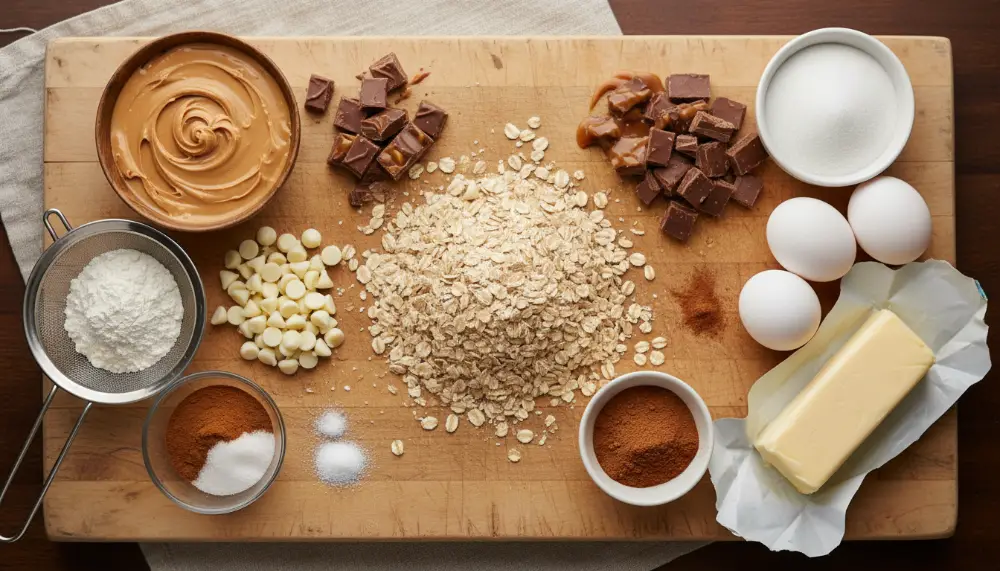
- 1 cup unsalted butter, softened
- 1.5 cups granulated sugar
- 2 large eggs
- 1 tsp alcohol-free vanilla bean paste
- 2 cups all-purpose flour
- 1 cup old-fashioned rolled oats
- 1 tsp cream of tartar
- 0.5 tsp baking soda
- 0.25 tsp salt
- 2 tbsp sugar + 2 tsp cinnamon (for rolling)
Instructions
- 1 Preheat your oven to 350°F (175°C) and line two large baking sheets with parchment paper.
- 2 In a large bowl, cream together the softened butter and 1.5 cups of sugar until the mixture is light, fluffy, and pale in color.
- 3 Beat in the eggs one at a time, then stir in the alcohol-free vanilla bean paste until fully incorporated.
- 4 In a separate medium bowl, whisk together the flour, oats, cream of tartar, baking soda, and salt.
- 5 Gradually add the dry ingredients to the wet mixture, mixing until just combined. Avoid over-mixing to keep the texture tender.
- 6 In a small bowl, combine the extra 2 tablespoons of sugar and the cinnamon.
- 7 Roll the dough into 1-inch balls, roll each ball in the cinnamon-sugar mixture until coated, and place them 2 inches apart on the baking sheets.
- 8 Bake for 10 to 12 minutes until the edges are lightly golden but the centers are still soft. Cool on the pan for 5 minutes before moving to a wire rack.
The Fascinating History and Evolution of Snicker Oat Cookies
To truly appreciate the Snicker Oat Cookies, one must understand the two distinct culinary lineages that came together to create this masterpiece. The snickerdoodle, characterized by its signature cracked surface and tangy flavor, traces its roots back to German or Dutch traditions. The name is widely thought to be an adaptation of the German word Schneckennudeln, which literally translates to snail noodles, a popular cinnamon pastry. By the 19th century, New England home bakers had adopted the recipe, giving it a whimsical name that fit the era’s trend for nonsensical cookie titles. When it was eventually featured in the 1950 Betty Crocker Picture Cook Book, the snickerdoodle became a permanent fixture in American kitchens.
Parallel to the snickerdoodle’s rise was the development of the oatmeal cookie. These treats evolved from Scottish oatcakes, which were originally savory flatbreads. As oats transitioned from being viewed as simple animal fodder to a nutritional human staple during the Victorian era, the English began adding sweeteners to create biscuits. The American version gained massive popularity in the late 1800s when the Quaker Oats Company began printing cookie recipes directly on their containers. The hybrid Snicker Oat Cookies emerged in the mid-20th century, combining the heartiness of the oatcake with the spicy, acidic profile of the snickerdoodle, creating a cookie that was both more filling and structurally sound than its predecessors.
The Science of Flavor: Why These Cookies Taste Unique
What sets Snicker Oat Cookies apart from a standard oatmeal cookie is the presence of cream of tartar. This acidic ingredient, a byproduct of winemaking that is filtered to be completely free of any liquids or restricted substances, serves two critical purposes. First, it acts as a leavening agent when combined with baking soda, producing the carbon dioxide gas that creates the cookie’s lift. Second, and more importantly, the acidity prevents the sugar in the dough from crystallizing. This results in a soft, chewy texture rather than a crisp or brittle one, while providing that iconic, subtle tang that defines the snickerdoodle experience.
The addition of whole rolled oats further complicates the texture in the best way possible. While the flour and sugar provide a tender base, the oats offer a mechanical resistance that makes the cookie satisfyingly chewy. When these cookies are baked, the Maillard reaction occurs on the surface, where the cinnamon and sugar coating caramelizes, creating a complex, toasted flavor that balances the inner sweetness. For the best results in achieving this texture, professional bakers recommend using the Cuisinart 8 Cup Food Processor (https://amzn.to/47Nhbg8), which is perfect for fast chopping and slicing, or even pulsing a portion of the oats for a more uniform crumb. This meal prep essential ensures your dough is mixed consistently every single time.
Nutritional Deep Dive: The Power of Oats
Snicker Oat Cookies are not just a delight for the palate, they also offer a more robust nutritional profile than a standard sugar cookie. Rolled oats are a significant source of beta-glucan, a type of soluble fiber known for its heart-healthy properties. This fiber content helps slow down the digestion of the sugars in the cookie, leading to a more gradual release of energy. A professional-grade cookie typically contains between 160 and 190 calories, with roughly 2 grams of protein per serving. By using high-quality fats like pure butter or vegetable-based shortening, and ensuring no pork-derived products are used, you maintain a clean and inclusive ingredient list.
To maximize the nutritional quality, many chefs are now experimenting with making their own oat flour to blend into the dough. This is where the Ninja BN751 Professional Plus DUO Blender (https://amzn.to/3LCDyNR) becomes a game-changer. With its 1000W motor, it is perfect for transforming whole oats into a fine, nutrient-dense flour, much like it handles tahini sauce or harissa paste with ease. This adds another layer of versatility to your Snicker Oat Cookies, allowing for a smoother texture without losing the whole-grain benefits.
Professional Variations and Flavor Profiles
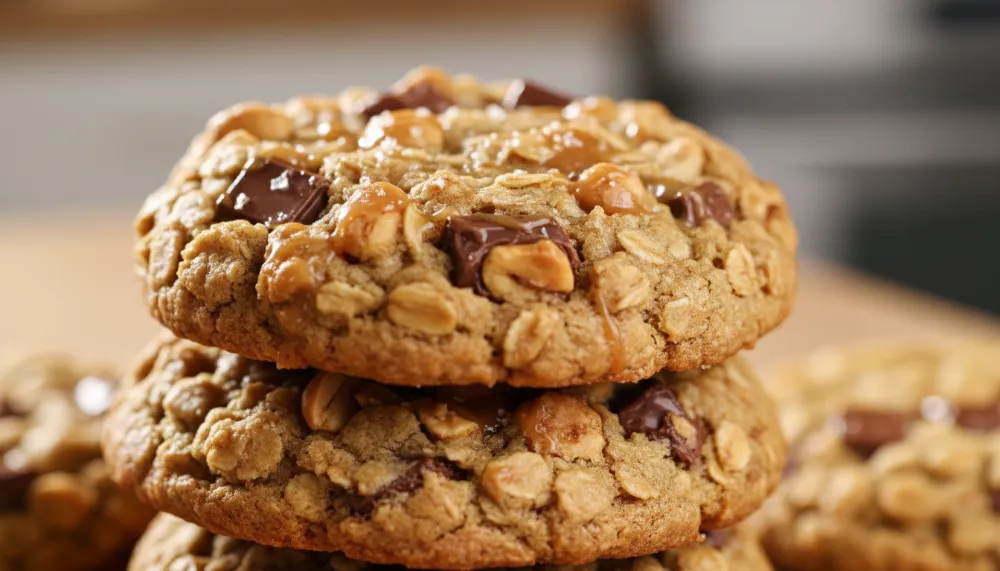
While the classic cinnamon-sugar coating is timeless, Snicker Oat Cookies are an excellent canvas for professional experimentation. Here are some sophisticated variations that adhere to strict dietary standards:
- Chai-Spiced Variation: Instead of a simple cinnamon coating, roll your dough in a blend of ground ginger, cardamom, and cloves. This creates an aromatic, warming profile. Since we avoid alcohol, use pure vanilla bean powder instead of traditional extracts to maintain depth of flavor.
- Brown Butter & Sea Salt: Simmer your butter until it reaches a nutty, golden-brown color (beurre noisette) before cooling it to cream with the sugar. Finish each cookie with a tiny pinch of flaky sea salt to elevate the spices.
- Maple and Toasted Nut: Substitute 1/4 cup of the granulated sugar with pure maple syrup and fold in toasted pecans or walnuts. The maple adds an earthy complexity that pairs beautifully with the oats.
- Pumpkin Harvest Snicker Oats: Incorporate two tablespoons of roasted pumpkin purée and a dash of nutmeg into the dough. This makes for a soft, cake-like version of the Snicker Oat Cookies that is perfect for autumn.
Essential Equipment for the Best Baking Results
Achieving the perfect Snicker Oat Cookies requires more than just a good recipe, it requires the right tools. Beyond the blender and food processor mentioned earlier, the way you cook and store your cookies dictates the final quality. For those who want to bake small, fresh batches on demand, the Cosori 9-in-1 TurboBlaze Air Fryer 6 Qt (https://amzn.to/4hRWmVq) is a surprising but effective tool. It roasts chickpeas and vegetables perfectly, but its turbo-convection technology can also bake a handful of cookies in minutes, making it a versatile family capacity appliance.
Once your Snicker Oat Cookies are cooled, storage is paramount to preventing them from becoming stale or absorbing refrigerator odors. The Rubbermaid Brilliance Glass Storage Set of 9 (https://amzn.to/4oD0YkY) is the gold standard for this task. These leak-proof, stackable containers are perfect for meal prep storage and keeping your cookies as fresh as the day they were baked. If you plan on making a massive batch of dough to save for later, the FoodSaver Vacuum Sealer Machine (https://amzn.to/4qWgVnS) is essential. It keeps ingredients fresh longer and prevents freezer burn, allowing you to vacuum-seal individual dough balls for a quick treat months down the line.
Troubleshooting Your Snicker Oat Cookies
If your cookies are spreading too thin, it is likely that the butter was too warm when you started the creaming process. Always ensure your butter is at room temperature, not melted. If the cookies are too puffy or cakey, you may have over-beaten the eggs or used too much leavening. Accuracy in measurement is key, especially with the cream of tartar. Another common issue is the cinnamon-sugar coating burning, this usually happens if the oven rack is too low or the sugar content in the coating is too high relative to the spice. Keep your pans on the center rack for the most even heat distribution.
Final Thoughts on the Perfect Bake
The Snicker Oat Cookies represent a beautiful intersection of culinary history and modern baking science. By choosing high-quality, inclusive ingredients and utilizing professional-grade equipment, you can create a snack that is both comforting and sophisticated. Whether you are serving them at a large gathering or keeping them in your pantry for a midnight snack, these cookies provide a unique texture and flavor that stands out in the crowded world of baked goods. Remember to respect the chill time of the dough and the quality of your oats, and you will be rewarded with a cookie that is truly second to none.