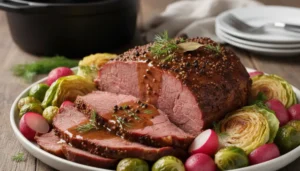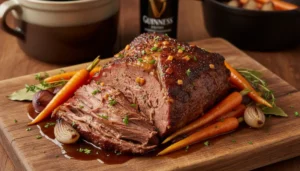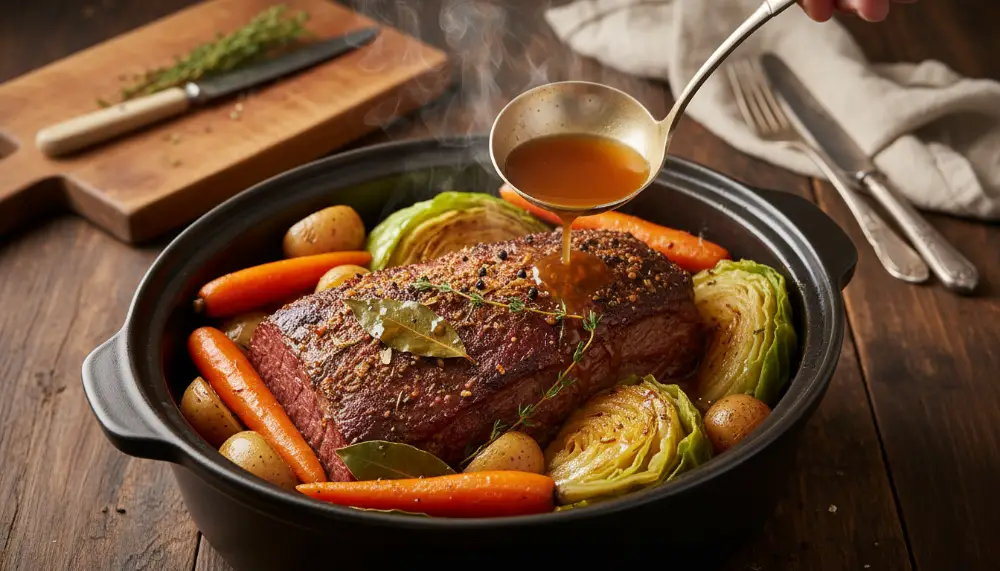

Experience the ultimate comfort of Traditional Slow Cooker Corned Beef, where hours of gentle simmering transform a humble brisket into a buttery, melt-in-your-mouth masterpiece. This foolproof method guarantees a tender, flavor-packed meal that honors tradition while making preparation effortless for the modern home cook.
Traditional Slow Cooker Corned Beef
Ingredients
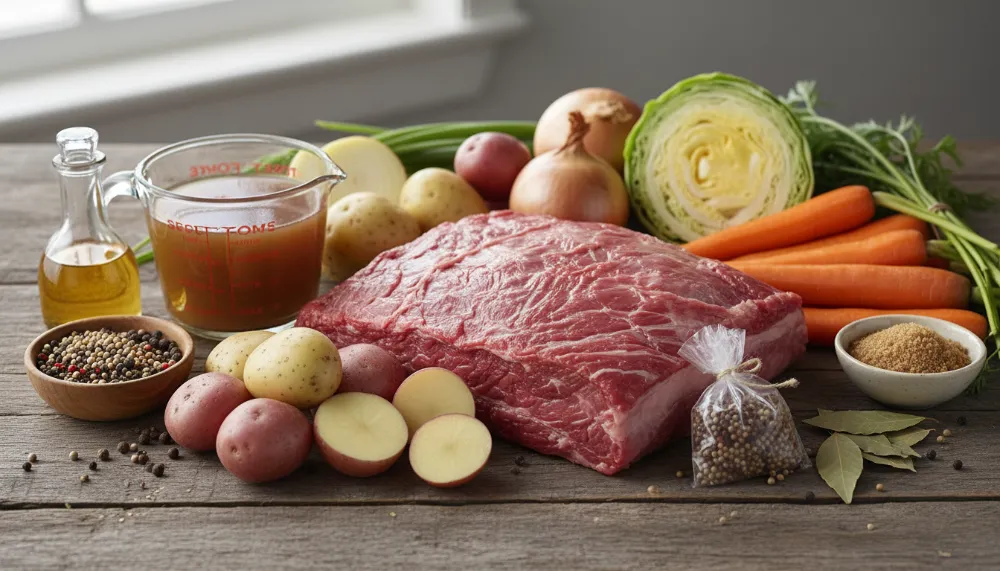
- 1 3 to 4 pound beef brisket (flat or point cut), rinsed
- 2 cups high-quality beef broth
- 1 cup unfiltered apple juice or cider
- 1 large yellow onion, quartered
- 6 cloves garlic, smashed
- 1 packet pickling spices (or custom blend)
- 1 pound small red potatoes, halved
- 4 large carrots, cut into 2-inch chunks
- 1 head green cabbage, cut into 8 wedges
Instructions
- 1 Layer the quartered onion and smashed garlic at the bottom of a 6-quart or larger slow cooker.
- 2 Place the beef brisket on top of the onions, fat side facing up. Sprinkle the pickling spice blend evenly over the meat.
- 3 Pour the beef broth and apple juice around the sides of the brisket (do not pour directly over the spices to avoid washing them off). Add enough water if needed to cover at least half of the meat.
- 4 Cover and cook on LOW for 8 to 10 hours. Do not cook on high, as the meat requires slow heat to break down connective tissues.
- 5 During the last 2 to 3 hours of cooking, nestle the potatoes and carrots around the brisket in the liquid.
- 6 Add the cabbage wedges during the final 45 to 60 minutes of cooking until just tender.
- 7 Remove the meat and let it rest for 15 minutes before slicing against the grain. Serve with the vegetables and a drizzle of the cooking liquid.
The Rich History of Traditional Slow Cooker Corned Beef
To truly appreciate the Traditional Slow Cooker Corned Beef we enjoy today, we must look back at its fascinating evolution from a preservation necessity to a cultural icon. The term “corned” has nothing to do with maize; instead, it refers to the large “corns” or kernels of rock salt used to dry-cure the beef centuries ago. This salt-curing process was vital for long-term storage before refrigeration was a reality.
In the 17th and 18th centuries, Ireland was a powerhouse producer of corned beef, largely supplying the British Navy and various colonies. Interestingly, during this era, the dish was largely an export commodity. The local Irish population generally preferred pork, particularly salted bacon and cabbage, as it was more affordable. However, the narrative shifted dramatically when Irish immigrants arrived in North America in the 19th century. In bustling urban centers like New York and Boston, these immigrants discovered that beef brisket was significantly more accessible and cheaper than the pork they were used to. They adapted their ancestral recipes, substituting the beef brisket and simmering it slowly with cabbage to recreate a taste of home. This adaptation gave birth to the classic Irish-American celebratory meal we know today.
By the late 20th century, the advent of the Crock-Pot revolutionized the preparation. What once required a large pot and constant monitoring on a stove became the perfect candidate for slow cooking. The low, steady heat of a slow cooker mimics the traditional simmering method perfectly, allowing the tough connective tissues of the brisket to melt into gelatin, resulting in that legendary fork-tender texture.
Understanding the Nutritional Value
Traditional Slow Cooker Corned Beef is a powerhouse of nutrition, offering dense protein and critical minerals. While it is known for being high in sodium due to the curing process, it provides substantial benefits when enjoyed as part of a balanced diet. A standard 3-ounce serving of cooked brisket is rich in Vitamin B12 and Selenium, both vital for metabolic health and immune function.
| Nutrient | Amount per 3oz Serving | % Daily Value (DV) |
|---|---|---|
| Calories | 213 kcal | – |
| Protein | 16g | 32% |
| Total Fat | 16g | 21% |
| Sodium | 827mg | 36% |
| Vitamin B12 | 1.4mcg | 58% |
Selecting the Perfect Brisket: Flat Cut vs. Point Cut
When shopping for Traditional Slow Cooker Corned Beef, you will likely encounter two main cuts: the flat cut and the point cut. Choosing the right one depends on your personal preference for texture and fat content.
The **Flat Cut** is the most common choice for many families. It is leaner, thinner, and has a more uniform rectangular shape, which makes it much easier to slice into neat, beautiful servings. Because it is leaner, it is slightly tougher if overcooked, but the slow cooker’s moist environment usually keeps it succulent. For precise vegetable prep to accompany your brisket, the Cuisinart 8 Cup Food Processor is essential for fast chopping and slicing during meal prep, ensuring your carrots and onions are perfectly sized for even cooking.
The **Point Cut** is the thicker, fattier end of the brisket. It has more marbling throughout, which results in a significantly more tender and flavorful piece of meat once the fat renders down. However, it is misshapen and harder to slice into uniform pieces. Many enthusiasts prefer the point cut for its richness and