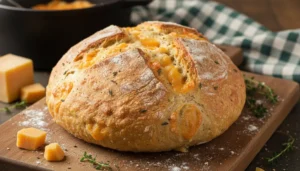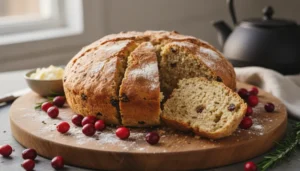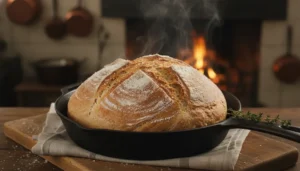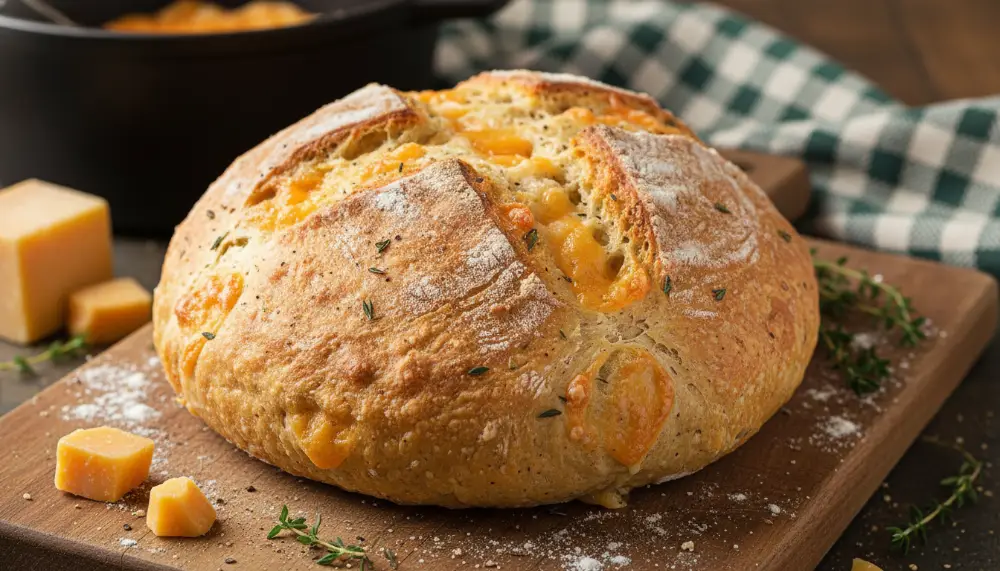

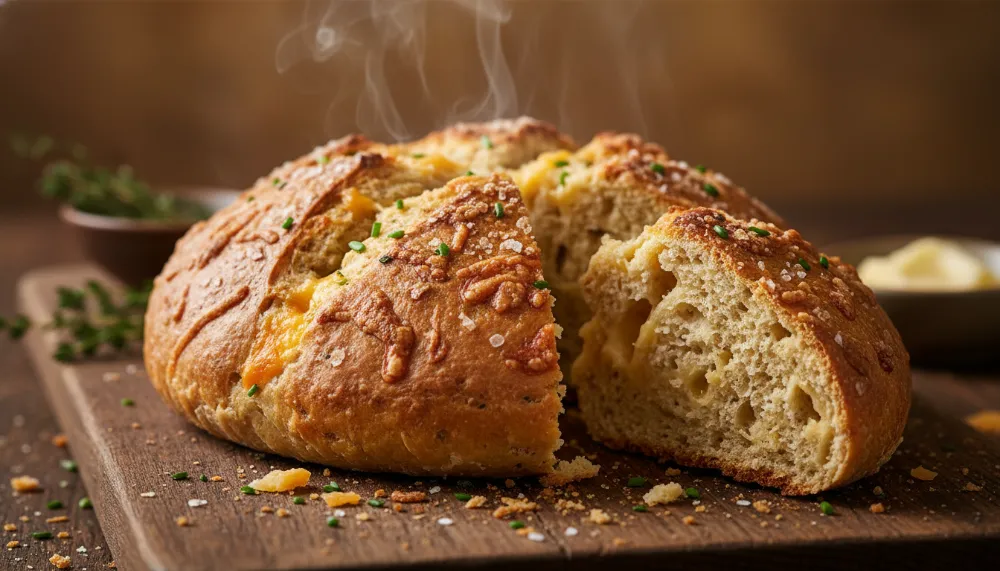
Experience the ultimate rustic comfort with this Savory Cheddar Irish Soda Bread, a golden, crusty loaf bursting with sharp mature cheese and savory depth. This quick bread is the perfect accompaniment to hearty stews or enjoyed warm with a thick slab of creamy butter.
Savory Cheddar Irish Soda Bread
Ingredients
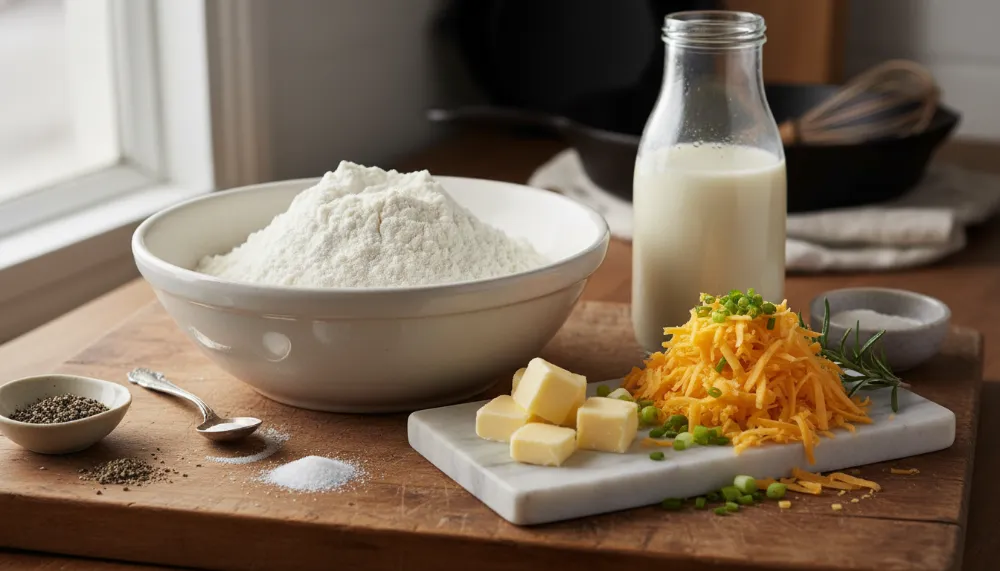
- 1 4 cups All-Purpose Flour
- 2 1 tsp Baking Soda
- 3 1 tsp Fine Sea Salt
- 4 4 tbsp Cold Unsalted Butter (cubed)
- 5 1.5 cups Sharp Mature Cheddar (shredded)
- 6 2 tbsp Fresh Chives (finely chopped)
- 7 1.75 cups Real Buttermilk
- 8 1/2 cup Cooked Smoked Beef Brisket (finely diced)
Instructions
- 1 Pre-heat your oven to 425°F (220°C) and lightly grease a cast-iron skillet or line a baking sheet with parchment paper.
- 2 In a large mixing bowl, whisk together the flour, baking soda, and salt until thoroughly combined.
- 3 Use your fingers or a pastry cutter to rub the cold butter into the flour mixture until it resembles coarse crumbs.
- 4 Fold in the shredded cheddar, chopped chives, and diced beef brisket until evenly distributed.
- 5 Make a well in the center and pour in the buttermilk. Mix with a wooden spoon until a shaggy dough forms.
- 6 Turn the dough onto a floured surface and gently shape into a round loaf. Do not overwork.
- 7 Place the loaf in the skillet. Use a sharp knife to cut a deep cross (X) into the top of the dough.
- 8 Bake for 35 to 45 minutes until the bread is golden brown and sounds hollow when tapped on the bottom.
The Rich Heritage and Historical Origin of Irish Soda Bread
Savory Cheddar Irish Soda Bread is a hearty, rustic quick bread that has evolved from a 19th-century survival staple into a celebrated gourmet accompaniment. The origin of Irish soda bread dates back to the 1830s and 1840s, following the introduction of commercial bicarbonate of soda, commonly known as baking soda, to Ireland. Before this period, bread was often unleavened or made with natural wild yeasts that were notoriously difficult to maintain in the damp Irish climate.
During the mid-19th century, particularly during the Great Famine, resources were incredibly scarce. Households relied on simple, inexpensive ingredients that were readily available: soft wheat flour, salt, sour milk or buttermilk, and baking soda. Unlike the hard wheat grown in America or parts of Europe, Irish wheat was “soft,” meaning it had a lower gluten content. This type of flour does not rise well with yeast, but it is perfectly suited for the quick chemical reaction of baking soda.
Most rural Irish homes lacked expensive ovens, so the bread was traditionally baked in a “bastible,” which was a three-legged cast-iron pot with a flat lid. This pot was placed directly over an open peat fire, and hot coals were often placed on the lid to ensure even heat distribution. The iconic cross cut into the top of the loaf, while practically allowing the dense dough to expand and cook evenly in the center, was traditionally believed to let the fairies out or ward off evil spirits from the household.
The Science of the Rise: Why No Yeast is Needed
The magic of Savory Cheddar Irish Soda Bread lies in the immediate chemical reaction between its two primary leavening agents: the alkaline baking soda and the acidic buttermilk. When these two meet, they produce carbon dioxide bubbles that become trapped in the dough, causing it to rise instantly. This is why Irish soda bread is classified as a “quick bread,” much like muffins or biscuits, rather than a traditional yeast-leavened loaf.
Because the reaction begins the second the liquid touches the dry ingredients, speed is of the essence. Professional bakers emphasize that the dough should be handled as little as possible. Over-kneading develops the gluten in the flour, which turns the soda bread from tender and crumbly to tough and rubbery. This lack of proofing time makes it a favorite for busy kitchens, providing a fresh, artisanal loaf in under an hour.
Professional Flavor Variations and Gourmet Inclusions
While the traditional recipe is austere, professional chefs often elevate this “peasant bread” by introducing high-quality fats and complex flavor profiles. The Savory Cheddar variation is perhaps the most beloved, as the sharpness of the cheese complements the tang of the buttermilk perfectly.
The Royal Savory Cheddar with Smoked Beef
Inspired by traditional methods but enriched for gourmet service, this version uses mature Irish cheddar and fresh chives. To comply with strict dietary guidelines while maintaining a savory, salty depth, we replace traditional pork products with finely diced smoked beef brisket or cubes of seasoned chicken breast. These inclusions provide a smoky umami that balances the richness of the cheese. For the fastest preparation of your cheese and aromatics, the Cuisinart 8 Cup Food Processor is essential for fast chopping and slicing during meal prep, ensuring your cheddar is perfectly shredded without clumping.
Sage and Roasted Garlic Variation
For a more earth-forward profile, incorporate whole cloves of roasted garlic and finely minced fresh sage into the dry mix. After baking, the loaf is often brushed with a compound butter made of sea salt and sage while it is still steaming hot. If you want to serve your bread alongside perfectly roasted garlic or root vegetables, the Cosori 9-in-1 TurboBlaze Air Fryer 6 Qt roasts chickpeas and vegetables perfectly with a large family capacity, making it a versatile companion for bread-based meals.
Substituting Alcohol in Professional Baking
In many modern professional recipes, beer or stout is used to provide a malty flavor and extra lift to the bread. However, to maintain a high standard of dietary compliance, chefs substitute alcohol with a mixture of carbonated water and a reduction of rich beef or vegetable broth. This technique maintains the carbonation necessary for a lighter crumb and provides a deep, savory color and complex flavor profile without the use of wine or spirits.
Professional Tips for Bread-Making Success
Achieving the perfect Savory Cheddar Irish Soda Bread requires attention to detail regarding temperature and texture. First, ensure your inclusions, such as the cheddar and beef, are chilled before they are added to the dough. Cold fats prevent the inclusions from melting into the dough prematurely, resulting in distinct pockets of flavor rather than a homogenized mass.
Second, if buttermilk is unavailable, professional kitchens create a cultured alternative by adding one tablespoon of lemon juice or white vinegar to one cup of whole milk and letting it stand for ten minutes. This ensures the necessary acidity is present to trigger the baking soda. When you are ready to serve your bread with a specialized dip or spread, the Ninja BN751 Professional Plus DUO Blender is perfect for tahini sauce and harissa paste with its 1000W motor, allowing you to create restaurant-quality accompaniments in seconds.
Nutritional Profile and Dietary Considerations
Per serving, this savory bread offers a robust nutritional profile. A standard slice provides approximately 190 to 210 calories, with 7 to 9 grams of protein thanks to the addition of mature cheddar. It is an excellent source of calcium, contributing roughly 15% of the daily value. By focusing on whole, high-quality ingredients and avoiding processed additives, this bread remains a wholesome option for families seeking a substantial, fiber-rich carbohydrate source.
The dense nature of the bread makes it incredibly filling, and its low sugar content compared to modern yeast breads makes it a preferred choice for those watching their refined sugar intake. It is important to note that because this bread relies on sodium bicarbonate, the sodium content is higher than in some other breads, so it should be enjoyed as part of a balanced diet.
Storage and Reheating for Long-Lasting Freshness
Irish soda bread is best enjoyed the day it is baked, as it lacks the preservatives and fat content of many commercial loaves. However, if you have leftovers, they can be stored in an airtight container for up to two days. To revive the bread, we recommend lightly toasting slices in the oven or using an air fryer. The Cosori 9-in-1 TurboBlaze Air Fryer 6 Qt is particularly effective for this, as it can crisp the outer edges while keeping the center tender.
For long-term storage, this bread freezes exceptionally well. Wrap individual slices in parchment paper and then foil to prevent freezer burn. When you are ready to eat, simply thaw at room temperature and warm in a 350°F oven for five minutes to restore that just-baked crustiness.