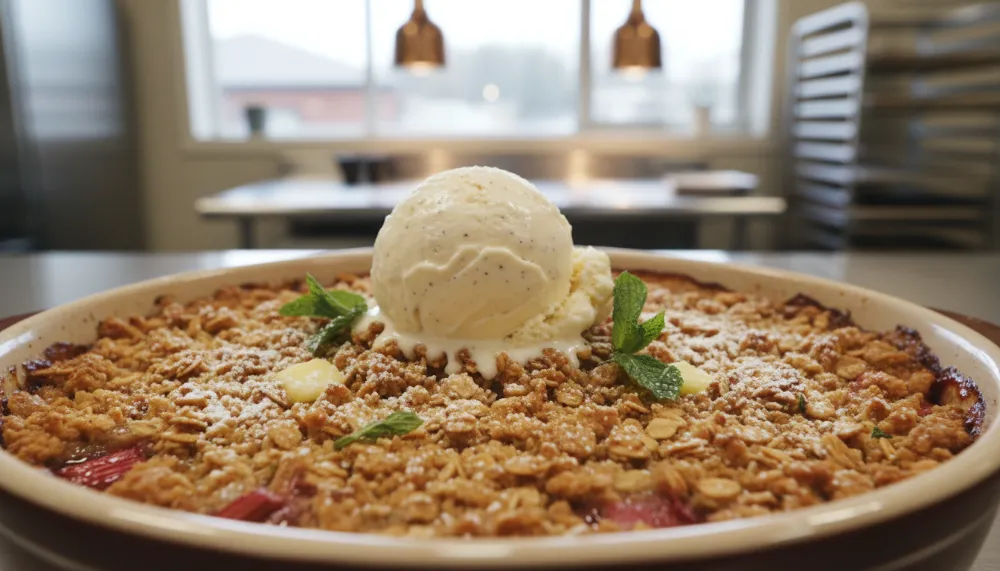

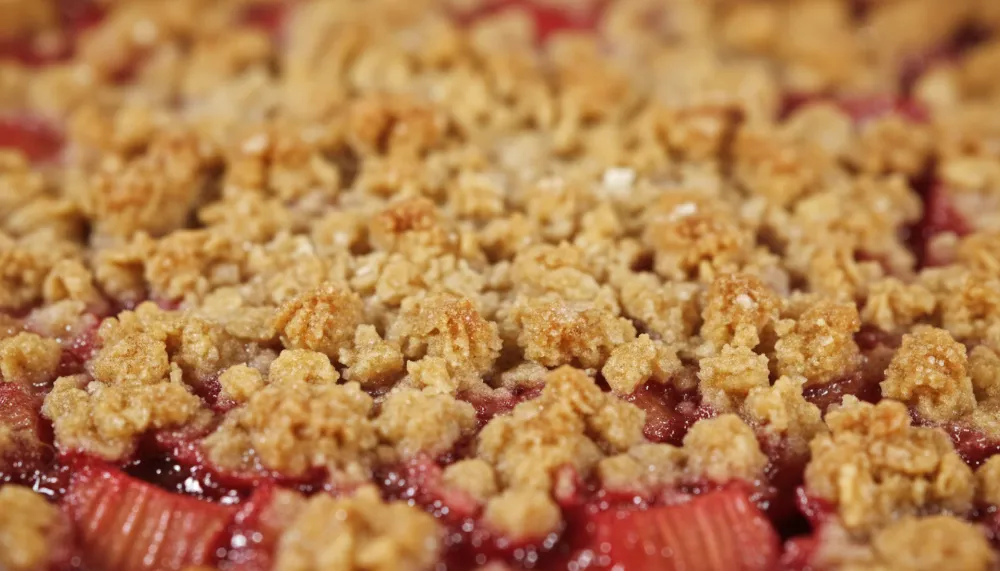
Experience the ultimate spring dessert with this tart and tangy Rhubarb Crisp with Oat Crumble Topping, featuring a golden, buttery crust that perfectly balances the vibrant stalks. This timeless comfort food brings together the nostalgic flavors of the garden with a satisfyingly crunchy finish that will leave your guests begging for seconds.
Rhubarb Crisp with Oat Crumble Topping
Ingredients
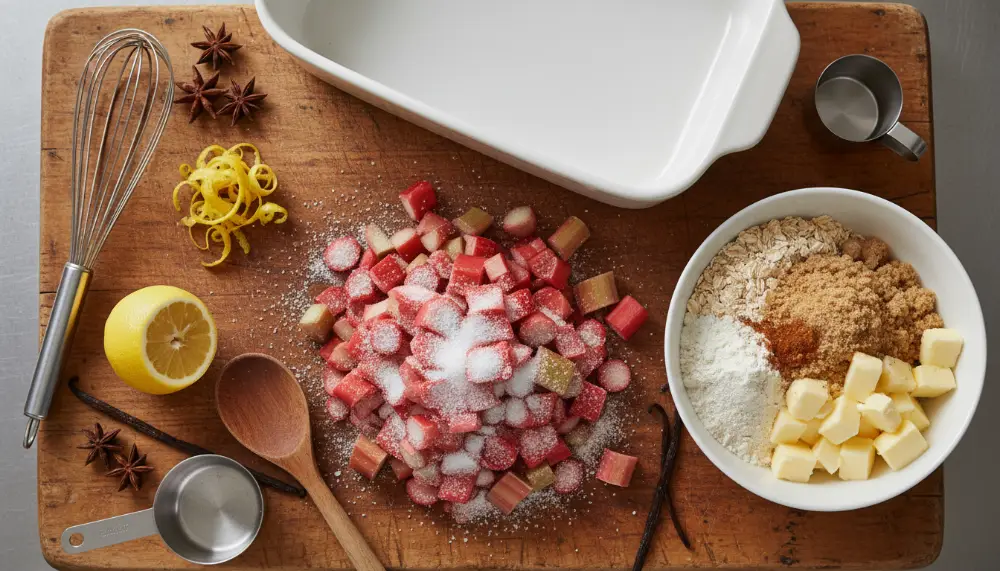
- 1 6-8 cups fresh rhubarb, chopped into 1-inch pieces
- 2 1 cup granulated sugar
- 3 2 tablespoons cornstarch
- 4 1/4 cup apple juice (replaces wine for moisture)
- 5 1 1/2 cups rolled oats
- 6 1 cup all-purpose flour
- 7 1 cup packed brown sugar
- 8 1/2 cup cold unsalted butter, cubed
- 9 1 teaspoon ground cinnamon
Instructions
- 1 Preheat your oven to 375 degrees F (190 degrees C) and grease a 9×13 inch baking dish.
- 2 In a large bowl, toss the chopped rhubarb with granulated sugar, cornstarch, and apple juice until evenly coated. Spread into the baking dish.
- 3 In a food processor or bowl, combine oats, flour, brown sugar, and cinnamon. Cut in the cold butter until the mixture resembles coarse crumbs.
- 4 Sprinkle the oat crumble topping evenly over the rhubarb filling.
- 5 Bake for 35 to 45 minutes until the fruit is bubbling and the topping is golden brown.
The Fascinating History of Rhubarb Crisp
Rhubarb Crisp with Oat Crumble Topping is more than just a seasonal dessert, it is a culinary bridge connecting centuries of global trade and domestic ingenuity. Rhubarb itself, scientifically known as Rheum rhabarbarum, originated in the cold climates of Siberia and China. For millennia, it was prized exclusively for its medicinal properties, used primarily as a digestive aid. It was not until the 17th century that rhubarb made its way to Europe via the Silk Road, initially fetching prices that rivaled rare spices like saffron and opium. The transformation of this tart vegetable into a beloved dessert ingredient was entirely dependent on the global sugar trade. As sugar became more affordable and accessible to the general public in the 18th and 19th centuries, the intense acidity of rhubarb could finally be balanced, giving birth to the “pie plant” era in American and British kitchens.
The specific format of the “crisp” or “crumble” has its own unique wartime history. During World War II, food rationing across Great Britain meant that traditional pastry doughs, which required large amounts of flour and precious lard or butter, were difficult to make. Home cooks pivoted to the crumble, a more forgiving and resourceful topping that used less fat and could be extended with whole grains like oats. This innovation allowed families to enjoy a comforting dessert even during times of scarcity. Today, the Rhubarb Crisp with Oat Crumble Topping remains a symbol of that resourcefulness, celebrated for its rustic charm and the satisfying contrast between the jammy, bubbling fruit and the crunchy, buttery lid.
Why the Oat Crumble Topping is Essential
While some traditional British recipes omit the oats in favor of a simpler flour-and-butter crumble, the American “crisp” variation relies heavily on the texture of rolled oats. The oats provide a structural integrity that prevents the topping from becoming a soggy mass of dough. When baked, the oats toast in the butter, creating a nutty, complex flavor profile that pairs beautifully with the sharp, floral notes of the rhubarb. Using a high-quality tool like the Cuisinart 8 Cup Food Processor is the professional secret to achieving that perfect texture. By pulsing cold butter directly into the oat and flour mixture, you create varying sizes of crumbs that melt at different rates in the oven, ensuring a multi-layered crunch.
Botanical Profile and Seasonal Selection
To make the best Rhubarb Crisp with Oat Crumble Topping, one must understand the raw material. Rhubarb is a perennial plant characterized by its thick, fleshy stalks and large, toxic leaves. It is important to remember that only the stalks are edible, the leaves contain high concentrations of oxalic acid and should always be discarded. In early spring, look for “hothouse” rhubarb, which is typically a brilliant pink or red and has a more delicate flavor. As the season progresses into late spring and early summer, field-grown rhubarb becomes available. These stalks are often thicker and can range from bright green to deep crimson. Contrary to popular belief, the color of the rhubarb stalk does not necessarily indicate its sweetness, green stalks can be just as delicious as red ones, though the red stalks provide a more visually striking dessert.
When selecting stalks at the market or in your garden, look for firm, crisp stems that do not feel limp or rubbery. If you find yourself with an abundance of rhubarb during its short peak season, the FoodSaver Vacuum Sealer Machine is an essential investment. By vacuum-sealing chopped rhubarb stalks, you can prevent freezer burn and preserve the cellular structure of the plant, allowing you to bake a fresh-tasting Rhubarb Crisp with Oat Crumble Topping even in the depths of winter.
The Chemistry of the Tart Filling
The primary challenge when baking with rhubarb is managing its high water content and intense acidity. Rhubarb is approximately 95 percent water, which means that without a proper thickener, your crisp can quickly turn into a soup. This recipe utilizes cornstarch as a thickening agent, which provides a clear, glossy sheen to the fruit filling without muddying the flavors. Some chefs prefer using flour or tapioca, but cornstarch offers the most reliable “set” for a fruit crisp. The addition of granulated sugar is non-negotiable, as it draws the juices out of the stalks and macerates the fruit, creating a natural syrup that thickens as it reaches a boil in the oven.
Professional Variations and Flavor Pairings
While a pure Rhubarb Crisp with Oat Crumble Topping is a purist’s dream, the versatility of the fruit allows for many professional enhancements. A classic pairing is the strawberry rhubarb recipe, where the natural sweetness of strawberries balances the tartness of the rhubarb. If you want to elevate the dish further, consider adding freshly grated ginger or ground cardamom to the topping. Cardamom, in particular, has floral citrus notes that accentuate the rhubarb’s natural aroma. For a deeper flavor, you can also substitute a portion of the flour in the topping for almond meal, which adds a rich, toasted nuttiness.
In professional kitchens, rhubarb is not limited to the dessert menu. Its high acidity makes it an excellent accompaniment to savory dishes. A tart rhubarb compote, very similar to the base of this crisp, can be served alongside roasted chicken or braised beef. The acidity acts as a palate cleanser, cutting through the richness of the animal fats. If you are preparing a large-scale dinner, using the Cosori 9-in-1 TurboBlaze Air Fryer to roast smaller batches of the crumble separately can provide a localized, intense crunch that you can sprinkle over savory meat dishes for a unique textural element.
Essential Tools for the Perfect Crisp
Success in the kitchen often comes down to having the right equipment. To prepare the rhubarb stalks with precision, a sharp knife is required, but for the topping, mechanical assistance is preferred. The Ninja BN751 Professional Plus DUO Blender is excellent for creating fruit purees or quick sauces to drizzle over your crisp, while the food processor mentioned earlier handles the heavy lifting of the dough. When it comes to storage, the Rubbermaid Brilliance Glass Storage Set is unmatched. These leak-proof containers are perfect for storing leftover Rhubarb Crisp with Oat Crumble Topping, as the glass does not absorb odors and the airtight seal keeps the oat topping from absorbing moisture and becoming soft.
Nutritional Benefits of Rhubarb
Beyond its culinary appeal, rhubarb offers several nutritional advantages. It is a fantastic source of Vitamin K1, which is essential for bone health and blood clotting. It also contains a significant amount of dietary fiber, particularly when paired with the whole-grain oats in the crumble topping. Fiber is crucial for digestive health and helps to regulate blood sugar levels, mitigating the impact of the sugar used in the recipe. Rhubarb is also rich in antioxidants like anthocyanins (which give the stalks their red color) and proanthocyanidins, which help protect the body against oxidative stress and inflammation.
Tips for the Ultimate Crunchy Topping
The secret to a world-class Rhubarb Crisp with Oat Crumble Topping lies in the temperature of the fat. Always use cold butter. If the butter is too warm, it will incorporate into the flour and oats like a cookie dough, resulting in a heavy, cake-like layer rather than a light, crisp one. For those who enjoy a very chunky topping, try pressing the crumble mixture into small clumps with your hands before scattering it over the fruit. This creates “nuggets” of sweetness that provide a varying textural experience. Additionally, baking the crisp at a slightly higher temperature like 375 degrees F ensures that the fruit boils and thickens in the same timeframe that the topping turns golden brown.