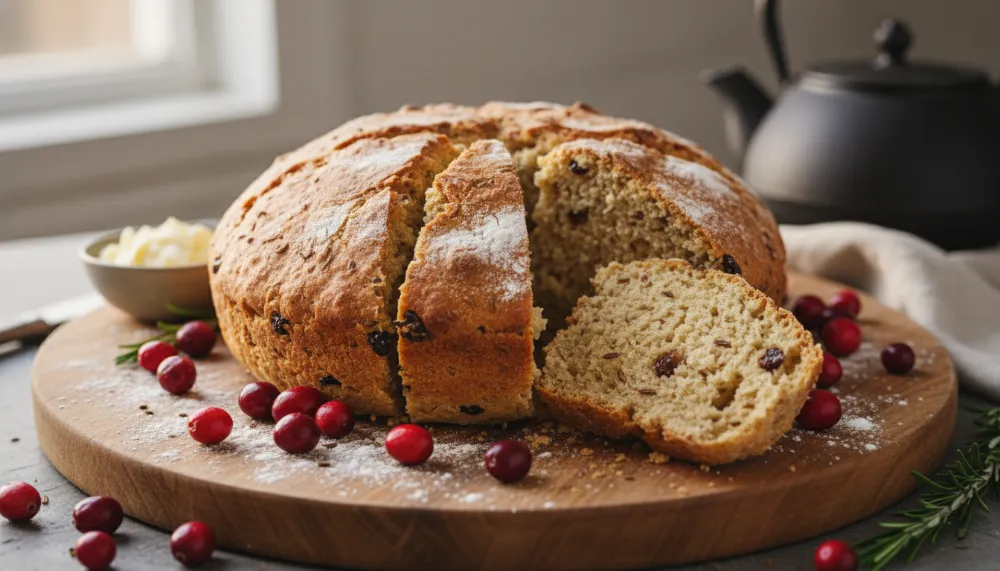

Master the art of the perfect Quick Irish Soda Bread with this authentic, four-ingredient base that transforms from pantry staples to a warm, crusty loaf in under an hour. This rustic classic delivers a tender crumb and golden crust without a single minute of kneading or rising time.
Quick Irish Soda Bread
Ingredients
- 1 4 cups (500g) All-purpose flour
- 2 1 teaspoon Baking soda (bicarbonate of soda)
- 3 1 teaspoon Salt
- 4 1 3/4 cups (420ml) Real buttermilk
- 5 Optional: 1/2 cup cooked diced beef or cheddar cheese
Instructions
- 1 Preheat your oven to 425°F (220°C) and lightly grease a baking sheet or cast-iron skillet.
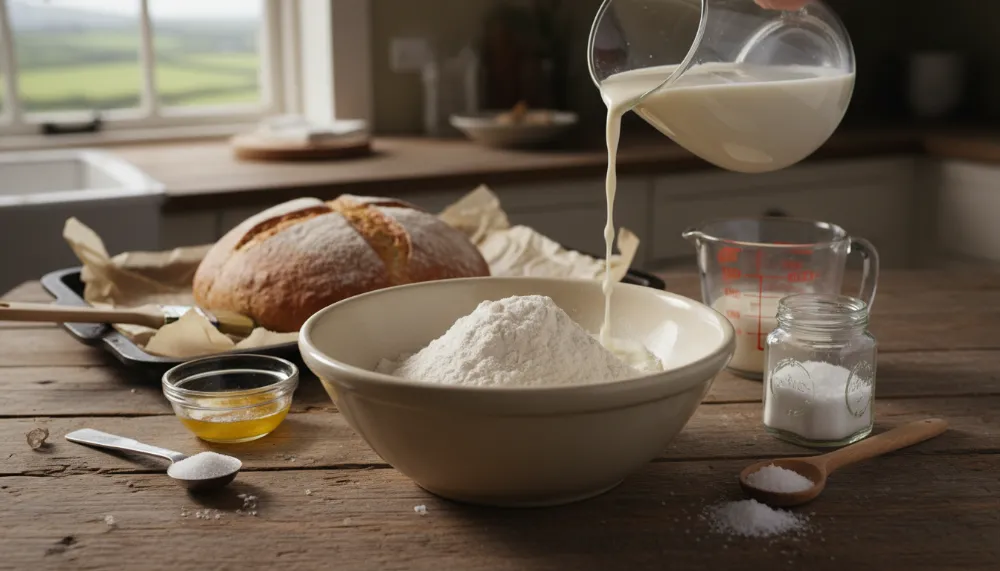
- 2 Whisk together the flour, baking soda, and salt in a large bowl until fully combined.
- 3 Create a well in the center and pour in the buttermilk, mixing gently with a wooden spoon.
- 4 Turn the dough onto a floured surface and shape into a round disk about 1.5 inches thick.
- 5 Use a sharp knife to cut a deep cross into the top of the dough, extending to the edges.
- 6 Bake for 30-35 minutes until the loaf sounds hollow when tapped on the bottom.
The Fascinating History of Quick Irish Soda Bread
To understand the soul of Quick Irish Soda Bread, one must look back to the mid-19th century. While we often think of bread as a complex process involving yeast and hours of proofing, Irish Soda Bread emerged as a 1830s necessity. This era marked the introduction of bicarbonate of soda, commonly known as baking soda, to the rural kitchens of Ireland. Unlike the hard wheat grown in warmer climates, Ireland’s temperate, damp environment was better suited for “soft wheat.” This variety of grain is naturally low in gluten, making it a poor candidate for traditional yeast fermentation. However, when combined with the acidity of soured milk, soft wheat reacts beautifully with baking soda to create a reliable rise.
During the years of extreme poverty and famine, this bread became a primary staple. Its popularity was rooted in its extreme frugality, requiring only flour, salt, baking soda, and the acidic byproduct of butter making, buttermilk. It didn’t require an expensive oven; many families baked their loaves in a “bastible,” a heavy cast-iron pot with a lid that sat directly in the hearth coals. Using a Cuisinart 8 Cup Food Processor: https://amzn.to/47Nhbg8 is a modern luxury that can help quickly pulse dry ingredients, though the traditional hand-mixed method remains the gold standard for maintaining the delicate crumb.
The Science: Why This Bread Works
The chemistry of Quick Irish Soda Bread is a marvel of simplicity. When the alkaline baking soda meets the acidic lactic acid in buttermilk, a chemical reaction occurs immediately, releasing carbon dioxide gas. This gas gets trapped in the weak gluten structure of the soft wheat flour, causing the bread to expand. This is why it is imperative not to over-knead the dough. If you work the dough too much, you develop the gluten too strongly, which leads to a tough, leaden loaf rather than the desired tender, biscuit-like texture.
Symbolism and the Iconic Cross
Every loaf of Quick Irish Soda Bread features a deep cross sliced into the top. This isn’t just for aesthetics. Practically, the cross allows the thick dough to expand without cracking randomly, and it helps the heat penetrate the dense center of the loaf, ensuring even baking. Traditionally, however, the Irish said the cross was to “let the devil out” of the bread or to bless the table. In some regions, a small hole was poked in each of the four corners created by the cross to further release the steam, a practice known as “letting the fairies out.”
Nutritional Profile of a Classic Loaf
A standard 100g serving of this bread provides approximately 280 to 290 kcal. It is primarily composed of complex carbohydrates (53-56g) and offers a respectable 6-8g of protein. Because it lacks added fats in its most traditional form, it is relatively low in fat (3-5g) unless you choose to add butter. It is also a notable source of Iron, providing between 15% and 30% of the daily value, alongside Calcium and Sodium. For those looking to increase fiber, replacing half of the white flour with whole-wheat flour creates a “Wheaten Bread” that adds 2-3g of fiber per serving.
Savory Variations: Beef and Herb Infusions
While the basic four-ingredient recipe is a masterpiece, modern chefs often incorporate mix-ins for a savory twist. A popular variation involves adding sharp white cheddar and seared beef. To keep this recipe pork-free, replace traditional bacon with finely diced, pan-seared smoked beef or beef salami. This provides a robust, smoky flavor that pairs perfectly with the tangy buttermilk. You can also incorporate a “Herbed Garden” profile by adding fresh rosemary, thyme, and cracked black pepper. If you are looking for a liquid boost, always use vegetable broth or beef broth in place of any alcohol-based flavorings to maintain the integrity of the dietary restrictions while deepening the umami profile.
For those preparing a Mediterranean version, try adding chopped sun-dried tomatoes (oil-packed) and crumbled feta cheese. The Ninja BN751 Professional Plus DUO Blender: https://amzn.to/3LCDyNR is perfect for creating a complementary tahini or harissa-based dipping sauce to serve alongside these savory variations, as its 1000W motor can emulsify even the toughest ingredients into a silk-smooth accompaniment.
Sweet Variations: The Spotted Dog and Beyond
In Ireland, adding raisins and a bit of sugar to the dough creates a loaf known as the “Spotted Dog.” To add a sophisticated sweetness without using alcohol, soak your golden raisins or currants in unsweetened apple juice or white grape juice for 30 minutes before folding them into the dough. This ensures the fruit stays plump and juicy during the high-heat baking process.
Another delicious option is the “Treacle and Ginger” loaf. By adding a tablespoon of molasses (treacle) and a teaspoon of ground ginger, you create a dark, spicy bread. If you encounter recipes calling for stout or ale, remember that a mixture of strong brewed coffee and a splash of cider vinegar provides the same acidity and dark color without any alcohol content. Citrus and cranberry variations are also popular, utilizing orange zest and dried cranberries. Ensure you replace any requested orange liqueurs with freshly squeezed orange juice for a bright, clean flavor profile.
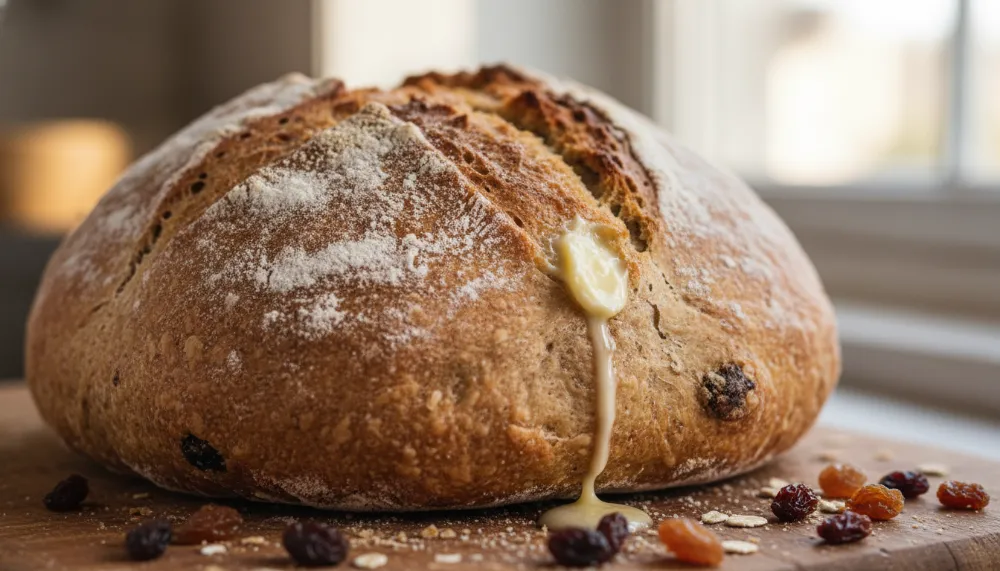
Modern Baking Methods: The Air Fryer Shortcut
While the traditional oven is the standard, the modern kitchen offers new ways to achieve that perfect crust. Using the Cosori 9-in-1 TurboBlaze Air Fryer 6 Qt: https://amzn.to/4hRWmVq allows you to bake smaller loaves or “soda farls” (quartered disks) in significantly less time. The rapid air circulation creates an exceptionally crispy exterior while keeping the inside moist. To do this, shape your dough into smaller rounds and air fry at 370°F (185°C) for about 18-22 minutes. This is a fantastic option for small families or when you need a fresh loaf for a single meal.
Pro-Tips for the Perfect Quick Irish Soda Bread
1. The Buttermilk Secret: If you don’t have buttermilk, you can make a substitute by adding a tablespoon of lemon juice or white vinegar to a cup of milk and letting it sit for five minutes. However, real buttermilk is thicker and provides a better rise.
2. Don’t Over-mix: The dough should be shaggy and slightly sticky. If it looks perfectly smooth, you’ve mixed it too long.
3. The Temperature Check: High heat is essential for the initial rise. Starting at 425°F (220°C) is key, though some bakers lower the heat to 400°F after the first 15 minutes to prevent the crust from over-browning.
4. The Cooling Rack: Once removed from the oven, wrap the bread in a clean kitchen towel while it cools on a wire rack. This helps soften the crust slightly so it is easier to slice without crumbling.
Troubleshooting Common Issues
If your Quick Irish Soda Bread comes out too dense, it usually means your baking soda was expired or you handled the dough too roughly. If the center is gummy, the oven temperature may have been too high, causing the outside to brown before the inside was done. Covering the loaf with foil halfway through baking can help if you notice it browning too fast. Finally, if the bread tastes metallic, you may have used too much baking soda. A level teaspoon is all you need for four cups of flour, the balance between the soda and the buttermilk acid is delicate and must be respected.
This bread is best served warm, slathered in salted butter. It is the perfect accompaniment to a hearty beef stew or a simple bowl of vegetable soup. Because it contains no preservatives, it is best eaten within 24 hours, though it makes excellent toast the following day. For long-term storage, slice the bread and freeze it in an airtight bag, it can be toasted directly from the freezer for a quick and satisfying snack.