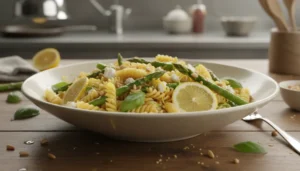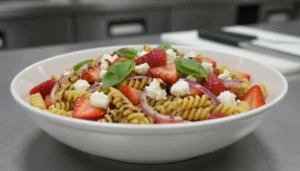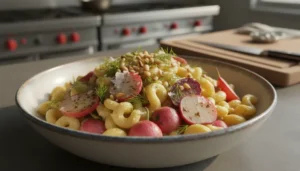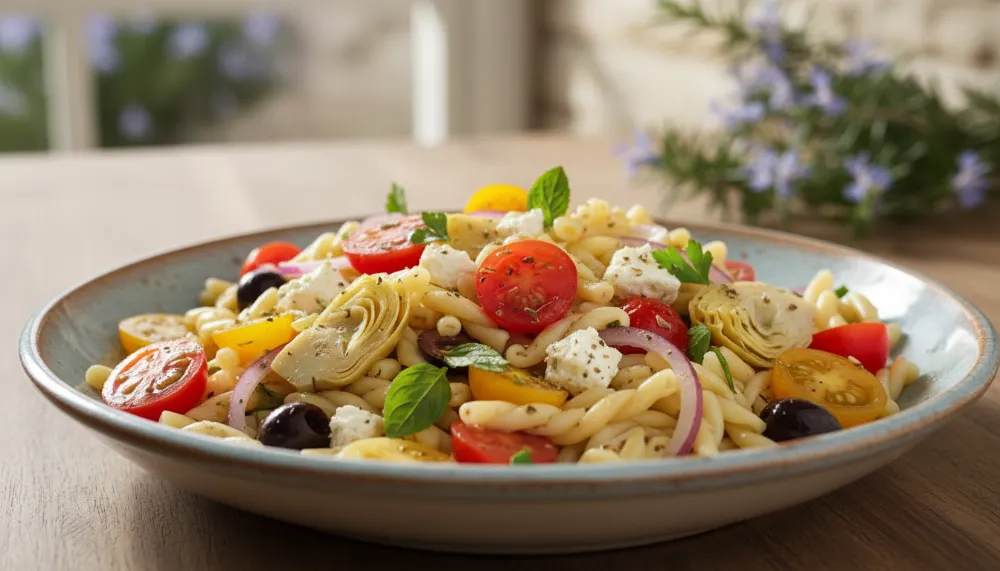

This vibrant Mediterranean spring pasta salad is the ultimate celebration of seasonal greens and zesty flavors, perfect for any outdoor gathering or meal prep session. It delivers a nutrient-dense punch that perfectly balances garden-fresh vegetables with high-quality, pork-free proteins.
Mediterranean Spring Pasta Salad
Ingredients
- 1 lb Rotini or Gemelli Pasta
- 2 cups Grilled Chicken Breast (sliced)
- 1 bunch Asparagus (trimmed and blanched)
- 1 cup Sweet English Peas
- 1/2 cup Radishes (thinly sliced)
- 1/2 cup Crumbled Feta Cheese
- 1/4 cup Kalamata Olives (pitted)
- 1/2 cup Extra Virgin Olive Oil
- 1/4 cup Fresh Lemon Juice
- 3 cloves Garlic (minced)
- 1 tbsp Dried Oregano
- Salt and Black Pepper to taste
Instructions
- Cook the pasta in a large pot of salted boiling water until al dente. Drain and rinse with cool water.
- In the last 2 minutes of pasta cooking, add the asparagus and peas to the pot to blanch. Drain with the pasta.
- In a high-powered blender, combine olive oil, lemon juice, garlic, oregano, salt, and pepper. Emulsify until smooth.
- In a massive bowl, combine the pasta, blanched vegetables, sliced radishes, grilled chicken, and olives.
- Pour the dressing over the salad and toss thoroughly to ensure every piece is coated.
- Fold in the crumbled feta cheese gently to avoid breaking it down too much.
- Chill in the refrigerator for at least 30 minutes before serving to allow flavors to meld.
The Deep History of the Mediterranean Spring Pasta Salad
While we often view pasta salad as a modern picnic staple, its roots are deeply embedded in the culinary fabric of the Mediterranean. The concept of “pasta fredda,” or cold pasta, is not a recent invention but a historical necessity born out of cultural traditions and religious observations. Culinary historians, including the renowned Claudia Roden, have frequently pointed toward Italian-Jewish communities as the true innovators of this dish. Because religious laws prohibited the act of cooking on the Sabbath, these communities developed ingenious ways to enjoy flavorful, pre-prepared meals. A chilled pasta dish, dressed in high-quality olive oil and seasonal herbs, was the perfect solution, it stayed fresh, remained delicious without reheating, and highlighted the best produce available.
In Sicily, the tradition of serving cold noodles dates back even further, potentially drawing inspiration from ancient Roman practices where grains and pasta-like doughs were dressed with vinegar and oil. These early versions were minimalist, relying on the purity of the harvest. As the seasons shifted to spring, the ingredients changed to include the very first tender greens of the year. This transition from heavy, winter sauces to light, oil-based spring dressings is what eventually evolved into the modern Mediterranean spring pasta salad we enjoy today.
Throughout the mid-20th century, the dish traveled across the Atlantic with Italian immigrants. In the United States, it underwent a transformation from a quiet family tradition to a deli-counter icon. However, the gourmet resurgence of the 1980s reclaimed the dish, moving away from bottled dressings and toward the fresh, artisanal ingredients that define a true Mediterranean diet. Today, a Mediterranean spring pasta salad is considered a canvas for culinary expression, bridging the gap between ancient history and contemporary health-conscious lifestyles.
Nutritional Excellence in Every Bite
One of the primary reasons the Mediterranean spring pasta salad remains a top-tier choice for health enthusiasts is its incredibly balanced nutritional profile. A standard serving of this vibrant dish is designed to provide sustained energy while delivering a wide spectrum of micronutrients. Typically, a 1.5-cup serving contains between 250 to 400 calories, but the quality of those calories is what truly matters.
The heart of the dish lies in its healthy fats. By utilizing extra virgin olive oil and kalamata olives, you are flooding your system with monounsaturated fats. These fats are celebrated for their ability to support heart health and reduce inflammation. When we look at the protein content, which ranges from 8 to 15 grams per serving, we see the versatility of the Mediterranean spring pasta salad. By incorporating grilled chicken or seared beef instead of pork, you ensure a lean, high-quality protein source that aids in muscle recovery and satiety.
Fiber is another standout component. Thanks to the inclusion of spring vegetables like asparagus and sweet peas, a single serving can provide up to 8 grams of dietary fiber. This is essential for digestive health and blood sugar regulation. Furthermore, the dish is a powerhouse of vitamins. The fresh lemon juice and radishes provide a significant dose of Vitamin C, while the leafy greens and asparagus offer Vitamin K and folate. When topped with a moderate amount of feta or parmesan, you also add a boost of calcium and protein without the need for heavy, cream-based sauces.
Essential Tools for the Perfect Mediterranean Spring Pasta Salad
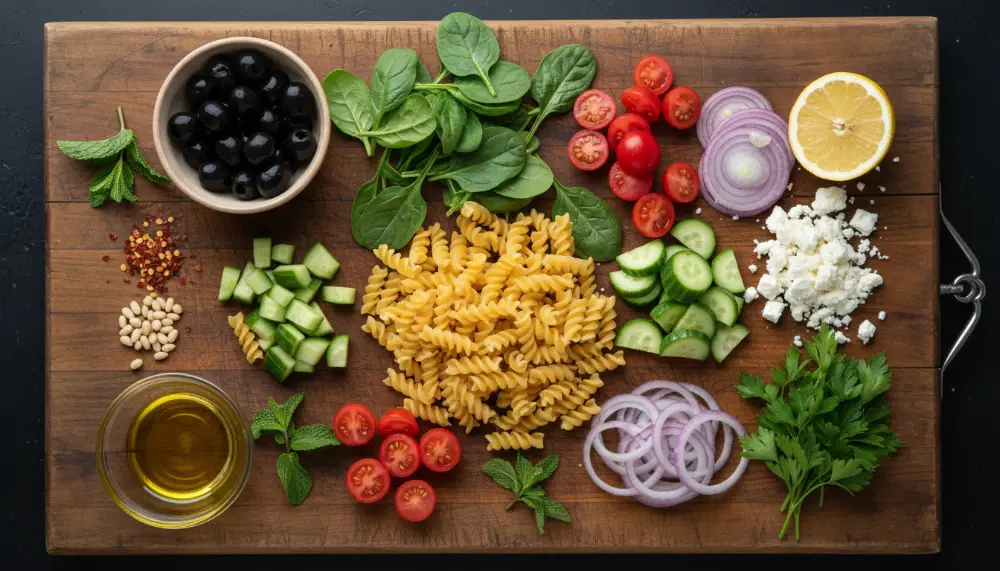
To achieve professional-grade results at home, having the right equipment is non-negotiable. Preparing a Mediterranean spring pasta salad involves a variety of textures, from silky dressings to perfectly sliced vegetables.
First and foremost, the dressing is the soul of the salad. For an emulsification that never separates, the **Ninja BN751 Professional Plus DUO Blender** (https://amzn.to/3LCDyNR) is our top recommendation. Its 1000W motor is perfect for creating a creamy lemon-tahini sauce or a smooth herb vinaigrette, ensuring that the garlic and herbs are perfectly integrated. If you are adding a bit of crunch to your salad, the **Cosori 9-in-1 TurboBlaze Air Fryer 6 Qt** (https://amzn.to/4hRWmVq) is perfect for roasting chickpeas or even flash-roasting your asparagus to get those charred tips that add so much depth to a Mediterranean spring pasta salad.
For the prep-heavy aspects, like slicing radishes and cucumbers into uniform coins, the **Cuisinart 8 Cup Food Processor** (https://amzn.to/47Nhbg8) is a meal-prep essential. It turns what would be twenty minutes of knife work into twenty seconds of effortless slicing. Once your masterpiece is assembled, storage is the next priority. The **Rubbermaid Brilliance Glass Storage Set of 9** (https://amzn.to/4oD0YkY) is ideal because the leak-proof lids keep the dressing contained, and the glass does not absorb odors from the garlic or onions. Finally, for those who like to prep ingredients days in advance, the **FoodSaver Vacuum Sealer Machine** (https://amzn.to/4qWgVnS) is a lifework, it keeps your blanched vegetables and grilled proteins fresh much longer than standard bags, preventing any loss of texture or flavor.
Mastering Professional Flavor Variations
While the classic recipe is a crowd-pleaser, the beauty of the Mediterranean spring pasta salad is its adaptability. Depending on your mood or the occasion, you can pivot the flavor profile while still strictly adhering to non-pork and alcohol-free guidelines.
### The “Verde” Spring Variation
This version is a tribute to the “green” harvest. It focuses exclusively on the first vegetables of the season. Instead of a standard vinaigrette, try a pesto-adjacent dressing made with fresh mint, dill, and parsley. In the Ninja blender, pulse these herbs with lemon juice, olive oil, and a handful of pine nuts. Replace traditional meats with protein-rich roasted chickpeas, which you can crisp up in the Cosori Air Fryer. This vegetarian-friendly version of the Mediterranean spring pasta salad is incredibly light and refreshing.
### Grilled Lemon-Chicken Power Bowl
For those who need a more substantial meal, the lemon-chicken variation is a winner. Marinate lean chicken breasts in a mixture of lemon zest, crushed garlic, and dried oregano. After grilling, slice the chicken into thin strips and toss them into the pasta while they are still slightly warm, this allows the chicken to soak up some of the dressing. Pair this with marinated artichoke hearts and English cucumbers for a Mediterranean spring pasta salad that feels like a full restaurant entree.
### Savory Beef and Arugula Zest
If you prefer a deeper, more savory profile, use seared beef sirloin strips. Season the beef heavily with cracked black pepper and sea salt before searing. The richness of the beef pairs beautifully with the peppery bite of fresh arugula. To keep this version alcohol-free, use a high-quality balsamic glaze (ensuring no wine reductions are involved) or a splash of apple cider vinegar to provide the necessary acidity. This variation of the Mediterranean spring pasta salad is sophisticated and bold.
The Secret to the Ultimate Alcohol-Free Dressing
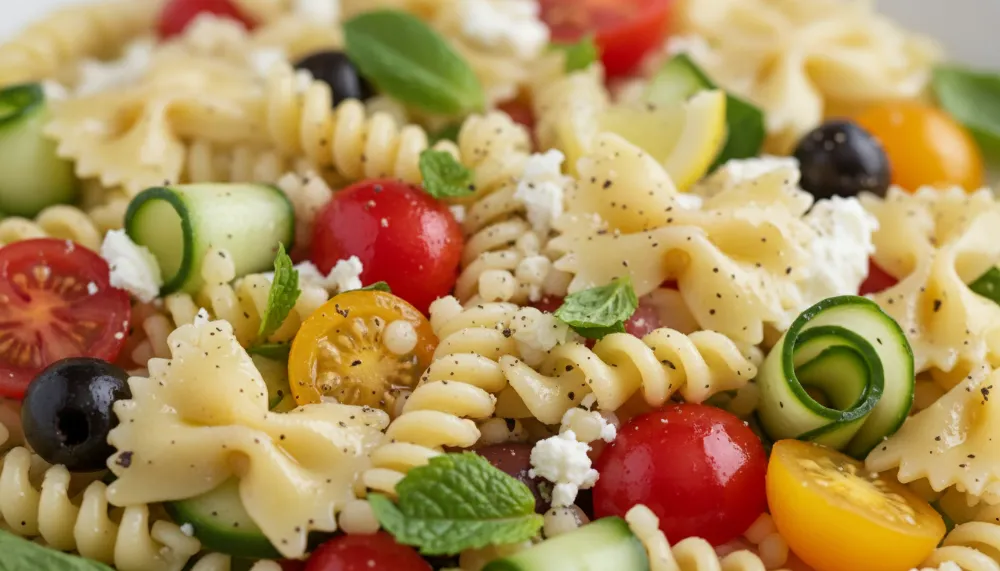
Many traditional Mediterranean recipes call for red or white wine vinegar, but you can achieve even better results using natural fruit acids and broths. The key to a successful Mediterranean spring pasta salad dressing without alcohol is to focus on “bright” acids. Freshly squeezed lemon juice is the gold standard, its citrus notes enhance the natural sweetness of spring peas and asparagus.
If you want a deeper tang, apple cider vinegar is an excellent substitute for wine vinegar, offering a complex, slightly fruity undertone. For a creamier texture without using dairy, whisk in a teaspoon of stone-ground mustard or a tablespoon of tahini. This not only acts as an emulsifier but also adds a layer of umami that replaces the depth often provided by wine. If your dressing feels too sharp, don’t reach for the sugar, instead, use a splash of high-quality vegetable or chicken broth. This thins the dressing while adding a savory element that rounds out the entire Mediterranean spring pasta salad.
Storage and Make-Ahead Success
One of the greatest strengths of the Mediterranean spring pasta salad is that it actually tastes better the next day. As the salad sits, the pasta absorbs the dressing, and the flavors of the garlic, herbs, and lemon infuse every ingredient. However, there are a few professional tips to ensure it doesn’t become soggy.
First, always cook your pasta “al dente.” Overcooked pasta will turn mushy once it sits in the dressing. Second, keep your “soft” ingredients separate if you are prepping more than 24 hours in advance. For example, add the feta cheese and fresh arugula just before serving. Use your Rubbermaid Brilliance containers to store the main salad, and keep a small extra portion of dressing on the side. Before serving, give it a fresh toss and a squeeze of lemon to wake up the flavors.
For long-term meal prep, using a FoodSaver to vacuum seal your grilled chicken or beef will keep the proteins from drying out. When you are ready to assemble your Mediterranean spring pasta salad, the meat will be as juicy as the day it was grilled. This approach makes it easy to have a gourmet, healthy lunch ready for the entire week.
Seasonal Ingredient Spotlight: Why Spring Matters
Why do we call it a “spring” pasta salad? It is all about the timing of the harvest. Spring brings us ingredients that are tender, sweet, and require very little cooking. Asparagus, for instance, is at its peak in the spring, offering a crisp-tender texture that is far superior to the woody spears found in late summer. Sweet English peas provide a burst of natural sugar that contrasts beautifully with the salty feta and olives.
Radishes are another spring superstar. Their peppery crunch provides a necessary textural contrast to the soft pasta. By focusing on these seasonal items, your Mediterranean spring pasta salad becomes a reflection of the environment, making it a more mindful and enjoyable eating experience. When you choose ingredients that are in season, they are not only more flavorful but also more nutrient-dense, as they haven’t spent weeks in transit.
In conclusion, the Mediterranean spring pasta salad is much more than a side dish. It is a historical treasure, a nutritional powerhouse, and a versatile canvas for any home cook. By following these professional tips, using the right equipment, and adhering to high-quality dietary standards, you can create a meal that is as impressive as it is delicious.