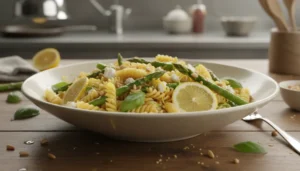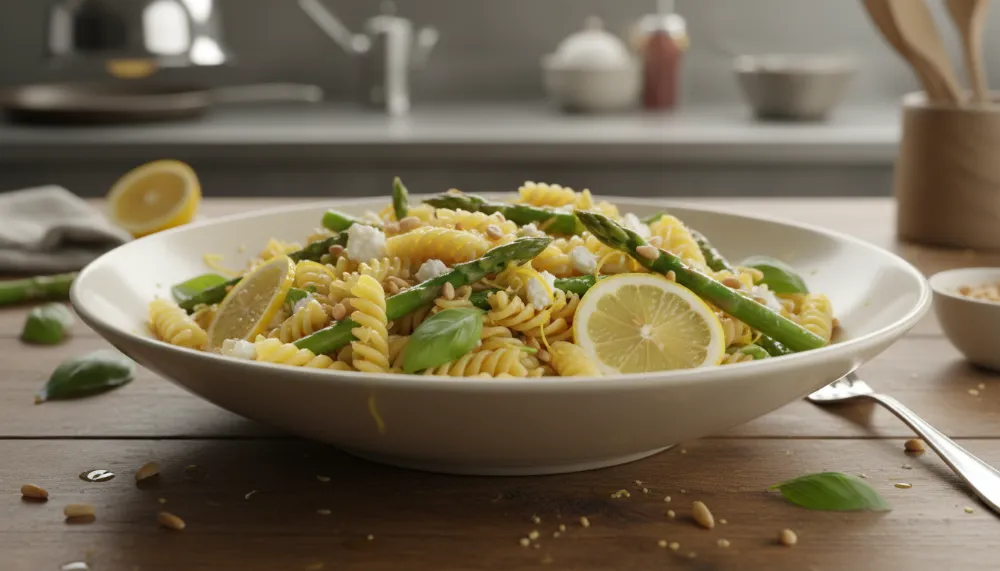

This lemon asparagus pasta salad is a vibrant celebration of spring flavors, blending zesty citrus with tender greens and perfectly cooked noodles. It is the definitive refreshing meal that works as a hearty side or a light, satisfying main course.
Lemon Asparagus Pasta Salad
Ingredients
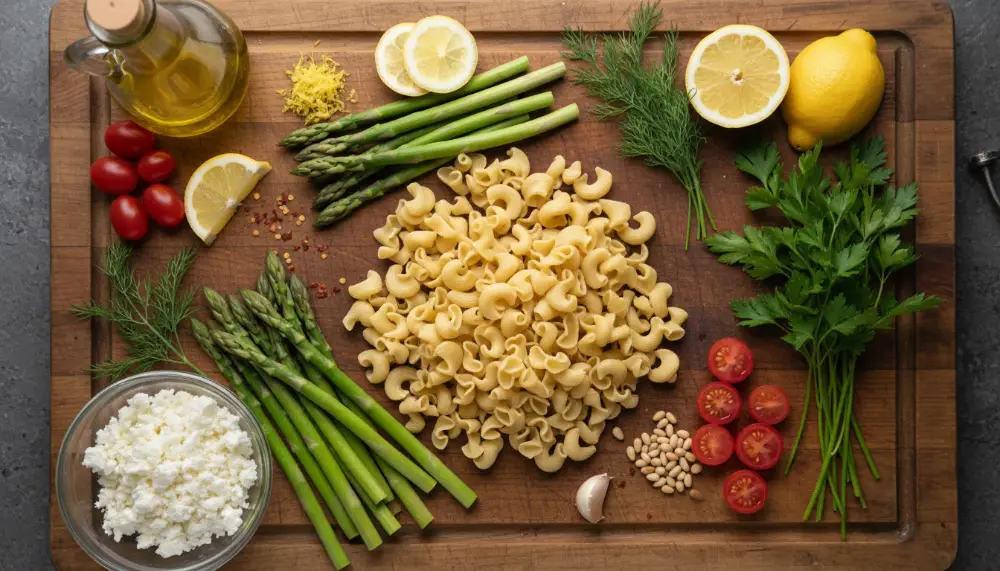
- 1 lb Penne or Fusilli pasta
- 1 lb Fresh asparagus, trimmed and cut
- 1/2 cup Extra virgin olive oil
- 2 Large lemons (zested and juiced)
- 3 cloves Garlic, minced
- 1/2 cup Shaved Parmesan cheese
- 1/4 cup Toasted pine nuts
- Fresh basil and parsley, chopped
- Salt and black pepper to taste
Instructions
- Boil a large pot of salted water. Cook pasta according to package directions until al dente.
- In the last 2 minutes of pasta cooking, add the asparagus pieces to the boiling water to blanch.
- Drain pasta and asparagus together, then rinse under cold water to stop the cooking process.
- In a small bowl, whisk olive oil, lemon juice, lemon zest, and minced garlic until emulsified.
- In a large bowl, toss the pasta and asparagus with the dressing, parmesan, herbs, and pine nuts.
- Season with salt and pepper. Serve chilled or at room temperature.
The Fascinating History of Lemon and Asparagus Pairings
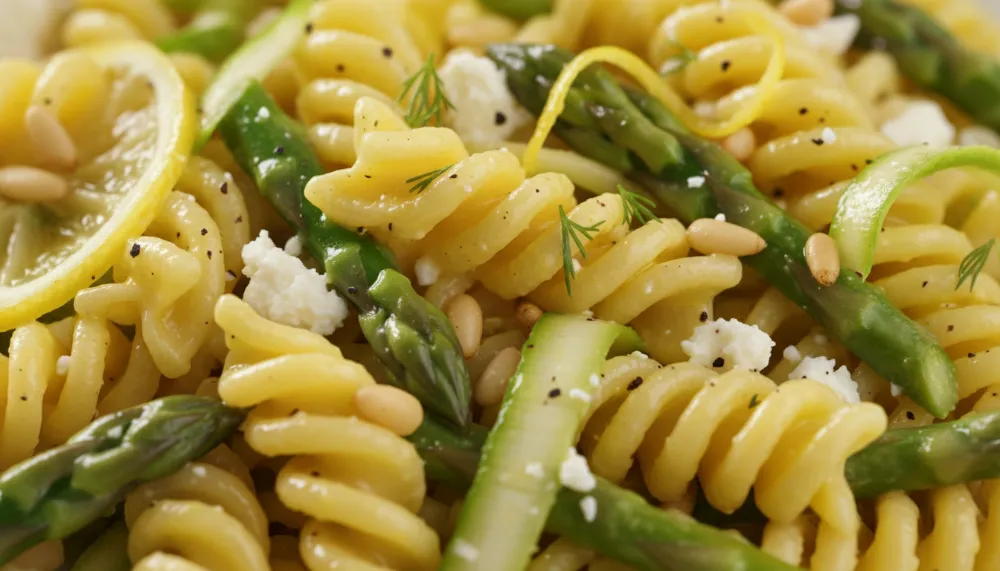
The culinary lineage of the lemon asparagus pasta salad can be traced back to the sun-drenched shores of the Amalfi Coast in Southern Italy. Originally, the dish was known as Spaghetti al Limone, a minimalist masterpiece that relied solely on the high quality of local lemons, rich butter, and sharp Parmigiano-Reggiano. However, as Mediterranean cuisine migrated across the globe, it underwent a transformation. American home cooks, seeking a dish that could withstand the heat of summer picnics, reimagined the hot pasta as a cold salad. By introducing seasonal asparagus, a vegetable revered since the times of ancient Rome for its medicinal and culinary properties, the dish gained a structural crunch and earthy depth. This modern iteration is no longer just a pasta dish, it is a seasonal event that signals the arrival of spring and the transition into light, healthy eating habits. The combination of the acidic lemon and the alkaline asparagus creates a chemical balance that is both pleasing to the palate and visually striking with its bright green and yellow hues.
Nutritional Deep Dive: Why This Salad is a Powerhouse
A typical serving of this lemon asparagus pasta salad, approximately 1.5 to 2 cups, provides a balanced mix of complex carbohydrates, healthy fats, and essential micronutrients. It contains between 310 to 375 calories, making it a substantial but not overwhelming meal. The protein content ranges from 10g to 17g, which can be significantly higher if you choose to add beef or chicken. The total fat content, primarily heart-healthy monounsaturated fats from extra virgin olive oil, ranges from 9g to 21g. Fiber is a standout feature here, offering 5g to 11g depending on whether whole grain or bean-based pasta is utilized. Furthermore, this dish is exceptionally rich in Vitamin K and Vitamin A, which are critical for bone and eye health. Minerals are also abundant, specifically Folate, which occurs naturally in high concentrations in asparagus, and Potassium. Antioxidants are the final piece of the puzzle, with high levels of Vitamin C from the fresh lemon juice and polyphenols from the premium olive oil used in the dressing.
Professional Flavor Variations Without the Alcohol
While the classic version is stunning, professional chefs often look for ways to elevate the lemon asparagus pasta salad using diverse proteins and flavor profiles. These variations strictly avoid pork and alcohol, ensuring they are accessible to all dietary preferences while maintaining high gourmet standards.
1. Savory Beef and Garlic Oil Variation
This version replaces traditional cured meats with high-quality beef for a more robust flavor. For the protein, use thinly sliced strips of roast beef or pan-seared steak seasoned heavily with cracked black pepper. The flavor base involves a dressing made of extra virgin olive oil infused with toasted garlic slivers and red pepper flakes. To achieve the perfect infusion, use the Ninja BN751 Professional Plus DUO Blender to pulse your garlic and oil into a smooth, aromatic base. The acidity comes from fresh lemon juice and a splash of apple cider vinegar, which replaces the depth often found in wine. Enhance the dish with thinly sliced scallions and a generous sprinkle of aged pecorino cheese for a savory finish.
2. Herbed Chicken and Goat Cheese Variation
For a lighter, protein-packed option, the chicken variation focuses on bright, herbaceous notes. Use grilled chicken breast rubbed with smoked paprika, garlic powder, and dried oregano. For the most efficient meal prep, the Cosori 9-in-1 TurboBlaze Air Fryer 6 Qt is perfect for roasting the chicken to juicy perfection while you boil the pasta. The dressing for this version is a creamy lemon-tarragon vinaigrette using lemon zest and juice. The tanginess is provided by crumbled goat cheese or feta, which adds a creamy texture that negates the need for any alcohol-based cream sauces. Topped with toasted pine nuts and baby spinach, this version is a complete meal in a bowl.
3. Mediterranean Vegetarian Variation
A dense, nutrient-rich option using legumes and preserved vegetables for depth. The primary protein comes from cooked chickpeas or cannellini beans, which provide a satisfying bite. The flavor base is a zingy lemon-mustard vinaigrette made with Dijon mustard, honey, and olive oil. To add briny elements that replace the complexity of white wine, incorporate chopped artichoke hearts, sun-dried tomatoes, and capers. You can use the Cuisinart 8 Cup Food Processor to quickly chop these additions into uniform sizes. Finish the dish with a blend of fresh basil and dill, and toasted walnuts for an earthy finish.
Essential Techniques for the Perfect Pasta Salad
The secret to a world-class lemon asparagus pasta salad lies in the technique. First, consider the pasta. You must cook it in water that is as salty as the sea to ensure the flavor is built from the inside out. Once cooked, do not rinse the pasta with cold water unless you are serving it immediately, as the starch on the surface helps the dressing adhere. For the asparagus, the blanching method is superior to roasting if you want to maintain that vibrant green color. By dropping the stalks into boiling water for just 120 seconds and then immediately shocking them in an ice bath, you lock in the chlorophyll and the snap. When it comes to the dressing, emulsification is key. Use your Ninja BN751 Professional Plus DUO Blender to combine the oil and lemon juice, the 1000W motor ensures a permanent emulsion that won’t separate while the salad sits on a buffet table.
Storage and Longevity
Many people wonder if lemon asparagus pasta salad can be made ahead of time. The answer is yes, but with specific caveats. The acid in the lemon juice will eventually turn the bright green asparagus into an olive-drab color due to the breakdown of chlorophyll. If you are prepping this more than 24 hours in advance, store the dressing and the vegetables separately. For the best storage results, the Rubbermaid Brilliance Glass Storage Set of 9 is highly recommended. These containers are leak-proof and airtight, which prevents the pasta from absorbing refrigerator odors and keeps the ingredients fresh. If you are looking to keep your prep ingredients like the sliced beef or chicken fresh for even longer, the FoodSaver Vacuum Sealer Machine is an essential tool to prevent oxidation and freezer burn, allowing you to buy your proteins in bulk and use them throughout the season.