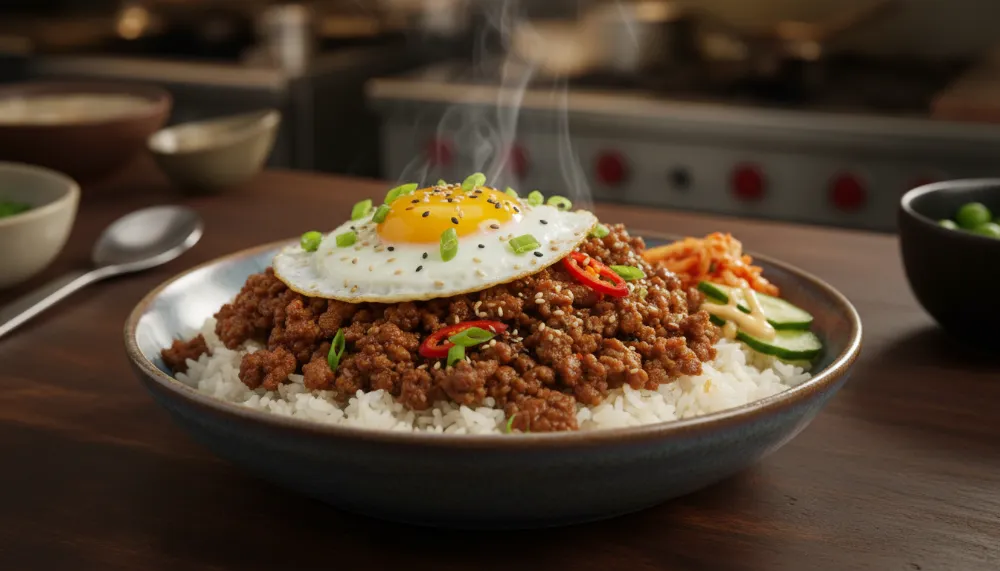

Experience the perfect harmony of sweet, savory, and spicy flavors with this lightning-fast Korean Ground Beef Bowl. This modern twist on traditional Bulgogi delivers gourmet Korean BBQ taste in under twenty minutes, making it the ultimate weeknight hero.
Korean Ground Beef Bowl
Ingredients
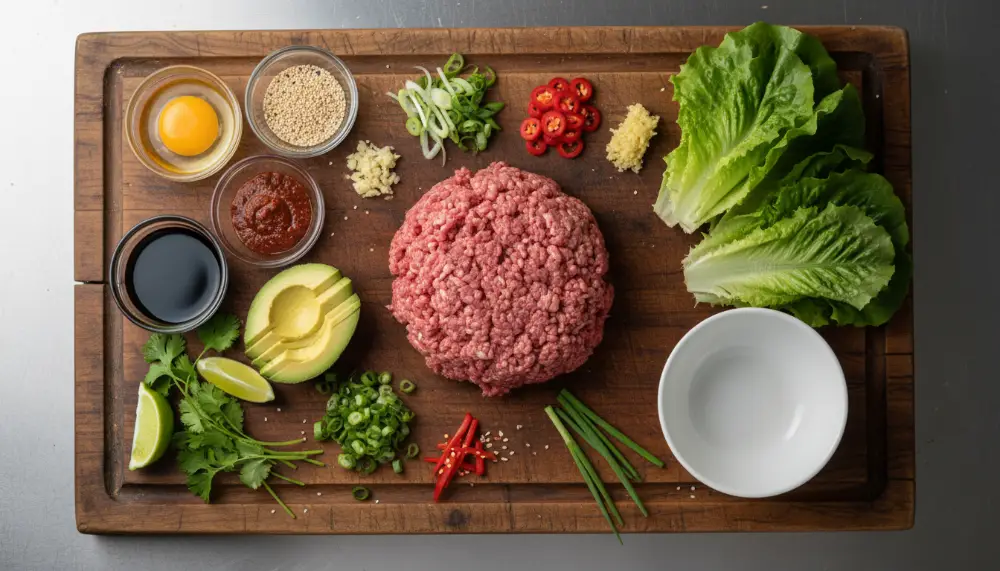
- 1 1 lb Lean Ground Beef (90/10)
- 2 3 cloves Garlic, minced
- 3 1 tbsp Fresh Ginger, grated
- 4 1/4 cup Low-Sodium Soy Sauce
- 5 1/4 cup Brown Sugar or 1/2 Grated Asian Pear
- 6 1 tbsp Toasted Sesame Oil
- 7 1/2 tsp Red Pepper Flakes
- 8 3 cups Cooked Jasmine Rice
- 9 2 Green Onions, sliced
- 10 1 tsp Toasted Sesame Seeds
Instructions
- 1 In a large skillet over medium-high heat, brown the ground beef until fully cooked and slightly crispy. Drain excess fat.
- 2 Stir in minced garlic and grated ginger, cook for 1 minute until fragrant.
- 3 Pour in soy sauce, brown sugar (or pear), sesame oil, and red pepper flakes. Simmer for 3-5 minutes until the sauce coats the meat.
- 4 Serve the beef over bowls of warm jasmine rice.
- 5 Garnish generously with sliced green onions and toasted sesame seeds.
The Historical Journey of the Korean Ground Beef Bowl
While the Korean Ground Beef Bowl is often celebrated as a modern meal-prep staple, its culinary DNA is rooted in thousands of years of tradition. The dish is a direct descendant of Bulgogi, which translates literally to “fire meat.” This technique of grilling marinated meat has defined Korean cuisine since the Goguryeo era (37 BCE to 668 CE). Originally known as maekjeok, the dish featured beef skewered and grilled over open flames, a method that evolved through the Joseon Dynasty into a sophisticated royal court delicacy called neobiani.
The transformation from thinly sliced premium ribeye to ground beef represents a fascinating shift in global food culture. Following the Korean War, as beef became more accessible but remained relatively expensive, home cooks sought ways to stretch their ingredients. In the 21st century, the ground beef variation emerged as a “shortcut” masterpiece. By using ground meat, the surface area is maximized, allowing the meat to absorb the complex ginger and garlic aromatics instantly without the need for hours of marinating. This adaptation has turned a once royal luxury into a fast-casual global phenomenon.
The Science of Flavor: The Holy Trinity of Korean Seasoning
What makes a Korean Ground Beef Bowl so addictive? It is the calculated balance of the “holy trinity”: salty, sweet, and pungent. In professional kitchens, we achieve this by utilizing the Maillard reaction. When you sear the ground beef in a hot skillet, the sugars and proteins react to create a caramelized crust. This is where the depth of flavor lives. Do not break the meat into tiny pieces immediately, let it sit undisturbed for two minutes to develop that dark, savory lace.
The Secret Sweetness: Pear vs. Sugar
While brown sugar is the standard for most home recipes, professional chefs often use finely grated Nashi (Asian) pear. This fruit contains an enzyme called calpain, which acts as a natural tenderizer. It also provides a floral, nuanced sweetness that is far more complex than refined sugar. If you cannot find Asian pear, a Red Delicious or Fuji apple serves as an excellent substitute. Using a Cuisinart 8 Cup Food Processor (https://amzn.to/47Nhbg8) allows you to pulse these aromatics into a fine paste that melts into the sauce, providing an incredible texture that hand-chopping cannot replicate.
Alcohol-Free Depth: Mastering the Sauce Without Mirin
Traditional Korean marinades often utilize mirin (sweet rice wine) to add a glossy sheen and a subtle acidity. However, achieving this same professional finish is easily possible without alcohol. To replicate the profile of mirin, use a mixture of one tablespoon of rice vinegar and half a teaspoon of sugar. This provides the necessary acidity to cut through the richness of the beef fat.
Alternatively, using a splash of white grape juice or apple juice adds the necessary sugars for a beautiful glaze. For those seeking an even deeper umami profile, a small amount of beef broth mixed with a teaspoon of apple cider vinegar can mimic the fermented complexity of traditional Korean wines without the alcohol content. This ensures the dish remains accessible for all dietary preferences while maintaining its authentic flavor profile.
Nutritional Excellence: A Balanced Power Bowl
The Korean Ground Beef Bowl is not just a flavor powerhouse, it is a nutritional powerhouse. A standard serving offers a robust macronutrient profile that fuels both the body and the brain. Lean ground beef provides high-quality protein, which is essential for muscle repair and metabolic health. It is also one of the best sources of Heme Iron, which is more easily absorbed by the body than plant-based iron, along with Zinc and Vitamin B12.
For those watching their carbohydrate intake, the rice base can be swapped for cauliflower rice or a bed of fresh greens. Using the Cosori 9-in-1 TurboBlaze Air Fryer 6 Qt (https://amzn.to/4hRWmVq) to roast broccoli or snap peas as a side addition adds essential fiber and micronutrients like Vitamin C and Vitamin K, turning the bowl into a complete, health-conscious meal.
Professional Variations: Elevating the Basic Bowl
Once you have mastered the foundational recipe, you can experiment with professional pivots to keep your meal rotation exciting.
- The Spicy Kick: Incorporate two tablespoons of Gochujang (Korean chili paste) directly into the beef as it finishes cooking. This adds a smoky, fermented heat that transforms the sauce into a thick, vibrant glaze.
- The Vegetarian Pivot: Replace the beef with crumbled extra-firm tofu or finely diced mushrooms. To get the right texture, use a Ninja BN751 Professional Plus DUO Blender (https://amzn.to/3LCDyNR) to pulse the mushrooms until they resemble the texture of ground meat. Sauté them until all moisture is evaporated to achieve that signature “meaty” bite.
- The Crispy Texture: For a restaurant-quality finish, add a sunny-side-up egg on top. The runny yolk acts as a secondary sauce, adding a luxurious creaminess that balances the spicy red pepper flakes.
Meal Prep and Long-Term Storage
This recipe is a favorite for meal preppers because the flavors actually improve as they sit. The ginger and garlic continue to infuse the meat over 24 to 48 hours. To keep your meals fresh and prevent the rice from drying out, storage is key. We recommend the Rubbermaid Brilliance Glass Storage Set of 9 (https://amzn.to/4oD0YkY). These leak-proof containers are perfect for stacking and ensure your Korean beef remains succulent when reheated.
For those who like to prep in bulk for the entire month, the FoodSaver Vacuum Sealer Machine (https://amzn.to/4qWgVnS) is an essential tool. You can vacuum seal the cooked beef mixture and freeze it for up to three months. This prevents freezer burn and preserves the vibrant aromatics of the ginger and sesame oil, allowing you to have a gourmet meal ready in the time it takes to boil a pot of rice.