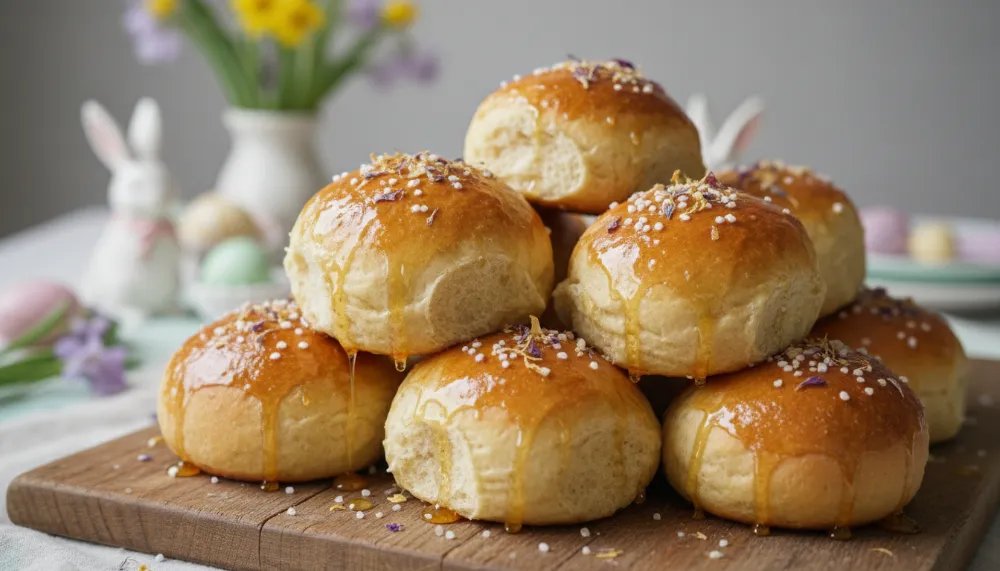

These Honey Easter Dinner Rolls are the ultimate holiday centerpiece, combining a pillowy texture with a delicate floral sweetness that perfectly complements any festive meal. One bite of these golden, honey-glazed clouds will transform your holiday tradition forever and leave your guests begging for the recipe.
Honey Easter Dinner Rolls
Ingredients
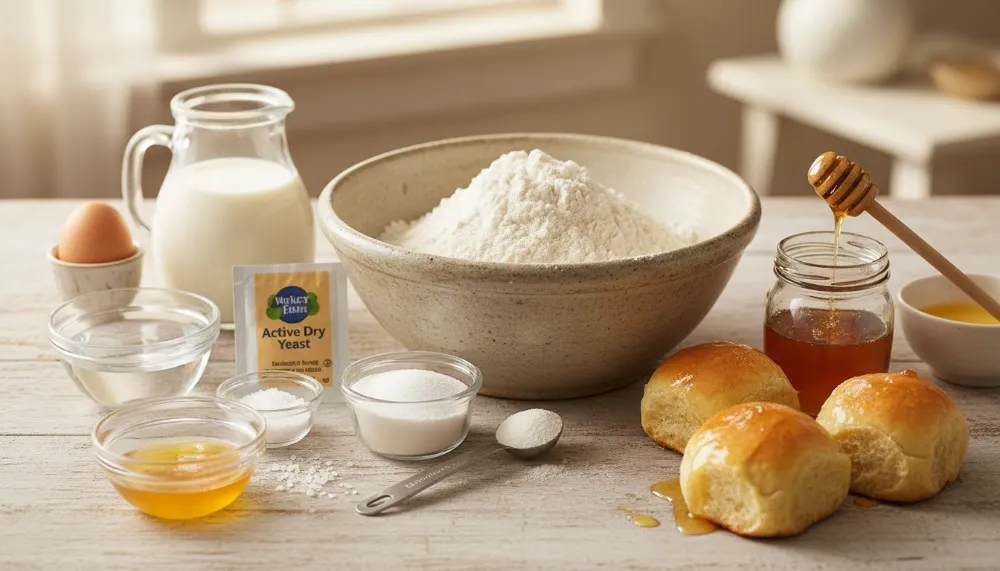
- 1 cup warm whole milk (110°F)
- 2.25 tsp active dry yeast
- 1/3 cup organic honey
- 4 tbsp unsalted butter, melted and cooled
- 1 large egg, room temperature
- 1 tsp fine sea salt
- 3.5 to 4 cups all-purpose flour
- 2 tbsp extra honey and butter for glazing
Instructions
- 1 Whisk warm milk, yeast, and 1 teaspoon of the honey in a bowl. Let sit for 5 to 10 minutes until foamy.
- 2 Add remaining honey, melted butter, egg, and salt. Gradually mix in flour until a soft dough forms.
- 3 Knead dough on a floured surface for 5 to 7 minutes until smooth and elastic.
- 4 Place dough in a greased bowl, cover, and let rise in a warm spot for 1 to 1.5 hours until doubled in size.
- 5 Punch down dough and divide into 12 to 15 equal pieces. Roll into smooth balls and place in a greased 9×13 baking dish.
- 6 Cover and let rise again for 30 to 45 minutes. Pre-heat oven to 350°F.
- 7 Bake for 20 to 25 minutes until golden brown. Brush immediately with a mixture of melted butter and honey.
The History and Heritage of Sweetened Holiday Breads
The tradition of serving sweet, honey enriched breads at Easter traces back to ancient culinary practices that celebrate the arrival of spring and the abundance of nature. These Honey Easter Dinner Rolls are more than just a side dish, they are a culinary bridge to a past where honey was the primary sweetener and bread was a sacred offering.
The concept of the “bun” is believed to have originated in ancient Greece, where small sacred breads made with fine flour and honey were called bous, meaning “ox”, and offered to the gods. Over centuries, these traditions evolved and migrated. In medieval Europe, enriched doughs, using milk, butter, and honey, became synonymous with Christian feast days. During Lent, dairy and fats were often restricted, making their return at Easter a significant celebration of renewal and indulgence.
Honey dinner rolls are a direct descendant of the “spiced bun” tradition. While some regions developed the Hot Cross Bun, flavored with spices and fruit, others maintained a simpler, honey glazed version to symbolize the “sweetness of life” following the spring harvest. This focus on purity and simple ingredients makes the honey roll a timeless favorite that fits seamlessly onto any modern holiday table.
Why Honey Makes the Difference: The Science of Softness
Achieving that specific texture, soft, fluffy, and irresistible, requires an understanding of how honey interacts with dough. Unlike granulated sugar, honey is a hygroscopic substance, meaning it attracts and retains moisture. This property ensures that your Honey Easter Dinner Rolls stay tender for days longer than rolls made with standard white sugar.
Furthermore, honey contains natural enzymes and acids that can assist in breaking down gluten just enough to create a more tender crumb without sacrificing the structural integrity of the roll. When you bite into one of these rolls, the honey doesn’t just provide sweetness, it provides a unique mouthfeel that feels luxurious and artisanal. If you are prepping your kitchen for a big holiday bake, using the right tools can make a difference. The Cuisinart 8 Cup Food Processor is essential for fast chopping and slicing during meal prep, especially when you are preparing herbs for the savory variations of these rolls.
Nutritional Profile of a Classic Honey Dinner Roll
While holiday rolls are an indulgence, they provide a balanced nutritional profile that fits within a festive meal plan. Understanding what goes into each bite helps you appreciate the quality of the ingredients used.
- Calories: 110 to 130 kcal
- Total Fat: 2g to 4g (primarily from butter or vegetable oil)
- Carbohydrates: 20g to 24g (with 4g to 6g from sugars, including honey)
- Protein: 3g to 4g
- Fiber: ~1g
- Micronutrients: Small amounts of Calcium (approx. 4% DV) and Iron (approx. 4% DV), often enriched through the flour used.
Professional Flavor Variations for the Modern Table
To elevate these rolls while strictly adhering to dietary requirements, consider these professional variations. These options focus on savory and aromatic profiles that pair perfectly with beef or chicken main courses, ensuring there is no need for pork-based additives.
Brown Butter & Sage
Incorporate browned butter into the dough and brush with a sage-infused honey glaze. The nuttiness of the butter complements the honey’s sweetness beautifully. This version is spectacular when served alongside a roasted beef tenderloin or herb-crusted chicken.
Garlic & Rosemary Sea Salt
Fold finely minced fresh rosemary into the dough before the first rise. After baking, brush with honey and sprinkle with roasted garlic flakes and flaky sea salt. These rolls are ideal for soaking up juices from a rich beef pot roast.
Sharp Cheddar & Chive
Add aged sharp cheddar and fresh snipped chives to the dry ingredients before mixing. The cheese creates a lacy, golden crust that provides a savory counterpoint to the honey dough. This pairs excellently with a hearty beef stew or grilled chicken breast.
Smoked Paprika & Honey
Whisk a pinch of smoked paprika into the honey glaze for a subtle “fire-roasted” depth without high heat. This variation complements smoked beef brisket or roasted poultry perfectly. For those looking to create a complete meal, the Cosori 9-in-1 TurboBlaze Air Fryer 6 Qt roasts chickpeas and vegetables perfectly with its large family capacity, making it a great companion for your holiday baking efforts.
Chef’s Tips for the Perfect Rise
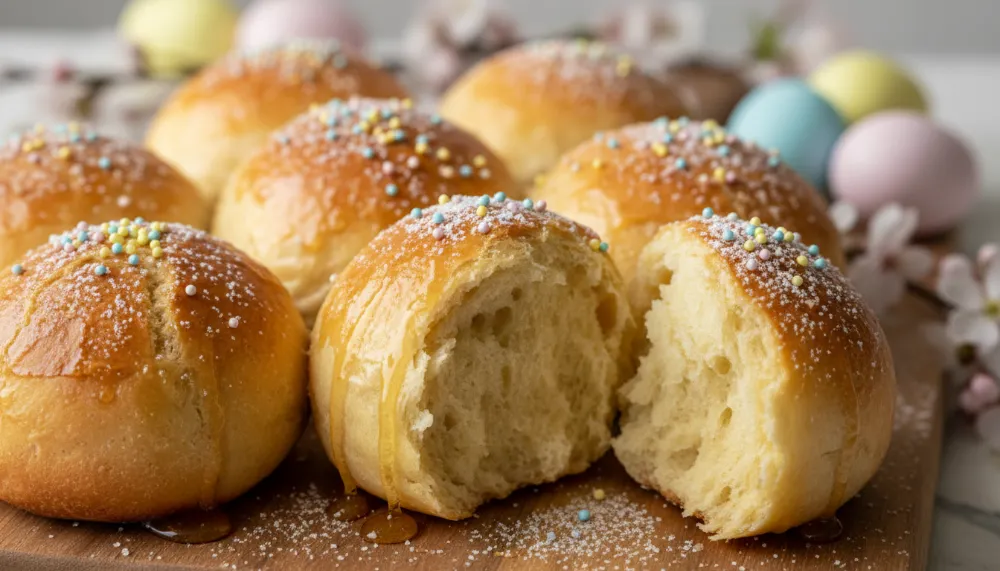
The secret to the softest Honey Easter Dinner Rolls lies in the fermentation process. Yeast is a living organism, and it thrives in a warm, moist environment. Ensure your milk is between 105°F and 115°F. If it is too cold, the yeast won’t activate, if it is too hot, you risk killing the yeast entirely. When mixing, avoid adding too much flour. The dough should be slightly tacky to the touch, which ensures a high moisture content that results in that signature fluffy texture.
If you are looking to create a sauce or a spread to go with your rolls, such as a honey-mustard or a specialized vegetable dip, the Ninja BN751 Professional Plus DUO Blender is perfect for whipping up tahini sauce or harissa paste with its powerful 1000W motor.
Chef’s Substitutions (Mandatory Compliance)
In maintaining a professional kitchen, substitutions must be handled with care to respect dietary needs. For any recipe calling for alcohol or wine based glazes, simply replace it with apple juice for sweetness, beef broth for savory depth, or a balsamic vinegar reduction for acidity. Regarding meats, these rolls are best served with beef bacon, chicken sausage, or a vegetarian mushroom gravy. Lard should never be used, instead, stick to high-quality butter or vegetable shortening to maintain the integrity of the recipe.
Storing and Reheating Your Rolls
Honey rolls are best served warm, but they store remarkably well. Keep them in an airtight container at room temperature for up to three days. To reheat, wrap them in foil and place them in a 300°F oven for 5 to 10 minutes. This gentle heating method revives the honey glaze and restores the internal fluffiness without drying out the crumb.