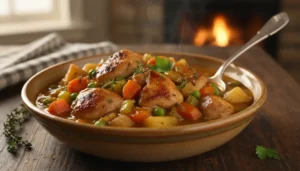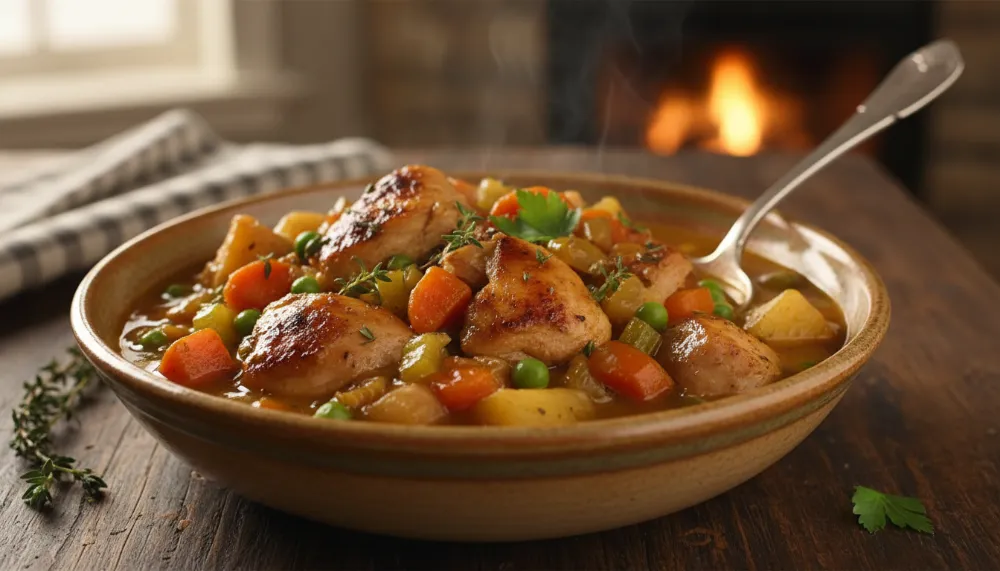

Few dishes evoke a sense of home and warmth quite like a bowl of Hearty Chicken Stew: A Comforting Classic, a meal that bridges the gap between simple sustenance and gourmet satisfaction. This dish is a masterclass in slow-simmered flavors, combining tender protein with earthy vegetables in a broth that feels like a hug for the soul.
Hearty Chicken Stew
Ingredients
- 1 3 lbs Bone-in, skinless chicken thighs (trimmed of excess fat)
- 2 2 tbsp Beef tallow or high-quality olive oil
- 3 2 large yellow onions, finely diced
- 4 4 large carrots, peeled and sliced into thick rounds
- 5 3 stalks celery, chopped into half-inch pieces
- 6 4 cloves garlic, minced
- 7 1 lb Yukon Gold potatoes, cubed
- 8 6 cups low-sodium chicken broth
- 9 2 tbsp apple cider vinegar
- 10 1 tbsp tomato paste and 1 tsp smoked paprika
- 11 Fresh thyme and rosemary sprigs tied with kitchen twine
Instructions
- 1 In a large heavy-bottomed pot, heat the beef tallow over medium-high heat. Season chicken with salt and pepper, then sear until deeply browned on both sides. Remove and set aside.
- 2 Add onions, carrots, and celery to the pot. Sauté for 8 minutes until softened. Stir in the garlic, tomato paste, and smoked paprika, cooking for another 2 minutes until fragrant.
- 3 Pour in the apple cider vinegar, scraping the bottom of the pot to release the brown bits (the fond).
- 4 Return the chicken to the pot and add the chicken broth, potatoes, and herb bundle. Bring to a boil, then reduce heat to low and simmer, partially covered, for 45 to 55 minutes.
- 5 Remove the herb bundle. Use a fork to slightly shred the chicken if desired. Taste and adjust seasoning before serving hot.
The Historical Journey of the Chicken Stew
To truly appreciate Hearty Chicken Stew: A Comforting Classic, one must look back through the lens of culinary history. Chicken stew is a global culinary staple that transcends borders, offering a balance of protein, starch, and slow-simmered aromatics. By substituting traditional wine-based deglazing with bright acids and replacing pork-based fats with beef or plant-based alternatives, the dish retains its depth while meeting specific dietary standards.
Antiquity and the Roman Influence
One of the earliest recorded versions of chicken stew appears in the 4th-century Roman text De Re Coquinaria. These ancient stews relied on vinegar, honey, and a heavy use of Mediterranean herbs like cumin and coriander to create a sweet-and-sour profile. By the 6th century, Frankish physicians prescribed chicken stews flavored with pepper and cloves as a restorative “health food,” recognizing the nutrient-density of bone-in poultry simmered over time. This ancient wisdom laid the foundation for the modern comfort food we enjoy today.
The Evolution of the American “Muddle”
In the Southern United States, “Chicken Muddle” (or Chicken Mull) emerged in the 18th century as a community-driven feast. Originally a fish-based stew cooked in large iron pots by coastal communities, it moved inland and transitioned to chicken as poultry became more accessible. It traditionally uses a thick base of slow-cooked tomatoes, potatoes, and corn, often thickened with crushed crackers to provide a unique, creamy texture that differs from the flour-dredged stews of Europe.
The Science of Flavor: Why Thighs Rule
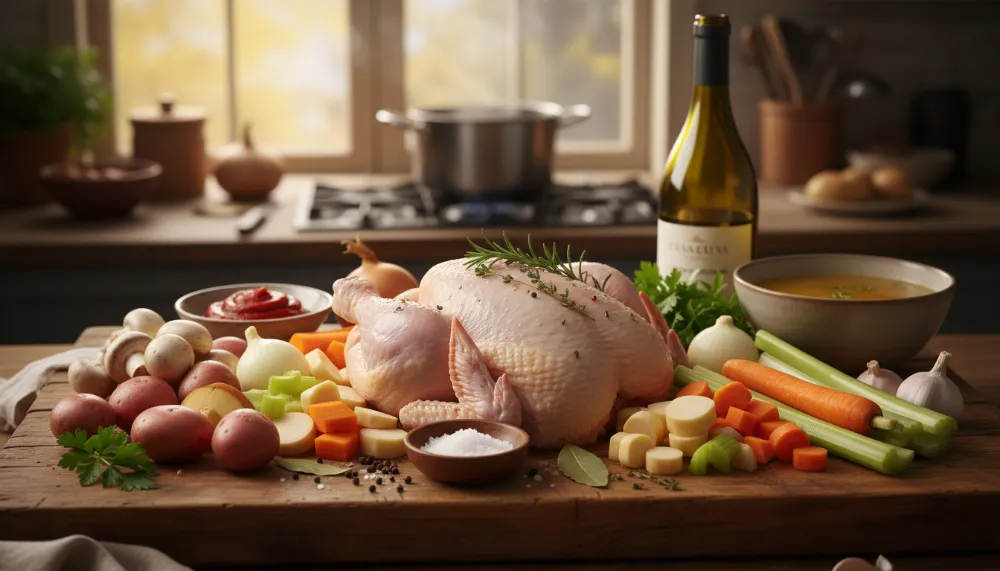
When making Hearty Chicken Stew: A Comforting Classic, the choice of meat is paramount. While many lean toward chicken breasts for their lower fat content, the professional choice is almost always the thigh. Chicken thighs contain a higher concentration of connective tissue and fat, which, when subjected to low and slow heat, break down into gelatin. This gelatin provides a mouth-coating silkiness to the broth that a lean breast simply cannot replicate.
Furthermore, the Maillard reaction, the chemical process that browns the meat, occurs more efficiently on the skin and darker meat of the thigh, creating those complex, savory notes that define a high-quality stew. Using the Cuisinart 8 Cup Food Processor: https://amzn.to/47Nhbg8 is essential for fast chopping and slicing during meal prep, ensuring your vegetables are uniform in size so they cook at the same rate as the chicken.
Building the Umami Foundation Without Pork
Traditional European stews often begin with lardons or bacon to provide a smoky, salty base. However, for those avoiding pork, you can achieve the same complexity by utilizing beef tallow or high-quality vegetable oils infused with smoked paprika. This swap maintains the deep, smoky undertone that characterizes a hearty meal.
Adding a tablespoon of tomato paste and allowing it to caramelize against the bottom of the pot creates a rich, brick-red base that mimics the depth of a long-simmered beef stew. For a perfectly smooth transition in texture, the Ninja BN751 Professional Plus DUO Blender: https://amzn.to/3LCDyNR is perfect for tahini sauce and harissa paste with its 1000W motor, which can also be used to blend a small portion of the stew’s cooked vegetables and broth to create a thick, creamy consistency without the need for heavy cream.
Nutritional Profile of a Hearty Bowl
A standard serving (approx. 1.5 to 2 cups) of a “hearty” chicken stew, containing dark meat chicken, root vegetables, and a thickened broth, typically offers a powerhouse of nutrition:
* **Calories:** 420–580 kcal
* **Protein:** 35–41g (Primarily from chicken thighs or drumsticks)
* **Carbohydrates:** 28–40g (Derived from potatoes, carrots, and peas)
* **Fat:** 18–30g (Varies based on the use of skin-on chicken or added fats like beef tallow or oil)
* **Micronutrients:** High in Vitamin A (from carrots), Potassium (from potatoes), and B vitamins (from chicken).
Global Variations: A World of Chicken Stew
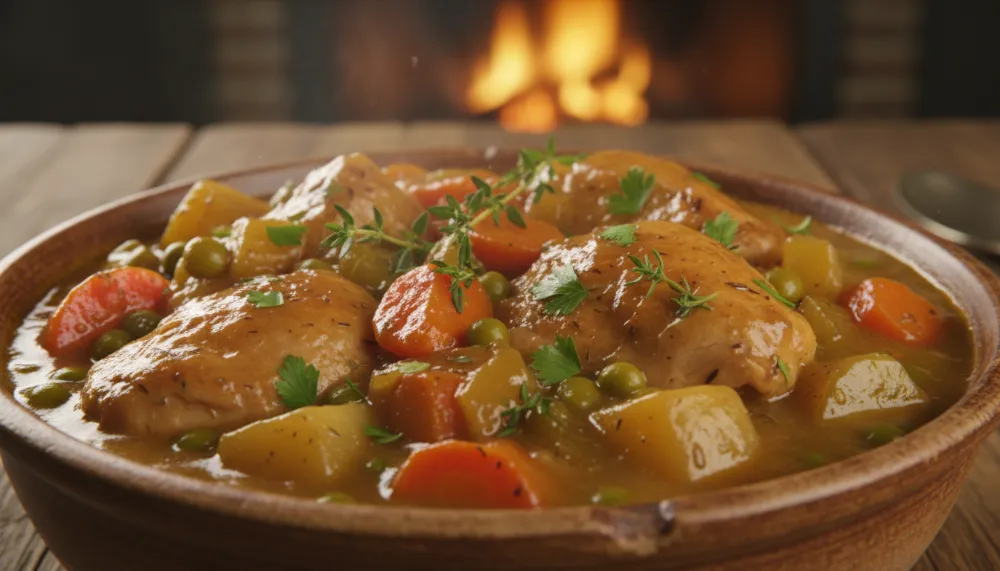
Hearty Chicken Stew: A Comforting Classic is not a monolith; it is a canvas for cultural expression across the globe.
East Africa: Ethiopian Doro Wat
Ethiopian Doro Wat is a celebrated spicy stew characterized by a long-simmered onion base and a complex spice blend known as berbere. Unlike Western stews, the onions are cooked without oil for a long period until they form a thick paste. Hard-boiled eggs are added at the end, making it one of the most unique and protein-packed variations in the world.
South America: Colombian Sudado de Pollo
Colombian Sudado de Pollo is a “sweated” chicken stew that highlights the simplicity of bone-in chicken, yuca, and potatoes in a light tomato and onion broth. It is a lighter, more refreshing take on the concept of a stew, often served with a side of white rice and avocado.
The Professional Technique: Acid and Brightness
In professional kitchens, the secret to a stew that doesn’t feel “heavy” or one-dimensional is the addition of acid. While many recipes call for white wine, we achieve a superior, bright finish by using apple cider vinegar or a splash of lemon juice. The acid cuts through the richness of the rendered chicken fat and the starchy potatoes, elevating the entire flavor profile.
For a professional twist, consider the “Creamy Citrus Variation” where you whisk a small amount of lemon juice and an egg yolk into a portion of the warm broth before adding it back to the pot. This technique, called tempering, creates a luxurious, silky texture and a bright, zesty finish without any alcohol or pork products.
Enhancing the Experience with Sides
No stew is complete without the perfect accompaniment. While a crusty piece of sourdough bread is the standard, you can elevate your meal by serving it alongside crispy air-fried vegetables. The Cosori 9-in-1 TurboBlaze Air Fryer 6 Qt: https://amzn.to/4hRWmVq roasts chickpeas and vegetables perfectly with a large family capacity, providing a crunch that contrasts beautifully with the soft, tender elements of the Hearty Chicken Stew: A Comforting Classic.
Storage and Reheating for Maximum Flavor
One of the greatest secrets of stew is that it often tastes better the second day. As the stew cools, the proteins and carbohydrates continue to release flavors into the liquid, and the starch from the potatoes further thickens the sauce. To store, allow the stew to cool to room temperature before transferring it to airtight containers. It can be refrigerated for up to four days or frozen for up to three months. When reheating, add a small splash of chicken broth to loosen the consistency, as the gelatin will have set the stew into a thick, jelly-like state in the fridge.