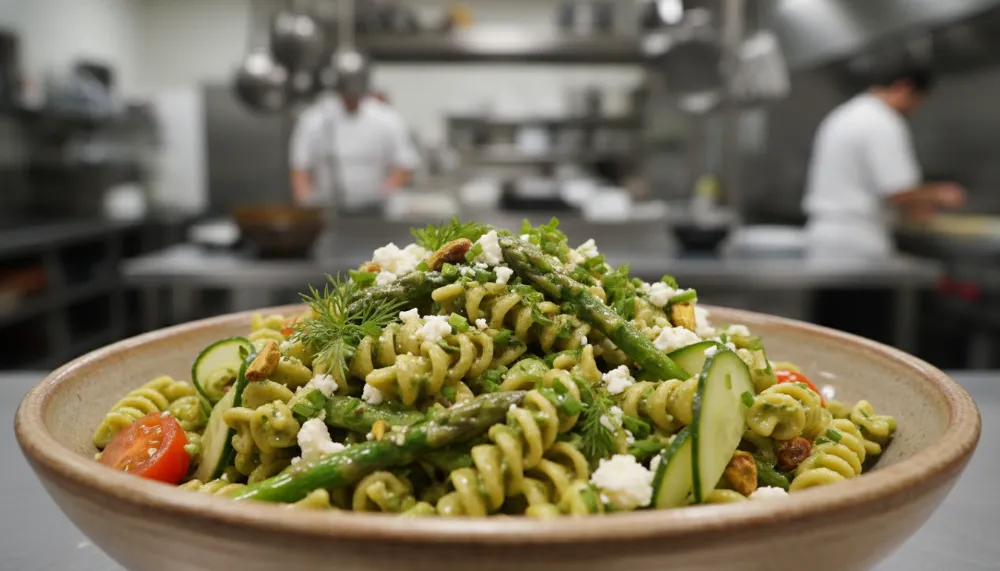

This vibrant green goddess pasta salad combines a legendary herb-packed dressing with perfectly al dente pasta for the ultimate refreshing meal. It is a brilliant fusion of historical San Francisco flair and modern meal-prep convenience that satisfies every craving.
Green Goddess Pasta Salad
Ingredients
- 1 lb Fusilli or Rotini pasta
- 1 cup Greek Yogurt (Plain)
- 1 cup fresh Italian Parsley
- 1/2 cup fresh Chives, chopped
- 1/4 cup fresh Basil leaves
- 2 cloves Garlic, minced
- 1 tbsp White Vinegar or Lemon Juice
- 1 tsp Miso Paste (for umami)
- 2 cups Baby Spinach
- 1 English Cucumber, sliced
- 1 cup frozen Peas, thawed
Instructions
- Boil pasta in salted water until al dente. Drain and rinse with cold water to stop cooking.
- In a Ninja BN751 Professional Plus DUO Blender, combine yogurt, parsley, chives, basil, garlic, vinegar, and miso. Blend until neon green and smooth.
- In a large bowl, toss the cold pasta with spinach, cucumbers, and peas.
- Pour the dressing over the salad and toss until every noodle is coated.
- Chill for at least 30 minutes before serving.
The Fascinating History of Green Goddess
The green goddess pasta salad is a modern, carbohydrate-rich adaptation of the classic 1920s American dressing. Known for its vibrant color and herb-forward flavor, it has evolved from a simple salad topping into a versatile main or side dish often featuring seasonal vegetables and varied proteins. The identity of this dish was born in 1923 at the Palace Hotel in San Francisco. Executive Chef Philip Roemer created the original dressing to honor actor George Arliss, who was staying at the hotel while starring in the popular play “The Green Goddess.”
The original recipe from 1923 was a creamy emulsion of mayonnaise, tarragon vinegar, chives, parsley, scallions, and anchovies. It was famously served over a salad of canned artichokes, though it quickly became a staple for seafood and fresh greens. During the 1940s and 1950s, the recipe was popularized through national cookbooks and eventually commercialized in bottled forms. The transition into a pasta-based dish occurred much later, during the late 20th-century boom of deli-style cold salads, where short pasta shapes were found to be excellent vessels for the thick, herbaceous dressing.
Nutritional Profile of a Modern Classic
When constructing a high-quality green goddess pasta salad, understanding the nutritional breakdown is essential for balance. A typical serving, approximately 1.5 cups, generally offers 300 to 550 calories depending on the base. For those looking to increase protein, the shift from mayonnaise to Greek yogurt is a professional move that adds probiotics and satiating power. The micronutrient density is impressive, specifically high in Vitamin K and Vitamin A due to the sheer volume of fresh herbs and leafy greens like spinach used in the sauce.
Professional Flavor Variations and Substitutions
To keep your green goddess pasta salad versatile while strictly adhering to dietary standards, consider these high-authority variations. Remember, no pork or alcohol should ever enter the mix, ensuring the dish remains accessible and clean.
1. The Grilled Citrus Chicken Variation
This version focuses on a bright, citrus-heavy profile to complement the charred flavor of the meat. Use sliced grilled chicken breast seasoned with lemon and black pepper. The dressing should lean on a base of Greek yogurt blended with fresh basil, chives, and lemon juice. For the pasta, choose casarecce or gemelli, the twists are designed to trap the thick herb dressing. To prep the vegetables, the Cosori 9-in-1 TurboBlaze Air Fryer 6 Qt is perfect for roasting asparagus or broccoli to add a smoky depth without extra oil: https://amzn.to/4hRWmVq.
2. The Peppery Steak and Arugula Variation
A heartier, more savory take that replaces traditional seafood notes with robust beef. Use seared flat iron or flank steak, thinly sliced against the grain. The dressing remains traditional but benefits from added Dijon mustard and extra garlic. Since we avoid wine-based vinegars, replace them with apple cider vinegar or lemon juice to maintain that necessary acidity. Incorporate peppery arugula and charred corn for texture. To prep the herbs quickly, the Cuisinart 8 Cup Food Processor is a meal prep essential: https://amzn.to/47Nhbg8.
3. The Gourmet Garden (Vegetarian)
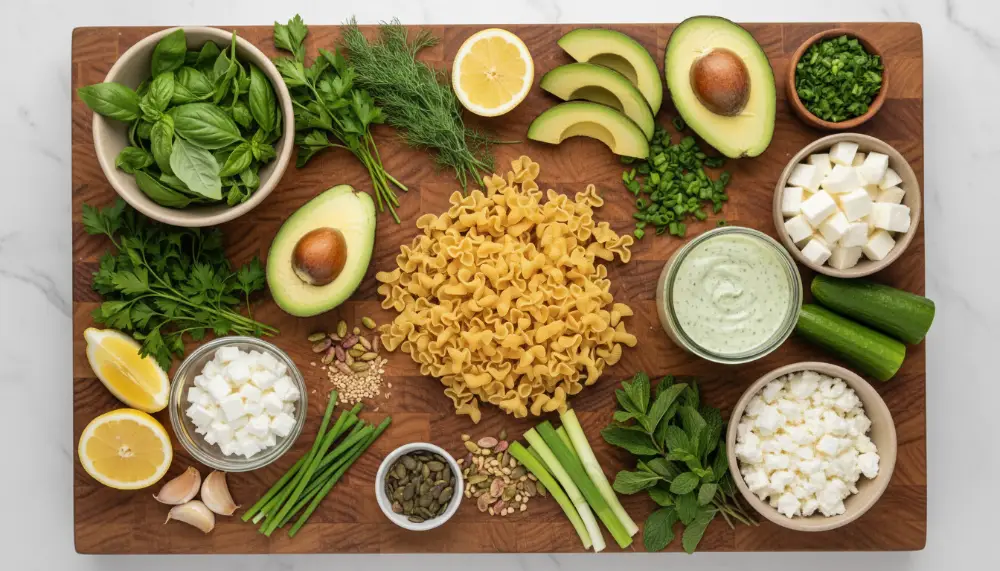
For a sophisticated plant-based option, focus on texture and green density. Use crispy roasted chickpeas or cubes of firm feta cheese. An avocado-based goddess sauce works beautifully here, blend ripe avocado with lime juice, spinach, cilantro, and parsley. Instead of wine-based liquids, use vegetable broth to adjust the consistency. This variation is best served with marinated artichoke hearts and sugar snap peas.
Essential Equipment for the Perfect Salad
The secret to a world-class green goddess pasta salad lies in the emulsion of the dressing. You want it to be silky, not chunky. The Ninja BN751 Professional Plus DUO Blender with its 1000W motor is the gold standard for this task: https://amzn.to/3LCDyNR. It pulverizes fibrous herbs like parsley and kale into a smooth, vibrant liquid that clings to the pasta perfectly.
Storage and Meal Prep Mastery
Pasta salads are notorious for absorbing dressing over time, which can lead to a dry dish the next day. To combat this, professionals recommend storing the dressing and the pasta components separately if you aren’t serving immediately. Using the Rubbermaid Brilliance Glass Storage Set ensures your ingredients stay fresh and the dressing doesn’t leak: https://amzn.to/4oD0YkY. These containers are stackable and leak-proof, making them the ultimate choice for organized chefs.
If you are prepping ingredients like sliced cucumbers or cooked chicken days in advance, the FoodSaver Vacuum Sealer Machine is your best friend: https://amzn.to/4qWgVnS. It keeps ingredients fresh longer and prevents the oxidation of delicate herbs. When ready to serve, simply toss the pre-portioned ingredients together for a restaurant-quality meal in seconds.
Substitution Guide for Professional Results
When adapting recipes, it is crucial to maintain flavor balance while following restrictions. If a recipe calls for bacon, replace it with crispy seasoned beef strips or toasted walnuts for that salty crunch. Instead of wine or alcohol-based vinegars, utilize the bright acidity of citrus or the mellow tang of apple cider vinegar. If you miss the depth of anchovies but want to keep it vegetarian, a small amount of white miso paste or capers provides that necessary umami punch without the fish.
Frequently Asked Questions
Can I make this dairy-free?
Absolutely. You can replace the Greek yogurt with a high-quality cashew cream or a ripe avocado. This keeps the creamy texture while remaining entirely plant-based.
What pasta shape is best for green goddess pasta salad?
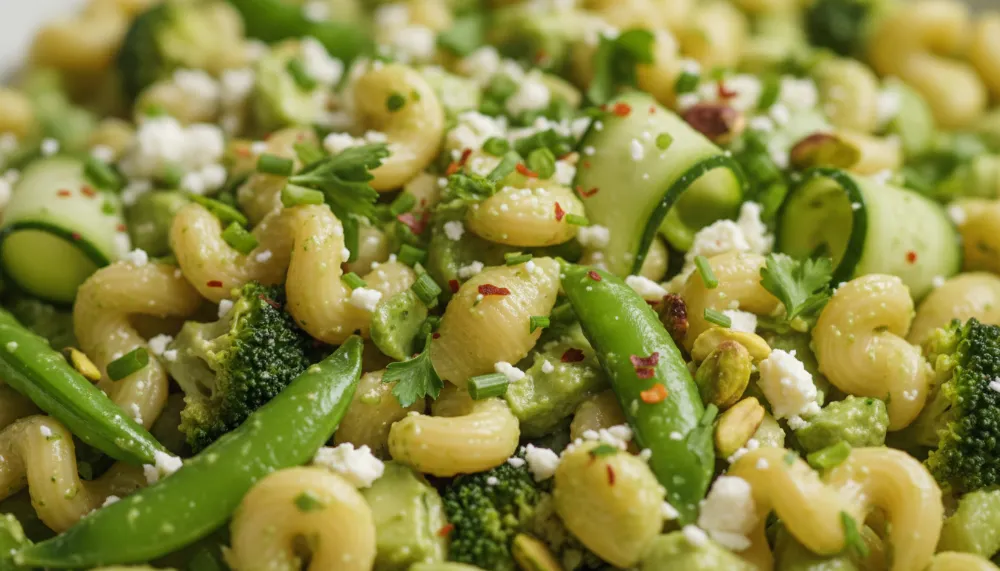
Short, textured shapes like rotini, fusilli, or campanelle are best. They have ridges and hollows that hold onto the thick, blended herb sauce much better than smooth pastas like penne.
How long does it last in the fridge?
While best enjoyed within 24 hours, it will stay safe and delicious for up to 3 to 4 days. If the pasta seems dry on day two, simply stir in a tablespoon of Greek yogurt or a splash of water to loosen the sauce back up.