

These Elote Deviled Eggs combine the smoky, tangy essence of Mexican street corn with the classic creaminess of stuffed eggs for the perfect party appetizer. One bite of these zesty treats and you will never go back to the basic version again, as they offer a complex flavor profile that satisfies every palate.
Gourmet Elote Deviled Eggs
Ingredients
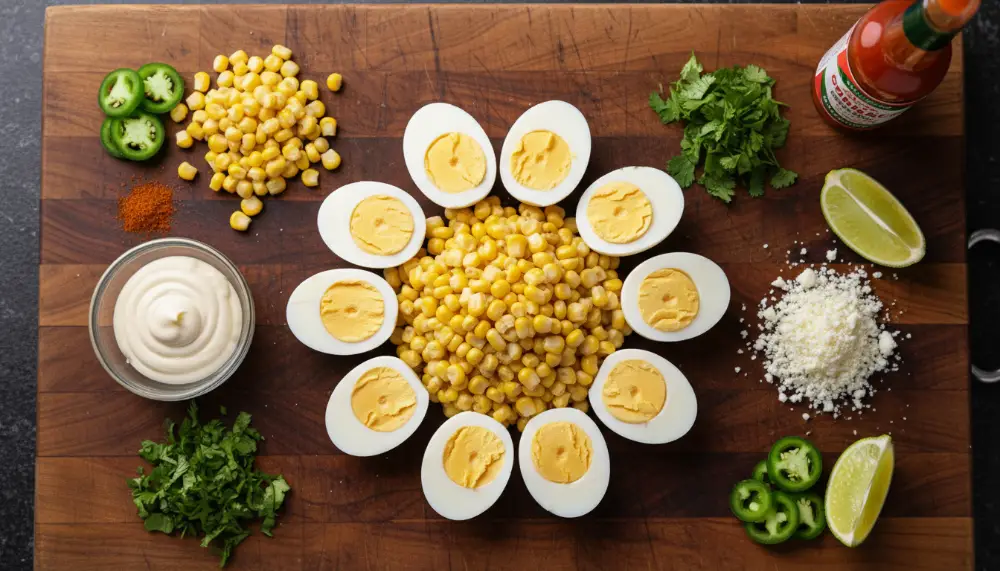
- 12 Large Eggs
- 1/2 Cup Mayonnaise
- 2 tbsp Sour Cream
- 1 tbsp Fresh Lime Juice
- 1/2 tsp Chili Powder
- 1/4 tsp Smoked Paprika
- 1/2 Cup Roasted Corn Kernels
- 1/4 Cup Crumbled Cotija Cheese
- 2 tbsp Chopped Cilantro
- 1/4 Cup Crispy Beef Bacon Bits
Instructions
- 1 Hard boil the eggs by placing them in a pot of cold water, bringing to a boil, then simmering for 10 minutes. Immediately transfer to an ice bath for 15 minutes.
- 2 Peel the eggs carefully and slice them in half lengthwise. Remove the yolks and place them in a food processor or bowl.
- 3 Blend yolks with mayonnaise, sour cream, lime juice, and spices until ultra-smooth.
- 4 Fold in half of the corn and half of the cotija cheese. Pipe the mixture back into the egg whites.
- 5 Garnish with remaining corn, cotija, cilantro, beef bacon bits, and a dusting of chili powder.
The Cultural Fusion of Elote Deviled Eggs
Elote Deviled Eggs represent a fascinating intersection of culinary traditions. On one hand, you have the classic deviled egg, a staple of Western picnics and holiday gatherings, which finds its roots in ancient Rome. On the other hand, you have Elote, the beloved Mexican street food consisting of grilled corn slathered in crema, chili, and cheese. By combining these two, we create a dish that is both nostalgic and excitingly modern. This fusion works so well because the mayonnaise and egg yolk base of the deviled egg mirrors the creamy coating traditionally used on Mexican street corn.
In contemporary food culture, “mash-up” dishes like Elote Deviled Eggs have gained massive popularity because they allow chefs to play with familiar textures while introducing bold, global flavors. The tender, protein-rich egg white serves as the perfect vessel for the explosion of sweet corn, salty cotija, and spicy chili. This dish is not just an appetizer, it is a conversation starter that brings the vibrant energy of Mexico City streets to any table.
The History and Origin of the Components
To truly appreciate Elote Deviled Eggs, we must look at the history of its two primary influences. The term “elote” comes from the Nahuatl word elotl, meaning “tender cob.” For the Aztecs and Mayans, corn was more than just food, it was a sacred entity. The modern version of elote, sold by street vendors (eloteros), evolved as dairy became more prevalent in Mexico. The combination of grilled corn with lime, chili, and cheese has become an iconic representation of Mexican culinary ingenuity.
Deviled eggs, meanwhile, have a surprisingly long history. The Romans were known to serve boiled eggs with spicy sauces as an opening course. The term “deviled” was adopted in the 18th century to describe foods that were prepared with a high level of spice or heat. When these two histories collide, the result is a sophisticated appetizer that honors the ancient reverence for corn and the long-standing tradition of the spiced egg. This recipe skips the common pork additions often found in modern fusion, opting instead for crispy beef bacon bits to provide that essential smoky crunch while respecting dietary preferences.
The Science of the Perfect Hard-Boiled Egg
The foundation of great Elote Deviled Eggs is a perfectly cooked egg. Nothing ruins a deviled egg faster than a rubbery white or a chalky yolk with a green sulfur ring. To avoid this, the technique is paramount. Start by placing your eggs in a single layer in a pot and cover them with cold water. Bringing the water to a boil along with the eggs ensures even cooking. Once the water reaches a rolling boil, turn off the heat, cover the pot, and let them sit for exactly 10 to 12 minutes.
For those who want a truly professional finish, using a high-quality tool like the Cosori 9-in-1 TurboBlaze Air Fryer 6 Qt can actually be a game-changer for “boiling” eggs without the water. Many chefs now use air fryers to roast eggs at 270°F for 15 minutes, resulting in a creamy texture that is hard to replicate on the stove. Regardless of the method, the most important step is the ice bath. Shocking the eggs in ice water stops the cooking process and causes the egg to shrink slightly inside the shell, making them much easier to peel without tearing the whites.
Essential Ingredients for Authentic Flavor
When making Elote Deviled Eggs, the quality of your ingredients will dictate the final result. Traditional elote uses Mexican Crema, but a mixture of high-quality mayonnaise and sour cream provides the necessary stability for a deviled egg filling. The corn is the star of the show. While canned corn can work in a pinch, roasted or charred corn is vastly superior. The caramelization of the natural sugars in the corn adds a depth of flavor that balances the richness of the yolk.
The cheese is another non-negotiable component. Cotija cheese, often referred to as the “Parmesan of Mexico,” is a dry, crumbly cow’s milk cheese that doesn’t melt. Its salty, milky punch is what gives Elote Deviled Eggs their authentic edge. If you cannot find cotija, a very dry feta is the closest substitute, though cotija is always preferred for its unique texture. For the spices, a blend of ancho chili powder and smoked paprika provides heat and a hint of “grill smoke” flavor even if you aren’t cooking over charcoal.
Professional Flavor Enhancements (No Pork, No Alcohol)
Many recipes call for bacon bits or a splash of white wine in the filling, but our Elote Deviled Eggs achieve incredible flavor without these ingredients. To replace the salt and smoke of pork, we recommend using crispy beef bacon. When fried until shattered, beef bacon provides a robust, savory flavor that pairs beautifully with the sweet corn. Another professional tip is to use a drop of liquid smoke in the yolk mixture to mimic the flavor of a street vendor’s charcoal grill.
Instead of using alcohol to provide acidity, we rely on a combination of fresh lime juice and a high-quality apple cider vinegar. This provides a bright, sharp “zip” that cuts through the fat of the mayonnaise and egg yolks. For an extra layer of umami, you can also add a teaspoon of nutritional yeast or a tiny amount of miso paste to the filling, which adds a savory depth without the need for pork-based products.
Recommended Professional Equipment
To achieve the smooth, restaurant-quality filling seen in gourmet Elote Deviled Eggs, the right tools are essential. Here are our top recommendations:
- Ninja BN751 Professional Plus DUO Blender: https://amzn.to/3LCDyNR (Why Perfect: Its 1000W motor ensures the yolk mixture is completely emulsified and silky smooth, which is the hallmark of a professional deviled egg.)
- Cosori 9-in-1 TurboBlaze Air Fryer 6 Qt: https://amzn.to/4hRWmVq (Why Perfect: Ideal for roasting the corn kernels to a perfect char and even for “boiling” the eggs themselves for a consistent result.)
- Cuisinart 8 Cup Food Processor: https://amzn.to/47Nhbg8 (Why Perfect: This is a meal prep essential for finely chopping the cilantro, jalapeños, and beef bacon with precision.)
- Rubbermaid Brilliance Glass Storage Set of 9: https://amzn.to/4oD0YkY (Why Perfect: These are the best for storing your prepared egg whites and filling separately if you are making them ahead of time, keeping everything fresh and leak-proof.)
- FoodSaver Vacuum Sealer Machine: https://amzn.to/4qWgVnS (Why Perfect: If you roast a large batch of corn for future Elote Deviled Eggs, this keeps the ingredients fresh in the freezer for months.)
The Art of the Presentation
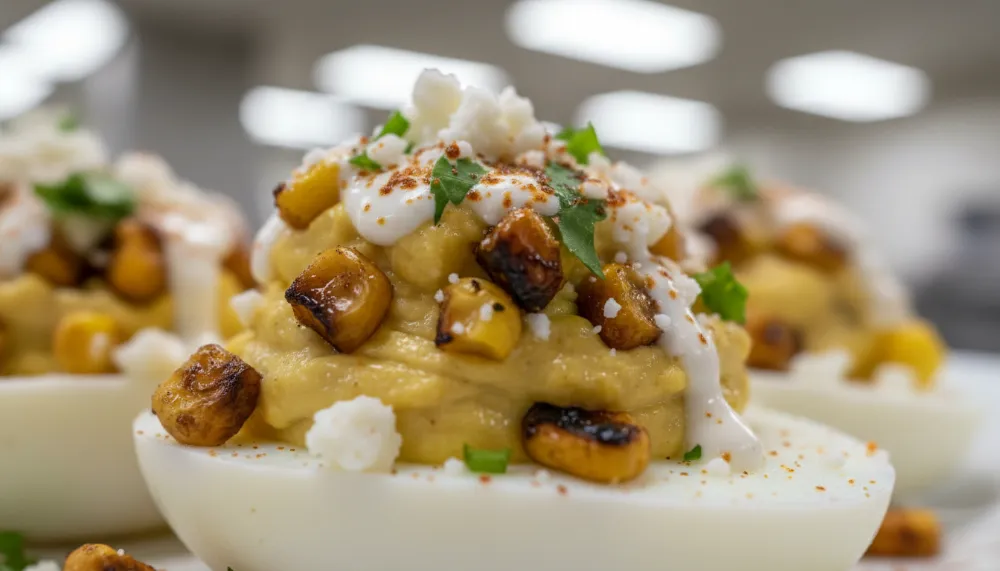
Presentation is key when serving Elote Deviled Eggs. Instead of simply spooning the filling into the whites, use a piping bag with a large open star tip. This creates a beautiful, ruffled texture that holds the garnishes in place. Because the filling contains corn kernels, ensure your piping tip is large enough to prevent clogging, or alternatively, purée half the corn into the yolk mixture and use the other half exclusively for topping.
To give the dish a final “chef’s kiss” touch, dip the rim of the empty egg whites into a mixture of Tajín and salt before filling. This creates a beautiful red rim that mimics the look of a chili-dusted corn cob. Arrange the eggs on a wooden platter and sprinkle the final garnishes from a height of about 12 inches to ensure even coverage. The contrast of the white egg, the yellow corn, the red chili powder, and the green cilantro makes for a visually stunning plate.
Storage and Food Safety Tips
Deviled eggs are delicate and should be handled with care. If you are preparing Elote Deviled Eggs for a party, it is best to store the components separately until shortly before serving. The whites can be kept in a Rubbermaid Brilliance Glass container, while the filling can be stored in a piping bag with the end snipped and folded over. This prevents the filling from drying out and keeps the whites from becoming soggy.
Never leave deviled eggs at room temperature for more than two hours. Because they are dairy and egg-based, they are susceptible to bacterial growth in warm environments. If you are serving them outdoors, consider placing the serving platter on a bed of ice. Properly stored in the refrigerator, these eggs will stay fresh for up to two days, though they are always best when consumed within 24 hours of assembly.
Frequently Asked Questions
Can I use frozen corn?
Yes, frozen corn is a great option for Elote Deviled Eggs. Simply thaw the corn and pat it dry before roasting it in a pan or the Cosori Air Fryer. Drying the corn is essential to ensure it gets a good char rather than just steaming in the pan.
How do I keep the eggs from sliding on the plate?
A professional trick to keep your Elote Deviled Eggs stable is to slice a tiny sliver off the bottom of the egg white. This creates a flat surface that allows the egg to sit firmly on the platter without rolling around.
What can I use instead of beef bacon?
If you prefer a vegetarian version, you can replace the beef bacon with smoked roasted chickpeas or even crushed corn chips. Both provide the necessary crunch and saltiness that the dish requires without using any meat products.