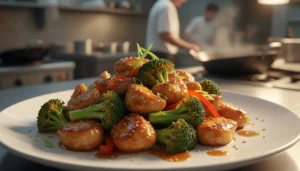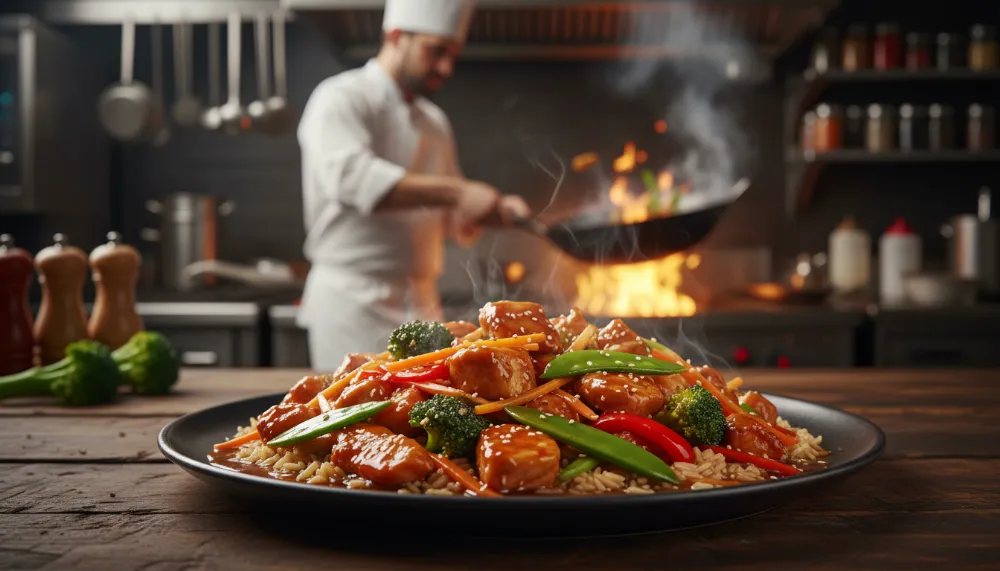

Forget the local delivery app because the secret to the ultimate home-cooked meal lies in a simple mathematical formula. Why This Easy Chicken Stir Fry Beats Takeout (It’s the Sauce Ratio) is the only guide you need to master the perfect balance of umami, sweet, and tang every single time.
The Ultimate 3-2-1 Chicken Stir Fry
Ingredients
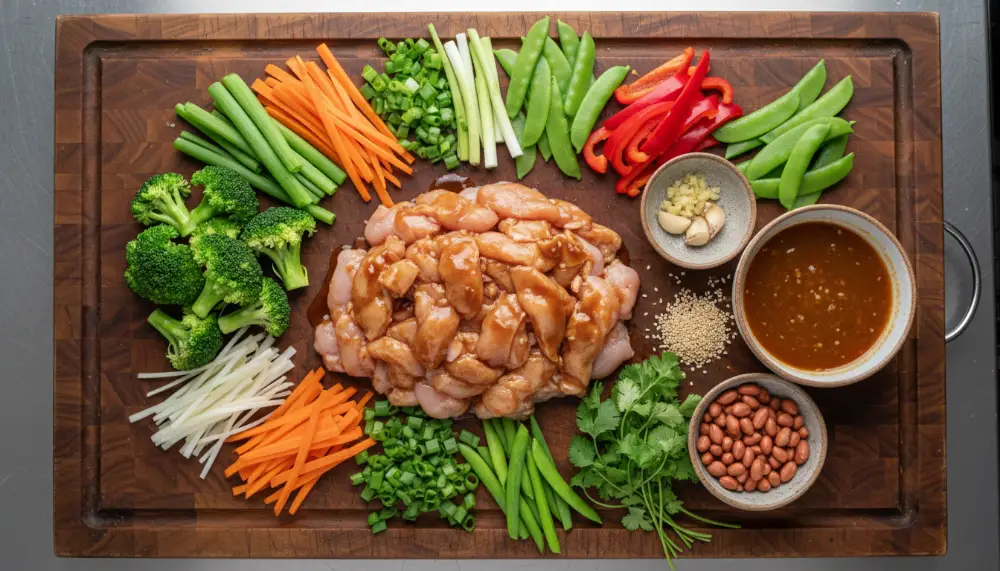
- 1.5 lbs Chicken Breast, sliced into thin strips
- 2 cups Broccoli florets
- 1 Red Bell Pepper, sliced
- 1 Large Carrot, julienned
- 3 tbsp Rice Vinegar + 3 tbsp Chicken Broth (The “3” Part)
- 4 tbsp Honey or Brown Sugar (The “2” Part)
- 2 tbsp Soy Sauce or Tamari (The “1” Part)
- 1 tbsp Cornstarch mixed with 1 tbsp cold water (Slurry)
- 2 tbsp Vegetable Oil, divided
- 1 tbsp fresh Ginger, grated
- 3 cloves Garlic, minced
Instructions
- Whisk the rice vinegar, broth, honey, and soy sauce in a small bowl. Set aside.
- Heat 1 tbsp oil in a large skillet or wok over high heat until shimmering.
- Add chicken in a single layer. Sear for 3 minutes without moving to get a golden crust, then flip and cook through. Remove and set aside.
- Add remaining oil to the pan. Toss in broccoli, peppers, and carrots. Stir-fry for 4 minutes until tender-crisp.
- Add garlic and ginger, cooking for 30 seconds until fragrant.
- Return chicken to the pan. Pour in the sauce.
- Add the cornstarch slurry. Stir constantly for 1 minute until the sauce is thick, glossy, and clings to the chicken.
Why This Easy Chicken Stir Fry Beats Takeout (It’s the Sauce Ratio)
When we talk about Why This Easy Chicken Stir Fry Beats Takeout (It’s the Sauce Ratio), we are discussing more than just a simple Tuesday night dinner. We are dismantling the myth that restaurant quality requires professional equipment or secret ingredients. The reality is that takeout often relies on high-sodium, pre-packaged sauce bases that mask the actual flavor of the meat and vegetables. By mastering the 3:2:1 ratio, you reclaim control over the flavor profile, ensuring a dish that is vibrant, healthy, and deeply satisfying. This ratio, 3 parts liquid/acid, 2 parts sweetener, and 1 part salt, creates a chemical harmony on the palate that most restaurants simply can’t match at high volume.
The Historical Roots of the Stir-Fry Technique
To truly appreciate Why This Easy Chicken Stir Fry Beats Takeout (It’s the Sauce Ratio), one must look back nearly two thousand years. The technique of stir-frying, known as chao, began during the Han Dynasty in China. It was an ingenious solution to a practical problem: fuel shortages. Because wood and charcoal were expensive and scarce, cooks needed to prepare food as quickly as possible. By cutting meat and vegetables into small, uniform pieces and tossing them in a high-heat vessel, they could serve an entire family with minimal energy expenditure.
By the Tang Dynasty, the wok had evolved into the curved, high-walled masterpiece we know today. This shape allowed for the “toss,” which keeps food in constant motion, preventing burning while ensuring a uniform sear. It wasn’t until the mid-20th century that the term “stir-fry” entered the English lexicon, popularized by the author Buwei Yang Chao in her book How to Cook and Eat in Chinese. Since then, it has become a global staple, but the fundamental mechanics remain unchanged: high heat, fast motion, and the perfect sauce balance.
The Science of the Golden Sauce Ratio
The reason Why This Easy Chicken Stir Fry Beats Takeout (It’s the Sauce Ratio) works so well is grounded in culinary science. Most home cooks struggle with sauces that are either too salty, too watery, or cloyingly sweet. The 3:2:1 ratio solves this by creating a baseline of balance.
1. The Acid and Liquid (3 Parts)
The bulk of your sauce should be a combination of acidity and savory liquid. Using rice vinegar provides a bright, sharp note that cuts through the richness of the oil and the protein. When combined with a high-quality chicken broth, you create a voluminous base that carries the other flavors. If you are prepping your components, using the Ninja BN751 Professional Plus DUO Blender (https://amzn.to/3LCDyNR) can help you emulsify aromatics like ginger and garlic directly into this liquid base for a smoother, more intense flavor profile.
2. The Sweetener (2 Parts)
Sugar is not just for desserts, it is a crucial component in savory cooking. In a stir-fry, the sweetener (honey, brown sugar, or maple syrup) serves two purposes. First, it balances the sharpness of the vinegar. Second, it aids in caramelization. As the sauce hits the hot pan, the sugars react with the proteins in the chicken, creating deep, complex flavors that define the dish.
3. The Salt and Umami (1 Part)
The final part of the ratio is the salt. Soy sauce or tamari provides the essential umami punch. Because this is the most concentrated part of the ratio, keeping it to one part ensures your stir-fry never feels like a salt bomb, which is a common complaint with restaurant versions. For those looking to prep in bulk, using a Cuisinart 8 Cup Food Processor (https://amzn.to/47Nhbg8) to quickly mince garlic and ginger ensures these aromatics are ready to be integrated into your 1-part salty component effortlessly.
Mastering the High-Heat Technique
Beyond the sauce, the success of Why This Easy Chicken Stir Fry Beats Takeout (It’s the Sauce Ratio) depends on how you handle the heat. Many home stoves cannot reach the intense temperatures of a commercial jet-burner, but you can mimic the effect with these steps:
- The Dry Factor: Water is the enemy of a good sear. Always pat your chicken dry with paper towels before it hits the pan. If the chicken is wet, it will steam rather than brown, resulting in a rubbery texture.
- Small Batches: Do not overcrowd the pan. If you add too much at once, the temperature of the skillet will drop, and the food will stew in its own juices. Cook the chicken in two batches if necessary.
- The Order of Operations: Vegetables have different cooking times. Hard vegetables like carrots and broccoli stalks should go in first, followed by softer vegetables like bell peppers and snap peas.
If you prefer a hands-off approach for your vegetable components, the Cosori 9-in-1 TurboBlaze Air Fryer 6 Qt (https://amzn.to/4hRWmVq) is a fantastic tool for pre-roasting vegetables to achieve a perfect “char” before tossing them into the wok with the sauce and chicken. This adds a layer of smoky flavor that mimics restaurant-style wok cooking.
Flavor Variations to Keep Things Fresh
Once you understand Why This Easy Chicken Stir Fry Beats Takeout (It’s the Sauce Ratio), you can begin to experiment with variations that keep your meal rotation exciting. The 3:2:1 ratio is a template, not a cage.
Zesty Orange Ginger
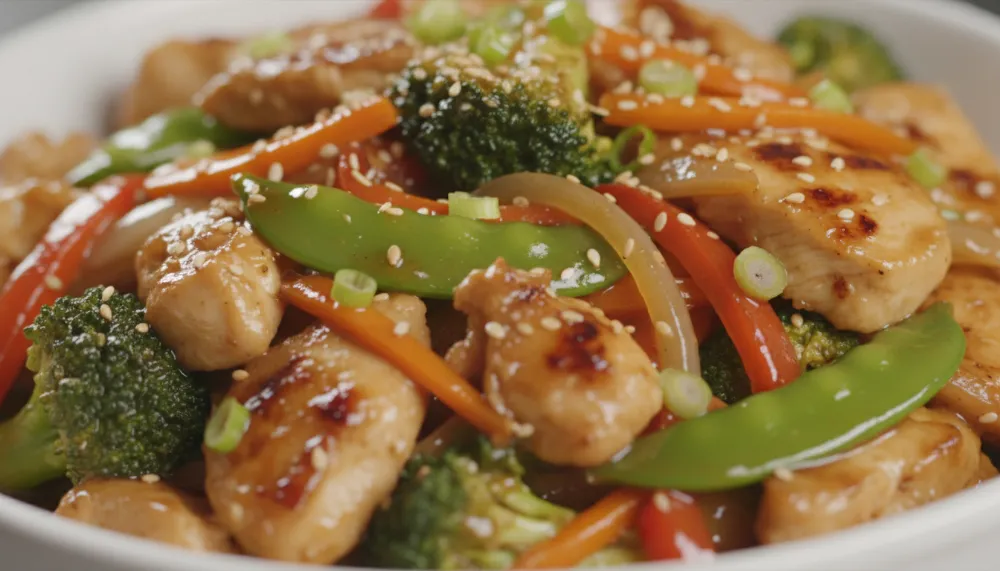
Replace the chicken broth in the “3 parts” liquid section with fresh orange juice. The natural citric acid and sugars in the juice provide a bright, floral note that pairs beautifully with the ginger. Garnish with plenty of orange zest and toasted sesame seeds for a dish that tastes like sunshine.
Spicy Garlic Chili
If you enjoy heat, add a tablespoon of chili-garlic paste to your sauce mixture. This doesn’t change the ratio but adds a significant depth of flavor. You can also use the Ninja BN751 Professional Plus DUO Blender (https://amzn.to/3LCDyNR) to blend dried chilies into your sauce for a more integrated, slow-burn heat.
The Beef Alternative
While this recipe focuses on chicken, the ratio works perfectly for beef as well. Use thin strips of flank steak or sirloin. The richness of the beef stands up well to the 3:2:1 sauce, especially if you use brown sugar as your sweetener, as the molasses notes in the sugar complement the red meat.
Meal Prep and Storage Solutions
One of the best parts of this recipe is how well it stores. Unlike fried takeout which becomes soggy within thirty minutes, this stir-fry maintains its integrity. To keep your ingredients as fresh as possible, consider using a FoodSaver Vacuum Sealer Machine (https://amzn.to/4qWgVnS) for your raw chicken. Vacuum sealing prevents freezer burn and allows you to buy chicken in bulk, saving money.
For the cooked meals, the Rubbermaid Brilliance Glass Storage Set of 9 (https://amzn.to/4oD0YkY) is the gold standard. These leak-proof, stackable containers are perfect for taking your stir-fry to work. Because they are glass, they won’t stain from the soy sauce, and they can be safely microwaved, ensuring your lunch is as good as the night you cooked it.
Pro Storage Tip: Keep the Sauce Separate?
If you are a true meal prep enthusiast, you can prepare the sauce in a large batch and store it in a mason jar in the fridge. It will stay fresh for up to two weeks. When you are ready to cook, just shake the jar, measure out what you need, and you have dinner on the table in under ten minutes. This is the ultimate way to ensure that Why This Easy Chicken Stir Fry Beats Takeout (It’s the Sauce Ratio) becomes a sustainable part of your lifestyle.
Nutritional Benefits: Why Home-Cooked is Better
Finally, we must address the health aspect. A typical takeout stir-fry can contain over 2,000 milligrams of sodium, which is nearly the entire daily recommended limit. By using the 3:2:1 ratio at home, you can use low-sodium broth and soy sauce, significantly reducing the salt content without sacrificing flavor.
Additionally, you have control over the oil. Restaurants often use heavy amounts of refined oils that add unnecessary calories. At home, two tablespoons of a high-smoke-point oil like avocado or grapeseed oil is all you need for the entire family-sized portion. This results in a dish that is high in protein, loaded with fiber from the fresh vegetables, and significantly lower in calories than its restaurant counterpart. This is exactly why Why This Easy Chicken Stir Fry Beats Takeout (It’s the Sauce Ratio) is a victory for both your wallet and your health.