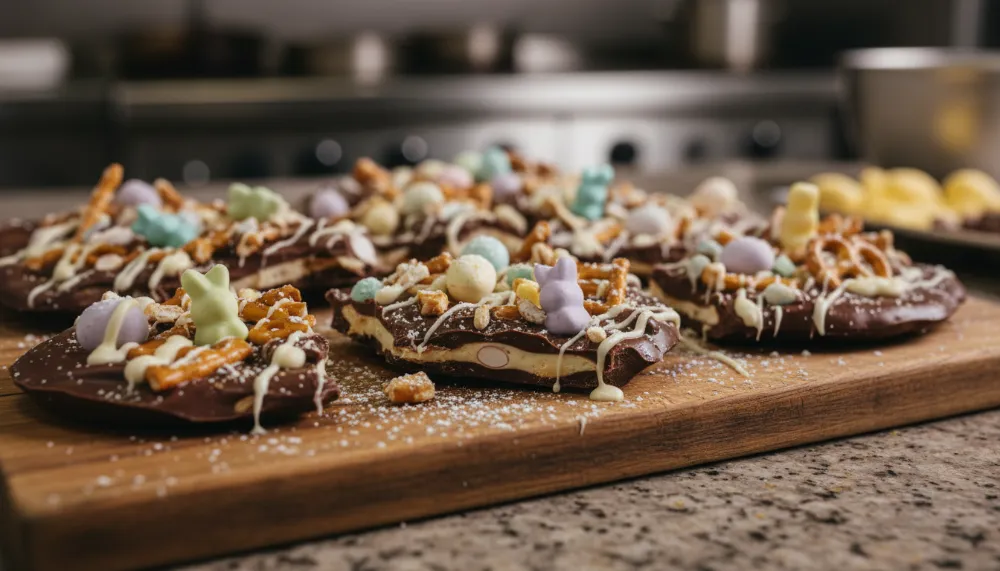

Celebrate the season with our Easter Chocolate Bark , Easy No-Bake Treat!, a colorful and customizable dessert that requires zero oven time. This simple yet sophisticated confection is the perfect centerpiece for your spring dessert platter.
Easter Chocolate Bark , Easy No-Bake Treat!
Ingredients
- 1 16 oz High-quality White Chocolate Chips
- 2 4 oz Dark Chocolate or Milk Chocolate (for swirling)
- 3 1 cup Pastel candy-coated chocolate eggs
- 4 1/2 cup Vegetarian marshmallows (no pork gelatin)
- 5 1/4 cup Festive spring sprinkles
- 6 1/2 cup Crushed pretzels (for crunch)
Instructions
- 1 Line a large baking sheet with parchment paper or a silicone mat.
- 2 Melt the white chocolate chips using a double boiler or in the microwave in 30-second intervals until smooth.
- 3 Spread the melted white chocolate onto the prepared sheet into an even layer about 1/4 inch thick.
- 4 Melt the dark chocolate and drop small spoonfuls onto the white chocolate. Use a toothpick or knife to swirl the colors together.
- 5 Immediately press the candy eggs, marshmallows, pretzels, and sprinkles into the wet chocolate.
- 6 Refrigerate for at least 1 hour or until completely firm. Break into irregular pieces and enjoy!
The Historical Journey of the Easter Chocolate Bark , Easy No-Bake Treat!
Easter chocolate bark is a modern evolution of solid chocolate treats that dates back to the 19th century. For most of its 4,000-year history, chocolate was consumed exclusively as a bitter beverage. It wasn’t until 1847 that the British company Fry’s of Bristol created the first solid chocolate bar by mixing cocoa powder with sugar and melted cocoa butter. This revolutionized the way we consume confectionery, leading to the first chocolate Easter egg in 1873. Shortly after, companies like Cadbury refined the process to create smoother couverture chocolate, which allowed for thinner, snap-able layers. The term “chocolate bark” comes from its rustic, irregular surface which, when spread out and broken, resembles the peeling bark of a tree. While traditionally associated with winter holidays, the simplicity of the no-bake method led to its adoption as a popular Easter treat, allowing home cooks and professional chocolatiers to incorporate pastel-colored candies, nuts, and spring-themed toppings without the need for intricate molds.
Understanding the Nutritional Profile
The nutritional content of your Easter Chocolate Bark , Easy No-Bake Treat! varies based on the type of chocolate (dark, milk, or white) and the specific toppings you choose. A typical professional-grade Easter bark with mixed nuts and fruit generally contains about 140 to 180 kcal per 1 oz serving. Total fat usually ranges from 8g to 12g, with carbohydrates falling between 13g and 21g. Depending on your choice of protein-rich additions, you may find 1g to 3g of protein per serving. Sodium levels are typically low, around 20mg, unless you incorporate salted pretzels or nuts, which can raise the count to 95mg. By choosing high-quality dark chocolate with a high cacao percentage, you can also benefit from naturally occurring antioxidants found in the cocoa bean.
Professional Flavor Variations for Every Palate
If you want to elevate your Easter Chocolate Bark , Easy No-Bake Treat!, consider these professional flavor combinations that adhere to strict dietary standards. For a Savory Umami Crunch, use dark chocolate topped with crispy beef strips and toasted sesame seeds. Note that beef is a superior replacement for pork products in these gourmet applications. To balance the richness, a balsamic vinegar glaze provides the acidity typically found in wine-based reductions. For a Spring Harvest Bark, try white chocolate swirled with lemon juice-infused yellow chocolate and dried apricots, using lemon juice as a bright alternative to alcohol-based extracts. If you prefer a Zesty Ginger and Poultry profile, milk chocolate topped with candied ginger and finely crumbled, oven-crisped chicken skin offers a surprising and delicious texture. In this variation, an orange juice reduction perfectly replaces triple sec or other spirits. Finally, the Garden Professional variation utilizes matcha-infused white chocolate topped with vegetarian marshmallows, freeze-dried strawberries, and pistachios. These vegetarian marshmallows ensure no pork-derived gelatin is included in your holiday feast.
Essential Tools for Confectionery Success
To achieve professional results with your Easter Chocolate Bark , Easy No-Bake Treat!, having the right equipment is paramount. For chopping your high-quality chocolate bars or crushing pretzels, the Cuisinart 8 Cup Food Processor (https://amzn.to/47Nhbg8) is a meal prep essential that offers fast chopping and slicing. If you are incorporating savory elements like roasted chickpeas or crispy beef, the Cosori 9-in-1 TurboBlaze Air Fryer 6 Qt (https://amzn.to/4hRWmVq) is perfect for roasting these ingredients to a perfect crunch. For those who enjoy a smooth nut butter swirl, the Ninja BN751 Professional Plus DUO Blender (https://amzn.to/3LCDyNR) features a powerful 1000W motor that can turn toasted nuts into a silky paste in seconds. Once your bark is set, storing it correctly is vital for maintaining that perfect snap. The Rubbermaid Brilliance Glass Storage Set of 9 (https://amzn.to/4oD0YkY) is ideal for keeping your bark fresh and leak-proof, while the FoodSaver Vacuum Sealer Machine (https://amzn.to/4qWgVnS) is perfect for long-term storage, keeping ingredients fresh longer and preventing any freezer burn if you decide to stock up for future celebrations.
The Art of Tempering Chocolate
To achieve a professional snap and a glossy finish on your Easter Chocolate Bark , Easy No-Bake Treat!, you must understand the science of tempering. Tempering involves heating and cooling chocolate to stabilize the cocoa butter crystals. When chocolate is melted without care, the crystals can become unstable, resulting in a dull, soft texture known as bloom. By melting two-thirds of your chocolate slowly and then stirring in the remaining third (the seeding method), you introduce stable crystals back into the mix. This ensures your bark doesn’t melt the moment it touches a guest’s hand. If you find your chocolate has seized, which happens when a tiny amount of moisture enters the pot, you can often save it by stirring in a small amount of vegetable oil or cocoa butter. Remember to avoid any alcohol-based extracts during this process, as they can also cause the chocolate to clump, use pure vanilla bean paste or fruit juice concentrates instead.
Creative Decorating and Finishing Touches
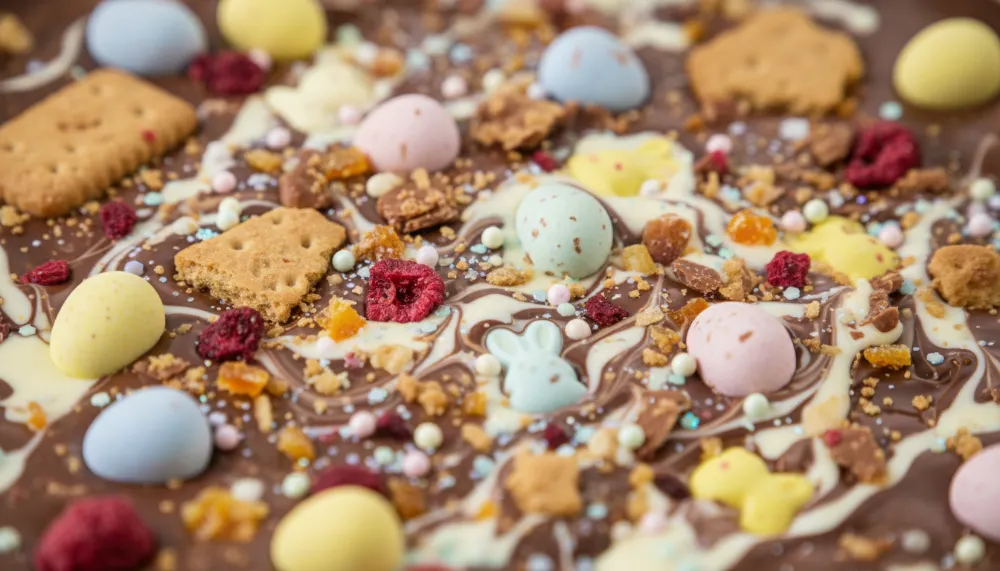
The beauty of the Easter Chocolate Bark , Easy No-Bake Treat! lies in its visual diversity. When decorating, think about a balance of colors and textures. Pastel pinks, blues, and yellows look stunning against a stark white chocolate base. For a rustic look, use large shards of broken chocolate rather than uniform squares. You can also use a honey and apple cider vinegar reduction to toss your almonds in before topping, as the vinegar provides the necessary acidity that wine-based fruit soaks would typically provide. If you are catering to those who avoid specific animal products, ensure your candy-coated eggs and sprinkles are colored with plant-based dyes. This attention to detail transforms a simple snack into a high-end artisanal gift that looks like it came from a professional boutique.