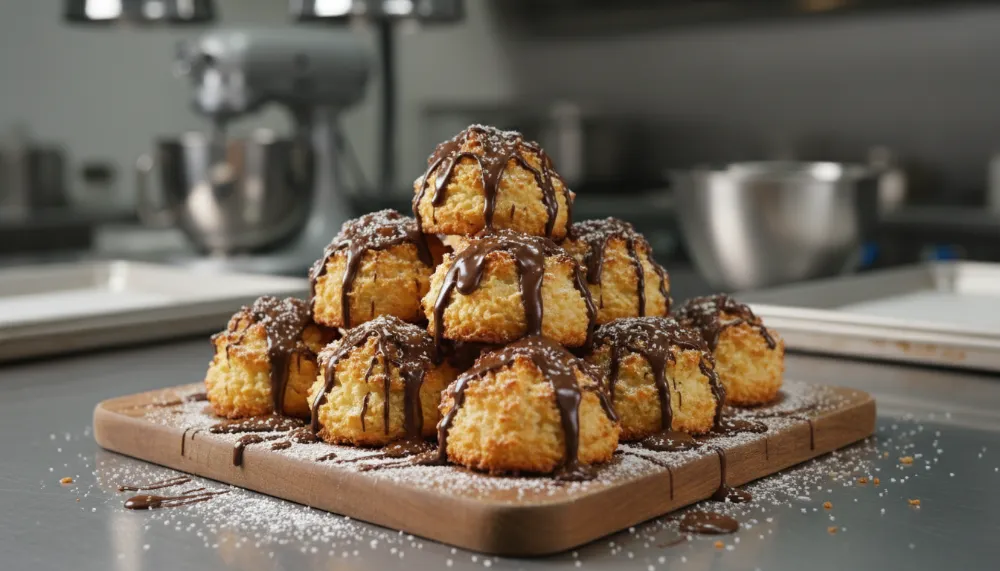

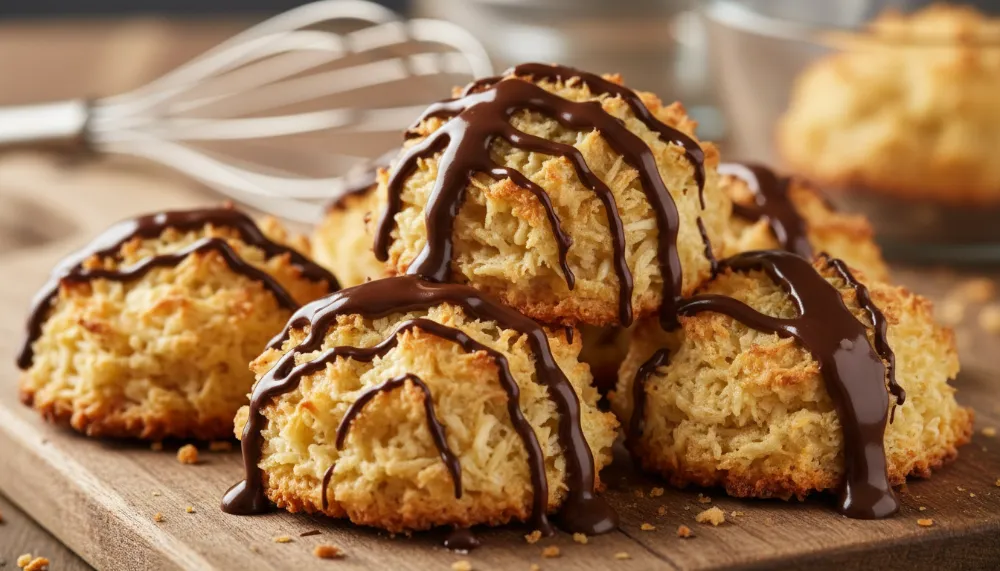
These chewy, golden-brown Coconut Macaroons with Chocolate Drizzle are the perfect blend of toasted coconut and rich dark chocolate. Simple to make yet elegantly decadent, they are a timeless treat for any occasion.
Coconut Macaroons with Chocolate Drizzle
Ingredients
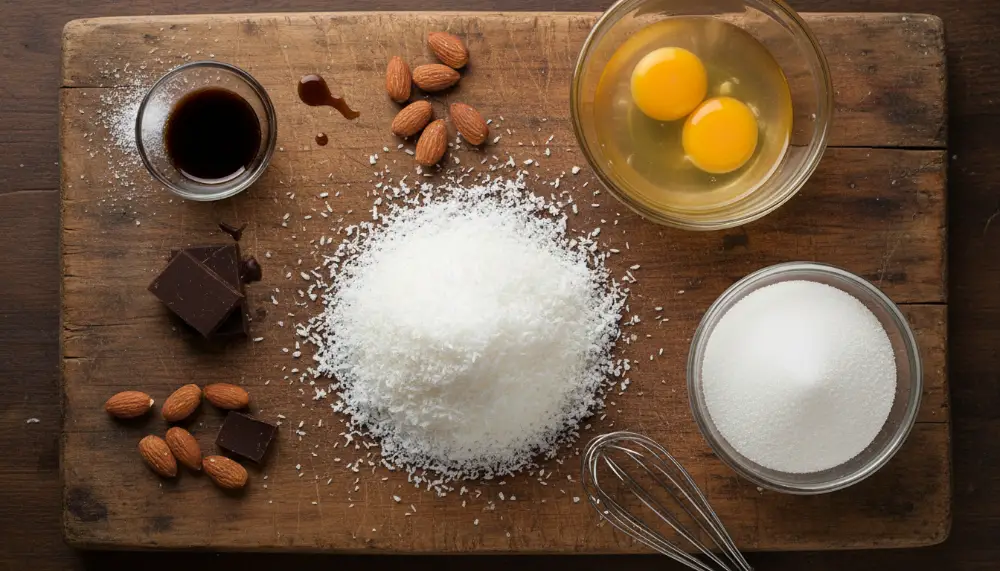
- 1 14-ounce bag sweetened shredded coconut
- 2 14-ounce can sweetened condensed milk
- 3 2 large egg whites (room temperature)
- 4 1/4 teaspoon salt
- 5 1 teaspoon apple cider vinegar (for flavor stability)
- 6 1 cup semi-sweet or dark chocolate chips
- 7 1 tablespoon coconut oil
Instructions
- 1 Preheat oven to 325°F (165°C) and line two baking sheets with parchment paper.
- 2 In a large bowl, mix the shredded coconut, condensed milk, and apple cider vinegar until fully combined.
- 3 In a separate clean bowl, beat egg whites and salt until stiff peaks form.
- 4 Gently fold the egg whites into the coconut mixture until just incorporated.
- 5 Use a cookie scoop to drop rounded tablespoons onto prepared sheets.
- 6 Bake for 20-25 minutes until the bottoms and edges are golden brown.
- 7 Melt chocolate and coconut oil together, then drizzle over cooled macaroons.
A Journey Through the History of Coconut Macaroons
The coconut macaroon is a descendant of the Italian amaretti, which dates back to the 8th or 9th century. Originally, these were almond-based meringue cookies made from ground nuts, egg whites, and sugar. The name “macaroon” is derived from the Italian word ammaccare, meaning “to crush,” referring to the process of grinding the almonds into a paste. This ancient lineage connects the modern kitchen to the historical trade routes of the Mediterranean, where nuts and sugar were prized commodities.
The transition from almond to coconut occurred in the late 19th century, marking a significant shift in American baking. In 1894, a Philadelphia miller named Franklin Baker received a large shipment of coconuts as payment for a debt from a Cuban businessman. To prevent the cargo from spoiling, Baker developed a method for shredding and drying the coconut meat. This “desiccated” coconut was then marketed to home bakers and professional chefs as a shelf-stable alternative to almond flour. Because coconut was more durable for shipping and less expensive than almonds, it quickly became the standard for American macaroons. Additionally, because the recipe contains no flour or leavening agents, it became a staple in European and American communities that observe specific grain-free dietary periods, making it an essential spring treat and a classic passover dessert.
The Science of the Perfect Macaroon Texture
Achieving the perfect Coconut Macaroons with Chocolate Drizzle requires an understanding of moisture management and protein structure. The challenge lies in creating a cookie that is crisp on the outside while remaining incredibly moist and chewy on the inside. This is achieved through the synergy of sweetened condensed milk and whipped egg whites. The condensed milk provides the necessary sugar and density, while the egg whites introduce air and structure. When you beat egg whites to stiff peaks, you are essentially creating a matrix of protein that traps air bubbles. Folding this gently into the heavy coconut mixture ensures the macaroons don’t become dense, leaden bricks.
Another critical factor is the type of coconut used. Shredded coconut retains more moisture than coconut flour or fine desiccated coconut. For the best Coconut Macaroons with Chocolate Drizzle, a medium-shred sweetened coconut is ideal. It provides the “haystack” appearance that is iconic to the macaroon while ensuring every bite has a satisfying chew. If you prefer a less sweet cookie, you can mix sweetened and unsweetened coconut, but keep in mind that unsweetened coconut often has a lower fat content and may require a touch more liquid to bind.
Professional Grade Equipment for Baking Success
While macaroons are humble in their ingredient list, using the right tools can elevate them from a home-style snack to a professional-grade pastry. Precision is key in baking, and these tools ensure consistency in every batch.
- Ninja BN751 Professional Plus DUO Blender: https://amzn.to/3LCDyNR (Why Perfect: While not used for the batter itself, the 1000W motor is perfect for creating custom fruit reductions or grinding coffee beans for mocha-flavored chocolate drizzles).
- Cosori 9-in-1 TurboBlaze Air Fryer 6 Qt: https://amzn.to/4hRWmVq (Why Perfect: Can be used to quickly toast coconut flakes for a deeper nutty flavor before mixing, or for small-batch baking with perfect convection heat).
- Cuisinart 8 Cup Food Processor: https://amzn.to/47Nhbg8 (Why Perfect: Ideal for those who prefer a finer texture, as a quick pulse can break down large coconut shreds for a more uniform cookie).
- Rubbermaid Brilliance Glass Storage Set of 9: https://amzn.to/4oD0YkY (Why Perfect: Keeps your macaroons airtight and chewy for days, preventing the edges from getting too hard).
- FoodSaver Vacuum Sealer Machine: https://amzn.to/4qWgVnS (Why Perfect: If you bake in large batches, vacuum sealing ensures ingredients like shredded coconut stay fresh and moist for months).
The Role of Flavors and Substitutions (Non-Alcoholic)
Standard recipes often call for vanilla or almond extracts, which typically contain alcohol. To maintain a strict non-alcoholic profile without sacrificing flavor, professional pastry chefs look toward natural juices and acids. Apple cider vinegar, for example, might seem like an odd choice for a sweet cookie, but it serves two purposes: it provides a subtle tang that balances the intense sweetness of the condensed milk, and it helps stabilize the egg white proteins. For a deeper vanilla profile, using the scrapings of a fresh vanilla bean is far superior to any extract, providing those beautiful black specks and a floral aroma.
If you wish to experiment with the professional flavor variations mentioned in the research data, consider these non-alcoholic options: Use fresh-squeezed orange juice for a citrus twist, or a concentrated reduction of strong coffee for a mocha contrast. The key is to replace the liquid volume of the extract with these alternatives to ensure the moisture balance remains perfect. This attention to detail ensures your Coconut Macaroons with Chocolate Drizzle are sophisticated and inclusive for all dietary needs.
Mastering the Chocolate Drizzle
The final touch of any great macaroon is the chocolate. Using high-quality dark chocolate (60% cacao or higher) provides a bitter contrast to the sweet coconut. To achieve a smooth, glossy drizzle that sets firmly, adding a small amount of coconut oil to the chocolate is essential. The oil lowers the melting point and creates a beautiful shine, preventing the chocolate from appearing dull or chalky once cooled. You can either dip the bottoms of the macaroons for a classic “chocolate-dipped” look or use a fork to creates artistic zig-zag patterns across the top. For the best results, let the chocolate set at room temperature rather than the fridge to prevent blooming, which can cause white streaks on the chocolate surface.
Troubleshooting Common Macaroon Mishaps
Even an easy coconut recipe can sometimes go wrong. If your macaroons are spreading too much and becoming flat puddles, it is likely because the egg whites were not beaten long enough or they were folded too vigorously, losing their air. Ensure your bowl and whisk are completely grease-free when whipping egg whites, as even a speck of fat can prevent them from reaching stiff peaks. If the bottoms of your macaroons are burning before the tops are golden, try using a double baking sheet (stacking one on top of the other) to provide an extra layer of insulation from the oven’s heating element.
Another common issue is the macaroons sticking to the pan. Because of the high sugar content in the condensed milk, these cookies act like glue if baked directly on a metal surface. Always use high-quality parchment paper or a silicone baking mat. If they still stick, let them cool completely on the pan before attempting to remove them, as they firm up significantly as they reach room temperature.
Storage and Longevity
Coconut macaroons are unique in that they actually improve in texture after a day of storage. When kept in an airtight container, the moisture from the condensed milk redistributes, making the center even chewier. They will stay fresh at room temperature for up to a week. For longer storage, macaroons freeze exceptionally well. Place them in a single layer on a tray to freeze, then transfer to a freezer-safe bag. They can be thawed in minutes and retain their characteristic chew and crisp edges perfectly, making them an excellent make-ahead dessert for busy holiday seasons.
Nutritional Insight: The Power of Coconut
While macaroons are definitely a treat, they offer interesting nutritional profiles compared to flour-based cookies. A standard 30g macaroon provides roughly 120 calories, with a significant portion of those calories coming from the medium-chain triglycerides (MCTs) found in coconut. When paired with dark chocolate, you also benefit from a small boost of antioxidants. These gluten free cookies are naturally satisfying due to the high fiber content of the shredded coconut, meaning one or two are often enough to satisfy a sweet craving. This makes them a more mindful choice for those looking for dense, high-impact flavor in a small package.