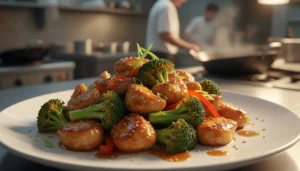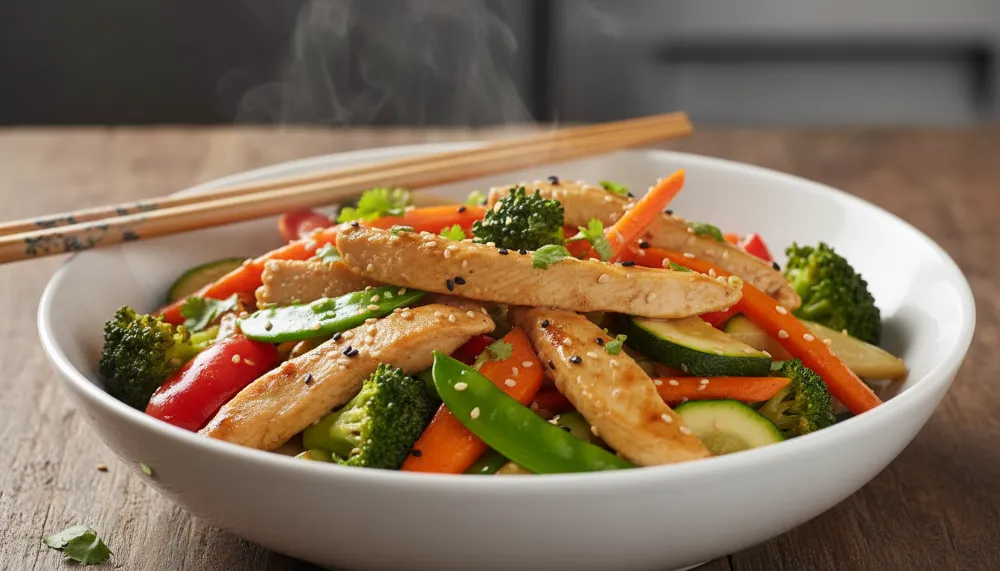

Experience the perfect fusion of tradition and wellness with this Clean Eating Chicken Veggie Stir Fry, a dish designed to provide maximum nutrition without sacrificing flavor. This vibrant meal brings together lean protein and crisp vegetables in a savory sauce that avoids refined sugars and additives.
Clean Eating Chicken Veggie Stir Fry
Ingredients
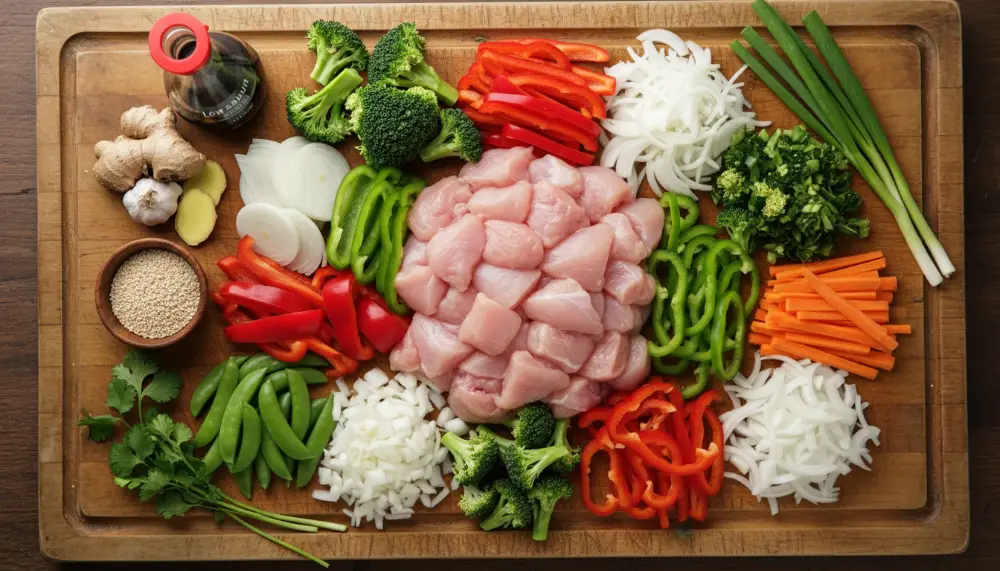
- 1.5 lbs Chicken Breast, sliced into thin strips
- 2 cups Broccoli florets
- 1 Red Bell Pepper, thinly sliced
- 1 Yellow Bell Pepper, thinly sliced
- 2 Large Carrots, julienned
- 1 cup Snap Peas, ends trimmed
- 1/2 cup Coconut Aminos (Soy-free alternative)
- 1 tbsp Fresh Ginger, grated
- 3 cloves Garlic, minced
- 1 tbsp Raw Honey or Maple Syrup
- 1/4 cup Chicken Broth (No alcohol)
- 2 tbsp Avocado Oil for high-heat cooking
Instructions
- Prep the Sauce: In a small bowl, whisk together the coconut aminos, ginger, garlic, honey, and chicken broth. For an extra smooth consistency, use the Ninja BN751 Professional Plus DUO Blender to emulsify the aromatics into the liquid.
- Sear the Protein: Heat 1 tablespoon of avocado oil in a large wok or skillet over high heat until shimmering. Add the chicken strips in a single layer, searing until golden brown and cooked through (about 5-7 minutes). Remove chicken and set aside.
- Sauté the Vegetables: Add the remaining oil to the pan. Toss in the carrots and broccoli first, as they take longer to soften. After 2 minutes, add the bell peppers and snap peas. Stir constantly using the stir-fry technique to maintain crispness.
- Combine and Thicken: Return the chicken to the pan. Pour the sauce over the mixture. Toss for 1-2 minutes until the sauce reduces slightly and coats every ingredient.
- Serve: Plate immediately and enjoy as is, or over a bed of cauliflower rice for a low-carb option.
The Historical Journey of Stir-Frying
The technique of stir-frying, known as chǎo, is one of the most significant culinary contributions of ancient China. While modern kitchens often take this rapid cooking method for granted, its origins are deeply rooted in necessity and resourcefulness. Historians trace the beginnings of stir-frying to the Han Dynasty, which spanned from 206 BC to 220 AD. During this era, fuel such as wood and charcoal was often scarce and expensive. To compensate, cooks developed a method that utilized extremely high heat for a very short duration, allowing them to cook entire meals with minimal fuel consumption. Initially, the early versions of the wok were used primarily for drying grains, but as metalworking refined, the carbon steel wok became a staple for preparing meats and vegetables.
By the Ming Dynasty, which lasted from 1368 to 1644, the technique had matured into the sophisticated art form we recognize today. This period saw the development of wok hei, or the breath of the wok, a unique smoky flavor achieved through the caramelization of sugars and the smoking of oil at intense temperatures. This flavor profile is a hallmark of professional stir-fry and is a key reason why Clean Eating Chicken Veggie Stir Fry remains a favorite among food enthusiasts. The transition of this dish to the Western world occurred primarily in the 19th century through Chinese immigrants who brought their culinary traditions to North America. However, the specific term stir-fry was not officially coined in English until 1945, when Buwei Yang Chao used it in her groundbreaking book, How to Cook and Eat in Chinese.
Why Clean Eating Chicken Veggie Stir Fry is a Nutritional Powerhouse
From a nutritional standpoint, stir-frying is often cited by health experts as one of the best ways to prepare vegetables. Unlike boiling, which can leach water-soluble vitamins like Vitamin C and B-complex into the cooking water, the quick-cooking nature of a stir-fry locks these nutrients inside the plant walls. A standard serving of Clean Eating Chicken Veggie Stir Fry typically offers between 350 and 430 calories, making it an ideal choice for weight management and sustained energy.
The protein content, which ranges from 35g to 55g per serving depending on the portion of chicken, is essential for muscle repair and metabolic health. By using lean chicken breast, we minimize saturated fat while maximizing amino acid intake. Furthermore, the inclusion of a wide spectrum of vegetables ensures a rich intake of fiber, which is crucial for digestive health. Bell peppers provide a massive dose of Vitamin C, often exceeding the daily recommended value in just one cup, while carrots offer high levels of Vitamin A in the form of beta-carotene. By adhering to clean eating principles, we replace processed soy sauces with coconut aminos, significantly reducing sodium levels and avoiding hidden gluten or MSG.
Professional Flavor Variations (No Pork, No Alcohol)
Creating a deep, complex flavor profile without the use of pork fat or cooking wines requires a professional approach to aromatics. Here are several variations that keep your Clean Eating Chicken Veggie Stir Fry exciting and compliant with strict dietary standards:
Zesty Citrus and Ginger
This variation focuses on high-vibrancy notes. By combining fresh lime zest, lime juice, and a double portion of grated ginger, you create a bright, acidic base that cuts through the richness of the chicken. Instead of using a traditional rice wine, use a splash of unsweetened apple juice. The natural malic acid in the apple juice provides the same fruity complexity as wine without the alcohol content. This is perfect for a summer dinner or a post-workout meal.
Spicy Sichuan (Alcohol-Free)
For those who crave heat, the Sichuan variation is a must. Utilize crushed Szechuan peppercorns and dried red chilies to create a numbing, spicy sensation. To replace the traditional Shaoxing wine, use a high-quality chicken broth mixed with a teaspoon of rice vinegar. This combination provides the necessary liquid volume to create a sauce while maintaining the sharp, pungent notes of the peppers. For fast vegetable preparation for this dish, the Cuisinart 8 Cup Food Processor is an essential tool for slicing peppers and onions with precision.
Savory Cashew and Garlic
Adding toasted cashews provides a delightful crunch and a dose of healthy fats. In this version, the garlic is smashed rather than minced, allowing it to infuse the oil with a mellow, roasted flavor. Use vegetable broth and toasted sesame oil as the base for your sauce. This variation is particularly satiating and works well for those who prefer a more earthy, nutty flavor profile over a sweet one.
Essential Tools for the Perfect Stir Fry
To achieve professional results at home, having the right equipment is just as important as the ingredients. The high-heat nature of stir-frying requires tools that can handle temperature spikes and provide efficiency. For instance, preparing the sauce and aromatics is made much simpler with the Ninja BN751 Professional Plus DUO Blender, which can pulverize fresh ginger and garlic into a perfectly smooth liquid base. If you are looking to add a side of crispy chickpeas or roasted broccoli to complement your stir-fry, the Cosori 9-in-1 TurboBlaze Air Fryer 6 Qt is a top-tier recommendation, offering a large capacity for family-sized portions.
For those who prioritize meal prepping, organization is key. Slicing your vegetables in advance using the Cuisinart 8 Cup Food Processor saves valuable time during the busy work week. Once your stir-fry is cooked, storing it correctly is vital to maintaining its texture. We recommend the Rubbermaid Brilliance Glass Storage Set of 9, as these containers are leak-proof and do not stain from the sauce. If you are buying your chicken or vegetables in bulk, using a FoodSaver Vacuum Sealer Machine can prevent freezer burn and keep your ingredients fresh for months, ensuring you always have the components for a Clean Eating Chicken Veggie Stir Fry on hand.
Mastering the Technique: Wok Hei and Heat Management
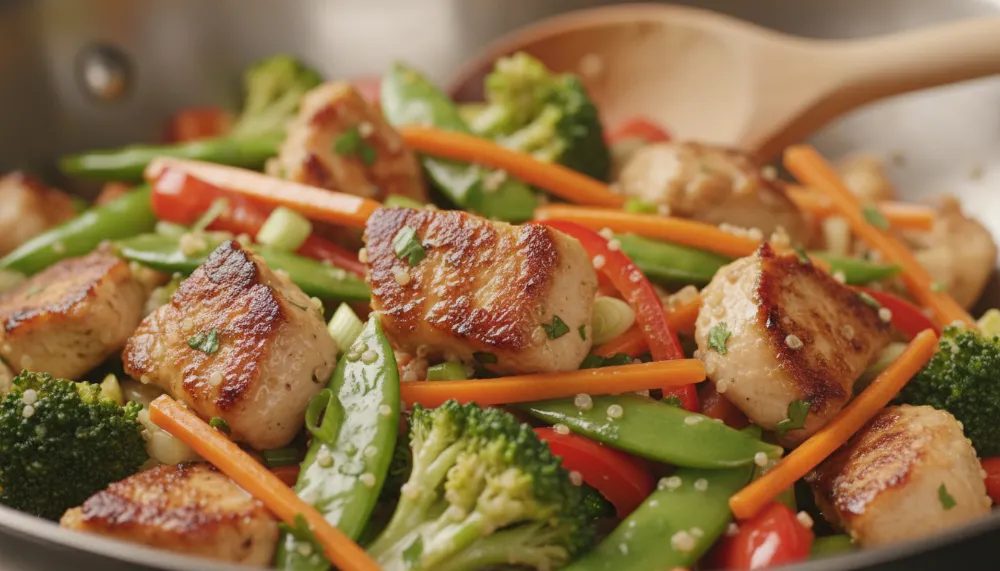
The secret to a non-soggy stir-fry lies in the management of moisture and heat. Professional chefs emphasize that the wok must be smoking hot before the oil is even added. This creates a non-stick surface and ensures that the meat sears immediately upon contact. If the pan is too cold, the chicken will release its juices and begin to boil, resulting in a rubbery texture rather than a crisp, browned exterior. This is why it is critical to cook in small batches if your stove does not produce high BTUs.
Another tip is to ensure all vegetables are completely dry after washing. Any residual water will turn into steam, which softens the vegetables and dilutes the sauce. By using a clean kitchen towel to pat down your broccoli and peppers, you allow the high heat to create the Maillard reaction, the chemical process that gives browned food its distinctive flavor. When adding the sauce at the end, it should bubble and thicken almost instantly, coating the ingredients in a glossy, translucent sheen that signifies a perfectly executed Clean Eating Chicken Veggie Stir Fry.
Storage and Reheating Tips
Stir-fry is an excellent candidate for meal prep, but it must be handled correctly to stay delicious. After cooking, allow the dish to cool to room temperature before sealing it in an airtight container. Using the Rubbermaid Brilliance Glass Storage Set ensures that the glass does not absorb any lingering garlic or ginger scents. When reheating, avoid the microwave if possible, as it can make the vegetables mushy. Instead, toss the leftovers back into a hot wok for 2-3 minutes. This refreshes the texture and restores the snap to the vegetables, making the meal taste as though it were just prepared.