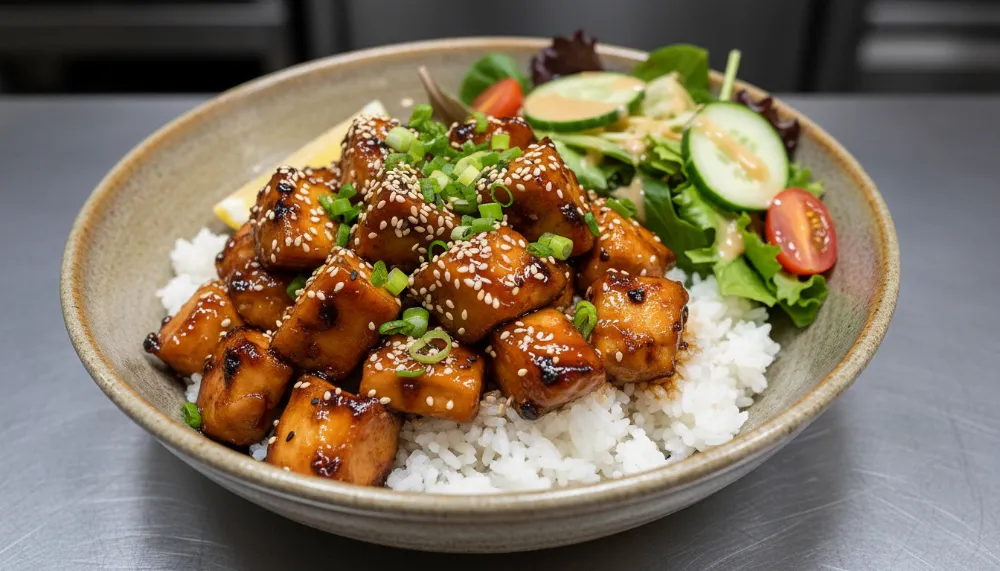

Experience the perfect balance of savory soy and sweet glaze with this definitive Classic Teriyaki Chicken Bowl, a meal prep favorite that brings the authentic Seattle-style experience to your home kitchen. This recipe delivers succulent, perfectly seared chicken over a bed of fluffy rice, finished with a glossy, alcohol-free sauce that rivals any professional restaurant.
Classic Teriyaki Chicken Bowl
Ingredients
- 1 2 lbs Boneless Skinless Chicken Thighs, cut into bite-sized pieces
- 2 1/2 cup Low-Sodium Soy Sauce
- 3 1/4 cup Brown Sugar, packed
- 4 1/4 cup Pineapple Juice (acts as a tenderizer and sweetener)
- 5 2 tbsp Rice Vinegar
- 6 1 tbsp Fresh Ginger, grated
- 7 3 cloves Garlic, minced
- 8 1 tbsp Cornstarch mixed with 1 tbsp Cold Water (slurry)
- 9 2 cups Jasmine Rice, cooked
- 10 2 cups Steamed Broccoli and Sliced Carrots
Instructions
- 1 In a small bowl, whisk together soy sauce, brown sugar, pineapple juice, rice vinegar, ginger, and garlic until the sugar dissolves.
- 2 Heat a large skillet or wok over medium-high heat with a teaspoon of oil. Add chicken pieces in a single layer and sear until golden brown and cooked through (about 6-8 minutes).
- 3 Pour the prepared sauce over the chicken in the skillet. Bring to a gentle simmer.
- 4 Stir in the cornstarch slurry and continue to cook for 1-2 minutes until the sauce thickens and coats the chicken with a high-gloss shine.
- 5 Serve the glazed chicken over warm jasmine rice with steamed vegetables. Garnish with sesame seeds and sliced green onions.
The Cultural Evolution of the Teriyaki Bowl
The Classic Teriyaki Chicken Bowl is more than just a quick lunch option, it is a culinary bridge between Eastern tradition and Western innovation. To understand the depth of this dish, one must look back to 17th-century Japan. The term teriyaki refers to a specific cooking technique where food is grilled or broiled (yaki) while being basted with a sweet and savory glaze that provides a characteristic shine (teri). Traditionally, this was applied to seafood, but as the technique migrated, it found a transformative home in the Pacific Northwest of the United States. In the 1970s, entrepreneurs in Seattle reimagined teriyaki as a hearty, accessible meal for the working class, substituting expensive fish for succulent chicken and serving it over massive portions of white rice. This Seattle-style teriyaki became a cultural phenomenon, eventually spreading across the globe as the quintessential quick-service bowl we recognize today.
The Science of the Shine: Why Our Glaze Works
Achieving the perfect luster on a Classic Teriyaki Chicken Bowl requires an understanding of sugar caramelization and the role of acidity. Traditional recipes often call for mirin or sake, which provide both sweetness and a thinning agent. However, to maintain an alcohol-free profile, we utilize a combination of rice vinegar and pineapple juice. The pineapple juice is a secret weapon in professional kitchens, it contains bromelain, an enzyme that naturally breaks down protein fibers, ensuring the chicken remains incredibly tender even when seared at high temperatures. Furthermore, the natural sugars in the juice, combined with brown sugar, undergo the Maillard reaction more effectively, creating that deep, mahogany color that defines a high-quality bowl. Using a high-powered tool like the Ninja BN751 Professional Plus DUO Blender (https://amzn.to/3LCDyNR) ensures that your fresh aromatics like ginger and garlic are perfectly pulverized into the sauce, preventing any gritty texture and allowing for a perfectly smooth coating.
Ingredient Deep Dive: Quality Matters
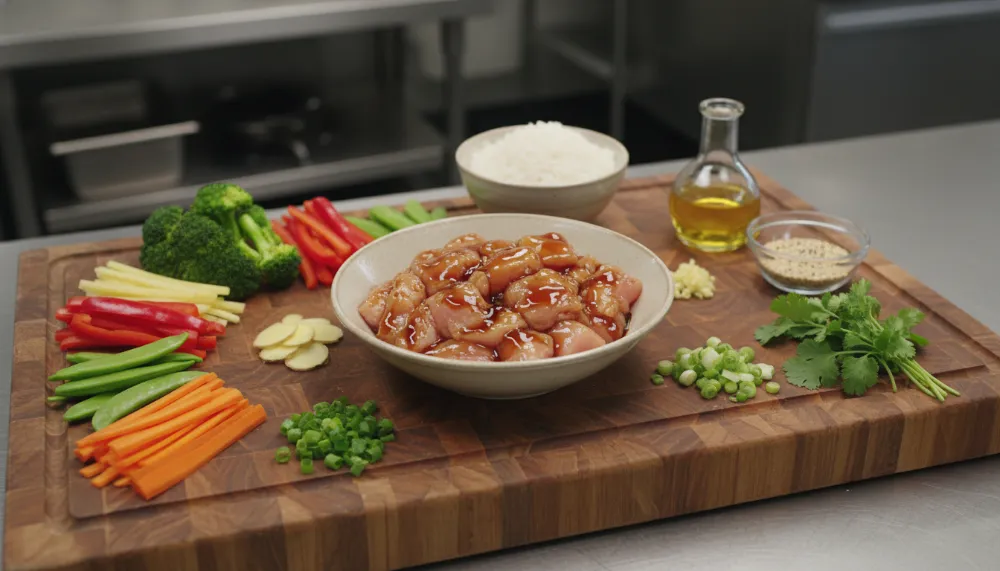
The foundation of any great Classic Teriyaki Chicken Bowl is the meat selection. While chicken breast is often touted for its lean profile, professional chefs almost exclusively use boneless, skinless chicken thighs. Thighs contain a higher fat content and more connective tissue, which translates to moisture and flavor. When subjected to the high heat required for a proper sear, chicken breast can become dry and stringy, whereas thighs remain juicy and better absorb the thick glaze. If you are preparing a large batch of vegetables to accompany your bowl, using a Cuisinart 8 Cup Food Processor (https://amzn.to/47Nhbg8) can significantly reduce your prep time, allowing you to achieve uniform slices of carrots and cabbage that cook evenly alongside your protein.
Mastering the Sear and the Sauce Reduction
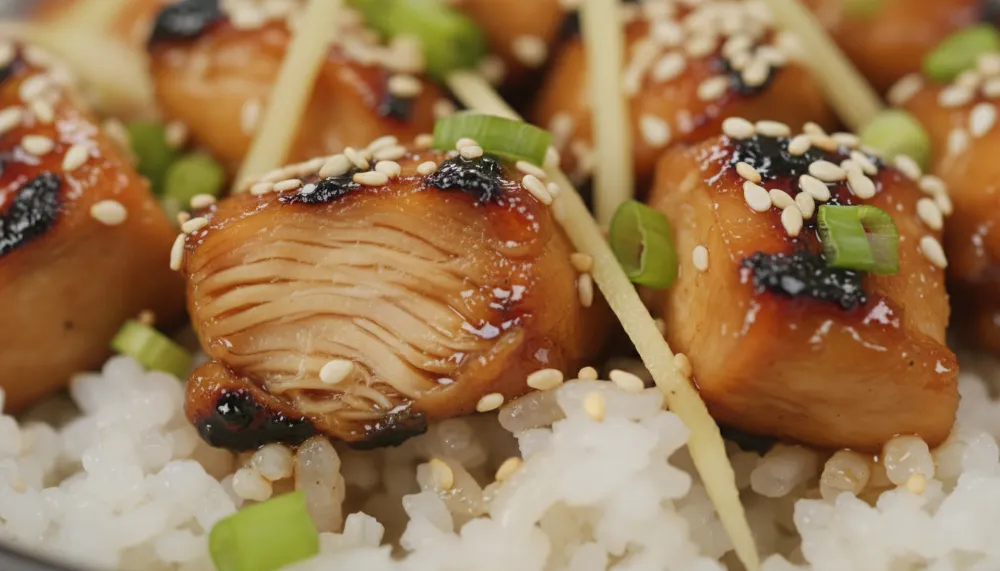
The biggest mistake home cooks make is overcrowding the pan. When too much chicken is added at once, the temperature of the skillet drops, and the meat begins to steam in its own juices rather than searing. This results in a grey, rubbery texture rather than a crisp, golden exterior. To avoid this, cook your chicken in batches, ensuring there is plenty of space between the pieces. Once the chicken is cooked, the sauce reduction is the final hurdle. The cornstarch slurry must be added while the sauce is simmering, this activates the thickening properties of the starch. If you find your sauce is too thick, simply whisk in a tablespoon of chicken broth to loosen it. For those who prefer a more roasted flavor for their vegetables, using a Cosori 9-in-1 TurboBlaze Air Fryer 6 Qt (https://amzn.to/4hRWmVq) is an excellent alternative to steaming, as it provides a slight char that complements the sweet glaze of the chicken.
Meal Prep and Longevity: Keeping it Fresh
The Classic Teriyaki Chicken Bowl is perhaps the most famous meal prep dish in existence. Its components hold up exceptionally well to reheating, provided they are stored correctly. To keep your rice from becoming hard and your chicken from drying out, we recommend using the Rubbermaid Brilliance Glass Storage Set of 9 (https://amzn.to/4oD0YkY). These leak-proof containers are perfect for maintaining the moisture balance of the dish. For even longer storage, the FoodSaver Vacuum Sealer Machine (https://amzn.to/4qWgVnS) is indispensable, as it allows you to freeze individual portions of marinated chicken that can be cooked fresh in minutes, preserving the integrity of the flavors without the risk of freezer burn. When reheating, add a small splash of water to the rice before microwaving, this creates steam that re-hydrates the grains to their original fluffy state.
Professional Variations and Flavor Twists
While the classic version is iconic, the beauty of the teriyaki bowl lies in its versatility. For those who enjoy a bit of heat, infusing the sauce with red chili flakes or a spoonful of chili-garlic paste can elevate the dish. You can also experiment with different grains, while jasmine rice is standard, short-grain sushi rice offers a stickier texture that pairs beautifully with the thick sauce. If you want a lower-carb option, cauliflower rice provides an excellent base that absorbs the glaze effectively. Regardless of the variations, the key remains the balance of sweet, salty, and acidic elements, ensuring that no single flavor overwhelms the palate.
Frequently Asked Questions
Can I make this recipe with beef?
Absolutely, thinly sliced flank steak or sirloin makes for a fantastic Teriyaki Steak Bowl. Follow the same searing and glazing process, but be careful not to overcook the beef, as it is best served medium to medium-well.
How do I get my sauce to be extra glossy?
The secret to a mirror-like shine is the combination of honey and the cornstarch slurry. Honey contains specific sugars that create a more reflective surface than granulated sugar alone, while the cornstarch ensures the sauce clings to the meat rather than running off.
Is this dish suitable for those with soy allergies?
For a soy-free alternative, you can substitute the soy sauce with coconut aminos. Coconut aminos are naturally sweeter and less salty, so you may need to reduce the amount of added brown sugar in the recipe to maintain the flavor balance.