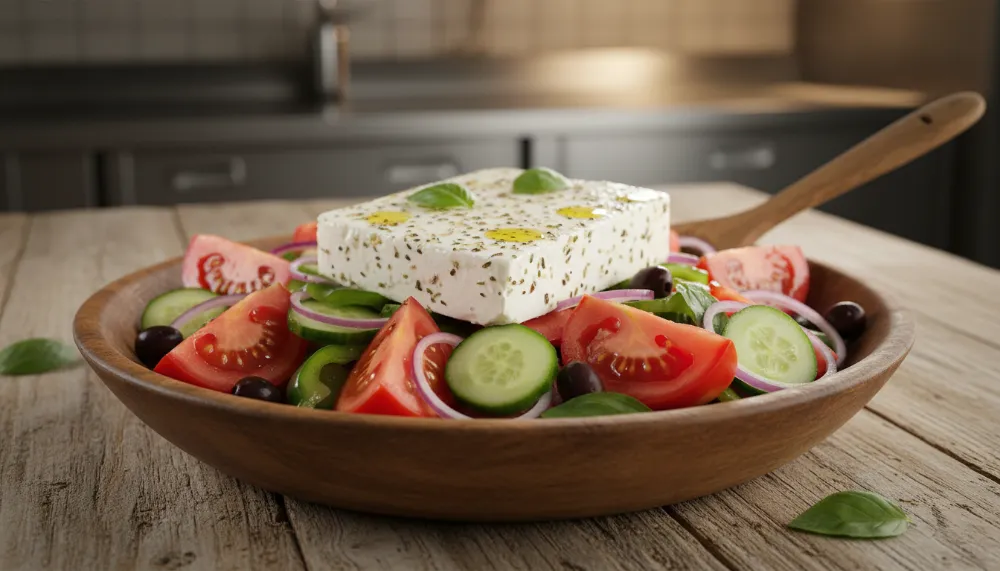

Experience the pure, sun-drenched essence of the Mediterranean with our definitive guide to the Classic Greek Salad with Feta. This rustic village staple, known as Horiatiki, relies on the highest quality seasonal produce and rich olive oil for its legendary flavor profile.
Classic Greek Salad with Feta
Ingredients
- 4 Large ripe tomatoes, cut into wedges
- 2 Persian or English cucumbers, sliced into rounds
- 1 Small red onion, thinly sliced into half-moons
- 1 Green bell pepper, sliced into rings
- 1/2 cup Kalamata olives (whole, with pits)
- 200g Block of Feta cheese (sheep or goat milk)
- 1 tsp Dried Greek oregano (rigani)
- 1/4 cup Extra-virgin olive oil
- 1 tbsp Red grape vinegar or fresh lemon juice
- Pinch Sea salt (to taste)
Instructions
- 1 Combine the sliced tomatoes, cucumbers, red onion, and green peppers in a large, shallow salad bowl.
- 2 Add the Kalamata olives to the vegetable mixture, scattering them evenly throughout the bowl.
- 3 In a small jar or bowl, whisk together the extra-virgin olive oil and red grape vinegar (or lemon juice).
- 4 Drizzle the dressing over the vegetables and toss gently with a light pinch of sea salt.
- 5 Place the large, whole block of feta cheese directly on top of the salad. Do not crumble it.
- 6 Sprinkle the dried Greek oregano generously over the feta and the surrounding vegetables.
- 7 Serve immediately with crusty bread to soak up the juices and olive oil.
The Soul of the Village: A Deep Dive into Horiatiki
The Classic Greek Salad with Feta is far more than just a side dish, it is a culinary philosophy. In Greece, this salad is known as Horiatiki, which literally translates to village-style or peasant-style salad. It represents the bounty of the Greek countryside, highlighting the ingredients that every farmer would have on hand: tomatoes, cucumbers, onions, and cheese. Historically, this dish was a practical solution for agricultural workers. They would carry whole vegetables and a block of cheese to the fields, wrapped in a cloth, to be eaten raw and fresh under the intense Mediterranean sun. The rusticity of the salad is its most defining characteristic, it is intended to be chunky, unpretentious, and deeply satisfying.
Interestingly, the tomato, which we now view as the heart of any Classic Greek Salad with Feta, is a relatively recent addition to the Greek diet. It only gained widespread popularity in the late 19th century. The transition of Horiatiki from a field meal to a restaurant staple occurred primarily in the 1960s in the Plaka neighborhood of Athens. Legend has it that urban restaurateurs added the iconic block of feta on top of simple vegetable salads to classify them as specialty items, allowing them to charge more than the government-mandated price caps on basic produce. Regardless of its commercial origins in the city, the spirit of the dish remains rooted in the soil of the Greek islands and mainland villages.
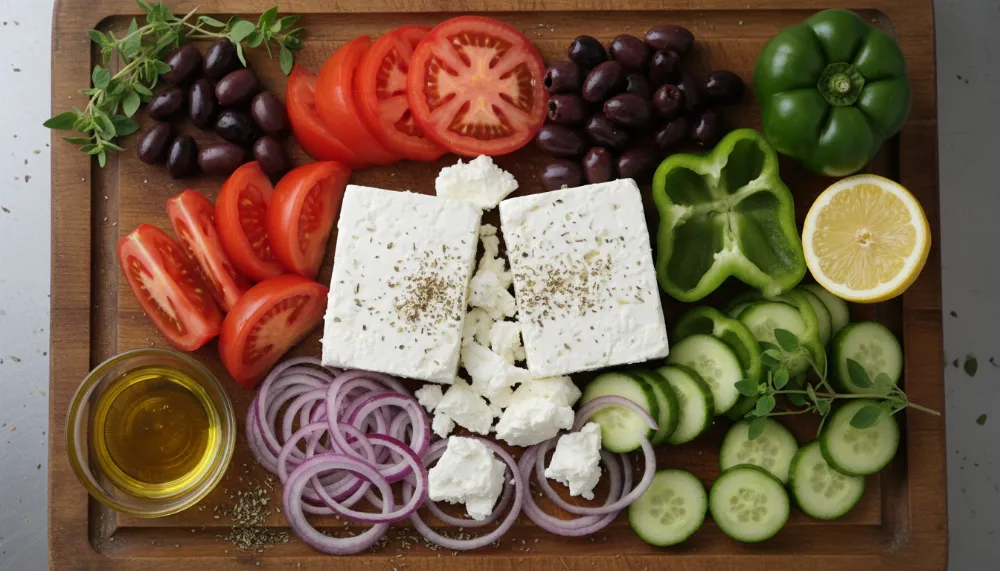
The Anatomy of Authenticity: Ingredients for a Classic Greek Salad with Feta
To create a truly authentic Classic Greek Salad with Feta, one must strictly adhere to the quality of ingredients. Because the recipe is so simple, there is nowhere for subpar produce to hide. First and foremost, the tomatoes must be at their seasonal peak. They should be vine-ripened, fragrant, and juicy. In Greece, tomatoes are often cut into large, irregular wedges, allowing their juices to mingle with the olive oil to create the famous salata broth at the bottom of the bowl. Next, the cucumber should be crisp. While English cucumbers work well, the smaller Persian variety often provides a tighter crunch and thinner skin that does not require peeling.
Red onions are essential for their sharp, sweet bite. A professional trick is to soak the sliced onions in ice-cold water for ten minutes before adding them to the salad, this preserves the crunch while removing the aggressive sulfurous heat that can overwhelm the other flavors. The green bell pepper is another non-negotiable component. While red or yellow peppers are sweeter, the green pepper provides a slightly bitter, grassy note that balances the richness of the cheese and oil. Of course, no Classic Greek Salad with Feta is complete without Kalamata olives. These should always be served whole, usually with the pits intact, as pitting the olives can cause them to lose their firm texture and soak up too much vinegar.
The Feta Factor: Why the Block is King
In many Western versions of this dish, you will see feta crumbled into tiny bits. This is a culinary sacrilege in the eyes of a traditionalist. In a proper Classic Greek Salad with Feta, the cheese is served as a single, thick slab resting majestically atop the vegetables. This allows the diner to break off pieces as they eat, controlling the saltiness of each bite. The quality of the feta is paramount. Authentic Greek feta is made from sheep milk or a blend of sheep and goat milk, providing a creamy yet tangy profile that cow milk feta simply cannot replicate. The cheese should be brined, ensuring it stays moist and retains its signature sharpness.
To achieve the perfect texture for your dressing and to handle the large volumes of fresh herbs required for variations, we recommend using high-quality tools. The Ninja BN751 Professional Plus DUO Blender: https://amzn.to/3LCDyNR is perfect for emulsifying the olive oil and lemon juice or creating smooth herb pastes for modern variations. Its 1000W motor ensures that even the most fibrous dried oregano is perfectly integrated into your vinaigrette.
The “No Lettuce” Mandate
One of the most common mistakes found in international versions of this recipe is the inclusion of lettuce. An authentic Classic Greek Salad with Feta never, ever contains lettuce. There are two reasons for this. First, Horiatiki is fundamentally a summer dish. In Greece, lettuce is a cool-weather crop that grows in the winter months, whereas tomatoes and cucumbers are the pride of the summer harvest. Traditionally, the two are never in season at the same time, and thus they never meet in the bowl. Second, the heavy juices from the tomatoes and the weight of the feta block would quickly wilt delicate lettuce leaves, turning the salad into a soggy mess. The structural integrity of the salad depends on the sturdy, crunchy vegetables like peppers and cucumbers.
Nutritional Powerhouse: Health Benefits of the Mediterranean Diet
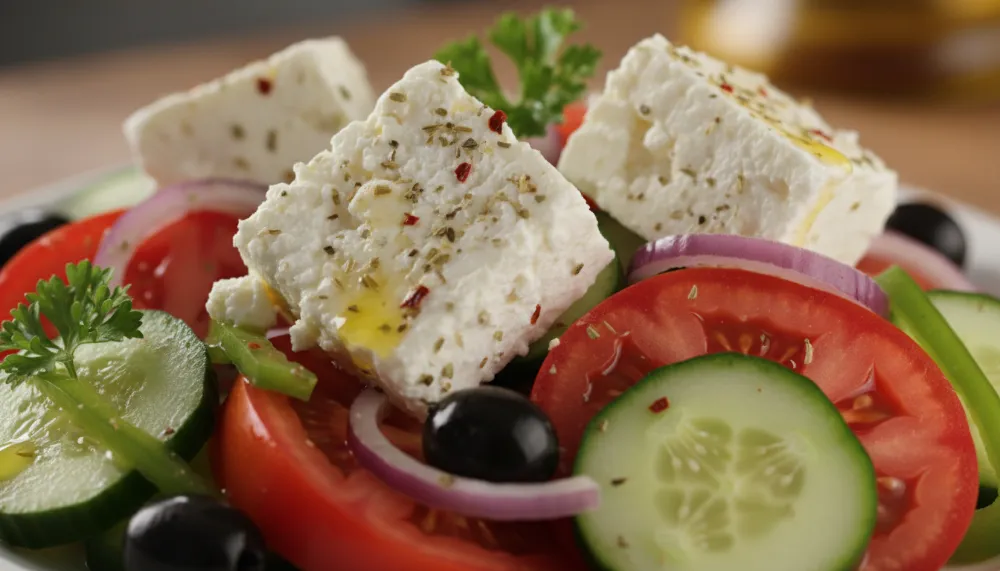
The Classic Greek Salad with Feta is a nutritional marvel, embodying the principles of the heart-healthy Mediterranean diet. A standard serving is relatively low in calories but exceptionally high in essential nutrients. The tomatoes provide a massive dose of lycopene, a powerful antioxidant known for its heart-protective properties. The cucumbers and peppers contribute Vitamin K and Vitamin C, which are essential for bone health and immune function. The extra-virgin olive oil is a primary source of monounsaturated fats, which help manage cholesterol levels and provide long-lasting satiety.
The protein in the dish comes from the feta cheese, which also provides a significant amount of calcium. Because the salad is primarily raw, the fiber content remains high, aiding in digestion and helping to regulate blood sugar levels. When you consume a Classic Greek Salad with Feta, you are not just eating a meal, you are nourishing your body with a balanced spectrum of macro and micronutrients that have sustained Mediterranean populations for generations.
Professional Flavor Variations
While the traditional version is a masterpiece, professional chefs often introduce variations to suit different meal times or dietary needs. These variations maintain the spirit of the Classic Greek Salad with Feta while adding new textures.
The Protein-Boosted Variation (Grilled Chicken)
To turn this side dish into a substantial main course, add thinly sliced grilled chicken breast. Marinate the chicken in lemon juice, garlic, and dried oregano before grilling to a charred finish. The savory, warm notes of the beef or chicken (remember, no pork) complement the cold, crisp vegetables beautifully. For perfectly prepped chicken, the Cosori 9-in-1 TurboBlaze Air Fryer 6 Qt: https://amzn.to/4hRWmVq is an excellent choice. It roasts meats and chickpeas perfectly, giving you that charred exterior without the need for an outdoor grill.
The Mediterranean Legume Variation (Chickpea)
Adding chickpeas is a fantastic way to introduce plant-based protein and extra fiber. You can use rinsed, canned chickpeas or, for a more professional touch, roast them in the air fryer until they are slightly crunchy. This adds a delightful textural contrast to the soft tomatoes and creamy feta. For fast prep of multiple vegetables, the Cuisinart 8 Cup Food Processor: https://amzn.to/47Nhbg8 is a meal-prep essential, allowing you to slice cucumbers and peppers in seconds.
The Seasonal Fruit Variation (Watermelon & Mint)
In the Aegean islands during the peak of heat, it is common to see watermelon paired with feta. You can replace the tomatoes with cubes of cold watermelon and add fresh mint leaves. The sweetness of the fruit creates a sharp, refreshing contrast with the saltiness of the feta, making it the ultimate cooling summer dish.
The Starch Variation (Dakos Style)
In Crete, a similar salad is served over broken pieces of barley rusks called paximadia. This is known as Dakos. As the salad sits, the juices from the tomatoes and the olive oil soak into the hard bread, softening it and creating a rustic, filling texture. This turns the Classic Greek Salad with Feta into a complete, high-fiber meal.
Storage and Preparation Secrets
The Classic Greek Salad with Feta is best enjoyed fresh, but it can be prepped in advance with the right technique. If you are meal prepping, store the chopped vegetables separately from the dressing and the feta. Using high-quality containers like the Rubbermaid Brilliance Glass Storage Set of 9: https://amzn.to/4oD0YkY will keep your ingredients fresh and prevent leakages. These glass containers are leak-proof and stackable, making them perfect for maintaining the crispness of your cucumbers. For even longer freshness of your produce, the FoodSaver Vacuum Sealer Machine: https://amzn.to/4qWgVnS can help preserve bulk-bought peppers and cucumbers before they are sliced.
Remember to never refrigerate the salad after it has been dressed, as the olive oil can solidify and the tomatoes will lose their flavor in the cold. If you must store leftovers, bring them to room temperature for 15 minutes before eating to allow the olive oil to return to its liquid state. The true magic of the Classic Greek Salad with Feta lies in the residual liquid at the bottom of the bowl, often called the nectar of the gods. Be sure to have a piece of sourdough or pita bread ready to dip into this mixture of tomato juice, vinegar, and premium oil.