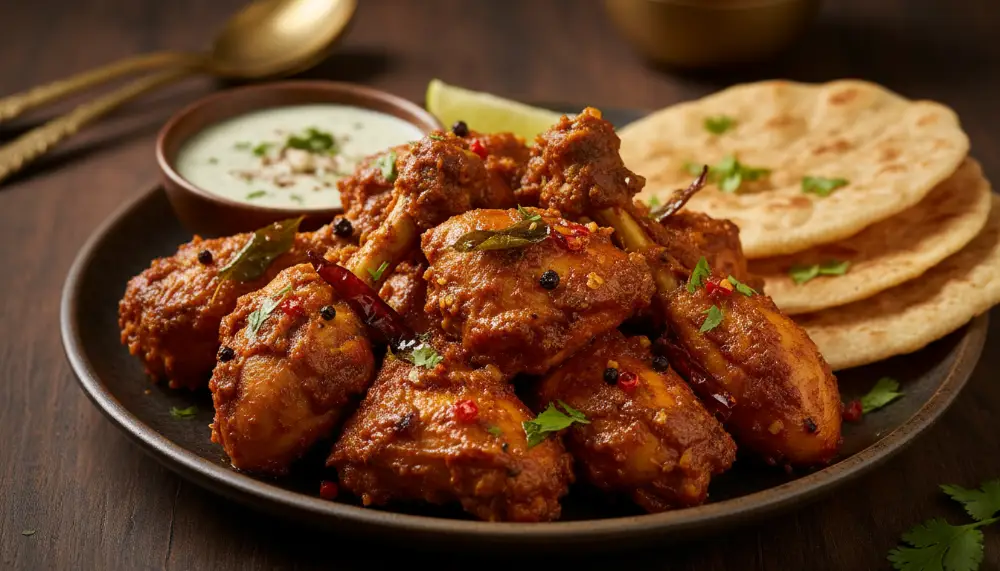

Experience the legendary flavors of Kundapur with this authentic Chicken Ghee Roast, a fiery, buttery masterpiece that defines the soul of Mangalorean coastal cuisine.
Authentic Chicken Ghee Roast
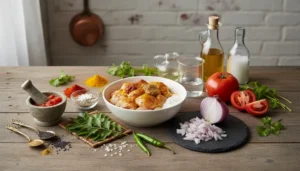
Ingredients
- 1 1 kg Chicken, cut into medium pieces
- 2 1/2 cup Pure Ghee (Clarified Butter)
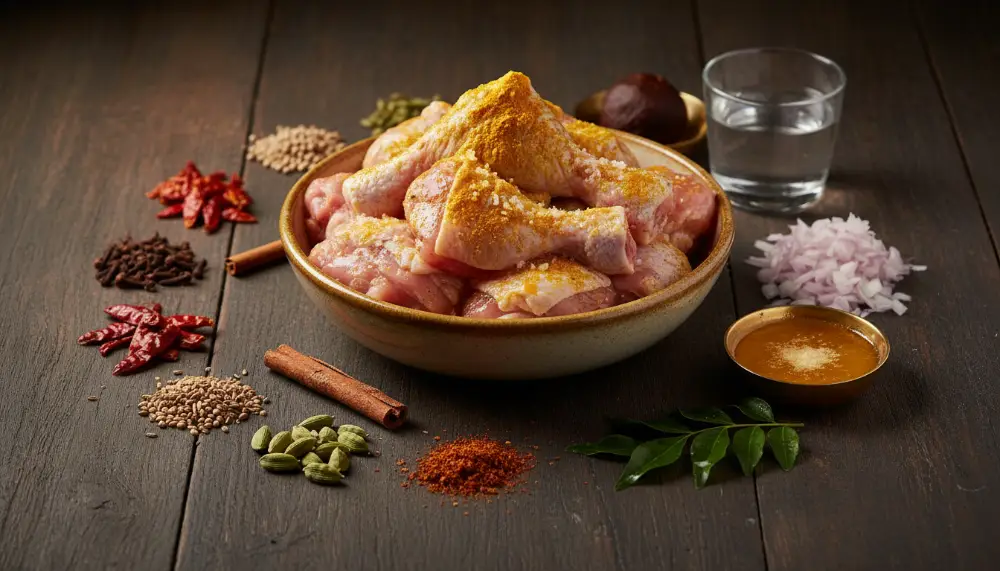
- 3 15 Byadgi Dried Red Chilies (for color)
- 4 5 Guntur Dried Red Chilies (for heat)
- 5 1 tbsp Coriander Seeds
- 6 1 tsp Cumin Seeds & 1/2 tsp Peppercorns
- 7 6 cloves Garlic & 1-inch Ginger
- 8 1 tbsp Tamarind Paste & 1 tsp Jaggery Powder
- 9 1/2 cup Thick Yogurt (for marinade)
- 10 2 sprigs Fresh Curry Leaves
Instructions
- 1 Marinate chicken with yogurt, turmeric, and salt for at least 1 hour.
- 2 Dry roast red chilies, coriander, cumin, and peppercorns until fragrant.
- 3 Grind the roasted spices with garlic, ginger, and tamarind into a smooth paste.
- 4 Cook the marinated chicken in a pan until 80% done, then set aside.
- 5 In a fresh pan, heat ghee and roast the spice paste until oil separates.
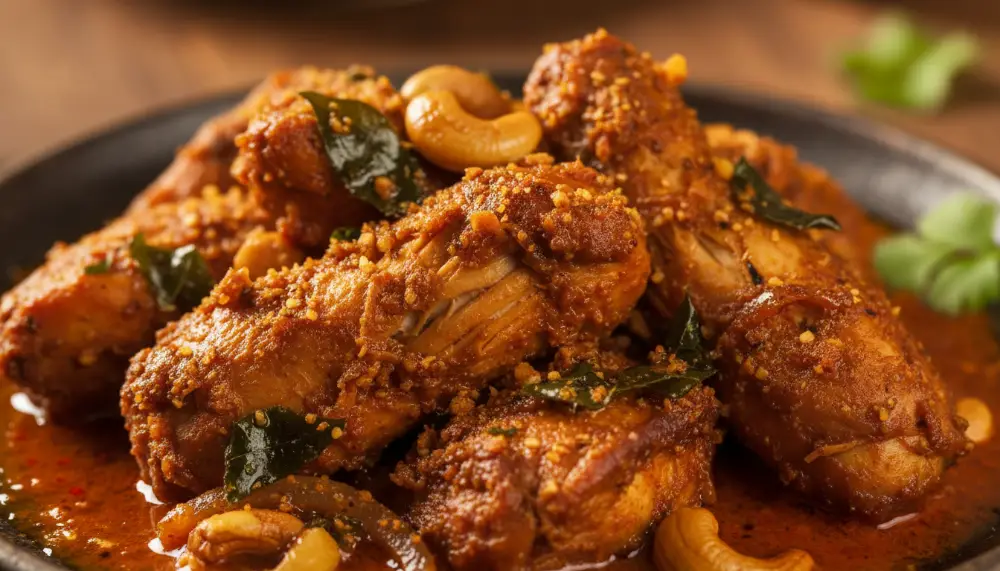
- 6 Add chicken, curry leaves, and jaggery. Roast on low heat until dark red and aromatic.
The History and Origin of Chicken Ghee Roast
To understand Chicken Ghee Roast is to take a journey to the sun-drenched coastal town of Kundapur, located in the Udupi district of Karnataka. Unlike many traditional Indian dishes that claim ancient lineage, Chicken Ghee Roast has a very specific and relatively modern birthday. It was invented in 1957 at the legendary Shetty Lunch Home by Tejappa Shetty and his wife, Prabhavathi Shetty. The couple was looking to innovate on the classic chicken sukka, a coconut-heavy dish common to the Bunt community. By stripping away the coconut and focusing intensely on the interplay between clarified butter (ghee) and a concentrated spice paste, they created a culinary icon.
The dish quickly became a sensation, moving from the quiet streets of Kundapur to the bustling food scene of Mangalore and eventually to fine-dining establishments across Mumbai, Bangalore, and Dubai. What makes it unique is the “Roast” element, which refers not to oven-roasting but to the slow, painstaking process of frying the spice paste in ghee until the moisture evaporates and the flavors concentrate into a dark, spicy, and velvet-smooth coating. This technique ensures that every fiber of the chicken is infused with the richness of the ghee and the sharp acidity of the tamarind.
The Science of the Spice Paste: Byadgi vs. Guntur
The vibrant, ruby-red color of Chicken Ghee Roast is its most striking feature, often leading diners to assume it is overwhelmingly spicy. However, the secret lies in the choice of chilies. Professionals use a specific blend of Byadgi chilies and Guntur chilies. Byadgi chilies are prized for their deep red pigments and wrinkled skin, providing an intense color and a mild, sweet, almost smoky flavor. Guntur chilies, on the other hand, provide the sharp, lingering heat that balances the richness of the ghee. Achieving the perfect texture for this paste is crucial, which is why we recommend using the Ninja BN751 Professional Plus DUO Blender. Its 1000W motor ensures the dried chilies and aromatics are pulverized into a silk-like consistency that won’t feel gritty on the palate.
Beyond the chilies, the paste incorporates coriander seeds, cumin, and black peppercorns. These are dry-roasted to release their essential oils before being ground with fresh garlic and ginger. The addition of tamarind at this stage is vital, as the tartness provides a necessary counterpoint to the heavy fats used during the roasting process. In professional kitchens, this paste is often prepared in large batches, as it acts as the “mother sauce” for various other ghee roast variations.
Mastering the Roast: Technique and Temperature
The cooking of Chicken Ghee Roast is an exercise in patience. It begins with a dual-stage process. First, the chicken must be marinated in thick yogurt and turmeric. This doesn’t just add flavor, the lactic acid in the yogurt works to tenderize the proteins, ensuring the meat stays succulent even during the high-heat roasting phase. Once marinated, the chicken is partially cooked in its own juices. This prevents the final dish from becoming watery, as the excess moisture is evaporated before the chicken meets the ghee.
The Role of Clarified Butter (Ghee)
Ghee is not merely a cooking medium in this recipe, it is a primary flavor component. Unlike butter, which contains water and milk solids that burn at high temperatures, ghee is pure fat with a high smoke point. This allows you to fry the spice paste for an extended period without developing bitter, burnt notes. As the paste roasts in the ghee, a chemical transformation occurs, the sugars in the spices caramelize, and the fat becomes infused with the essence of the chilies and curry leaves. You will know the base is ready when the ghee begins to separate from the spice mass and floats to the top, a visual cue known as “oil separation” in Indian culinary tradition.
Professional Variations and Adaptations
While chicken remains the most popular choice, the versatile Ghee Roast masala can be applied to various proteins to suit different dietary preferences. For those who enjoy a heartier red meat, a Beef Ghee Roast is an incredible alternative. The beef should be pressure-cooked or slow-braised until tender before being tossed into the ghee-roasted masala. The robust flavor of beef stands up exceptionally well to the intense spice profile of the Kundapur masala. During the prep phase for such variations, the Cuisinart 8 Cup Food Processor is essential for fast chopping and slicing of onions and aromatics during meal prep, especially when working with larger quantities of meat.
Vegetarian Ghee Roast Options
Vegetarians need not miss out on this coastal delicacy. Paneer Ghee Roast and Mushroom Ghee Roast are staples in Mangalorean restaurants. For the best results, paneer cubes should be lightly seared in ghee first to give them structure before adding them to the sauce. Mushrooms are particularly effective as they absorb the spice paste like a sponge. If you are looking for a lower-fat way to prep side components, like roasting chickpeas for a crunchy garnish, the Cosori 9-in-1 TurboBlaze Air Fryer 6 Qt roasts chickpeas and vegetables perfectly with its large family capacity, offering a modern twist to traditional sides.
Nutritional Profile: An Indulgent Powerhouse
Chicken Ghee Roast is a high-protein, calorie-dense dish designed for satisfaction. A standard 250g serving typically contains between 450 and 700 calories, primarily derived from the chicken and the healthy fats in the ghee. While high in fat, ghee is a source of butyrate, a short-chain fatty acid that supports gut health, and it is rich in fat-soluble vitamins like A, D, and E. The concentrated use of red chilies provides a significant boost of Vitamin C and capsaicin, which can temporarily increase metabolic rates. By removing the coconut milk found in other coastal curries, the dish remains relatively low in carbohydrates, making it suitable for those focusing on protein-forward diets.
Serving Suggestions and Traditional Pairings
To truly enjoy Chicken Ghee Roast, one must pair it with the correct accompaniments. The spice and richness of the dish require a neutral, slightly cooling base. The most traditional pairing is Neer Dosa, which are thin, lacy crepes made from a fermented rice batter. The name “Neer” literally translates to water, reflecting the thin consistency of the batter. These dosas are perfect for mopping up the thick, buttery masala. Other excellent pairings include Appam (rice pancakes with a soft, fluffy center) or Ghee Rice, which is aromatic Basmati rice cooked with whole spices like cinnamon and cardamom.
Expert Tips for the Perfect Ghee Roast
If you want to elevate your Chicken Ghee Roast from good to restaurant-quality, keep these professional tips in mind. First, never skip the Jaggery. A small teaspoon of unrefined cane sugar at the end of the cooking process doesn’t make the dish sweet, instead, it acts as a flavor bridge that rounds out the acidity of the tamarind and the heat of the chilies. Second, use fresh Curry Leaves. Dried leaves lack the essential oils that provide the characteristic citrusy, herbal aroma that defines South Indian cooking. Finally, ensure you are using high-quality ghee, preferably homemade or grass-fed, as the flavor of the fat is the foundation of the entire dish.