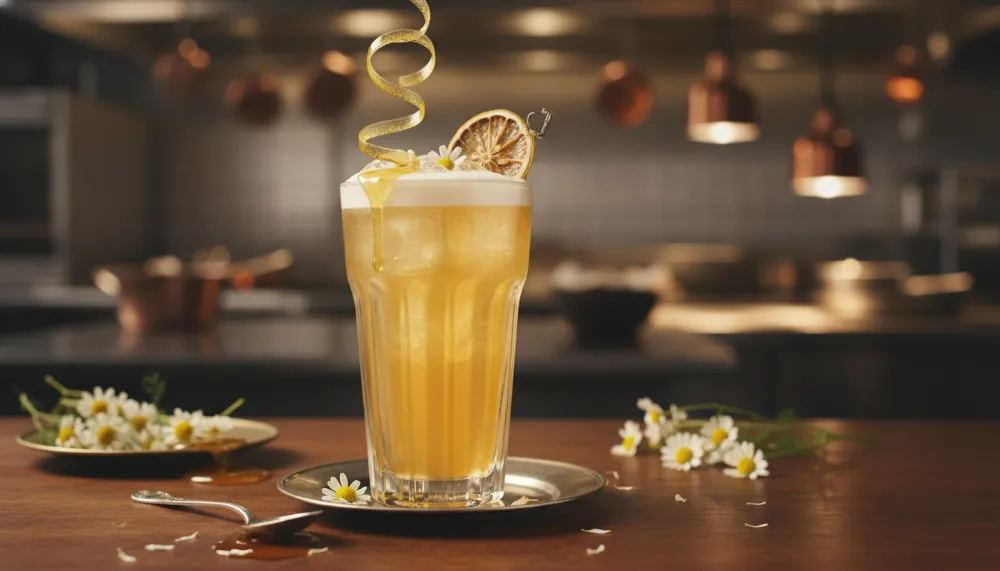

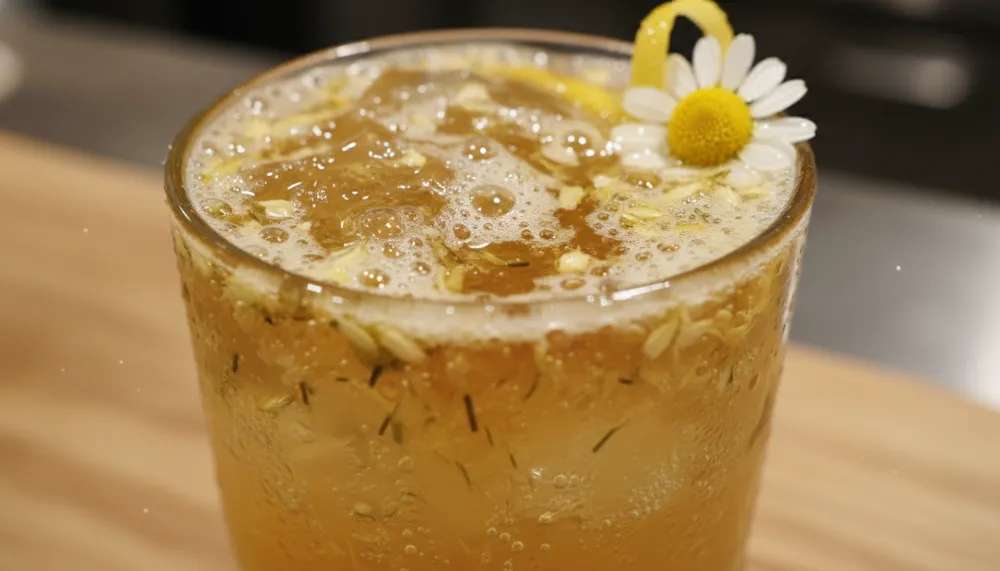
Discover the perfect blend of floral tranquility and golden sweetness with this elegant Chamomile Honey Mocktail. This sophisticated non-alcoholic beverage offers a complex flavor profile that rivals any traditional cocktail, making it the perfect choice for mindful sipping.
Chamomile Honey Mocktail
Ingredients
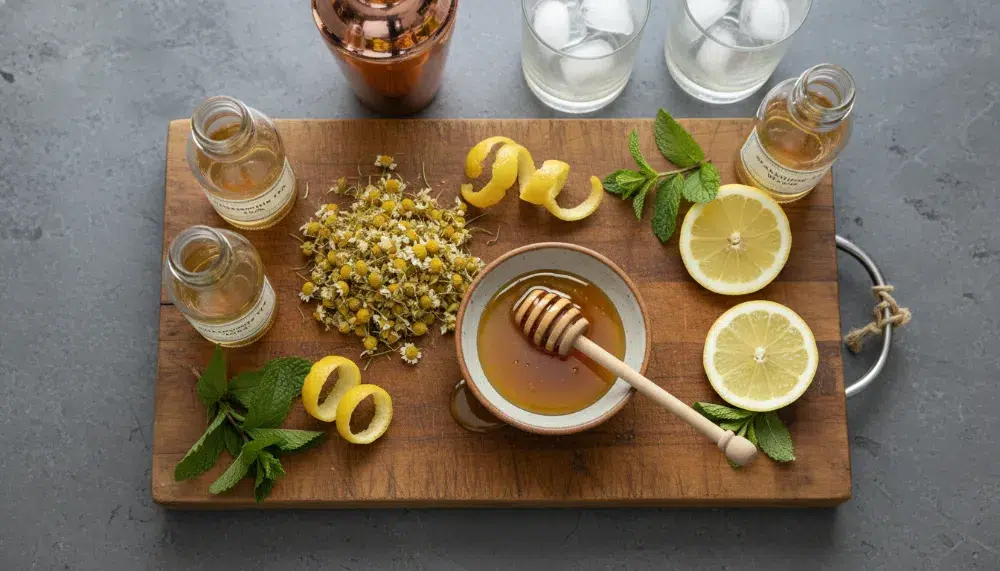
- 1 2 cups filtered water (boiled)
- 2 4 organic chamomile tea bags or 2 tbsp dried flowers
- 3 1/4 cup high-quality raw honey
- 4 2 tablespoons fresh lemon juice (strained)
- 5 1 cup sparkling water or club soda (chilled)
- 6 Fresh mint sprigs and lemon wheels for garnish
- 7 Ice cubes (preferably large cubes)
Instructions
- 1 Steep the chamomile tea in the 2 cups of boiling water for exactly 7 minutes to ensure a deep, concentrated flavor without bitterness.
- 2 Remove the tea bags or strain the flowers, then stir in the honey while the liquid is still warm until fully dissolved.
- 3 Allow the tea-honey mixture to cool to room temperature, then stir in the fresh lemon juice.
- 4 Fill two tall glasses with ice and pour the chamomile mixture halfway up each glass.
- 5 Top with chilled sparkling water and stir gently with a long spoon.
- 6 Garnish with fresh mint and lemon wheels, and serve immediately.
The Timeless Appeal of the Chamomile Honey Mocktail
The Chamomile Honey Mocktail is not just a drink, it is a sophisticated, non-alcoholic beverage that combines ancient herbal traditions with modern mixology. By utilizing the calming properties of the chamomile flower and the natural depth of honey, this drink serves as a versatile alternative to traditional cocktails. In an era where mindful drinking is on the rise, this mocktail provides a botanical complexity that satisfies the palate without the need for spirits.
Many people associate chamomile exclusively with bedtime tea, but when transformed into a chilled, effervescent mocktail, its “apple-like” notes are amplified. When paired with the floral richness of honey and the bright acidity of lemon, chamomile takes on a whole new dimension, transitioning from a sleepy-time staple to a refreshing afternoon or evening beverage. This article explores the depths of this beverage, from its historical roots to the professional techniques used to perfect it.
Historical Origin: From Sacred Herbs to Modern Glassware
The core components of this drink, chamomile and honey, have been used in beverages for thousands of years. The history of chamomile dates back to Ancient Egypt, where it was revered as a sacred herb and dedicated to the sun god, Ra. It was used both medicinally and as a calming drink, often brewed into thick syrups with honey to preserve its properties.
The Greeks referred to it as chamaemelon, meaning “ground apple,” because of its distinctive apple-like scent, while the Romans utilized it as a flavoring agent in beverages and for its restorative properties. During the Medieval era in Europe, chamomile was a staple in monastery gardens, often called “the plant’s physician” because of its ability to thrive and heal the plants around it. It was frequently brewed with honey to soothe the throat and improve sleep quality, a tradition that persists today.
In modern mixology, the specific structure of the Chamomile Honey Mocktail often draws inspiration from the Bee’s Knees, a classic cocktail from the 1920s Prohibition era. Mixologists today have realized that by replacing the traditional botanical spirit with a highly concentrated chamomile tea infusion, they can mimic the herbal complexity and “bite” of a spirit without the alcohol. This transition has cemented the Chamomile Honey Mocktail as a pillar of the modern non-alcoholic movement.
The Nutritional Profile of a Chamomile Honey Mocktail
Beyond its refreshing taste, this mocktail offers a variety of functional benefits. Unlike many sugary sodas or alcoholic drinks, this beverage focuses on natural ingredients that provide restorative properties. A standard serving (approx. 8 oz) typically contains the following:
| Nutrient | Amount per Serving |
|---|---|
| Calories | 55–65 kcal |
| Total Fat | 0g |
| Cholesterol | 0mg |
| Sodium | 5mg |
| Total Carbohydrates | 15–17g |
| Sugars | 15g (Natural from honey) |
| Protein | 0g |
Functional Benefits: More Than Just a Drink
The combination of chamomile and honey offers several health advantages, making this a “wellness mocktail”:
- Antioxidants: Chamomile is rich in flavonoids, specifically apigenin, which binds to certain receptors in your brain that may promote sleepiness and reduce insomnia.
- Anti-inflammatory: Both raw honey and chamomile contain compounds that help reduce inflammation throughout the body, providing a soothing effect on the digestive system.
- Digestive Aid: Historically, this blend has been used to settle the stomach, reduce bloating, and promote overall gastrointestinal comfort after a meal.
Professional Flavor Variations
While the base recipe is delicious, professional mixologists use various techniques to elevate the basic tea-and-honey profile into a complex, multi-layered drink. Here are five variations you can try at home:
1. The Sparkling Botanical
This variation focuses on effervescence and crispness. By steeping the chamomile at double strength (4 bags per 1 cup of water) and mixing it with a higher ratio of lemon, you create a “botanical syrup.” When topped with chilled sparkling water, the result is a light, airy beverage that mimics a high-end gin and tonic. The flavor profile is light, effervescent, and incredibly crisp, perfect for hot summer afternoons.
2. The Spiced Garden
For those who prefer a bit of warmth in their drinks, infuse the honey syrup with green cardamom pods or fresh ginger slices while it is still warm. The cardamom adds an herbal, slightly citrusy spice, while the ginger provides a sharp, invigorating kick. The flavor profile is warm and aromatic, with a spicy finish that balances the floral sweetness of the chamomile perfectly.
3. The Creamy “Chamomile Fog”
This is a warm variation of the mocktail, ideal for winter evenings. Brewed chamomile is combined with honey and a splash of vanilla bean extract, then topped with frothed plant-based milk, such as oat or almond. To get that professional froth, use the Ninja BN751 Professional Plus DUO Blender (https://amzn.to/3LCDyNR), which is perfect for creating silky textures in non-dairy milks. The result is a rich, dessert-like, and comforting drink.
4. The Tropical Orchard
Add fresh pineapple juice or muddled berries to the chamomile-honey base before adding the ice. To prepare the fruit puree or chop the berries finely, use the Cuisinart 8 Cup Food Processor (https://amzn.to/47Nhbg8), which makes quick work of meal prep and beverage garnishes. The flavor profile is tart and fruity, emphasizing the “apple” notes naturally found in the chamomile flower while adding a tropical flair.
5. The Smoked Honey
This variation uses a burnt honey syrup, honey heated in a saucepan until it just begins to caramelize and darken. When combined with a sprig of charred rosemary as a garnish, the drink takes on a deep, savory, and complex character. It provides a “spirit-forward” mouthfeel that is often missing from non-alcoholic drinks, making it a favorite for evening parties.
Essential Tools for the Perfect Mocktail
To achieve professional results, having the right equipment is essential. Here are my top recommendations for your home beverage bar:
- Ninja BN751 Professional Plus DUO Blender: https://amzn.to/3LCDyNR – Perfect for creating foams, blending fruit purees, or making large batches of mocktail bases.
- Cosori 9-in-1 TurboBlaze Air Fryer 6 Qt: https://amzn.to/4hRWmVq – Surprisingly useful for dehydrating citrus wheels or even drying your own chamomile flowers from the garden.
- Cuisinart 8 Cup Food Processor: https://amzn.to/47Nhbg8 – Essential for fast chopping of herbs and preparing large quantities of lemon zest for garnishes.
- Rubbermaid Brilliance Glass Storage Set: https://amzn.to/4oD0YkY – These are perfect for storing your infused honey syrups in the fridge; they are leak-proof and stackable.
- FoodSaver Vacuum Sealer Machine: https://amzn.to/4qWgVnS – Use this to keep your dried chamomile flowers or tea bags fresh for much longer, preventing them from absorbing other kitchen odors.
Frequently Asked Questions
Can I make this drink in advance?
Yes, you can prepare the chamomile and honey base up to three days in advance. Store it in a sealed container like the Rubbermaid Brilliance Glass Storage Set in the refrigerator. However, do not add the sparkling water or the fresh garnishes until you are ready to serve, as the water will go flat and the mint will wilt.
Why does my chamomile tea taste bitter?
Bitterness usually occurs if the water was too hot or if the tea steeped for too long. Chamomile is delicate, so avoid using rolling boiling water; let the water sit for 30 seconds after boiling before pouring it over the tea. Never steep for more than 10 minutes.
What is the best type of honey to use?
For a classic flavor, use Clover or Wildflower honey. If you want a more intense, medicinal, and earthy flavor, try Manuka honey. If you want to lean into the citrus notes, Orange Blossom honey is an excellent choice. Always try to use raw, local honey for the best nutritional benefits and flavor depth.
Is this mocktail suitable for children?
Since this recipe contains no alcohol and uses natural chamomile tea, it is generally safe for children. However, please note that honey should never be given to infants under one year of age due to the risk of botulism. For older children, it is a fantastic and healthy alternative to sugary sodas.