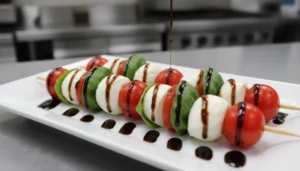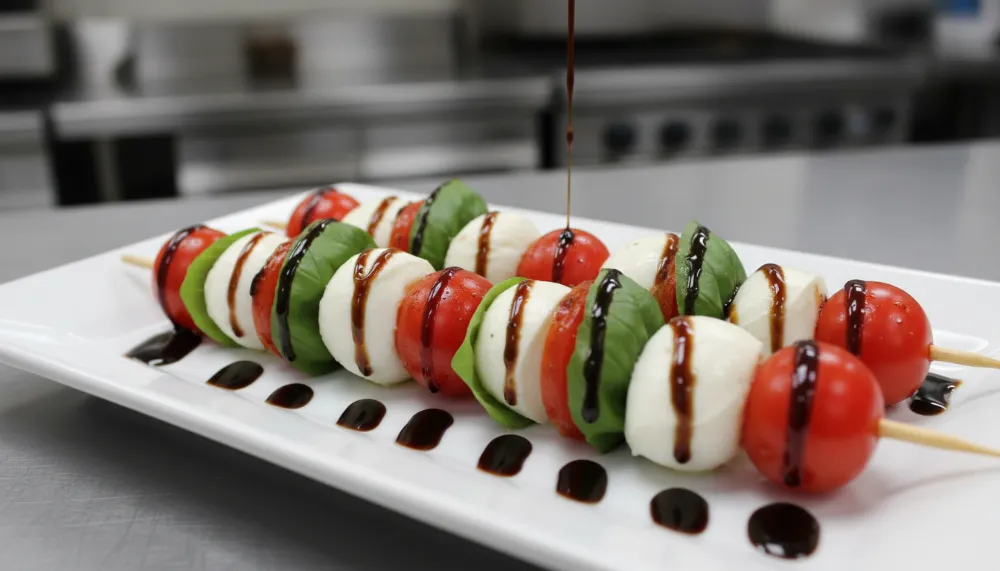

Elevate your next gathering with these vibrant Caprese Skewers with Balsamic Glaze, a bite-sized evolution of the classic Italian salad that balances creamy mozzarella with zesty tomatoes. These elegant appetizers offer a perfect explosion of Mediterranean flavors in every single mouthful, making them the ultimate centerpiece for any sophisticated spread.
Gourmet Caprese Skewers
Ingredients
- 24 Cherry or grape tomatoes (bright red and firm)
- 24 Fresh mozzarella pearls (bocconcini or ciliegine)
- 24 Large fresh basil leaves
- 1/2 Cup High-quality balsamic glaze (store-bought or homemade vinegar reduction)
- 2 Tbsp Extra virgin olive oil
- 1 Tsp Flaky sea salt and freshly cracked black pepper
Instructions
- 1 Wash and thoroughly dry the tomatoes and basil leaves to ensure the glaze adheres perfectly.
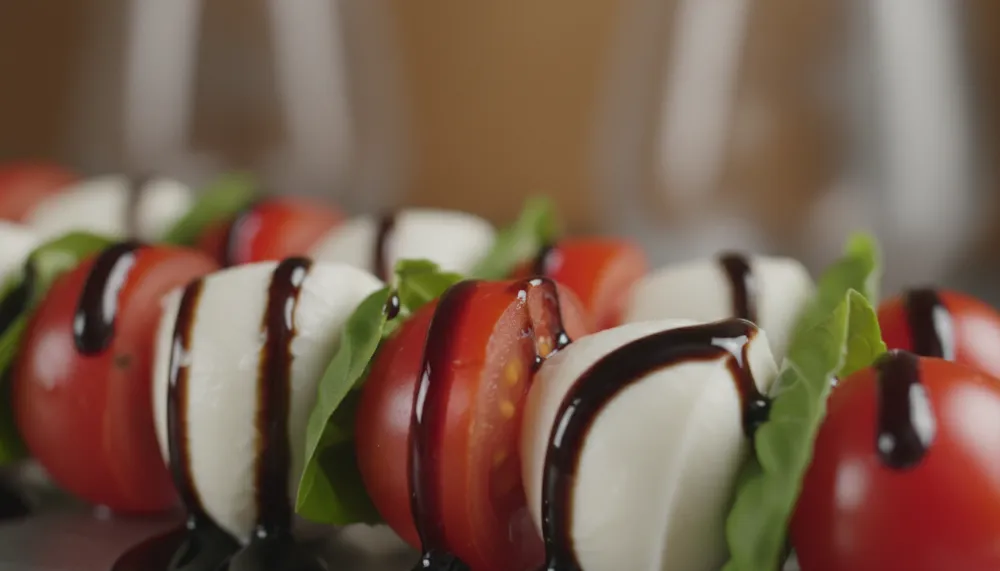
- 2 Thread a tomato onto a 4-inch bamboo skewer, followed by a folded basil leaf (folded in half or thirds), and finish with a mozzarella pearl.
- 3 Arrange the assembled skewers on a serving platter.
- 4 Lightly drizzle with extra virgin olive oil and sprinkle with sea salt and black pepper.
- 5 Just before serving, generously drizzle the balsamic glaze over the skewers in a decorative zig-zag pattern.
The Fascinating Origin of the Caprese Concept
The Caprese Skewers with Balsamic Glaze are a modern, portable evolution of the classic Insalata Caprese, a dish that carries the weight of Italian history within its simple ingredients. The foundations of this dish reside on the Island of Capri, Italy. While legends suggest ancient Roman origins, historians generally trace its prominence to the 1920s, a period of immense culinary transition in Europe.
One popular account credits a local stonemason who, after World War I, sought to create a snack that showcased the colors of the Italian flag: red, white, and green. By combining local tomatoes, creamy mozzarella, and fragrant basil, he created a patriotic masterpiece that was as visually striking as it was delicious. This worker’s lunch soon caught the eye of the elite who vacationed on the sun-drenched shores of Capri.
The dish gained intellectual fame at the Grand Hotel Quisisana when it was served to Filippo Tommaso Marinetti, the founder of the Futurist movement. Marinetti was famous for his disdain for heavy pasta, which he believed made people lethargic. He advocated for lighter, fresher meals that utilized raw ingredients, and the Caprese salad became the poster child for this revolutionary culinary philosophy. The skewers we enjoy today are a contemporary adaptation, designed for social catering and ease of service during cocktail hours and garden parties.
Mastering the Components: Ingredients Matter
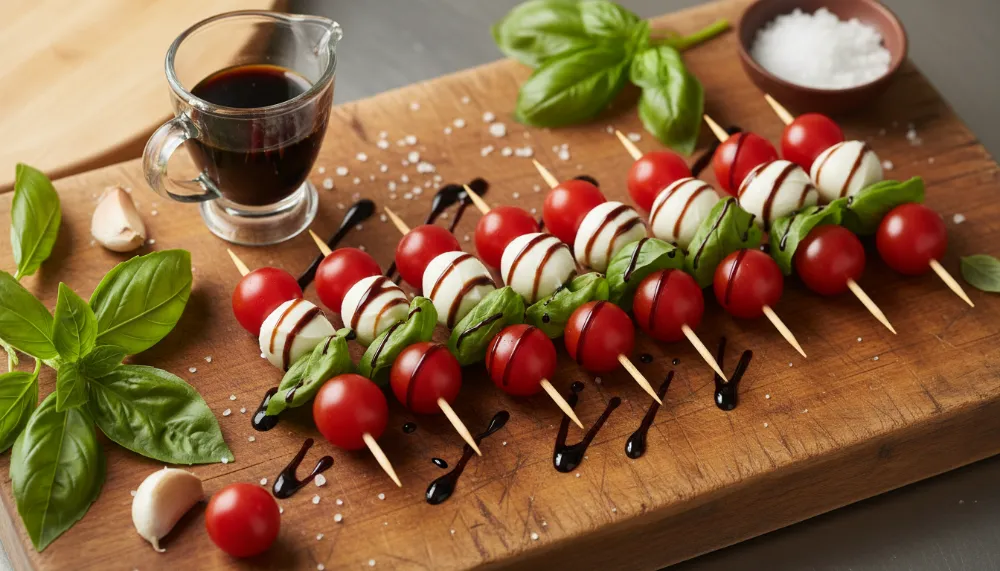
When making Caprese Skewers with Balsamic Glaze, the quality of your ingredients is the only thing that separates a mediocre snack from a gourmet experience. Because there is no cooking involved, every element must be at its peak freshness.
The Perfect Tomato
Search for cherry or grape tomatoes that are firm to the touch with a deep, ruby-red hue. Heirloom varieties can add a beautiful spectrum of colors, including yellow and purple, to your platter. The key is to avoid mealy or overripe tomatoes, as they will not hold up on the skewer. Using a high-quality tool like the Cuisinart 8 Cup Food Processor can help you prep large quantities of garnish if you choose to expand this dish into a larger salad format.
Fresh Mozzarella Selection
For skewers, mozzarella pearls, known as ciliegine or bocconcini, are the ideal size. These small spheres of cheese are usually packed in water or whey to maintain their moisture. Ensure you drain them thoroughly and pat them dry before assembly. If you find the cheese is lacking in flavor, you can marinate the pearls in olive oil and dried oregano for 30 minutes before threading them onto the sticks.
The Role of Fresh Basil
Basil is the aromatic heart of this dish. Look for Genovese basil with large, unbruised leaves. To keep your basil fresh for days, use a FoodSaver Vacuum Sealer Machine with the jar attachment to store the leaves in a controlled environment, preventing them from oxidizing and turning black. When assembling, folding the leaf into an “S” shape provides a beautiful green pop between the white cheese and red tomato.
The Science of the Balsamic Glaze
The balsamic glaze is the element that ties the entire dish together. Unlike regular balsamic vinegar, which is thin and highly acidic, a glaze is a reduction that concentrates the natural sugars of the grapes. To make your own, simply simmer balsamic vinegar in a small saucepan until it reduces by half, becoming thick enough to coat the back of a spoon. Because this recipe strictly avoids alcohol, balsamic vinegar is the perfect replacement for wine-based reductions, providing a deep, complex sweetness without any spirits.
For a perfectly smooth consistency in larger batches of sauces or glazes, the Ninja BN751 Professional Plus DUO Blender is an excellent choice. Its powerful motor can emulsify balsamic reductions with a touch of honey or mustard for a unique twist on the traditional glaze.
Professional Flavor Variations (No Pork)
While the traditional vegetarian version is a classic, these skewers can be transformed into a hearty protein-packed appetizer while strictly adhering to dietary restrictions. By omitting all pork products and focusing on high-quality beef and poultry, you can cater to a wider audience.
Savory Beef and Garlic Variation
For a more substantial bite, add a cube of seared beef tenderloin to the skewer. Season the beef with garlic powder, cracked pepper, and sea salt, then sear it in a hot pan until medium-rare. The richness of the beef contrasts beautifully with the acidic tomato and creamy cheese. This variation transforms the appetizer into a mini-meal that is perfect for evening events.
Balsamic-Grilled Chicken Variation
Marinate chicken breast chunks in a mixture of balsamic vinegar, olive oil, and lemon juice. Grill the chicken until fully cooked and slightly charred. Using the Cosori 9-in-1 TurboBlaze Air Fryer 6 Qt is the fastest way to achieve a perfect roast on these chicken bites, ensuring they remain juicy while developing a golden exterior. Thread the chicken onto the skewer along with the traditional Caprese ingredients for a protein-forward option.
Fruit Fusion: Peach and Tomato
A gourmet vegetarian enhancement involves adding a slice of fresh peach or a ball of cantaloupe. The sweetness of the fruit pairs exceptionally well with the savory mozzarella and the tang of the balsamic glaze. This variation is particularly popular during the summer months when stone fruits are at their peak.
Pro Tips for Assembly and Plating
To ensure your Caprese Skewers with Balsamic Glaze look as good as they taste, follow these professional tips. First, always use bamboo skewers or decorative picks that are at least 4 inches long. This gives your guests enough room to hold the skewer without getting glaze on their fingers. When threading, start with the tomato on the bottom to provide a sturdy base, then add the basil and the mozzarella.
If you are preparing these for a party, you can assemble the skewers up to 4 hours in advance. Store them in Rubbermaid Brilliance Glass Storage containers with a damp paper towel to keep the basil from wilting. However, do not add the oil, salt, or balsamic glaze until the very moment you are ready to serve. If you apply the glaze too early, it will bleed into the white mozzarella, ruining the clean aesthetic of the dish.
Nutritional Benefits and Dietary Compliance
Beyond their incredible taste, Caprese Skewers are a nutritionally dense choice for any health-conscious diner. Tomatoes are a primary source of lycopene, a powerful antioxidant linked to many health benefits. The fresh mozzarella provides a significant amount of calcium and protein, while the extra virgin olive oil offers heart-healthy monounsaturated fats.
This recipe is naturally free from pork and alcohol, making it an inclusive choice for various dietary needs. By using balsamic vinegar as the base for the glaze, we achieve the depth of flavor usually reserved for wine-based sauces while maintaining a strictly non-alcoholic profile. The simplicity of the ingredients ensures that the natural flavors of the Mediterranean shine through without the need for heavy additives or preservatives.
Final Thoughts on Entertaining
The Caprese Skewer with Balsamic Glaze remains one of the most popular appetizers globally because it hits every major flavor profile: sweet, salty, acidic, and creamy. Whether you are hosting a formal wedding reception or a casual backyard barbecue, these skewers provide a touch of elegance that requires minimal effort. By utilizing modern kitchen tools like air fryers for protein additions and high-quality storage containers for prep, you can master this Italian classic with ease.