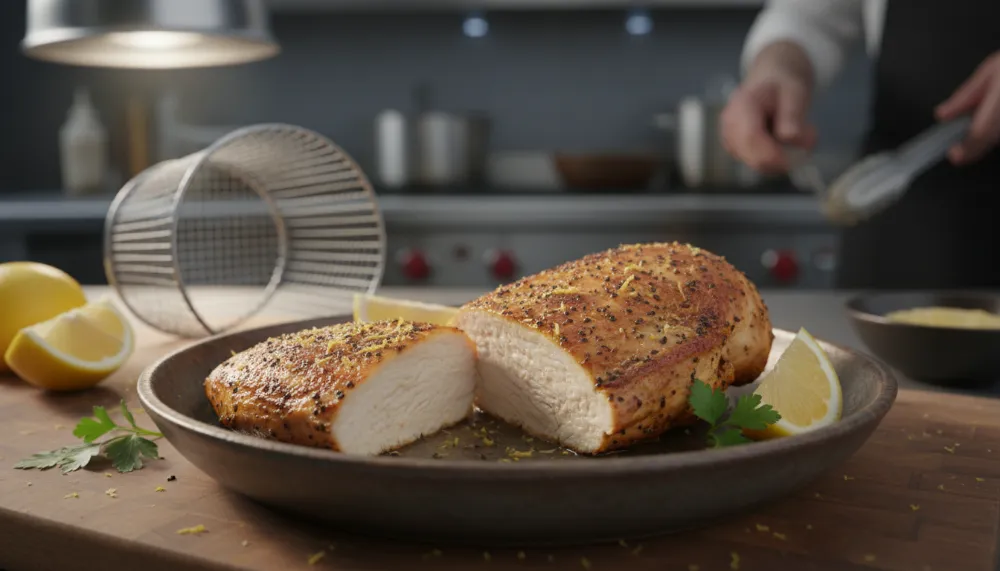

Get ready for the most succulent, citrusy chicken you have ever tasted, cooked to perfection in minutes using your favorite kitchen gadget. This Air Fryer Lemon Pepper Chicken Breast is the ultimate solution for a fast, high-protein meal that never compromises on moisture or flavor.
Air Fryer Lemon Pepper Chicken
Ingredients
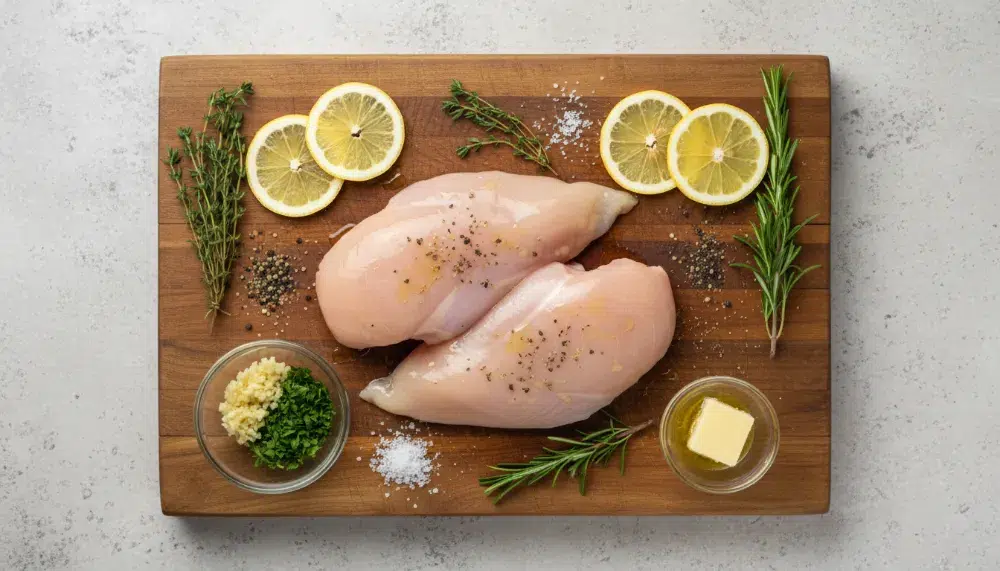
- 1 2 large boneless skinless chicken breasts (approx. 1.5 lbs)
- 2 2 tablespoons high-quality olive oil
- 3 1.5 tablespoons lemon pepper seasoning
- 4 1 teaspoon garlic powder
- 5 1/2 teaspoon onion powder
- 6 1 teaspoon fresh lemon zest
- 7 2 tablespoons melted butter (for the ‘Wet’ finish)
- 8 1 tablespoon fresh lemon juice
Instructions
- 1 Place chicken breasts between plastic wrap and pound to an even 1/2-inch thickness using a meat mallet.
- 2 Pat the chicken dry with paper towels and coat thoroughly with olive oil.
- 3 Mix the lemon pepper, garlic powder, onion powder, and lemon zest. Rub generously onto both sides of the chicken.
- 4 Preheat your air fryer to 375°F (190°C). Place chicken in the basket, ensuring no overlapping.
- 5 Air fry for 12 to 15 minutes, flipping halfway through, until internal temperature reaches 165°F (74°C).
- 6 Whisk melted butter and lemon juice. Brush over the hot chicken and let rest for 5 minutes before slicing.
The Evolution of Lemon Pepper: A Culinary Icon
The marriage of citrus and heat is not a modern invention but a centuries-old culinary tradition. While we often think of lemon pepper as a convenient seasoning bottle in our pantry, its roots are deep and global. The two primary components, lemons and black pepper, both find their ancestral homes in South Asia, specifically India. Known as “black gold,” pepper was once so valuable it was used as currency. When paired with the bright acidity of the lemon, it created a preservative effect that was essential in Mediterranean and Indian cuisines long before refrigeration.
In the American context, the combination took on a new life through the culinary ingenuity of African American pioneers. As early as 1881, Abby Fisher, a formerly enslaved woman from Alabama, documented the use of lemon and black pepper in her seminal work, What Mrs. Fisher Knows About Old Southern Cooking. Her techniques laid the groundwork for what would become a staple of Southern comfort food. Later, in 1911, Rufus Estes, a celebrated chef for the Pullman Company, further refined these flavor profiles in his professional menus, bringing the sophisticated pairing to a wider audience.
The Atlanta Connection and the “Wet” Variation
While the seasoning was commercially launched in the late 1960s, it achieved legendary status in Atlanta, Georgia, during the 1990s. The city’s music and food scenes coalesced around the “Lemon Pepper Wet” wing, a cultural phenomenon that eventually transitioned into the preparation of chicken breasts and other proteins. This variation involves tossing the cooked meat in a buttery, lemon-rich emulsion, adding a layer of indulgence to the sharp pepper bite. Our recipe today utilizes this technique to ensure that even the leanest chicken breast remains dripping with moisture.
The Science of the Air Fryer: Why It Works for Chicken
Traditional pan-searing or oven-roasting often leaves chicken breast dry or unevenly cooked. The air fryer, however, uses rapid air technology to circulate high-intensity heat around the meat. This creates a “convection effect” that seals the exterior almost instantly, trapping the internal juices. Because the heat is so consistent, the cooking time is reduced by nearly 40 percent compared to a standard oven, which is the key to preventing the protein fibers from tightening and becoming tough.
Essential Equipment for the Perfect Chicken
To achieve professional results, the right tools are non-negotiable. Here are our top recommendations:
- Cosori 9-in-1 TurboBlaze Air Fryer 6 Qt: https://amzn.to/4hRWmVq (Why Perfect: Roasts chickpeas and vegetables perfectly, large family capacity, and provides the consistent airflow needed for juicy chicken).
- Ninja BN751 Professional Plus DUO Blender: https://amzn.to/3LCDyNR (Why Perfect: 1000W motor, perfect for creating smooth tahini sauces or emulsifying your lemon butter glaze).
- Cuisinart 8 Cup Food Processor: https://amzn.to/47Nhbg8 (Why Perfect: Fast chopping and slicing for side salads and meal prep essentials).
- Rubbermaid Brilliance Glass Storage Set of 9: https://amzn.to/4oD0YkY (Why Perfect: Perfect for meal prep storage, leak-proof, and stackable for those busy weeknights).
- FoodSaver Vacuum Sealer Machine: https://amzn.to/4qWgVnS (Why Perfect: Keeps your marinated chicken breasts fresh longer and prevents freezer burn).
Professional Techniques for Maximum Juiciness
If you have ever struggled with “rubber bready” chicken, the following three techniques will change your life. Professionals never skip these steps, and neither should you.
1. The “Even-Cook” Pound
Chicken breasts are naturally asymmetrical, with a thick end and a thin end. If you cook them as is, the thin end will be dry and overcooked by the time the thick end is safe to eat. By pounding the breast to a uniform 1/2-inch thickness, you ensure that every square inch of the meat reaches 165°F at the exact same moment. This is the single most important step for texture.
2. The Power of Dry Brining
While a wet brine (submerging in salt water) is effective, a dry brine is more efficient for the air fryer. By applying your lemon pepper and salt rub at least 30 minutes before cooking, you allow the salt to draw out a small amount of moisture, dissolve, and then be reabsorbed into the meat. This seasons the chicken from the inside out and modifies the protein structure to hold onto more juice during the high-heat cycle.
3. The Non-Negotiable Rest
When chicken is cooking, the heat causes the juices to move toward the center of the breast. If you slice it immediately upon removal from the air fryer, those juices will spill out onto your cutting board, leaving the meat dry. By resting the chicken for 3 to 5 minutes, you allow the internal temperature to stabilize and the juices to redistribute throughout the fibers.
Flavor Variations: Customizing Your Lemon Pepper
While the classic rub is fantastic, you can elevate your chicken by experimenting with these professional flavor profiles:
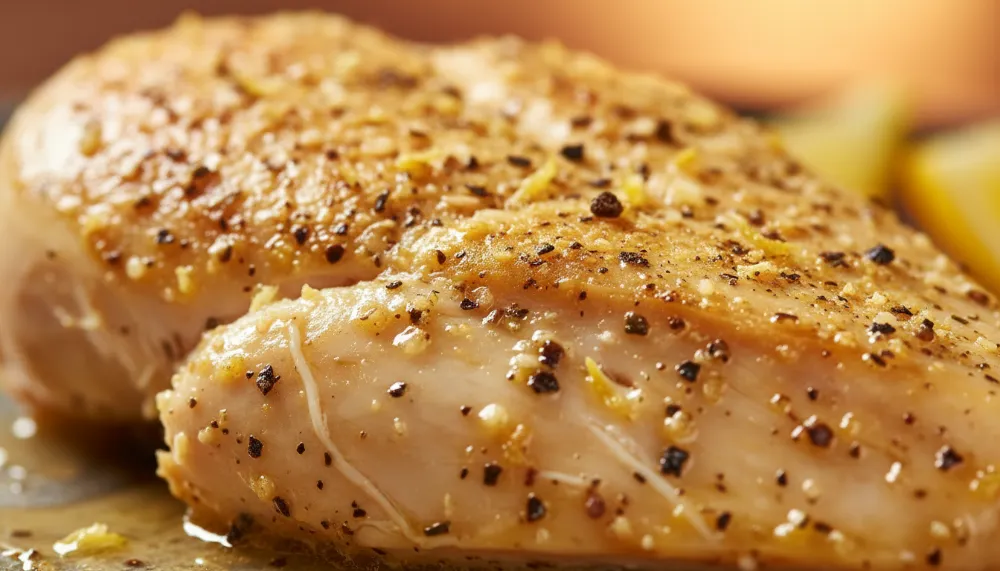
- Herbaceous Lemon Pepper: Incorporate finely minced fresh rosemary or thyme into your dry rub. The earthiness of these herbs provides a sophisticated balance to the sharp acidity of the lemon.
- The “Honey-Zest” Glaze: For those who love a sweet and savory contrast, whisk a teaspoon of honey with your lemon juice and brush it over the chicken during the final 2 minutes of air frying. This creates a beautiful caramelization.
- Zest-Heavy Infusion: Use a microplane to add a layer of fresh lemon zest *after* the chicken is cooked. The volatile oils in fresh zest are delicate and provide a bright, aromatic punch that dried spices simply cannot replicate.
Nutritional Breakdown
Air frying is not just about speed, it is a nutritional powerhouse. By using circulating air instead of deep-frying, you significantly reduce the caloric density while maintaining a high protein count. Below is the typical profile for a 6-ounce serving:
| Nutrient | Amount per Serving |
|---|---|
| Calories | 220–250 kcal |
| Total Protein | 45g – 48g |
| Total Fat | 5g – 7g |
| Carbohydrates | 1g – 3g |
| Vitamin C | 10% – 15% DV |
Frequently Asked Questions
Can I use frozen chicken? While you can air fry from frozen, we do not recommend it for this specific lemon pepper recipe. For the seasoning to adhere properly and for the pounding technique to work, the chicken should be fully thawed. If you are in a rush, place the sealed chicken in a bowl of cold water for 30 minutes to safely defrost.
My chicken is always dry, what am I doing wrong? The most common culprit is overcooking. Every air fryer is different, so start checking the internal temperature at the 10-minute mark. Once it hits 160°F, pull it out. The “carry-over cooking” that happens during the rest period will bring it to the safe 165°F mark without drying it out.
Is lemon pepper seasoning too salty? Some commercial brands contain a high amount of salt. If you are sensitive to sodium, look for a “salt-free” lemon pepper blend and add your own salt to taste, or better yet, make your own blend using cracked black pepper and dried lemon peel.
Meal Prep and Storage
This chicken is a meal prep superstar. Because it remains juicy even when cold, it is perfect for slicing over salads or stuffing into wraps. Store your leftovers in an airtight container like the Rubbermaid Brilliance Glass Set for up to four days. To reheat, we recommend using the air fryer again at 350°F for just 2 to 3 minutes to maintain the texture. Avoid the microwave if possible, as it tends to make the protein rubbery.