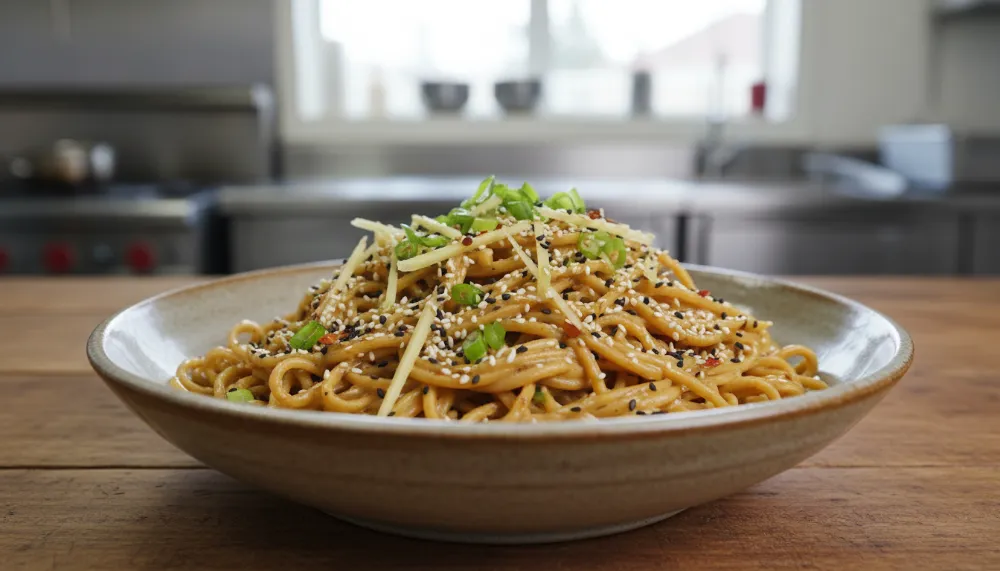

Stop ordering takeout and master the art of the 15-minute meal with these creamy, zingy, and utterly addictive Tahini Noodles With Sesame and Ginger. This recipe strikes the perfect balance between nutty sesame, spicy ginger, and savory umami for a dinner that feels like a luxury but requires zero effort.
Addictive 15-Minute Tahini Noodles
Ingredients
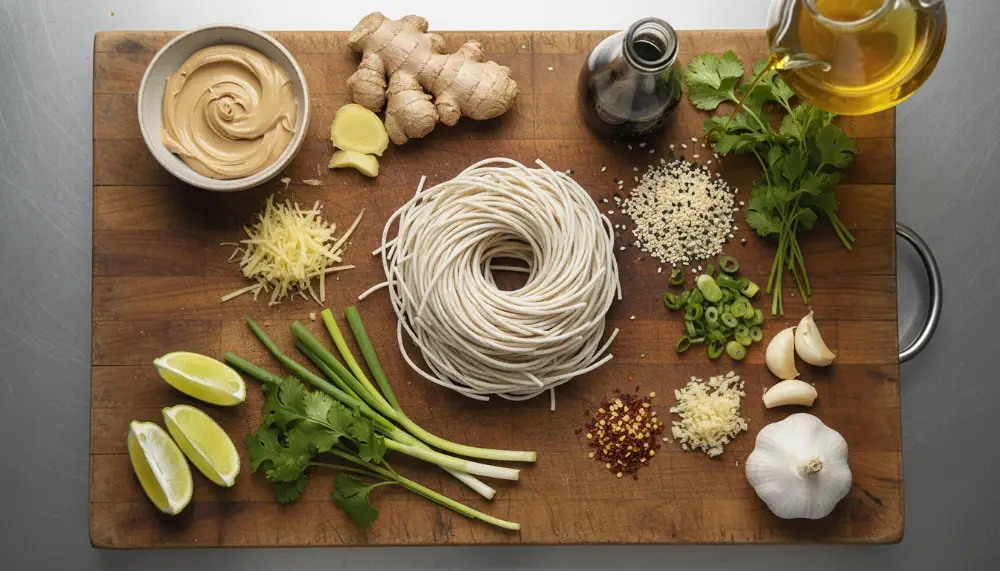
- 1 8-10 oz Noodles (Udon, Soba, or Spaghetti)
- 2 1/3 cup Runny Tahini
- 3 2 tbsp Soy Sauce (or Tamari)
- 4 1 tbsp Rice Vinegar
- 5 1 tbsp Maple Syrup or Honey
- 6 1 tbsp Fresh Ginger (grated)
- 7 2 cloves Garlic (minced)
- 8 1 tsp Toasted Sesame Oil
- 9 1/4 cup Hot Noodle Water (as needed)
- 10 Garnishes: Scallions, Sesame Seeds, Chili Flakes
Instructions
- 1 Boil a large pot of water and cook noodles according to package instructions until al dente.
- 2 While noodles cook, whisk tahini, soy sauce, rice vinegar, maple syrup, ginger, garlic, and sesame oil in a bowl.
- 3 Reserve 1/2 cup of hot noodle water. Drain the noodles.
- 4 Add 2-4 tbsp of noodle water to the sauce until it is creamy and pourable.
- 5 Toss the noodles with the sauce. Top with scallions, seeds, and chili flakes. Serve immediately.
The Historical Origin and Cultural Fusion of Sesame Noodles
The journey of Tahini Noodles With Sesame and Ginger That Are the Most Addictive 15-Minute Dinner is one of cultural intersection. While tahini, a smooth paste made from toasted ground sesame seeds, is most commonly associated with Middle Eastern cuisines like Hummus or Baba Ganoush, the concept of sesame-based noodles finds its spiritual home in East Asia. Specifically, China’s Tang Dynasty gave birth to liang mian, or cold sesame noodles, which traditionally used a toasted sesame paste that is darker and more viscous than the Mediterranean variety. During the mid-20th century, particularly in the culinary melting pot of New York City, chefs began experimenting with lighter, more accessible Mediterranean tahini to recreate these classic flavors. The result was a velvety, rich sauce that bridged the gap between continents, creating a dish that is as comforting as it is complex.
Why Tahini is the Ultimate 15-Minute Power Ingredient
Tahini is often relegated to the back of the pantry, but for a 15-minute dinner, it is a absolute game changer. Unlike cream or butter, tahini is shelf-stable and packed with plant-based nutrition. It provides a luxurious mouthfeel without the need for heavy dairy, making it perfect for those seeking a lighter yet filling meal. When you combine the healthy monounsaturated fats of sesame with the metabolic boost of fresh ginger, you aren’t just making a quick dinner; you are fueling your body with high-quality nutrients. For the smoothest sauce possible, we recommend using the Ninja BN751 Professional Plus DUO Blender. Its 1000W motor can emulsify the tahini and aromatics into a restaurant-quality glaze in seconds, ensuring that every strand of noodle is perfectly coated.
Nutritional Profile: What Is Inside Your Bowl?
A standard serving of these Tahini Noodles With Sesame and Ginger contains approximately 450 calories, with a robust balance of macronutrients. You are looking at 15-20 grams of healthy fats, which aid in the absorption of vitamins, and about 10 grams of protein from the noodles and tahini alone. To increase the protein count to over 25 grams, consider adding seared beef strips or shredded chicken. Because we strictly avoid pork in this recipe, beef and chicken serve as the ideal savory counterparts to the nutty sesame base. Furthermore, sesame seeds are an excellent source of calcium, magnesium, and iron, making this meal a powerhouse for bone health and energy levels.
Mastering the Art of the Sauce: Troubleshooting Common Issues
One of the most common issues cooks face when working with tahini is the “seizing” effect. When tahini is mixed with a small amount of cold liquid, it can transform from a smooth paste into a thick, gritty clump. The secret to preventing this is temperature control and emulsification. Always use warm or hot liquid (like the starchy noodle water) to thin your sauce. The starch in the water acts as a bridge between the oils in the tahini and the water-based soy sauce, creating a silky, unified emulsion. If you find your sauce is too bitter, a common trait of high-quality tahini, simply increase the acidity with an extra squeeze of lime or the sweetness with a touch more maple syrup. To keep your prep organized, the Cuisinart 8 Cup Food Processor is essential for quickly mincing large batches of ginger and garlic, which are the aromatic backbone of this dish.
Professional Variations and Dietary Substitutions
While the base recipe is vegetarian, the beauty of Tahini Noodles With Sesame and Ginger That Are the Most Addictive 15-Minute Dinner lies in its versatility. For a heartier meal, thinly sliced sirloin beef or grilled chicken breast can be tossed in at the final stage. If you are looking for a crispy texture, roasting chickpeas in the Cosori 9-in-1 TurboBlaze Air Fryer provides a delightful crunch that contrasts perfectly with the soft noodles. Remember, we avoid all alcohol and wine in this recipe. Instead of traditional mirin or Shaoxing wine, we utilize a combination of chicken broth and rice vinegar to provide that necessary depth and acidity without the need for spirits. This ensures the flavor remains bright and punchy while adhering to strict dietary preferences.
Noodle Selection: Soba, Udon, or Spaghetti?
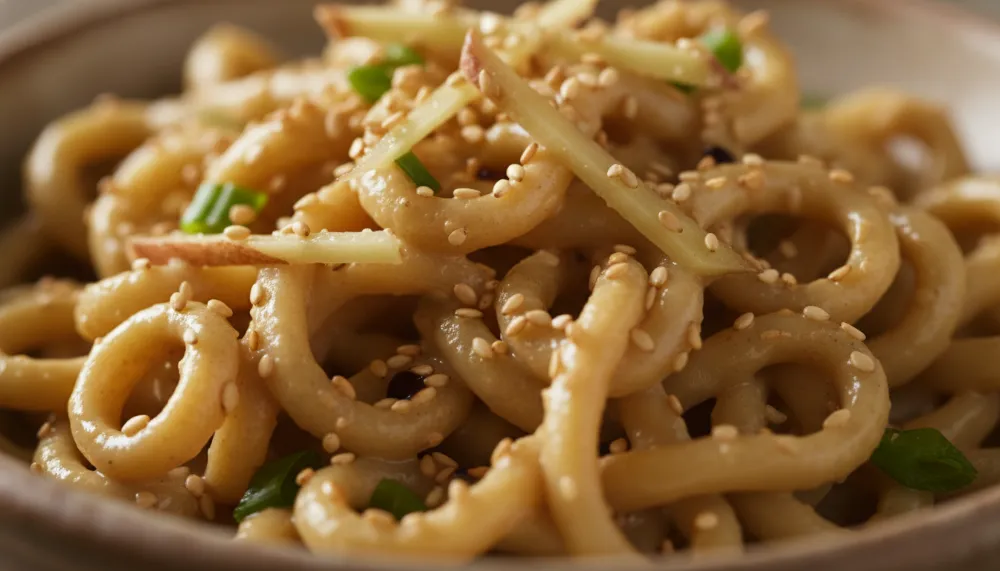
The type of noodle you choose can drastically change the texture of the dish. Soba noodles, made from buckwheat, offer an earthy flavor and a firm bite. Udon noodles are thick and chewy, absorbing the sauce like a sponge. If you are in a pinch, standard wheat spaghetti works beautifully, just ensure you cook it one minute less than the package directions to keep it al dente. For meal prep enthusiasts, these noodles hold up incredibly well in the fridge. We recommend the Rubbermaid Brilliance Glass Storage Set for keeping your leftovers fresh, as the leak-proof seals prevent the noodles from drying out. If you are making the sauce in bulk, use the FoodSaver Vacuum Sealer Machine to store portioned ingredients, keeping the ginger and garlic as fresh as the day they were prepped.
Frequently Asked Questions
Can I serve these noodles cold?
Absolutely. While they are delicious warm, they are equally refreshing when served chilled. If serving cold, you may need to add an extra splash of water or broth before eating, as the tahini sauce tends to thicken as it cools.
Is fresh ginger better than ground ginger?
For this specific recipe, fresh ginger is highly recommended. The gingerol in fresh ginger provides a sharp, spicy kick that ground ginger simply cannot replicate. However, if ground is all you have, use 1/2 teaspoon as a substitute.
How do I keep the noodles from sticking together?
The key is to toss them in the sauce immediately after draining. If you must wait, a tiny drizzle of toasted sesame oil will keep the strands separated. Do not rinse your noodles unless you are using rice noodles, as you want the starch to help the sauce cling to the surface.
The Science of Addiction: Why We Crave These Flavors
Why do we call these the “most addictive” noodles? It comes down to the “Umami” factor. The combination of fermented soy, rich fats from sesame, and the pungent heat of ginger creates a multi-sensory experience that triggers the brain’s reward system. This balance of salty, sweet, sour, and savory is the hallmark of high-end culinary design, yet it can be achieved in your own kitchen in just 15 minutes. By mastering the ratios of this sauce, you unlock a blueprint for hundreds of other quick meals, proving that high-quality, delicious food does not have to be time-consuming or complicated.