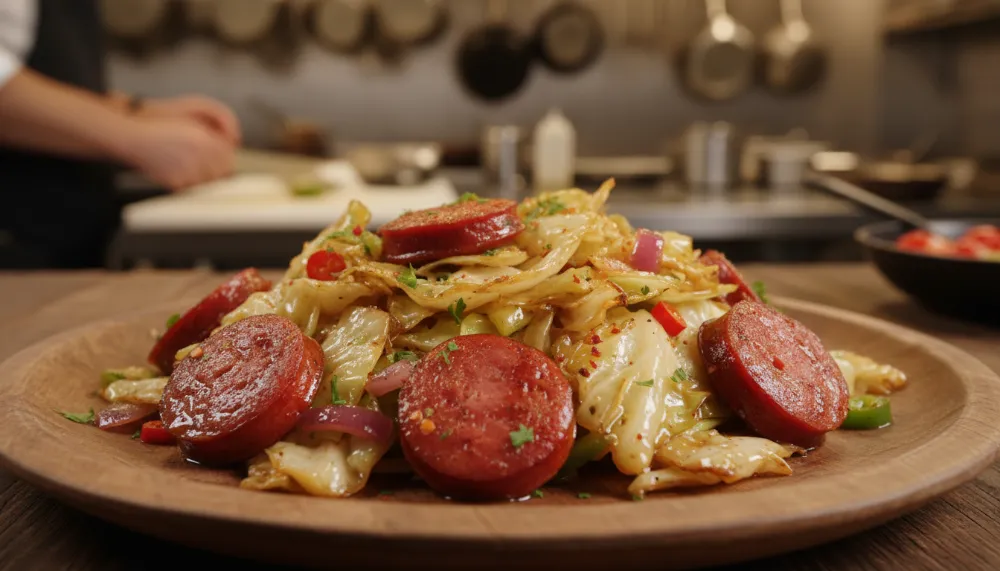

Experience the bold, smoky flavors of the bayou with this hearty Cajun Fried Cabbage with Andouille Sausage, a one-pan masterpiece that balances spice and comfort perfectly. This soul-warming dish brings a piece of Louisiana heritage right to your dinner table in under thirty minutes.
Cajun Fried Cabbage with Andouille Sausage
Ingredients
- 1 lb Beef or Chicken Andouille Sausage, sliced into rounds
- 1 Large Head Green Cabbage, shredded into 1/2-inch strips
- 1 Medium Yellow Onion, diced
- 1 Green Bell Pepper, diced
- 2 Stalks Celery, diced
- 4 Cloves Garlic, minced
- 2 tbsp Olive Oil
- 1 tbsp Cajun Seasoning (Low Sodium)
- 1 tsp Smoked Paprika
- 1/4 cup Beef Bone Broth
- 1 tbsp Apple Cider Vinegar
Instructions
- 1 Heat olive oil in a large deep skillet or Dutch oven over medium-high heat. Add sliced sausage and brown for 5-6 minutes until crisp.
- 2 Add the onion, bell pepper, and celery (the Holy Trinity) to the skillet. Sauté until the onions are translucent and the peppers are soft.
- 3 Stir in the minced garlic, Cajun seasoning, and smoked paprika. Cook for 1 minute until fragrant.
- 4 Add the shredded cabbage in batches, tossing to coat with the spice and oil mixture. It will look like a lot, but it will shrink significantly.
- 5 Pour in the beef bone broth and apple cider vinegar. This will deglaze the pan and lift the flavor.
- 6 Cover and reduce heat to medium. Simmer for 10-12 minutes, stirring occasionally, until cabbage reaches your desired tenderness.
The Historical Roots of Cajun Fried Cabbage
Cajun Fried Cabbage with Andouille Sausage is a quintessential example of the culinary melting pot that defines Louisiana’s Bayou Country. Its origins are a tapestry of four distinct cultural influences. The foundation lies with the French-speaking Acadians who were expelled from Canada in the mid-18th century. Upon settling in the rural swamps and bayous of South Louisiana, they adapted their one-pot French cooking styles to local ingredients, creating what we now know as Cajun cuisine.
The specific use of cabbage in South Louisiana is heavily attributed to German settlers who occupied the “German Coast” (Cote des Allemands) above New Orleans in the early 1700s. They introduced farming techniques for cabbage and the initial concept of smoked sausages, which the Cajuns later adapted into the spicy, garlic-heavy andouille. This cultural exchange turned a simple vegetable into a staple of the region.
Furthermore, West African influence cannot be overstated. Enslaved West Africans introduced the technique of smothering (étouffée), which involves braising vegetables and meats in their own juices or a small amount of liquid. This method is what transforms fried cabbage from a crisp sauté into the tender, flavor-saturated dish known today. Finally, the use of local peppers and the emphasis on bold, layered spice profiles, often involving cayenne, were influenced by Spanish settlers and the surrounding Native American tribes.
Nutritional Excellence of Cabbage and Protein
The following profile is based on a standard serving (approx. 1.5 cups) using beef or chicken andouille and olive oil as a base, rather than traditional pork-based fats. This modification reduces saturated fat while maintaining the robust flavor profile required for an authentic experience.
Cabbage is a nutritional powerhouse, providing an excellent source of Vitamin C and Vitamin K, while beef or chicken andouille provides significant B-vitamins and iron. When prepared with high-quality ingredients, this meal provides roughly 320 to 380 calories, 18 to 22 grams of protein, and 4 to 5 grams of dietary fiber. It is a satisfying, low-carb-friendly option that does not sacrifice taste for health.
Mastering the “Holy Trinity” and the “Pope”
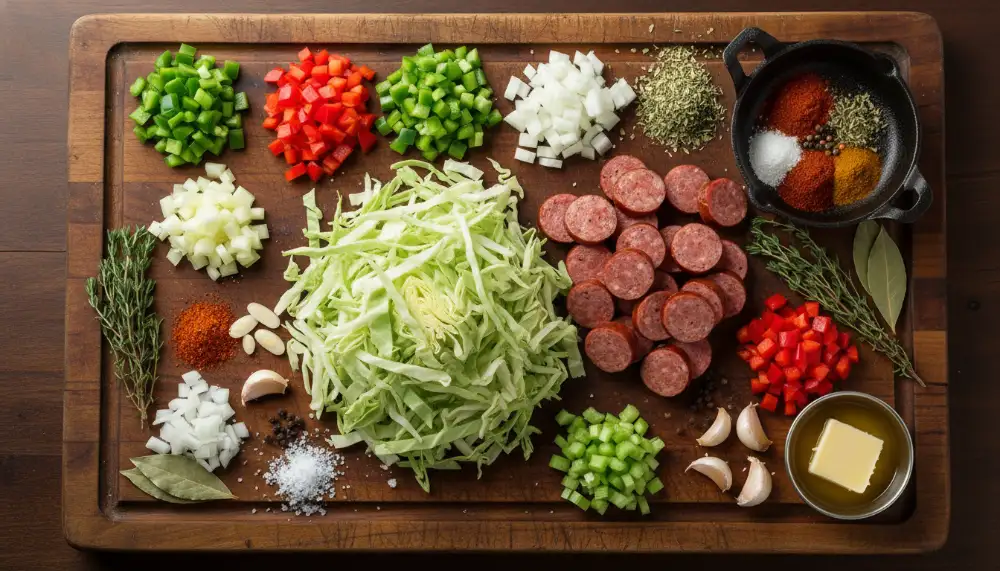
Professional versions of this dish always begin with the Cajun “Holy Trinity”: equal parts finely diced onion, green bell pepper, and celery. This aromatic base is the cornerstone of almost every savory Cajun dish. To truly elevate this, chefs add “The Pope”, which is an abundance of freshly minced garlic. However, the timing is critical. You must add the garlic only after the trinity has softened to prevent bitterness from over-browning.
To ensure your chopping is uniform and efficient, I highly recommend the Cuisinart 8 Cup Food Processor. It is a meal prep essential that makes quick work of the cabbage and the trinity, ensuring that every bite has a consistent texture. For those who prefer a more manual but high-powered approach for sauces or pastes used in variations, the Ninja BN751 Professional Plus DUO Blender with its 1000W motor is perfect for creating custom spice blends or purees.
Non-Alcoholic Deglazing Techniques
In many traditional recipes, wine is used to deglaze the pan. However, professional chefs often use high-acid, non-alcoholic liquids to lift the browned bits, known as the fond, from the pan. These bits contain the most concentrated flavor in the entire dish.
- Apple Cider Vinegar: Adds a fruity tang that cuts through the richness of the sausage and brightens the cabbage.
- Beef or Vegetable Bone Broth: Provides a deep, umami-rich glaze that coats the cabbage leaves, making them taste much more complex than they actually are.
- Worcestershire Sauce: A few dashes add a savory depth that mimics the complexity of long-simmered stews without the need for alcohol.
Professional Flavor Variations
Chefs elevate this rustic dish by focusing on building a fond and layering acids. If you are looking to take your Cajun Fried Cabbage with Andouille Sausage to the next level, consider these professional variations:
1. The Seafood Twist: Stir in large, peeled shrimp, seasoned with paprika and garlic, during the last 4 minutes of cooking. The steam from the cabbage will cook the shrimp perfectly, adding a luxurious layer of protein to the dish.
2. Smoky Umami: If you miss the traditional smokiness of certain ingredients, use smoked paprika or even a single drop of liquid smoke. This replicates that campfire depth that defines Southern outdoor cooking. You can even roast additional vegetables in the Cosori 9-in-1 TurboBlaze Air Fryer 6 Qt to add a charred, roasted dimension to the final mix.
The Importance of the “Fettuccine Cut”
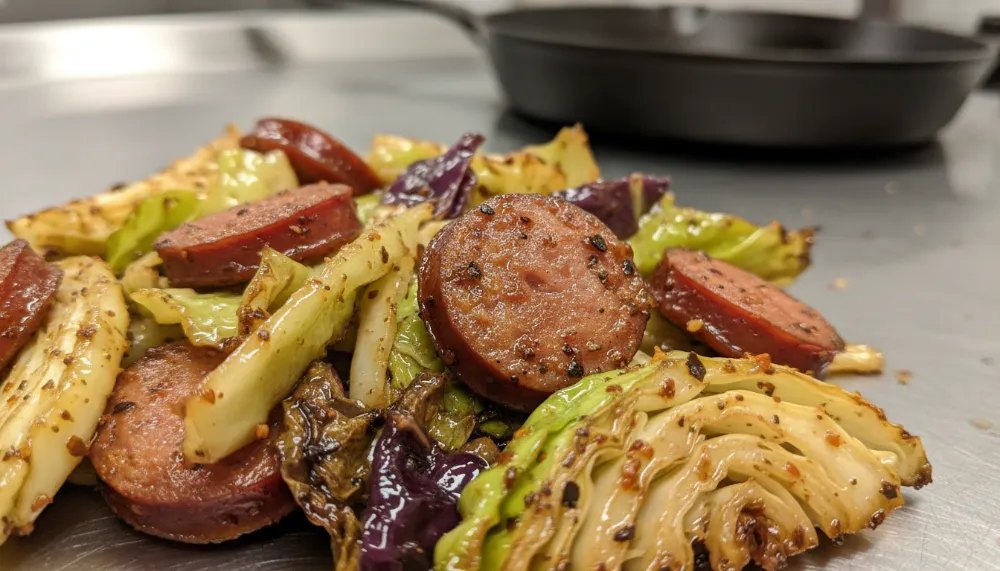
Texture is everything in a cabbage dish. Rather than thin, slaw-like shreds which can become mushy and lose their structural integrity, professionals recommend a “fettuccine cut”. These are strips approximately 1/2-inch wide. This specific width allows the cabbage to caramelize on the edges while maintaining a slight al dente snap in the center. This contrast in textures is what separates a mediocre side dish from a professional-grade entree.
Storage and Meal Prep Strategy
Because this dish is even better the next day, it is a prime candidate for meal prep. The flavors of the andouille and the Cajun seasoning continue to meld as it sits. For optimal storage, use the Rubbermaid Brilliance Glass Storage Set. These leak-proof, stackable containers keep the cabbage from getting soggy and are perfect for reheating in the oven or microwave. For those looking to keep ingredients fresh for long-term storage, the FoodSaver Vacuum Sealer Machine is an excellent investment to prevent freezer burn on your sausages or pre-chopped vegetables.
Finishing with “Compound Fat”
To finish the dish, professional cooks often stir in a tablespoon of garlic-herb butter (using high-quality butter) right before serving. This creates a silky mouthfeel and a glossy sheen that elevates the presentation. It ties the heat of the cayenne and the acidity of the vinegar together into a cohesive, restaurant-quality sauce that clings to every strip of cabbage.