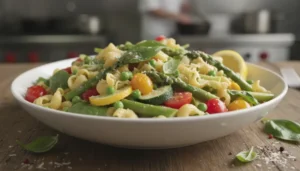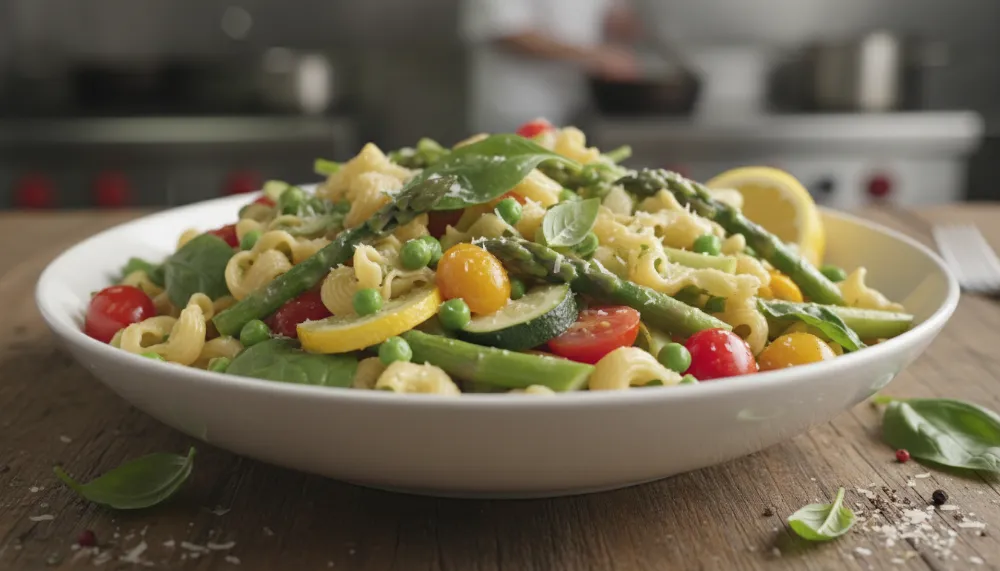

One Pot Pasta Primavera (Spring Vegetables) is the ultimate celebration of the season, bringing together vibrant produce and silky pasta in a single pan for a stress-free gourmet experience. This vibrant dish transforms a handful of garden-fresh ingredients into a creamy, satisfying meal that requires minimal cleanup.
One Pot Pasta Primavera (Spring Vegetables)
Ingredients
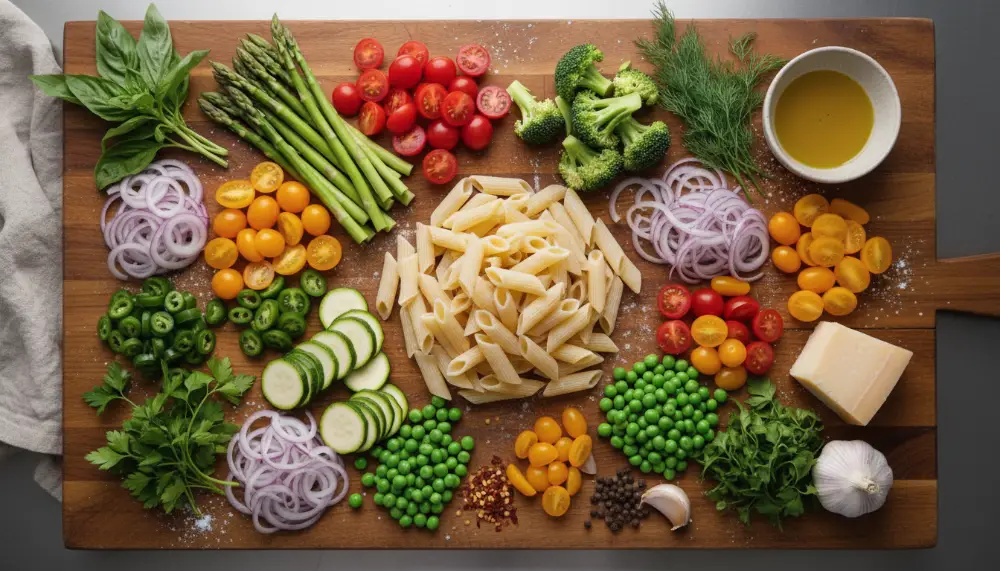
- 1 12 oz Linguine or Penne Pasta
- 2 4 Cups Low-Sodium Vegetable or Chicken Broth
- 3 2 Cups Asparagus Spears, trimmed and cut into 2-inch pieces
- 4 1 Cup Carrots, julienned or thinly sliced
- 5 1 Cup Frozen Peas, thawed
- 6 2 Cloves Garlic, minced
- 7 1 Small Shallot, finely diced
- 8 1/2 Cup Heavy Cream or Greek Yogurt
- 9 1/2 Cup Freshly Grated Parmesan Cheese
- 10 2 Tablespoons Fresh Lemon Juice (Zest reserved)
- 11 Fresh Basil and Red Pepper Flakes for Garnish
Instructions
- 1 In a large pot or deep skillet, sauté the diced shallot and minced garlic in a tablespoon of olive oil over medium heat until fragrant, about 2 minutes.
- 2 Add the pasta, broth, and julienned carrots to the pot. Ensure the pasta is mostly submerged. Bring the liquid to a rolling boil.
- 3 Reduce heat to a simmer and cook uncovered, stirring frequently to prevent the pasta from sticking. Cook for about 7 to 8 minutes.
- 4 Add the asparagus and peas to the pot. Continue simmering for another 3 to 4 minutes until the pasta is al dente and the vegetables are tender-crisp.
- 5 Stir in the heavy cream, Parmesan cheese, lemon juice, and lemon zest. The remaining cooking liquid will emulsify with the cheese to create a rich sauce.
- 6 Season with salt, black pepper, and red pepper flakes. Garnish with fresh basil and serve immediately.
The Surprising American History of Pasta Primavera
While the name sounds as though it was plucked from a Tuscan grandmother’s kitchen, One Pot Pasta Primavera (Spring Vegetables) is actually a mid-1970s American masterpiece. The dish was famously conceived by Sirio Maccioni at his legendary New York restaurant, Le Cirque. In 1975, while on a retreat in Nova Scotia, Maccioni and his team of chefs combined butter, cream, cheese, and a bounty of summer vegetables to create what would become a cultural phenomenon.
When the dish returned to New York, the French-trained chefs at Le Cirque initially refused to cook pasta in their kitchen, considering it beneath their high culinary standards. Consequently, the dish was originally prepared on a portable burner in the restaurant’s hallway or right at the table. This spectacle, combined with the incredibly fresh, light profile of the dish, catapulted it to fame. A 1977 New York Times review by Craig Claiborne and Pierre Franey officially labeled it the “most talked-about dish in Manhattan.” Today, it remains a hallmark of the 1970s culinary shift toward lighter, more vegetable-forward meals, and the “one pot” version we make today is a modern evolution that honors those fresh, vibrant flavors while respecting the busy schedules of home cooks.
The Culinary Science of One Pot Cooking
The magic of One Pot Pasta Primavera (Spring Vegetables) lies in the concentration of starches. Traditionally, pasta is boiled in a large volume of salted water, which is then drained away, taking with it the very starches that help sauces cling to the noodles. In a one-pot preparation, the pasta absorbs the broth as it cooks, releasing its starch directly into the liquid. This creates a natural thickener, resulting in a sauce that is inherently creamier and more cohesive without the need for excessive amounts of butter or cream.
To master this technique, you must use a high-quality pot that distributes heat evenly. For preparing the aromatics and blending any additional herb-based sauces, the Ninja BN751 Professional Plus DUO Blender is an exceptional tool, its 1000W motor ensures that any additions like a homemade harissa or tahini drizzle are perfectly smooth. When you cook everything in one vessel, every strand of pasta is infused with the garlic, shallots, and vegetable essences, creating a depth of flavor that traditional methods simply cannot match.
Choosing Your Spring Medley: A Deep Dive into Vegetables
The “Primavera” in One Pot Pasta Primavera (Spring Vegetables) refers to the season of spring, meaning the dish should be a showcase of what is freshest in the market. To achieve a professional result, texture management is key. Vegetables should be added in stages based on their density.
Asparagus: The King of Spring
Look for medium-sized spears with tight, closed tips. Avoid woody stems by snapping off the bottom inch. Asparagus only needs about 3 to 4 minutes of simmering to reach that perfect vibrant green, snap-tender stage. If you have extra asparagus, consider roasting some in the Cosori 9-in-1 TurboBlaze Air Fryer 6 Qt to add a smoky, charred contrast to the creamy pasta.
Sweet Peas and Julienne Carrots
Fresh English peas are a luxury, but high-quality frozen peas are often picked and frozen at their peak, providing a burst of sweetness. Carrots should be julienned, cut into thin matchsticks, so they cook at the same rate as the pasta. For fast, uniform slicing of carrots and other firm vegetables, the Cuisinart 8 Cup Food Processor is a meal-prep essential that saves significant time in the kitchen.
Professional Variations: Protein and Flavor Substitutes
To keep this recipe versatile and inclusive of specific dietary restrictions, we have omitted pork and alcohol while providing robust alternatives that do not sacrifice flavor.
1. The Protein Boost (Beef or Chicken)
If you wish to add meat, chicken breast is the traditional choice. Sauté cubed chicken with the garlic and shallots until browned before adding the broth. For a heartier version, use thinly sliced sirloin beef. Brown the beef quickly to develop a deep flavor, remove it from the pot, and fold it back in at the end to keep it tender. This ensures the “One Pot Pasta Primavera (Spring Vegetables)” remains the star while providing the satiety of animal protein.
2. The Non-Alcoholic Brightener
Classic recipes often call for a splash of dry white wine to deglaze the pan. To achieve that same acidity and floral depth without alcohol, use a mixture of chicken or vegetable broth and fresh lemon juice. A tablespoon of white wine vinegar also works beautifully. For the most sophisticated flavor, use verjuice, the unfermented juice of green grapes, which provides the complexity of wine without any fermentation.
Advanced Flavor Tweaks for the Modern Chef
Instead of standard yellow onions, professionals often opt for leeks or shallots. Leeks offer a more delicate, sweet onion flavor that pairs perfectly with the “spring” theme. Be sure to clean leeks thoroughly, as they often hide sand between their layers. Additionally, while basil is the standard herb, try using tarragon or chervil for a more refined, anise-like finish that highlights the sweetness of the peas and carrots.
Nutritional Profile and Health Benefits
This dish is a nutritional powerhouse. A standard serving of One Pot Pasta Primavera (Spring Vegetables) provides a significant amount of Vitamin A, Vitamin C, and Vitamin K. The inclusion of asparagus and peas ensures a high fiber content, which aids in digestion and keeps you full longer. By using a broth-based one-pot method, you can also reduce the amount of added fats while maintaining a luxurious mouthfeel thanks to the pasta starch emulsification.
Meal Prep and Storage Solutions
One Pot Pasta Primavera is an excellent candidate for meal prep. Because the sauce is starch-based, it holds up better than traditional cream sauces that might break when reheated. To keep your ingredients as fresh as possible, store leftovers in the Rubbermaid Brilliance Glass Storage Set. These leak-proof containers are perfect for taking to work or school. If you are prepping vegetables in advance, use the FoodSaver Vacuum Sealer Machine to keep your julienned carrots and trimmed asparagus from oxidizing, ensuring they stay crisp and vibrant for days.
Frequently Asked Questions
Can I use whole wheat pasta?
Yes, but be aware that whole wheat pasta requires slightly more liquid and a longer cooking time. It also imparts a nuttier flavor that can compete with the delicate spring vegetables.
How do I prevent the pasta from becoming gummy?
The key is frequent stirring and ensuring you don’t overcook it. The pasta should be al dente, meaning it has a slight bite. Remember that it will continue to cook slightly even after you remove it from the heat.
What can I use instead of Parmesan?
For a non-dairy option, nutritional yeast provides a similar savory, nutty flavor. Alternatively, a sharp Pecorino Romano (made from sheep’s milk) offers a bolder, saltier profile.