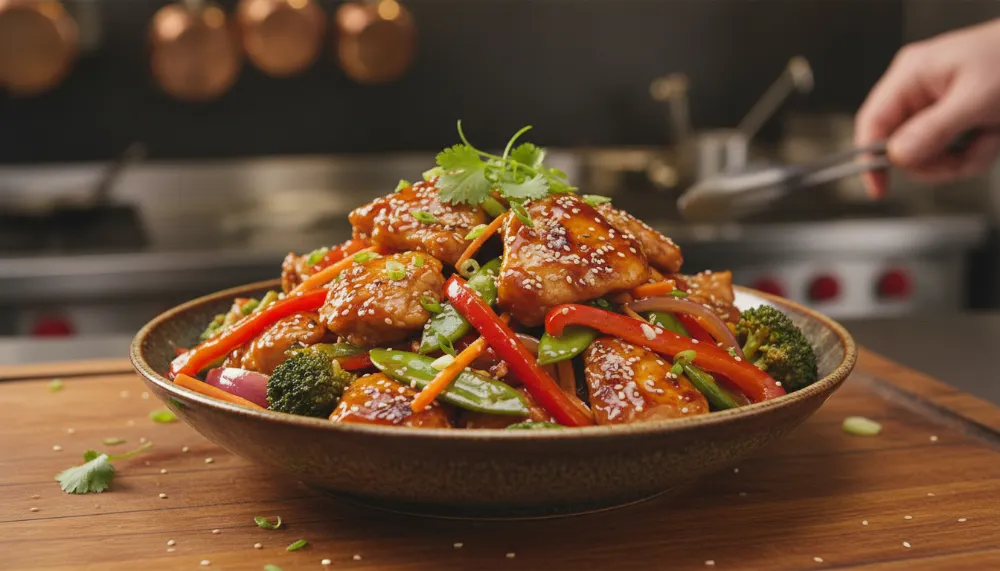

This Sticky Teriyaki Chicken Stir Fry delivers a restaurant-quality glaze and perfectly tender chicken in under 30 minutes. It is the ultimate weeknight dinner solution for those craving bold, savory flavors without the wait.
Sticky Teriyaki Chicken Stir Fry
Ingredients
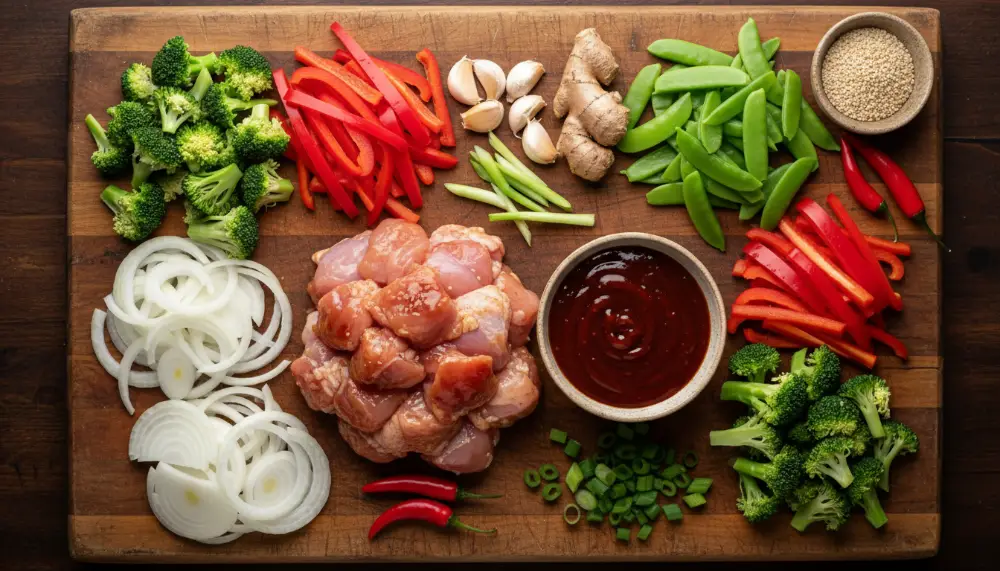
- 1 1.5 lbs Chicken Breast, cut into 1-inch pieces
- 2 1/2 cup Low-Sodium Soy Sauce
- 3 1/3 cup Pineapple Juice (for natural shine)
- 4 1/4 cup Brown Sugar, packed
- 5 1 tbsp Fresh Ginger, grated
- 6 3 Garlic Cloves, minced
- 7 1 tbsp Cornstarch (mixed with 1 tbsp water)
- 8 2 cups Broccoli Florets
- 9 1 Red Bell Pepper, sliced
- 10 2 tbsp Sesame Oil
Instructions
- 1 In a bowl, whisk together soy sauce, pineapple juice, brown sugar, ginger, and garlic to create the teriyaki base.
- 2 Heat 1 tbsp sesame oil in a large wok or skillet over high heat. Add chicken and sear until browned and cooked through. Remove and set aside.
- 3 Add remaining oil and stir fry the broccoli and bell peppers for 3,4 minutes until tender,crisp.
- 4 Return the chicken to the pan. Pour in the sauce and bring to a simmer.
- 5 Stir in the cornstarch slurry and cook for 1,2 minutes until the sauce becomes thick and sticky.
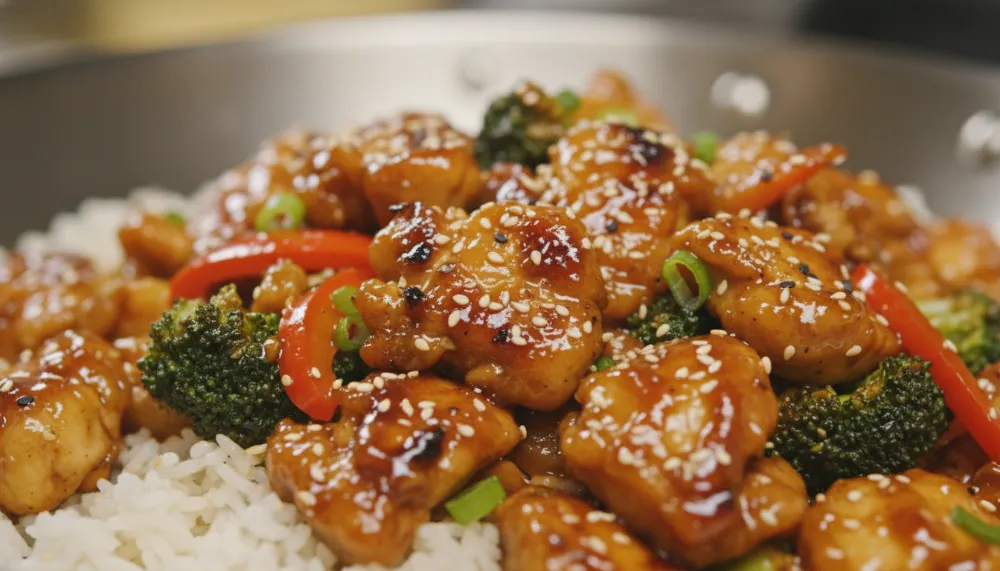
- 6 Garnish with sesame seeds and green onions. Serve over hot jasmine rice.
The Rich Cultural History of Teriyaki
The history of the Sticky Teriyaki Chicken Stir Fry is a fascinating journey through centuries of culinary evolution. While many modern diners associate the dish with quick-service malls, its roots are deeply embedded in traditional Japanese technique. The term “Teriyaki” itself is a combination of two Japanese words: *teri*, which describes the luster or shine given by the sugar content in the glaze, and *yaki*, which refers to the method of grilling or broiling. In the Edo period (1600s,1800s), Japanese chefs primarily used this technique on fish, applying a mixture of soy sauce and sugar to create a preserved, glossy finish that was as beautiful as it was delicious.
The transformation of teriyaki into the “sticky” stir-fry favorite we know today began in Hawaii during the 1960s. Japanese immigrants, adapting to local ingredients, began incorporating pineapple juice into their traditional recipes. This addition was revolutionary, the enzymes in the pineapple juice acted as a natural tenderizer for the meat, while the high sugar content allowed the sauce to caramelize and thicken into a “sticky” consistency without the need for traditional Japanese mirin or sake. This local adaptation laid the groundwork for the modern Sticky Teriyaki Chicken Stir Fry.
Mastering the Science of the “Sticky” Glaze
Achieving the perfect Sticky Teriyaki Chicken Stir Fry requires an understanding of sauce chemistry. In professional kitchens, creating a sauce that clings to every crevice of the chicken and vegetables without becoming a watery mess is an art form. The key lies in the balance of solutes, heat, and thickeners. In our alcohol-free version, we utilize the combination of brown sugar and pineapple juice. As these ingredients heat, the water evaporates, leaving behind a concentrated sugar solution that begins to caramelize at high temperatures.
To ensure the sauce remains stable, we use a cornstarch slurry. Cornstarch is a complex carbohydrate that, when heated with liquid, undergoes a process called gelatinization. The starch granules absorb liquid and swell, creating a network that traps the sauce and results in that iconic “sticky” texture. Using a high-quality blender like the Ninja BN751 Professional Plus DUO Blender can help you emulsify aromatics like ginger and garlic directly into the sauce base for an even smoother, more consistent flavor profile.
The “Velveting” Secret for Tender Chicken
Have you ever wondered why restaurant chicken in a Sticky Teriyaki Chicken Stir Fry is so much softer than home-cooked versions? Professionals use a technique called “velveting.” By coating the raw chicken pieces in a thin layer of cornstarch and a splash of oil before they hit the pan, you create a protective barrier. This barrier prevents the muscle fibers from tightening too quickly under the high heat of the wok, ensuring each piece of chicken remains succulent and tender regardless of how “sticky” the final sauce becomes.
Essential Tools for Stir-Fry Success
To produce a high-authority Sticky Teriyaki Chicken Stir Fry, your equipment matters as much as your ingredients. Stir-frying is a high-heat technique, requiring tools that can handle rapid temperature changes and facilitate quick movement. For those who prefer a modern approach, the Cosori 9-in-1 TurboBlaze Air Fryer 6 Qt is an incredible tool for pre-roasting vegetables like broccoli or bell peppers. This ensures they achieve a perfect char without the risk of overcooking the chicken in the pan.
Additionally, preparation is the most time-consuming part of any stir-fry. A Cuisinart 8 Cup Food Processor can drastically reduce your prep time by slicing bell peppers and mincing garlic in seconds. Remember, once the pan is hot, the cooking process happens fast, having everything ready to go (the *mise en place*) is the mark of a professional chef.
Nutritional Breakdown of Sticky Teriyaki Chicken Stir Fry
A standard serving of Sticky Teriyaki Chicken Stir Fry is surprisingly balanced. While the sauce does contain sugar, the high protein content from the chicken and the fiber from the vegetables make it a satiating meal. On average, a 1.5-cup serving provides approximately 350 to 450 calories. It is rich in Vitamin C from the bell peppers and Vitamin K from the broccoli. To keep this dish at its nutritional peak, always ensure you are using fresh, vibrant vegetables and lean chicken breast.
Professional Variations and Protein Substitutes
While chicken is the classic choice, this Sticky Teriyaki Chicken Stir Fry recipe is highly adaptable. You can easily substitute the chicken with thinly sliced flank steak or top sirloin for a “Sticky Teriyaki Beef Stir Fry.” If you are looking for a vegetarian option, extra-firm tofu or seitan works beautifully. The key is to ensure your protein is dry before it hits the pan, moisture is the enemy of a good sear.
Storage and Meal Prep Strategies
The Sticky Teriyaki Chicken Stir Fry is a premier candidate for meal prepping because the flavors actually deepen as they sit. If you are preparing this for the week, it is essential to store the components correctly to maintain the texture of the sauce. We highly recommend using the Rubbermaid Brilliance Glass Storage Set of 9. The leak-proof seals ensure your sticky sauce doesn’t escape, and the glass material is perfect for reheating without affecting the flavor of the teriyaki.
For those who like to prep in bulk, using a FoodSaver Vacuum Sealer Machine allows you to freeze marinated chicken and sauce components for up to six months. This “frozen meal kit” approach ensures you can have a gourmet Sticky Teriyaki Chicken Stir Fry on the table in less than 15 minutes on a busy Tuesday night.
Frequently Asked Questions
Can I make this sauce without pineapple juice?
Yes, you can substitute pineapple juice with apple juice or a mixture of water and a tablespoon of rice vinegar. However, you will lose the specific tenderizing enzymes found in pineapple juice.
How do I make the sauce even thicker?
If your sauce isn’t reaching the desired level of stickiness, simmer it for an additional two minutes. Avoid adding more cornstarch directly to the hot pan, as it will clump. Always mix it with cold water first.
What is the best rice to serve with this?
Jasmine rice is the gold standard for Sticky Teriyaki Chicken Stir Fry. Its floral aroma and slightly sticky texture complement the sweetness of the teriyaki glaze perfectly.