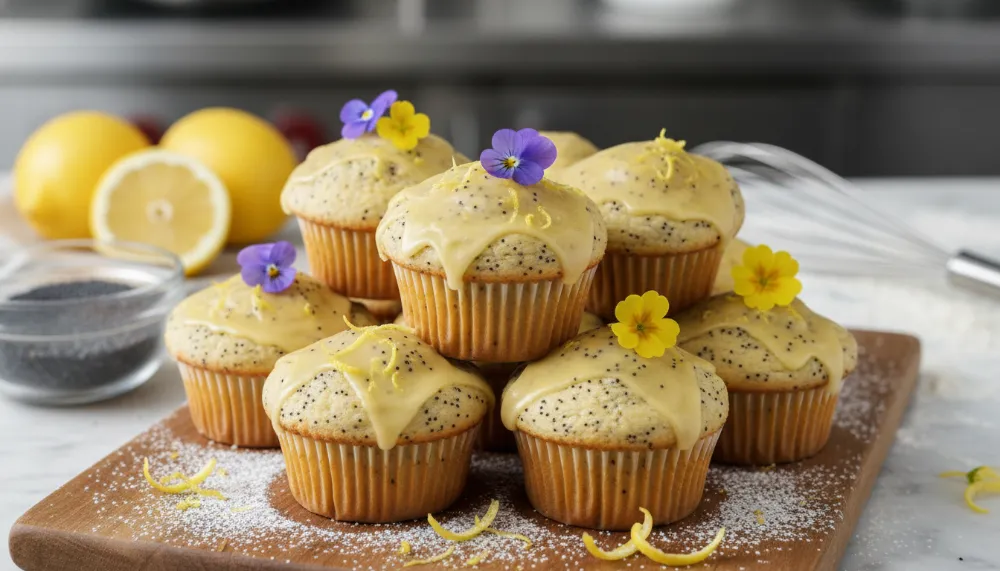

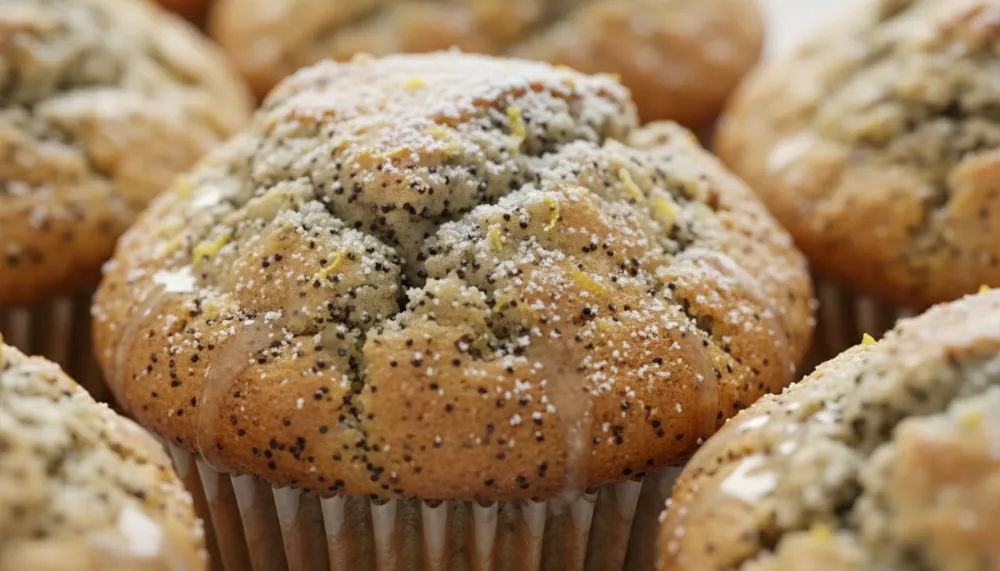
These Spring Lemon Poppy Seed Muffins offer a bright burst of citrus sunshine balanced by the sophisticated crunch of ancient oilseeds. Master the art of the perfect bakery dome with this comprehensive professional guide to seasonal baking.
Spring Lemon Poppy Seed Muffins
Ingredients
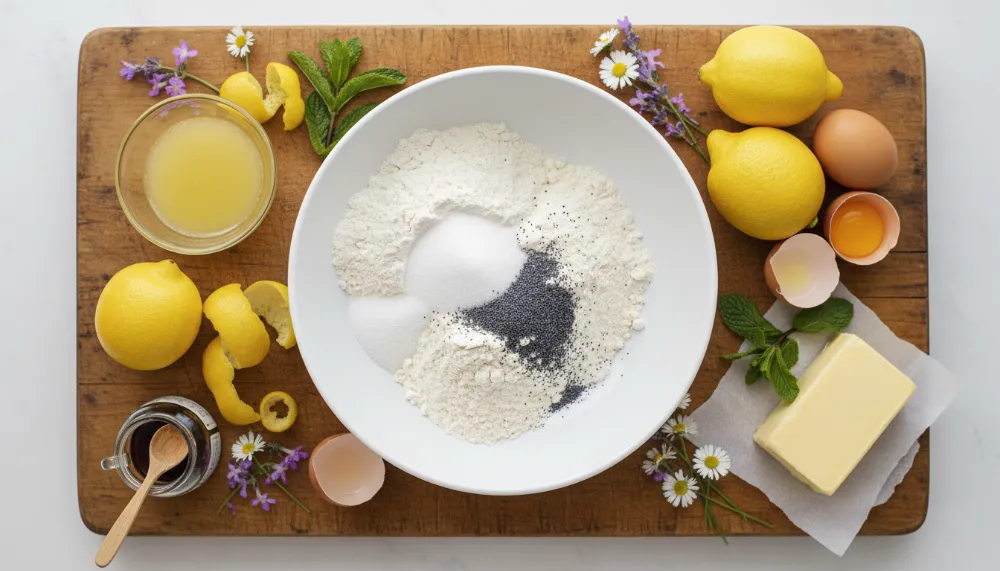
- 2.0 cups All-purpose flour
- 1.0 cup Granulated sugar
- 1.0 tbsp Poppy seeds
- 0.5 tsp Baking soda
- 0.5 tsp Sea salt
- 1.0 cup Greek yogurt (plain)
- 2.0 large Eggs
- 0.5 cup Melted grass-fed butter
- 0.25 cup Freshly squeezed lemon juice
- 2.0 tbsp Lemon zest
- 1.0 tsp Vanilla bean paste (alcohol-free)
Instructions
- 1 Preheat your oven to 375°F (190°C) and line a 12-cup muffin tin with high-quality paper liners.
- 2 In a large mixing bowl, whisk together the sugar and lemon zest, rubbing them between your fingers to release the oils.
- 3 Add the flour, poppy seeds, baking soda, and salt to the sugar mixture, whisking thoroughly to combine.
- 4 In a separate medium bowl, beat the eggs and whisk in the Greek yogurt, melted butter, lemon juice, and vanilla bean paste.
- 5 Gently fold the wet ingredients into the dry ingredients until just combined, being careful not to over-mix.
- 6 Divide the batter equally among the muffin cups and bake for 18 to 22 minutes until a toothpick comes out clean.
The Historical Lineage of Spring Lemon Poppy Seed Muffins
The journey of the poppy seed from wild cultivation to a staple of the spring brunch table is a fascinating study in human migration and culinary evolution. While modern bakers view Spring Lemon Poppy Seed Muffins as a quintessential American treat, their roots stretch back to the Neolithic era. Archaeologists have discovered evidence of poppy seed cultivation in lake dwellings across Switzerland and Germany dating back to 5000 BCE. These early societies recognized the poppy plant, Papaver somniferum, not just for its beauty but for the high oil content and nutritional density of its tiny seeds. In ancient Mediterranean cultures, the seeds were often mixed with honey and served to athletes for energy, or used as a decorative topping for ritual breads.
As these seeds traveled through Central and Eastern Europe, they became deeply embedded in the culinary fabric of regions like Poland, Hungary, and Austria. The tradition of creating dense, poppy seed-rich pastries like the Polish makowiec paved the way for the seeds to be incorporated into the emerging “quickbread” technology of the 19th century. In North America, the transition from yeast-raised breads to chemically leavened muffins allowed for a lighter, softer crumb that perfectly complemented the sharp acidity of citrus. The combination of lemon and poppy seed specifically gained massive popularity in the late 20th century as a “gourmet” alternative to traditional bran or blueberry muffins, offering a visual contrast that was as pleasing to the eye as it was to the palate.
The Science of Citrus: Why Lemon is the Key
When crafting Spring Lemon Poppy Seed Muffins, the role of lemon extends far beyond simple flavor. Citric acid is a powerful functional ingredient in baking. From a chemical perspective, the acidity in the lemon juice reacts with the baking soda to create carbon dioxide bubbles, which provides the initial lift in the oven. This reaction is crucial for achieving that characteristic light and airy texture. Furthermore, lemon zest contains essential oils like limonene, which provide a more enduring and robust flavor than the juice alone. This is why professional pastry chefs always recommend rubbing the zest into the sugar, as the abrasive nature of the sugar crystals ruptures the zest’s oil glands, ensuring the flavor is distributed evenly throughout the batter.
Nutritional Deep Dive: The Power of the Poppy
While often viewed as a decadent treat, Spring Lemon Poppy Seed Muffins contain surprising nutritional benefits thanks to their star ingredient. Poppy seeds are highly nutrient-dense, providing significant quantities of minerals that are often lacking in modern diets. A single tablespoon of poppy seeds provides approximately 13% of the recommended daily intake of manganese, a trace mineral essential for bone health and blood clotting. Additionally, they are an excellent source of calcium, phosphorus, and iron. The fats found in poppy seeds are primarily oleic and linoleic acids, which are heart-healthy unsaturated fats that help support cardiovascular function.
By utilizing Greek yogurt in this recipe, we further enhance the nutritional profile. Yogurt provides a substantial protein boost and contributes probiotics that support digestive health. When paired with the healthy fats from grass-fed butter, these muffins offer a more balanced glycemic response than traditional bakery versions made with refined oils and excessive sugar. This makes them a more sustainable energy source for busy spring mornings, providing long-lasting satiety without the typical sugar crash associated with commercial pastries.
Professional Secrets for Bakery-Style Results
To achieve the towering domes and tender crumbs of professional bakeries, there are several key techniques to master. The first is the “rest method,” popularized by the Bouchon Bakery. Allowing your muffin batter to rest in the refrigerator for at least an hour, or ideally overnight, allows the flour to fully hydrate. This process strengthens the gluten structure just enough to hold the air bubbles longer during the bake, resulting in a significantly taller muffin dome. Furthermore, the rest period allows the flavors of the lemon and vanilla bean paste to meld and intensify.
Another secret is the temperature of your ingredients. Using room temperature eggs and slightly warm (not hot) melted butter ensures that the batter emulsifies properly. If cold ingredients are added to melted butter, the fat will seize and create clumps, leading to an uneven bake. For the ultimate texture, ensure you are using a high-quality mixing tool. The [INTERNAL_LINK] can provide further insights into batter consistency. For those who enjoy a bit of extra texture, consider a light sprinkle of coarse sugar or additional poppy seeds on top of each muffin before they enter the oven to create a professional-looking crust.
Recommended Kitchen Essentials for the Modern Baker
To consistently produce high-quality Spring Lemon Poppy Seed Muffins, having the right equipment is non-negotiable. Here are our top professional recommendations:
- Ninja BN751 Professional Plus DUO Blender: https://amzn.to/3LCDyNR (Why Perfect: 1000W motor, perfect for creating smooth fruit purees or grinding whole poppy seeds for a more intense flavor profile).
- Cosori 9-in-1 TurboBlaze Air Fryer 6 Qt: https://amzn.to/4hRWmVq (Why Perfect: You can actually bake small batches of muffins in this air fryer with exceptional heat circulation for a perfect crust).
- Cuisinart 8 Cup Food Processor: https://amzn.to/47Nhbg8 (Why Perfect: Ideal for quickly cutting cold butter into flour if you decide to add a streusel topping).
- Rubbermaid Brilliance Glass Storage Set of 9: https://amzn.to/4oD0YkY (Why Perfect: Perfect for meal prep storage of your dry mix, leak-proof, and stackable).
- FoodSaver Vacuum Sealer Machine: https://amzn.to/4qWgVnS (Why Perfect: Keeps your poppy seeds and flour fresh longer, preventing the natural oils in the seeds from going rancid).
Elevated Variations for Every Occasion
While the classic Spring Lemon Poppy Seed Muffin is a masterpiece on its own, several professional-grade variations can elevate the dish for special occasions. For a floral twist, consider a Lavender Honey Drizzle. By simmering honey with culinary-grade lavender and a splash of water, you create a sophisticated syrup that complements the lemon’s tartness. Simply drizzle this over the muffins while they are still warm to allow the syrup to soak into the top layer of the crumb.
Another favorite for the spring season is the Rhubarb and Ginger infusion. Rhubarb is at its peak in early spring and its intense tartness provides a wonderful contrast to the sweet muffin base. Finely dice the rhubarb and fold it in with the dry ingredients to prevent it from bleeding. Replace the vanilla with fresh grated ginger to add a warm, spicy undertone that cuts through the citrus. Since these variations avoid alcohol-based extracts and pork-derived fats, they are inclusive of various dietary preferences while maintaining a high culinary standard.
Troubleshooting and Storage: Ensuring Longevity
Common issues like dense muffins or flat tops usually stem from two things: over-mixing and expired leavening agents. To avoid a dense muffin, use a large metal spoon or a spatula to fold the batter until just the last streaks of flour disappear. Over-mixing develops too much gluten, which results in a tough, bread-like texture rather than a light cake-like crumb. Additionally, always test your baking soda for freshness by dropping a small amount into lemon juice; if it doesn’t fizz vigorously, it’s time to replace it.
For storage, these muffins are best enjoyed within 24 hours of baking. However, if you have leftovers, store them in an airtight container like the Rubbermaid Brilliance Glass set mentioned above. For long-term preservation, these muffins freeze beautifully. Use the FoodSaver Vacuum Sealer to prevent freezer burn and maintain the delicate lemon fragrance. Simply thaw at room temperature or warm them slightly in a Cosori Air Fryer for a “just-baked” experience. By following these professional guidelines, your Spring Lemon Poppy Seed Muffins will be the highlight of your seasonal baking repertoire.