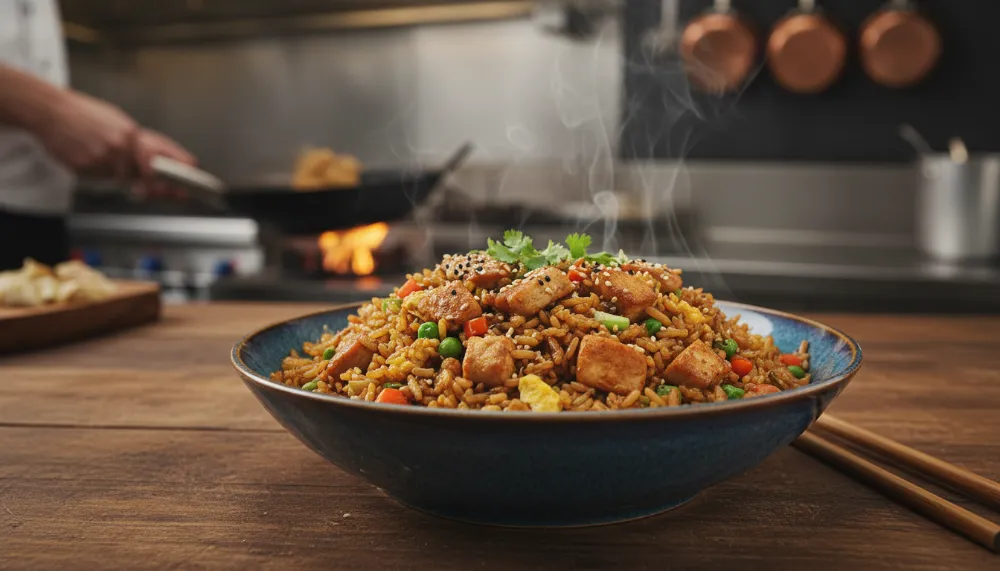

Fuel your fitness goals without sacrificing flavor with this protein-packed twist on a takeout classic that delivers the ultimate savory satisfaction. This High-Protein Chicken Fried Rice is meticulously designed to provide over 45 grams of protein per serving while maintaining that authentic wok-charred taste.
High-Protein Chicken Fried Rice
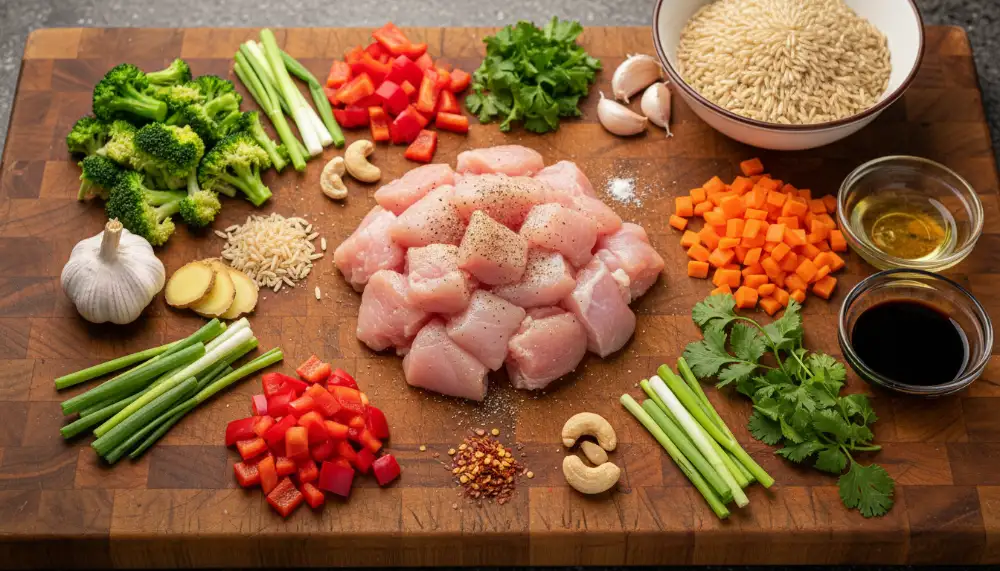
Ingredients
- 1 24 oz Chicken Breast, diced into small cubes
- 2 3 cups Cooked Jasmine Rice (Chilled overnight is best)
- 3 3 Large Eggs + 1/2 cup Liquid Egg Whites
- 4 1.5 cups Frozen Peas and Carrots
- 5 3 tbsp Soy Sauce (or Coconut Aminos)
- 6 1 tbsp Toasted Sesame Oil
- 7 2 tbsp Chicken Broth (replaces traditional cooking wine)
- 8 3 cloves Garlic, minced
- 9 1 tsp Fresh Ginger, grated
- 10 1/2 cup Green Onions, sliced
Instructions
- 1 Heat a large wok or skillet over high heat with a spray of avocado oil. Add the diced chicken and cook until browned and cooked through. Remove and set aside.
- 2 Pour the whisked eggs and egg whites into the same pan. Scramble quickly until just set, then remove and set aside with the chicken.
- 3 Add the sesame oil to the wok. Sauté the garlic, ginger, and frozen peas/carrots for 2 minutes until fragrant and the vegetables soften.
- 4 Turn the heat to maximum. Add the chilled rice, breaking up any clumps. Stir-fry for 3,4 minutes until the rice begins to toast and ‘pop.’
- 5 Pour in the soy sauce and chicken broth. Toss everything vigorously to coat the grains evenly.
- 6 Fold the cooked chicken, scrambled eggs, and green onions back into the wok. Toss for 1 more minute and serve immediately.
The Culinary Heritage of Fried Rice
To truly master High-Protein Chicken Fried Rice, one must understand its humble and brilliant origins. The dish, known as chǎofàn, traces its roots back to the Sui Dynasty (581–618 AD) in the city of Yangzhou, China. It was born not out of luxury, but out of a profound cultural respect for food and a practical need to minimize waste. In ancient Chinese culture, throwing away rice was unthinkable, yet cold, leftover rice became hard and difficult to eat. The solution was the wok, by stir-frying those leftover grains with oil, aromatics, and whatever protein was on hand, the rice was revitalized into something even better than its original form.
This high-protein adaptation honors that tradition of practicality. While the original focused on making a small amount of meat stretch a long way, the modern version prioritizes lean poultry and extra egg whites to meet contemporary nutritional needs. As Chinese laborers migrated across the globe in the 19th and 20th centuries, fried rice evolved with them, absorbing local flavors and ingredients. Today, we take those same techniques, the high heat, the quick tossing, the utilization of aromatics, and apply them to a meal-prep friendly, performance-focused recipe.
The Anatomy of High-Protein Chicken Fried Rice
What makes a fried rice “high-protein” specifically? In a standard takeout version, you might find a high ratio of rice to a tiny amount of meat and perhaps half an egg. Our version flips the script. By doubling the chicken breast and incorporating a blend of whole eggs and liquid egg whites, we create a dish where the protein is the star, not the filler. A typical 1.5-cup serving of this recipe offers between 40g and 55g of protein, making it an ideal post-workout meal.
Optimizing the Macro Profile
The key to keeping the calories in check while maximizing protein lies in the choice of ingredients. We use skinless chicken breast for its lean profile, but the secret weapon is the liquid egg whites. They add significant protein and volume without adding the fat and cholesterol of four or five whole yolks. Furthermore, using a moderate amount of toasted sesame oil provides that essential nutty aroma and healthy fats without drowning the dish in grease. For those looking for even lower calorie options, you can easily substitute half of the jasmine rice with riced cauliflower, a technique often used by “volume eaters” to increase satiety.
The Professional Secret: Why Day-Old Rice is Mandatory
If you have ever tried to make fried rice with freshly steamed, hot rice, you likely ended up with a gummy, clumpy mess. This is due to the starch structure of the grain. When rice is freshly cooked, the surface starches are hydrated and sticky. As rice cools and sits in the refrigerator overnight, it undergoes a process called starch retrogradation. The starch molecules realign, and the grains lose moisture, becoming firm and individual. This firmness allows the rice to be fried at high heat without breaking, allowing it to absorb the savory sauce while maintaining a distinct, “chewy” texture.
To prep like a pro, we recommend using the Cuisinart 8 Cup Food Processor to quickly dice your vegetables, ensuring uniform sizes that cook at the same rate as your rice grains. For those who meal prep in bulk, storing your cooked rice in Rubbermaid Brilliance Glass Storage ensures it stays airtight and reaches the perfect level of dryness for the wok the next day.
Flavor Variations for the Elite Home Chef
While the base recipe is a classic, you can diversify your meal plan with these professional flavor profiles, all while adhering to strict dietary guidelines.
1. The Japanese Steakhouse Variation
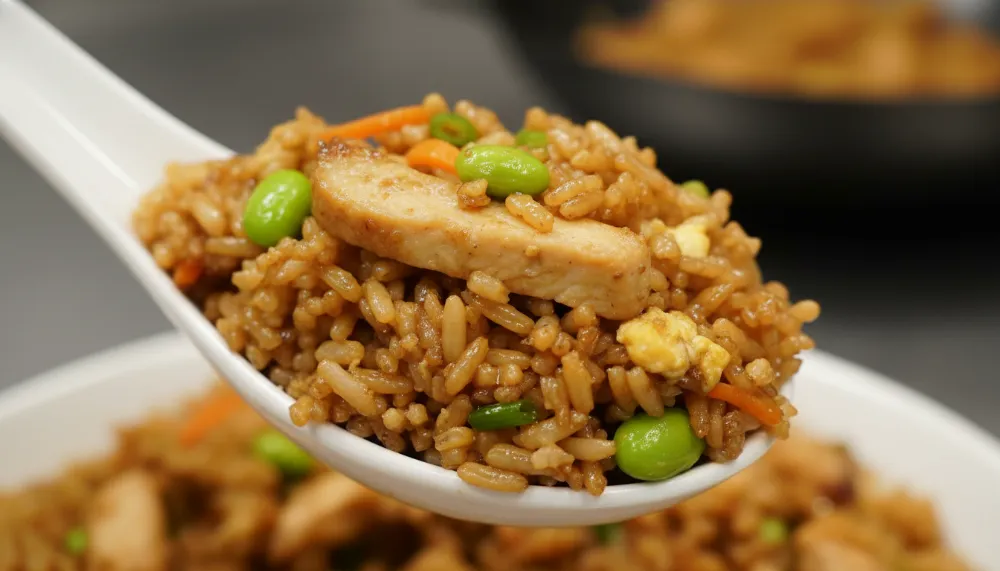
This version mimics the rich, buttery flavor found at high-end teppanyaki grills. Instead of standard oil, use a small amount of grass-fed butter to sauté the chicken. Add a heavy hand of cracked black pepper and plenty of garlic. To keep it high-protein, add shelled edamame into the mix. Instead of mirin, which contains alcohol, use a splash of chicken broth and a teaspoon of sugar to achieve that signature sweet-savory balance.
2. Southeast Asian Zesty Garlic
Inspired by Thai street food, this version is vibrant and aromatic. Incorporate fresh bird’s eye chilies and a handful of Thai basil at the very end. Use lime juice and a dash of rice vinegar to provide the acidity typically provided by cooking wines. For an extra protein kick, use minced chicken breast instead of cubes, it coats more of the rice surface area, ensuring every bite is packed with meat.
3. Crispy Ginger and Beef Twist
While this is a chicken-based article, a pro tip for flavor depth is using a 70/30 split of chicken and lean ground beef. Flash-fry julienned ginger until it is golden and crispy before adding your rice. To replace the depth of rice wine, use white grape juice or verjuice to deglaze the pan. This provides the necessary fruity notes and acidity without the need for alcohol.
Mastering the ‘Wok Hei’ at Home
“Wok Hei,” or the “breath of the wok,” is that elusive smoky flavor found in professional kitchens. It is achieved through high-heat stir-frying and the partial combustion of oil droplets. While difficult to fully replicate on a standard home stove, you can get close by following these three rules:
- Heat the Pan First: Your wok or skillet should be smoking slightly before the first drop of oil hits the surface.
- Don’t Overcrowd: If you add too many cold ingredients at once, the pan temperature drops, and the food steams rather than fries. Work in batches if necessary.
- Keep it Moving: The food must be constantly tossed to prevent burning while ensuring every surface hits the intense heat of the pan bottom.
Essential Tools for Perfect Results
To achieve professional-grade High-Protein Chicken Fried Rice, the right equipment is essential. For the perfect sauce consistency, the Ninja BN751 Professional Plus DUO Blender is excellent for emulsifying garlic and ginger into your soy base. If you prefer to roast your vegetables for a deeper flavor before tossing them into the rice, the Cosori 9-in-1 TurboBlaze Air Fryer is a game-changer for speed and texture.
Finally, for long-term freshness, especially if you are cooking for the entire week, the FoodSaver Vacuum Sealer Machine is the best way to prevent freezer burn on your pre-cooked chicken or rice portions, ensuring your meal prep tastes just as fresh on Friday as it did on Monday.