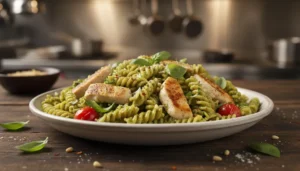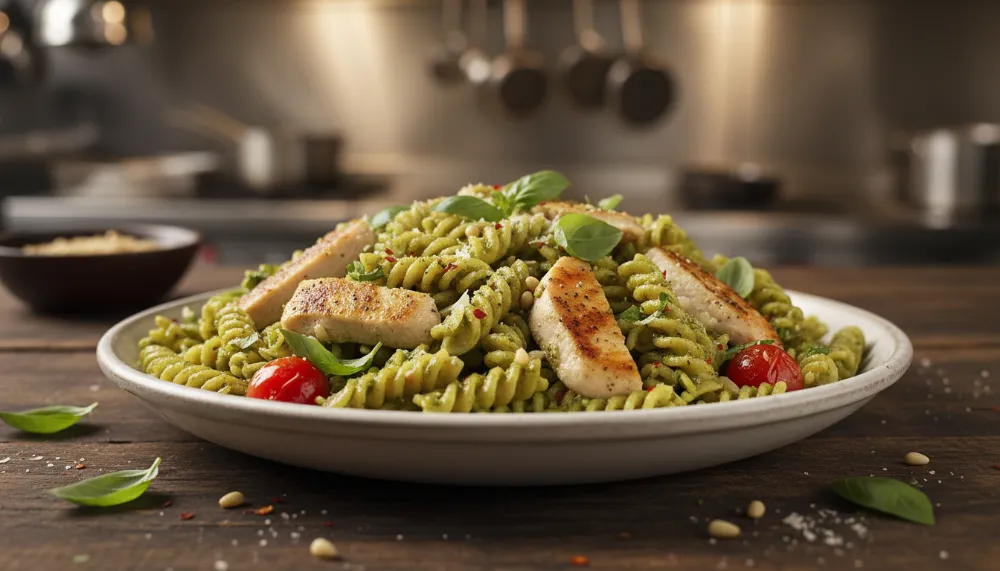

This 30-Minute Chicken Pesto Pasta is the ultimate weeknight savior, combining juicy seared chicken with a vibrant, herbaceous sauce that tastes like it came straight from a professional Italian kitchen. It is the definitive 30 minute chicken dinner for busy families who refuse to compromise on bold flavors and high-quality ingredients.
30-Minute Chicken Pesto Pasta
Ingredients
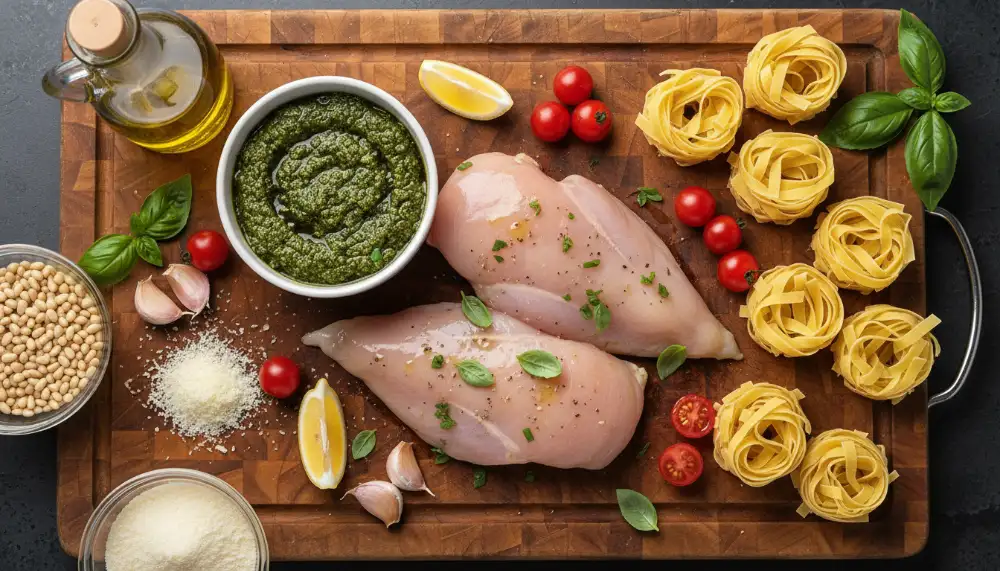
- 1 1 lb Boneless Skinless Chicken Breasts, cut into bite-sized pieces
- 2 12 oz Penne or Fusilli Pasta
- 3 2 cups Fresh Basil Leaves, packed
- 4 1/2 cup Grated Parmesan Cheese
- 5 1/3 cup Pine Nuts or Toasted Walnuts
- 6 2 cloves Garlic, peeled
- 7 1/2 cup Extra Virgin Olive Oil
- 8 1/4 cup Chicken Broth (for deglazing)
- 9 1 tbsp Lemon Juice
- 10 Salt, Black Pepper, and Red Pepper Flakes to taste
Instructions
- 1 Boil a large pot of salted water and cook pasta according to package directions until al dente. Reserve 1/2 cup of pasta water before draining.
- 2 While pasta cooks, prepare the pesto. Combine basil, nuts, garlic, and Parmesan in a food processor. Pulse while drizzling in olive oil until smooth.
- 3 Season chicken with salt and pepper. In a large skillet over medium-high heat, sear chicken until golden and cooked through (about 6-8 minutes).
- 4 Deglaze the skillet with chicken broth and lemon juice, scraping up any browned bits. Reduce heat to low.
- 5 Add cooked pasta and pesto to the skillet. Toss well, adding reserved pasta water as needed to reach a creamy consistency. Serve immediately with extra cheese and red pepper flakes.
The Historical Evolution of Pesto and Chicken
To truly appreciate a 30-Minute Chicken Pesto Pasta, one must understand the deep culinary roots that ground this dish. The conceptual journey of pesto begins in Ancient Rome, where the population enjoyed a paste known as moretum. This early ancestor was a rustic blend of herbs, cheese, oil, and vinegar, crushed together in a mortar. By the Middle Ages, the maritime city of Genoa in the Liguria region of Italy refined these flavors into agliata, a pungent garlic and walnut paste used predominantly by sailors for its preservation qualities.
The modern iteration of Pesto alla Genovese, characterized by its vibrant basil base, was first formally documented in 1852 by Emanuele Rossi. This period marked a transition where basil, once considered a medicinal herb, became a culinary powerhouse. However, the traditional Italian approach generally maintains a separation between pasta courses (primi) and meat courses (secondi). The marriage of chicken and pesto pasta is a relatively modern phenomenon, gaining traction in the 1980s and 1990s through the rise of California-style Italian cuisine. This fusion prioritized efficiency and protein, transforming a delicate herb sauce into a substantial 30 minute chicken dinner that conquered the global palate.
The Science of a Perfect 30-Minute Chicken Pesto Pasta
Achieving a restaurant-quality 30-Minute Chicken Pesto Pasta requires more than just mixing ingredients, it requires an understanding of emulsification and heat management. Pesto is a cold sauce by nature. When high heat is applied to fresh basil, the volatile oils oxidize quickly, leading to a dull, bitter flavor and a brown color. Professionals prevent this by adding the pesto to the pasta only after it has been removed from the direct flame, allowing the residual heat of the noodles to warm the sauce without