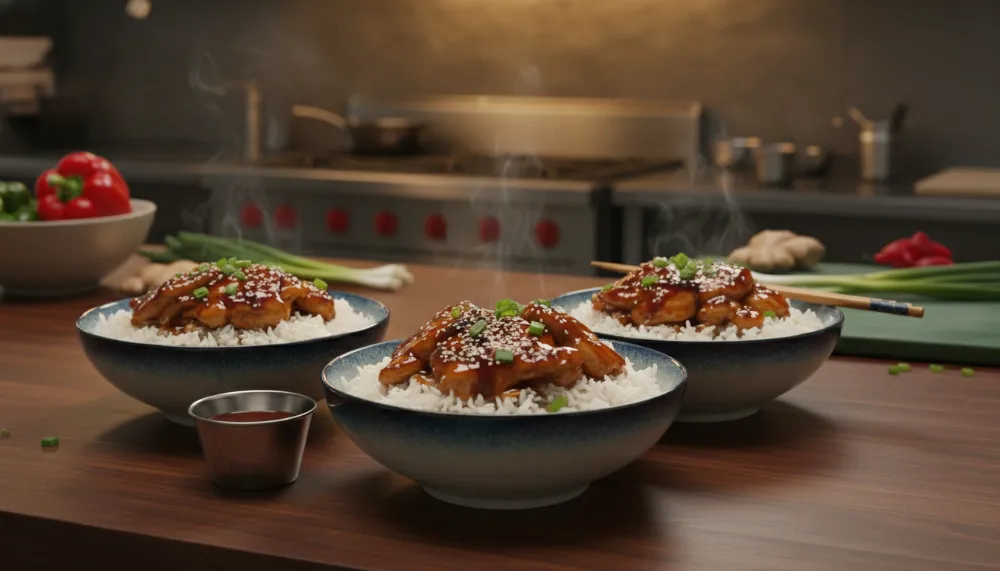

These Teriyaki Chicken Rice Bowls offer a perfect balance of savory, sweet, and tangy flavors that will transform your weeknight dinner routine into a gourmet experience. This alcohol-free version captures the authentic glossy finish and deep umami of the classic Japanese-inspired dish using simple, wholesome ingredients.
Gourmet Teriyaki Chicken Rice Bowls
Ingredients
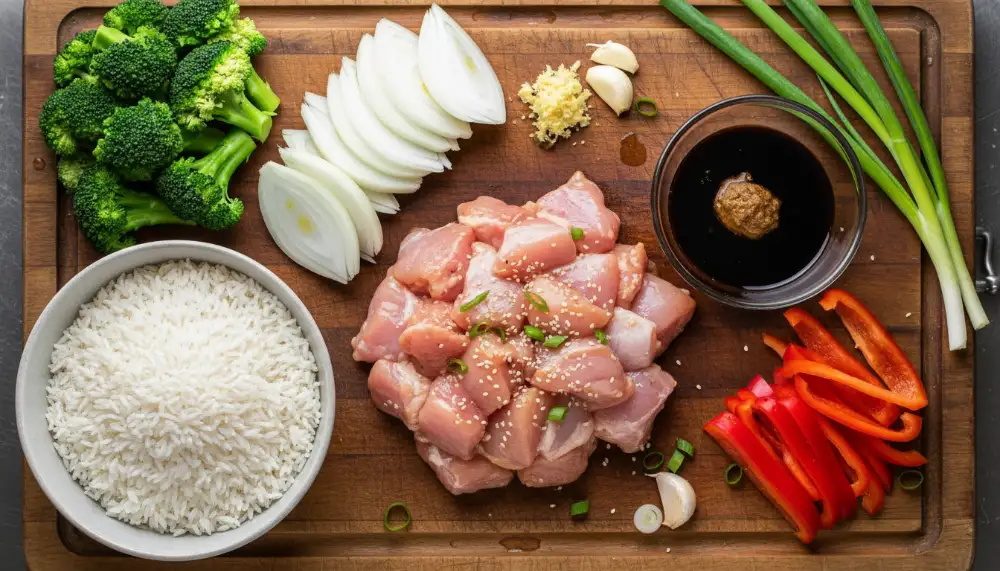
- 1 2 lbs Boneless Skinless Chicken Thighs, cut into bite-sized pieces
- 2 1/2 cup Low-Sodium Soy Sauce
- 3 1/3 cup Honey or Brown Sugar
- 4 2 tbsp Rice Vinegar (Alcohol-free)
- 5 1 tbsp Fresh Ginger, minced
- 6 3 cloves Fresh Garlic, minced
- 7 1 tbsp Cornstarch mixed with 2 tbsp Water (Slurry)
- 8 2 cups Cooked Jasmine Rice
- 9 2 cups Steamed Broccoli and sliced Carrots
Instructions
- 1 Whisk soy sauce, honey, rice vinegar, ginger, and garlic in a small bowl.
- 2 Heat a large skillet over medium-high heat with a splash of oil. Sear chicken until golden and cooked through.
- 3 Pour the sauce over the chicken and bring to a simmer for 2 to 3 minutes.
- 4 Stir in the cornstarch slurry and cook until the sauce thickens into a glossy glaze.
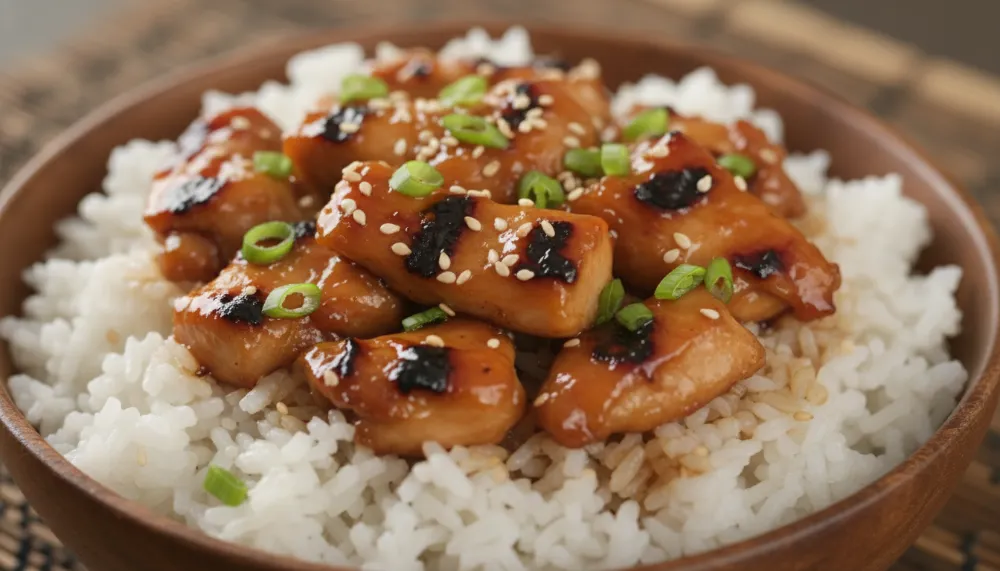
- 5 Serve over hot jasmine rice with steamed vegetables, garnished with sesame seeds and green onions.
The Fascinating History of Teriyaki Chicken Rice Bowls
Teriyaki chicken rice bowls represent a significant cultural fusion, evolving from a 17th-century Japanese grilling technique into a global comfort food. The story of this dish is a testament to how flavors travel across oceans and adapt to local ingredients, eventually becoming a staple in kitchens worldwide.
The term Teriyaki is derived from two Japanese words: teri, meaning “luster” or “shine”, and yaki, meaning “grill” or “broil”. In 18th-Century Japan, originally, teriyaki was a cooking method used primarily for fish. During the Edo period, chefs used a simple mixture of soy sauce and sugar to create a glaze that both preserved the fish and gave it a glossy finish. This was a necessity in a time before modern refrigeration, as the sugar and salt in the soy sauce acted as natural preservatives.
By the 1960s in Hawaii, the modern, sweeter sauce version was pioneered by Japanese immigrants. Lacking traditional Japanese ingredients like mirin or sake, they incorporated local pineapple juice and brown sugar into soy sauce. This “Hawaiian Teriyaki” became the foundation for the international profile we recognize today. It was during this time that the dish began to transition from fish to chicken and beef, catering to the American palate.
In the 1970s, Teriyaki exploded as a fast-casual staple in Seattle, Washington. This “Seattle-style” added heavy amounts of fresh garlic and ginger, resulting in a thicker, bolder sauce served over generous portions of white rice. Today, Teriyaki Chicken Rice Bowls are synonymous with quick, healthy, and flavorful meals that satisfy both the soul and the body.
Mastering the Alcohol-Free Teriyaki Glaze
One of the most common questions when preparing authentic-tasting Teriyaki Chicken Rice Bowls is how to achieve that signature depth without using traditional rice wines. In professional kitchens catering to diverse dietary needs, we utilize acidity and natural sugars to replicate the complexity of mirin or sake.
The secret lies in the balance of Rice Vinegar and Fruit Juices. Rice vinegar provides the necessary tang that cuts through the saltiness of the soy sauce, while a touch of apple juice or pineapple juice adds the fruity undertones and natural sugars that help the sauce caramelize. When these elements hit a hot pan, they undergo the Maillard reaction, creating a sticky, mahogany-colored glaze that clings perfectly to the chicken.
For those who want an even deeper flavor, replacing the liquid component with a high-quality Beef Broth or Vegetable Broth adds a layer of savory richness. This is particularly effective when making a beef version of the bowl, as the broth enhances the meatiness of the dish without the need for alcohol-based deglazing.
Essential Tools for Perfect Teriyaki Chicken Rice Bowls
To achieve professional results at home, having the right equipment is just as important as the ingredients. Here are our top recommendations for making the best Teriyaki Chicken Rice Bowls:
- Ninja BN751 Professional Plus DUO Blender: https://amzn.to/3LCDyNR (Why Perfect: 1000W motor, perfect for blending fresh ginger and garlic into a smooth, emulsified sauce base).
- Cosori 9-in-1 TurboBlaze Air Fryer 6 Qt: https://amzn.to/4hRWmVq (Why Perfect: Roasts chicken pieces and vegetables perfectly with minimal oil, giving you that “grilled” texture in minutes).
- Cuisinart 8 Cup Food Processor: https://amzn.to/47Nhbg8 (Why Perfect: Fast chopping and slicing of carrots, cabbage, and broccoli, a true meal prep essential).
- Rubbermaid Brilliance Glass Storage Set of 9: https://amzn.to/4oD0YkY (Why Perfect: Perfect for meal prep storage, leak-proof, and stackable for those who prep their bowls for the week).
- FoodSaver Vacuum Sealer Machine: https://amzn.to/4qWgVnS (Why Perfect: Keeps marinated chicken fresh longer and prevents freezer burn, allowing you to bulk-prep your proteins).
Nutritional Profile: A Balanced Powerhouse
A standard bowl featuring grilled chicken, white rice, and mixed vegetables is not just delicious, it is a nutritionally balanced meal. A standard portion (approximately 350g, 400g) generally follows this nutritional breakdown:
| Nutrient | Average Amount | % Daily Value |
|---|---|---|
| Calories | 480, 580 kcal | 25% |
| Protein | 25g, 35g | 60% |
| Total Fat | 8g, 14g | 15% |
| Carbohydrates | 75g, 85g | 30% |
| Sodium | 800mg, 1,100mg | 40% |
By using chicken thighs, you get a more succulent piece of meat with essential B-vitamins, while the rice provides the necessary complex carbohydrates for sustained energy. To lower the sodium, always opt for “Low-Sodium” soy sauce and avoid adding extra table salt, as the sauce already contains plenty of savory punch.
Professional Flavor Variations
While the classic chicken bowl is a fan favorite, the Teriyaki technique is incredibly versatile. Here are four professional variations that use zero alcohol and high-quality proteins:
1. The Tropical Hawaiian Variation
This version uses boneless chicken thighs and a glaze base of soy sauce, brown sugar, and unsweetened pineapple juice. The aromatics include freshly grated ginger and a touch of lime zest. It is traditionally garnished with grilled pineapple rings and toasted sesame seeds, offering a bright, summer-like flavor profile.
2. The Savory Beef & Broccoli Variation
For meat lovers, use thinly sliced flank steak or beef ribeye. The glaze base combines soy sauce, honey, and beef broth for extra depth. The aromatics are centered around minced garlic and a dash of sesame oil. Serve this with flash-steamed broccoli florets and thinly sliced onions to soak up the rich, dark sauce.
3. The Spicy Zen Bowl (Vegetarian)
This plant-based option uses extra-firm pressed tofu or tempeh cubes, pan-seared until crispy. The glaze base is soy sauce, maple syrup, and rice vinegar. To add heat, incorporate red pepper flakes or a swirl of chili oil. This bowl is best topped with edamame beans, shredded purple cabbage, and pickled radish for texture.
4. The Seattle Garlic Punch
Inspired by the Pacific Northwest, this version uses butterflied chicken breast or sliced steak. The glaze base is high-sodium soy sauce, plenty of brown sugar, and apple cider vinegar. The distinctive note here is doubling the amount of fresh garlic compared to other versions, simmered until the sauce becomes a thick, heavy syrup.
Step-by-Step Meal Prep Strategy
Teriyaki Chicken Rice Bowls are the ultimate meal prep candidate. Because the sauce acts as a preservative and the rice holds its texture well, you can prepare a week’s worth of lunches in under an hour. Start by cooking a large batch of jasmine rice and portioning it into your Rubbermaid Brilliance containers. While the rice cooks, sear your protein in batches. If you are using chicken, ensure it is cooked to an internal temperature of 165°F.
A pro tip for meal prepping is to keep the sauce slightly thinner than usual. When you reheat the bowl in the microwave, the sauce will naturally thicken further as the moisture evaporates, preventing the dish from becoming too dry. Always store the steamed vegetables on one side of the container and the chicken on top of the rice to keep the textures distinct.
Conclusion
Mastering Teriyaki Chicken Rice Bowls is a skill that every home cook should have in their arsenal. By understanding the balance of salt, sweet, and acid, and utilizing high-quality kitchen tools, you can create a restaurant-quality meal that is both healthy and satisfying. Whether you prefer the classic chicken or a bold beef variation, the key is the glaze. Enjoy your cooking journey and the delicious results!