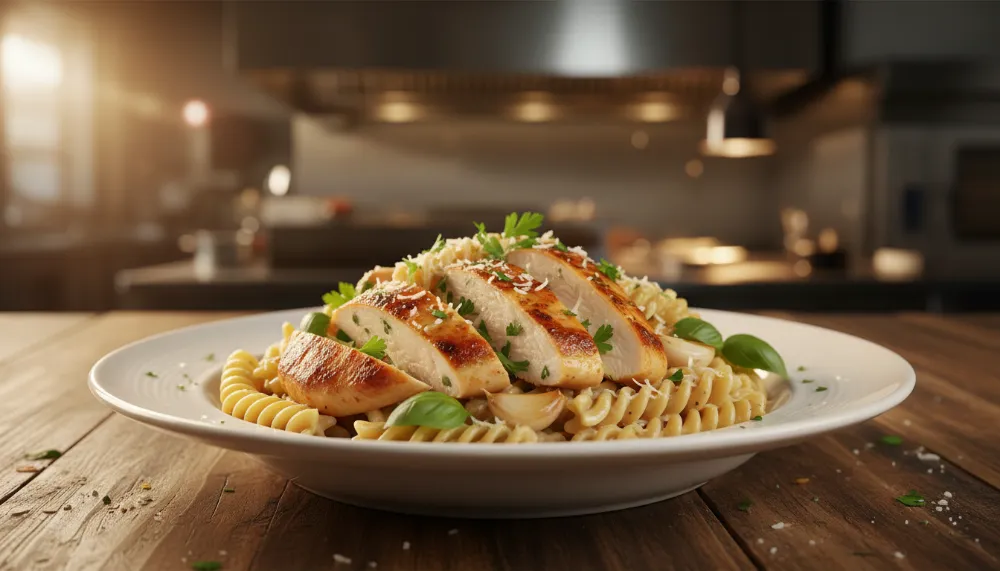

Experience a bowl of pure comfort that rivals any high-end Italian bistro with our Easy Garlic Parmesan Chicken Pasta , Restaurant Quality! This dish combines succulent pan-seared chicken with a velvety, garlic-infused cream sauce that clings perfectly to every strand of pasta.
Easy Garlic Parmesan Chicken Pasta
Ingredients
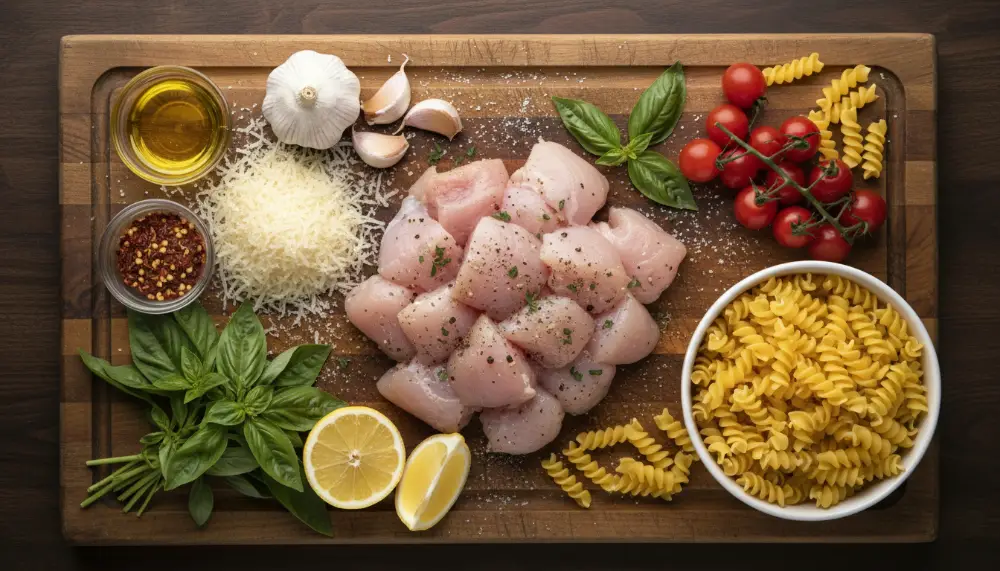
- 1 lb Chicken Breast, thinly sliced
- 1 lb Fettuccine or Penne Pasta
- 6 cloves Garlic, minced
- 1 cup Heavy Cream
- 1 cup Freshly Grated Parmesan
- 1/2 cup Chicken Broth (for deglazing)
- 2 tbsp Butter
- 1 tbsp Lemon Juice
- Salt, Black Pepper, and Red Pepper Flakes to taste
Instructions
- Boil pasta in salted water until al dente. Reserve 1 cup of starchy pasta water.
- Season chicken with salt and pepper. Sear in a large pan with olive oil until golden and cooked through. Remove and set aside.
- In the same pan, melt butter and sauté garlic for 1 minute until fragrant.
- Deglaze the pan with chicken broth and lemon juice, scraping up the browned bits.
- Pour in heavy cream and bring to a gentle simmer. Whisk in parmesan until the sauce is smooth.
- Toss the pasta and chicken back into the sauce. Add reserved pasta water if the sauce is too thick.
- Garnish with fresh parsley and extra parmesan before serving.
The Evolution of a Modern Comfort Classic
The Easy Garlic Parmesan Chicken Pasta , Restaurant Quality! is more than just a quick dinner, it is a testament to the beautiful fusion of Italian tradition and American culinary innovation. While many look at this dish and see a simple cream sauce, its lineage is actually quite prestigious. The core foundation of the sauce traces its roots back to the early 20th century in Rome, specifically to a man named Alfredo di Lelio. His original creation, Fettuccine al Burro, was a humble mixture of high-quality butter and aged parmesan cheese. It was not until the dish crossed the Atlantic that heavy cream and garlic became the stars of the show.
By the 1950s, Italian-American immigrants began incorporating chicken into their pasta dishes. In the Old World, meat was often a separate course, but in the United States, the abundance of poultry allowed for it to be integrated directly into the starch. This led to the birth of the Chicken Parmesan we know today, eventually evolving into this creamy, garlic-heavy variant that fills the menus of top-tier casual dining establishments. Our version focuses on that “restaurant quality” finish, achieved through careful deglazing and high-heat searing techniques.
Why This Recipe Works: The Science of Creamy Sauce
The secret to achieving that silky, non-clumping texture in your Easy Garlic Parmesan Chicken Pasta , Restaurant Quality! lies in the science of emulsification. Many home cooks struggle with sauces that break or become grainy. This usually happens because the heat is too high when the cheese is added, or the cheese itself is pre-shredded and coated in cornstarch. By using freshly grated parmesan and tempering it into the warm cream, you create a stable emulsion that coats the pasta perfectly.
Using a Cuisinart 8 Cup Food Processor is a meal prep essential for this recipe. It allows you to grate a large block of parmesan in seconds, ensuring you have the freshest cheese without the anti-caking agents found in bags. Freshly grated cheese melts much more efficiently, contributing to that signature restaurant mouthfeel.
Mastering the Sear: Chicken Preparation
To ensure your chicken is tender and flavorful, the sear is paramount. You want a deep golden-brown crust, which is known as the Maillard reaction. This reaction creates complex flavors that a simple boil or bake cannot provide. Ensure your chicken is patted dry before hitting the pan. If the chicken is wet, it will steam instead of sear, leaving you with rubbery meat.
If you prefer a healthier approach with less oil, the Cosori 9-in-1 TurboBlaze Air Fryer 6 Qt is perfect for this. It can roast the chicken pieces to perfection while keeping the inside juicy. It is also excellent for roasting a head of garlic to make a roasted garlic variant of this recipe.
Gourmet Flavor Variations Without Alcohol or Pork
Many restaurant recipes call for white wine to deglaze the pan or pancetta to add saltiness. To maintain strict dietary standards without sacrificing flavor, we utilize clever substitutions. For deglazing, a mixture of high-quality chicken broth and a splash of lemon juice or white vinegar provides the necessary acidity to cut through the heavy cream. This brightness is what separates a “heavy” pasta from a “restaurant quality” one.
The Tuscan Twist
Add sun-dried tomatoes and spinach to the sauce just before adding the pasta. The sun-dried tomatoes provide a concentrated burst of umami that mimics the complexity of aged meats. For the best results, use your Ninja BN751 Professional Plus DUO Blender to pulse some of the sun-dried tomatoes into a paste before adding them to the cream. This ensures the flavor is distributed evenly throughout the Easy Garlic Parmesan Chicken Pasta , Restaurant Quality!
The Smoky “No-Pork” Alternative
If you miss the smokiness of bacon, try using thinly sliced beef strips seasoned with smoked paprika and seared until crispy. Alternatively, you can fry chicken skin separately until it becomes a cracker-like garnish. This provides that savory crunch without any pork products.
The Importance of Starchy Pasta Water
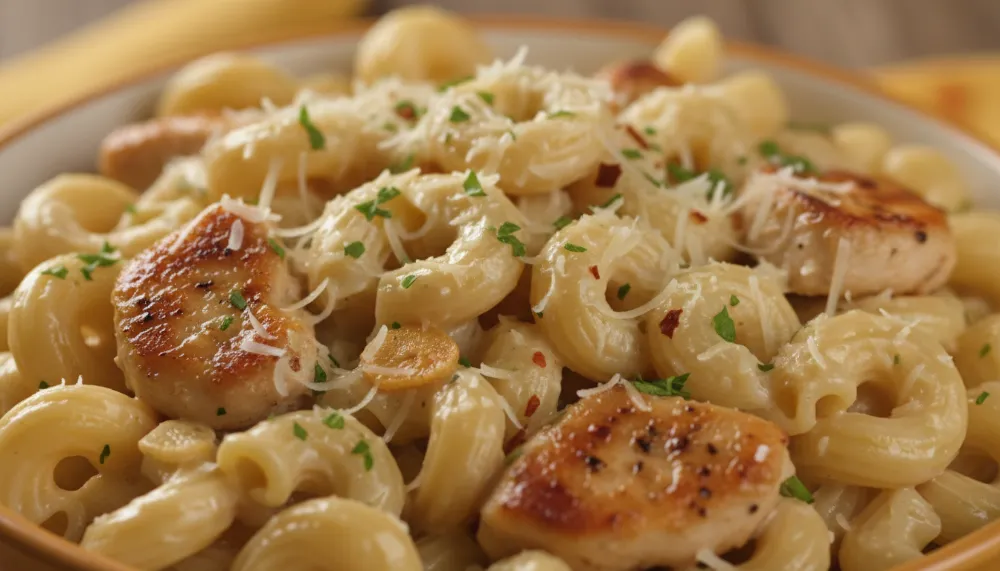
Never dump all your pasta water down the drain! This cloudy liquid is liquid gold. It contains the starch released by the pasta, which acts as a bridge between the watery broth and the fatty cream. If your sauce looks too thick or is sticking to the pan, adding half a cup of this water will loosen it while maintaining a creamy consistency. It is the number one trick chefs use to get that glossy finish on their Easy Garlic Parmesan Chicken Pasta , Restaurant Quality!
Meal Prep and Long-Term Storage
This pasta is a fantastic candidate for meal prep, provided you store it correctly. Because the sauce is dairy-based, it can dry out when reheated. To prevent this, store your portions in the Rubbermaid Brilliance Glass Storage Set of 9. These containers are leak-proof and stackable, making them perfect for maintaining freshness. When reheating, add a teaspoon of water or milk to the bowl to help re-emulsify the sauce in the microwave.
For those who like to prep in bulk, using a FoodSaver Vacuum Sealer Machine for the seared chicken components is a game changer. It keeps the chicken fresh and prevents freezer burn, allowing you to simply cook the pasta and make the sauce fresh on a busy weeknight.
Frequently Asked Questions
Can I use milk instead of heavy cream?
You can, but the sauce will be thinner. If you use milk, you will need to create a roux (a mixture of butter and flour) at the beginning to help the sauce thicken. However, for a true restaurant-quality feel, heavy cream is recommended for its high fat content and stability.
What is the best pasta shape for this dish?
Fettuccine is the traditional choice because its wide surface area holds the heavy sauce well. However, penne or rigatoni are excellent alternatives as their hollow centers trap the sauce and garlic bits, ensuring a flavor explosion in every bite.
How do I keep the garlic from burning?
Garlic has a high sugar content and burns quickly. Always add it to the pan when the butter is melted but not smoking, and sauté it for no more than 60 seconds before adding your liquid (broth or cream). If it turns dark brown or black, it will be bitter, and you should start the sauce over.
Final Culinary Thoughts
Creating an Easy Garlic Parmesan Chicken Pasta , Restaurant Quality! at home is about mastering a few simple techniques: the sear of the chicken, the deglazing of the pan, and the emulsification of the cheese. By following these steps and using the right tools, you can elevate a Tuesday night dinner into a gourmet experience. This dish is rich, satisfying, and incredibly versatile, making it a permanent favorite in any household.