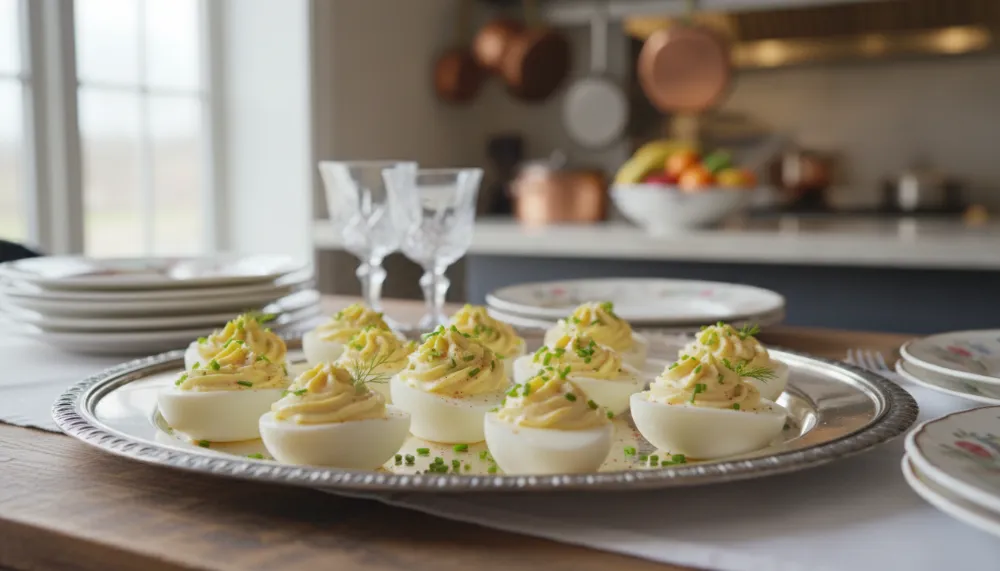

Classic deviled eggs are the undisputed crown jewel of the holiday table, offering a creamy, nostalgic bite that everyone loves. This Easter brunch essential combines a velvety yolk filling with a hint of spice to create the ultimate appetizer for your family gathering.
Classic Deviled Eggs , Easter Brunch Essential!
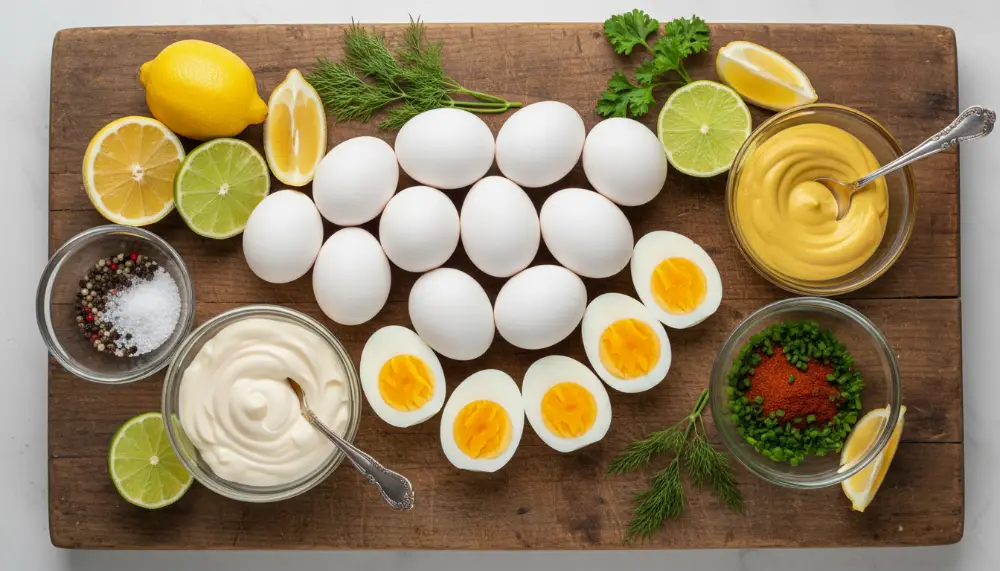
Ingredients
- 12 Large Eggs
- 1/2 cup High-Quality Mayonnaise
- 1 tbsp Yellow Mustard
- 1 tsp Apple Cider Vinegar
- 1/4 tsp Salt and Black Pepper to taste
- 1 tsp Smoked Paprika (for dusting)
- 2 tbsp Finely Minced Chives
Instructions
- 1 Place eggs in a single layer in a pot and cover with water by one inch. Bring to a rolling boil.
- 2 Turn off heat, cover, and let sit for 12 minutes. Transfer immediately to an ice-water bath.
- 3 Peel eggs, slice in half lengthwise, and remove yolks into a mixing bowl.
- 4 Mash yolks with mayo, mustard, vinegar, salt, and pepper until smooth and creamy.
- 5 Pipe the yolk mixture back into the whites and garnish with paprika and chives.
The Timeless Appeal of Classic Deviled Eggs , Easter Brunch Essential!
When it comes to holiday traditions, few dishes carry as much weight as Classic Deviled Eggs , Easter Brunch Essential! These elegant appetizers have stood the test of time, appearing at everything from high-society galas in the 1920s to modern-day backyard barbecues. Their appeal lies in their simplicity, the contrast of the firm, cool egg white against the rich, velvety yolk filling is a culinary masterpiece that requires no fancy equipment, though using tools like the Cuisinart 8 Cup Food Processor can certainly help achieve that ultra-smooth texture professional chefs strive for.
In this guide, we will explore why Classic Deviled Eggs , Easter Brunch Essential! are more than just a snack. We will delve into the science of the perfect boil, the history of the name, and how to create variations that respect strict dietary boundaries without sacrificing a single ounce of flavor. Whether you are a seasoned host or a first-time brunch organizer, mastering this dish is a rite of passage.
The Surprising History of Deviled Eggs
To truly appreciate Classic Deviled Eggs , Easter Brunch Essential!, one must look back nearly two thousand years. The concept of boiling eggs and seasoning them with spicy sauces dates back to Ancient Rome. At that time, boiled eggs were typically served as the first course of a banquet, often drenched in oil, wine, and pepper. The Romans were so fond of this starter that they had a famous saying, “Ab ovo usque ad mala,” which translates to “from eggs to apples,” representing the full span of a multi-course meal.
By the 13th century in Andalusia, what we now call deviled eggs began to take a shape more familiar to us. Yolks were removed and mixed with cilantro, onion juice, and coriander, then stuffed back into the whites. It wasn’t until the 18th century in England that the term “deviled” was coined. At the time, “deviling” a food meant preparing it with a significant amount of heat, spice, or piquant seasoning. Over time, the spiciness was tempered by the addition of mayonnaise, which became the standard binder in the late 19th century, cementing the American version of the dish.
The Science of the Perfect Hard-Boiled Egg
The foundation of Classic Deviled Eggs , Easter Brunch Essential! is the hard-boiled egg itself. A rubbery white or a chalky yolk with a green ring can ruin the experience. That green ring is actually a reaction between the iron in the yolk and the sulfur in the white, which occurs when the egg is overcooked or cooled too slowly. To avoid this, precision is key.
Start with eggs that are about a week old. Fresh eggs are wonderful for poaching, but for boiling, older eggs have a slightly higher pH level, which causes the inner membrane to adhere less tightly to the shell, making them significantly easier to peel. When you reach the boiling point, immediately remove the heat and cover. This gentle residual heat cooks the protein without toughening it. For the most consistent results when prepping for a large crowd, using a Cosori 9-in-1 TurboBlaze Air Fryer 6 Qt can actually be used to “air boil” eggs at 270°F for 15 minutes, which provides a remarkably consistent internal temperature.
Peeling Without the Frustration
The ice bath is non-negotiable. By shocking the eggs in ice water, you halt the cooking process and cause the egg to slightly shrink away from the shell. This creates a small pocket of air that makes peeling a breeze. For the ultimate smooth finish, peel the eggs under cool running water. The water helps lubricate the membrane, allowing it to slip right off. Once peeled, store them in Rubbermaid Brilliance Glass Storage to keep them moist and prevent them from absorbing refrigerator odors.
Achieving the Ultimate Creamy Filling
The hallmark of Classic Deviled Eggs , Easter Brunch Essential! is a filling that melts in your mouth. Many home cooks make the mistake of simply mashing with a fork, which leaves small lumps of yolk. For a professional result, you want to emulsify the yolks with your fats and acids. This is where a high-powered blender like the Ninja BN751 Professional Plus DUO Blender becomes a secret weapon. Its 1000W motor can turn standard yolks into a mousse-like consistency that is perfect for piping.
The ratio is also vital. A standard rule is one tablespoon of mayonnaise per two egg yolks. This provides enough fat to carry the flavor without making the mixture greasy. The addition of an acid, like apple cider vinegar or lemon juice, is essential to cut through the richness. Since we avoid alcohol-based vinegars like white wine vinegar, apple cider vinegar provides a beautiful, slightly fruity tang that complements the egg perfectly.
Gourmet Variations Without Pork or Alcohol
While the classic version is iconic, you can elevate Classic Deviled Eggs , Easter Brunch Essential! by introducing new flavor profiles. Here are several gourmet options that strictly adhere to your dietary needs:
1. The “Steakhouse” Smoked Beef Version
Instead of the traditional bacon garnish, use finely minced smoked beef strips. Pan-sear them until they reach a crispy, jerky-like consistency. Fold half of the beef into the yolk mixture and use the rest as a topping. This provides a deep, savory umami that rivals any pork product. The smokiness pairs beautifully with the creamy yolk and fresh chives.
2. Truffled Wild Mushroom (Vegetarian)
For a sophisticated vegetarian option, sauté finely chopped cremini mushrooms until they are deeply browned and have released all their moisture. Mix a drop of alcohol-free truffle oil into the yolk base. The earthy notes of the mushrooms and the luxury of the truffle oil transform the humble egg into a five-star appetizer.
3. Smoked Chicken and Harissa
If you enjoy a bit of heat, blend the yolks with a teaspoon of Harissa paste. This North African chili paste adds depth and a beautiful orange hue to the filling. Top with a tiny shred of smoked chicken breast for a protein-packed bite that is full of character. To keep the filling smooth, you can add a teaspoon of chicken broth to thin it out if the Harissa makes it too thick.
Presentation and Piping Techniques
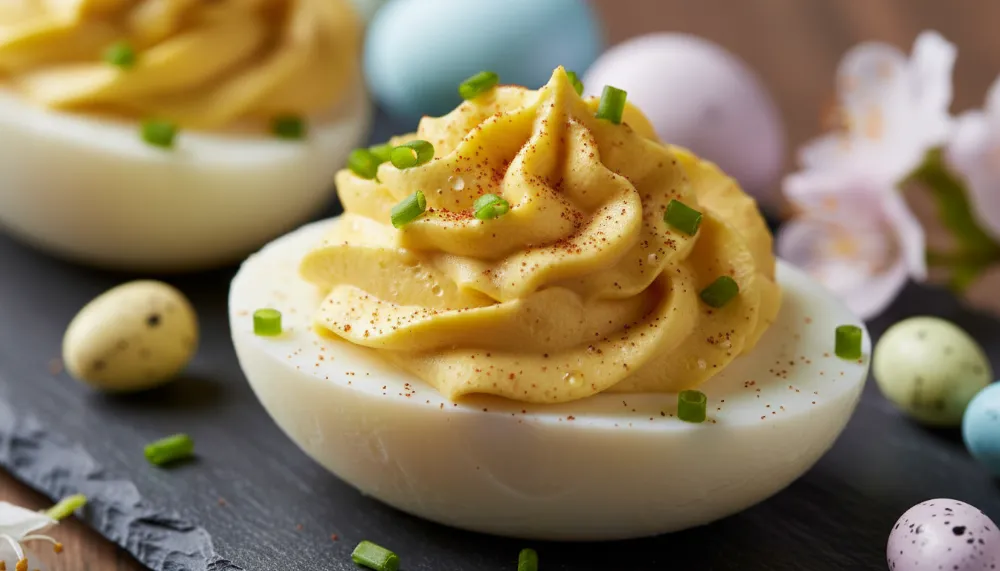
We eat with our eyes first, and Classic Deviled Eggs , Easter Brunch Essential! deserve to look as good as they taste. Instead of spooning the mixture into the whites, use a piping bag with a large star tip. This creates the classic “swirled” look that is synonymous with high-end catering. If you don’t have a piping bag, a plastic sandwich bag with the corner snipped off works in a pinch.
When arranging them on a platter, ensure they are stable. If the eggs are sliding around, you can slice a tiny sliver off the bottom of the egg white to create a flat surface. Garnish with a light dusting of smoked paprika from a height to ensure an even coating, and finish with a sprinkle of fresh herbs. Freshness is key, so if you are making these ahead of time, use a FoodSaver Vacuum Sealer Machine on the “gentle” or “pulse” setting for your prepped components to ensure they don’t oxidize before assembly.
Nutritional Benefits of Eggs
Beyond being delicious, Classic Deviled Eggs , Easter Brunch Essential! are incredibly nutrient-dense. A single egg contains about 6 grams of high-quality protein and all nine essential amino acids. They are one of the few natural food sources of Vitamin D and are rich in choline, a nutrient that is critical for brain health and memory. By using a beef or chicken-based garnish instead of pork, you maintain a high protein-to-fat ratio that makes these a relatively healthy holiday indulgence.
Common Mistakes to Avoid
Even the most experienced cooks can stumble when making Classic Deviled Eggs , Easter Brunch Essential!. One common error is using too much mustard, which can overpower the delicate flavor of the yolk. Always start with a small amount and taste as you go. Another mistake is failing to season the yolk mixture with enough salt. Because the egg white itself is quite bland, the filling needs to be slightly “over-seasoned” to balance the bite.
Lastly, never assemble the eggs too far in advance. The filling can develop a skin, and the paprika may bleed into the white. For the best results, keep the whites and the filling separate in the refrigerator and pipe them just before your guests arrive. This ensures the whites stay crisp and the filling remains fluffy and bright.
Final Thoughts for the Perfect Easter Brunch
As you prepare your holiday menu, remember that Classic Deviled Eggs , Easter Brunch Essential! are a symbol of spring and renewal. They are a bridge between the heavy comfort foods of winter and the fresh, vibrant flavors of the coming season. By paying attention to the details, from the age of the eggs to the precision of the emulsification, you create a dish that guests will talk about long after the brunch is over. Enjoy the process of creating these little masterpieces, and happy hosting!