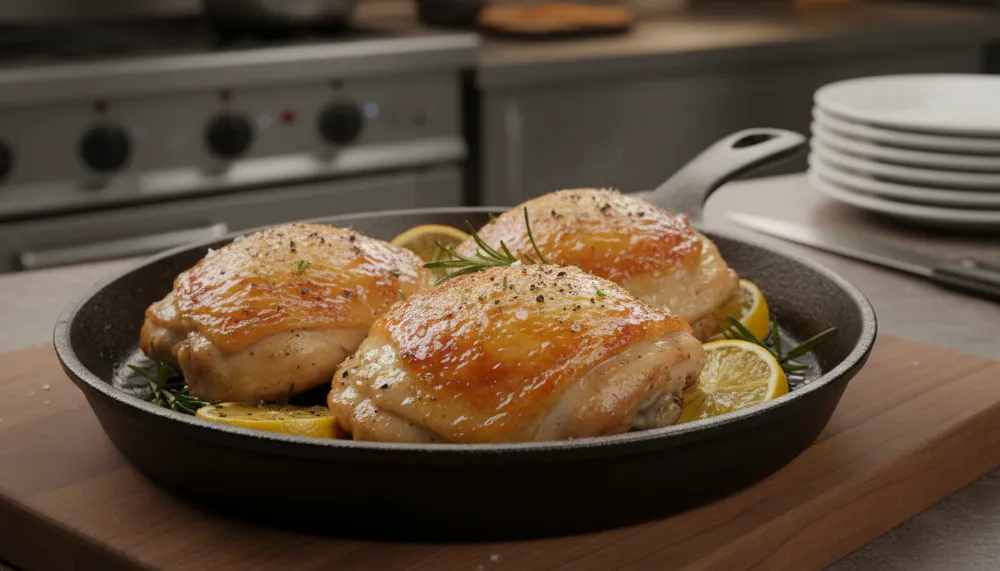

Achieve the ultimate crunch with these oven-baked chicken thighs that rival any fried version without the mess. This foolproof method guarantees golden, shattered-glass skin and succulent meat every single time.
Crispy Baked Chicken Thighs , Golden, Juicy, Perfect
Ingredients
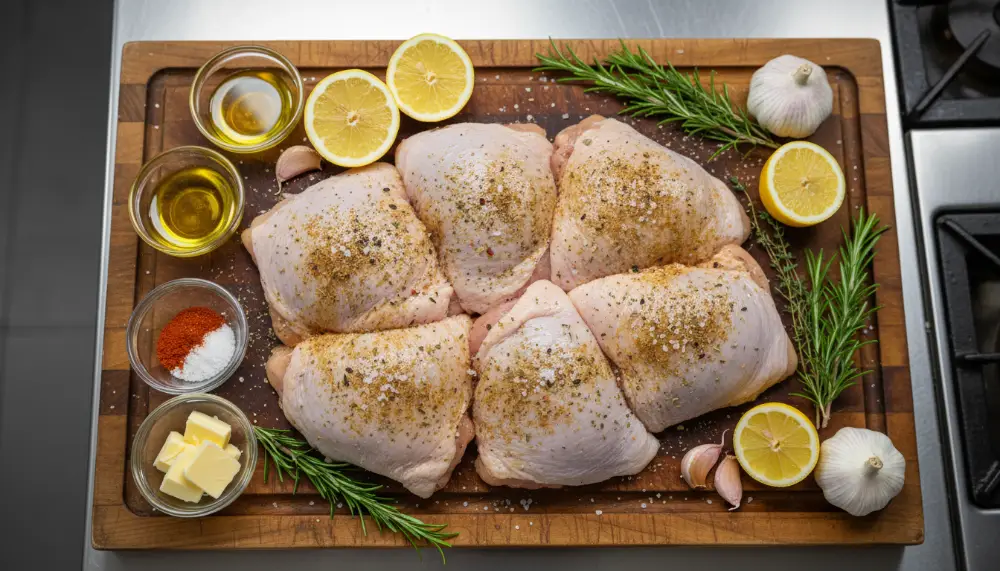
- 6 Bone-in, skin-on chicken thighs (room temperature)
- 2 tbsp Extra virgin olive oil or melted beef tallow
- 1 tsp Sea salt
- 1/2 tsp Cracked black pepper
- 1 tsp Garlic powder
- 1 tsp Smoked paprika
- 1/2 tsp Baking powder (the secret for extra crunch)
Instructions
- 1 Preheat oven to 425°F (220°C). Line a baking sheet with foil and place a wire rack on top.
- 2 Pat the chicken thighs bone-dry with paper towels. Ensure all moisture is removed from the skin.
- 3 In a small bowl, whisk together salt, pepper, garlic powder, smoked paprika, and baking powder.
- 4 Rub chicken with oil or beef tallow, then coat evenly with the spice mixture.
- 5 Place on the wire rack, skin-side up. Bake for 35-45 minutes until the skin is deep golden and the internal temperature reaches 175°F.
- 6 Let rest for 5 minutes before serving to lock in the juices.
The Culinary Evolution of the Crispy Chicken Thigh
The quest for the perfect Crispy Baked Chicken Thighs , Golden, Juicy, Perfect has been a multi-generational journey for home cooks and professional chefs alike. Historically, achieving a truly “crispy” texture was almost exclusively the domain of deep-frying. This technique, popularized globally through the culinary exchanges of Scottish and West African traditions, set a high bar for what poultry skin should sound like when bitten into. However, as the mid-20th century brought advanced oven technology into every home, a new movement was born: high-heat roasting.
Unlike chicken breasts, which are prone to drying out, bone-in thighs are the “dark meat” workhorses of the kitchen. They possess a higher fat content and more connective tissue, which, when treated with the right amount of heat, results in a flavor depth that is truly unmatched. This dish represents the evolution of the Sunday Roast, offering a healthier, less messy alternative to the frying vat while still triggering the beloved Maillard reaction , the chemical magic where amino acids and sugars transform into hundreds of flavor compounds and that iconic golden hue.
The Science Behind the Shatter-Glass Skin
Why do some recipes produce rubbery skin while ours results in a literal crunch? It all comes down to two factors: moisture and pH. Moisture is the ultimate enemy of crispiness. When you bake a chicken thigh that is still damp, the oven heat must first work to evaporate that water. This creates steam, which effectively boils the skin rather than roasting it. By patting the skin bone-dry and using a wire rack to allow 360-degree air circulation, we ensure the fat renders efficiently.
The second “pro secret” is the addition of baking powder. This isn’t just a kitchen myth; it’s chemistry. Baking powder is slightly alkaline, and by raising the pH level of the chicken skin, it breaks down the peptide bonds more rapidly. This accelerates the browning process and creates tiny micro-bubbles on the surface, which increase the surface area and lead to a more intense crunch. If you want a perfectly smooth, herb-infused finish to your prep, consider using a Cuisinart 8 Cup Food Processor to finely mince fresh herbs into your dry rub for a professional touch.
Nutritional Deep Dive: Why Thighs are Better
From a nutritional standpoint, Crispy Baked Chicken Thighs , Golden, Juicy, Perfect offer a robust profile that supports a variety of healthy lifestyles. A standard 6oz serving provides approximately 28g of high-quality protein, which is essential for muscle maintenance and repair. Because they are dark meat, thighs are also richer in minerals like Zinc and Iron compared to white meat. Furthermore, they are naturally keto-friendly and carbohydrate-free, making them an ideal main course for those managing blood sugar levels.
The fats found in chicken thighs are a mix of saturated and monounsaturated fats. While some shy away from the skin, it is the primary source of collagen, which is beneficial for joint and skin health. If you are prepping these for a weekly meal plan, using a FoodSaver Vacuum Sealer Machine can help preserve these nutrients and prevent freezer burn, ensuring that “fresh from the oven” taste even weeks later.
Professional Flavor Variations (No Pork, No Alcohol)
While the standard salt and paprika rub is a classic, you can easily elevate your chicken thighs with these curated profiles:
- Mediterranean Zest: Replace the paprika with dried oregano and lemon zest. Instead of white wine for a pan sauce, use a splash of chicken broth and fresh lemon juice. This pair goes beautifully with a tahini sauce blended in a Ninja BN751 Professional Plus DUO Blender.
- Smoky BBQ: Use a combination of smoked paprika, cumin, and a touch of brown sugar. To keep it professional and rich, use beef tallow as your fat binder instead of butter.
- Spicy North African: Rub the thighs with harissa paste mixed with apple cider vinegar. This bold heat pairs perfectly with roasted chickpeas made in a Cosori 9-in-1 TurboBlaze Air Fryer.
Common Mistakes and Expert Troubleshooting
Even seasoned cooks can stumble on the path to the perfect thigh. Here are the most common pitfalls:
Mistake 1: Crowding the Pan. If your chicken thighs are touching, the air cannot circulate. This leads to “steaming” rather than roasting. Ensure at least one inch of space between each piece. If you are cooking for a large crowd, it’s better to use two sheets than to crowd one.
Mistake 2: Pulling the Chicken Too Early. Most people are taught that 165°F is the safe internal temperature for poultry. While true for breasts, thighs contain a lot of connective tissue that only begins to melt and become tender at 175°F to 185°F. Cooking them to this slightly higher range ensures they are “fall-off-the-bone” juicy rather than rubbery.
Mistake 3: Using a Cold Pan. For the absolute best results, place your wire rack on a preheated baking sheet. This immediate hit of heat to the bottom of the chicken helps render the fat from the underside as well.
Serving and Storage Recommendations
Crispy Baked Chicken Thighs , Golden, Juicy, Perfect are incredibly versatile. Pair them with a bright arugula salad, roasted root vegetables, or a creamy mash. For meal preppers, these thighs hold up remarkably well. To maintain the crisp skin when reheating, avoid the microwave at all costs. Instead, place them back in a 400°F oven for 8-10 minutes.
For storage, the Rubbermaid Brilliance Glass Storage Set is our top recommendation. These leak-proof, glass containers allow you to see your prep clearly and can transition from the fridge to the oven (without the lid) with ease, keeping your skin as crispy as the day it was baked.
Frequently Asked Questions
Can I use boneless thighs for this recipe?
You can, but the cooking time will be significantly reduced (about 20-25 minutes). However, the bone acts as an insulator, keeping the meat juicier during high-heat roasting. For the “perfect” result, bone-in is strongly recommended.
Why use baking powder instead of baking soda?
Baking soda has a very strong metallic taste that will ruin the flavor of the chicken. Baking powder is a combination of soda and acid, which provides the chemical reaction needed for crispiness without the off-putting flavor.
Do I need to flip the chicken?
No. By using a wire rack, the heat reaches the bottom of the thigh. Flipping the chicken would place the crispy skin side down into the drippings, making it soggy. Keep them skin-side up for the entire duration.