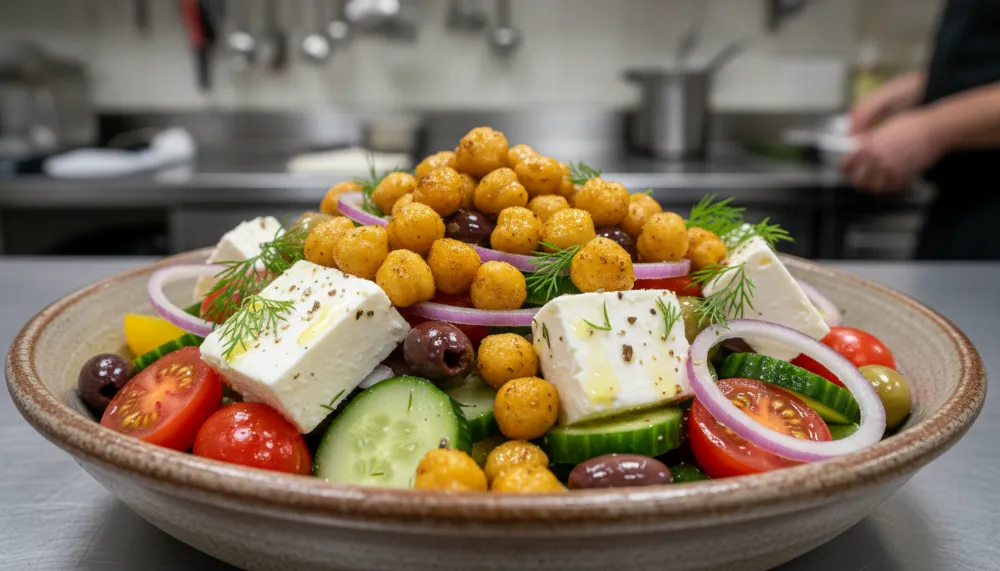

A vibrant Mediterranean powerhouse that redefines the classic village salad with a high-protein crunch, this Plant-Based Greek Salad with Roasted Chickpeas is the ultimate nutrient-dense meal for those seeking bold flavors and satisfying textures.
Plant-Based Greek Salad with Roasted Chickpeas
Ingredients
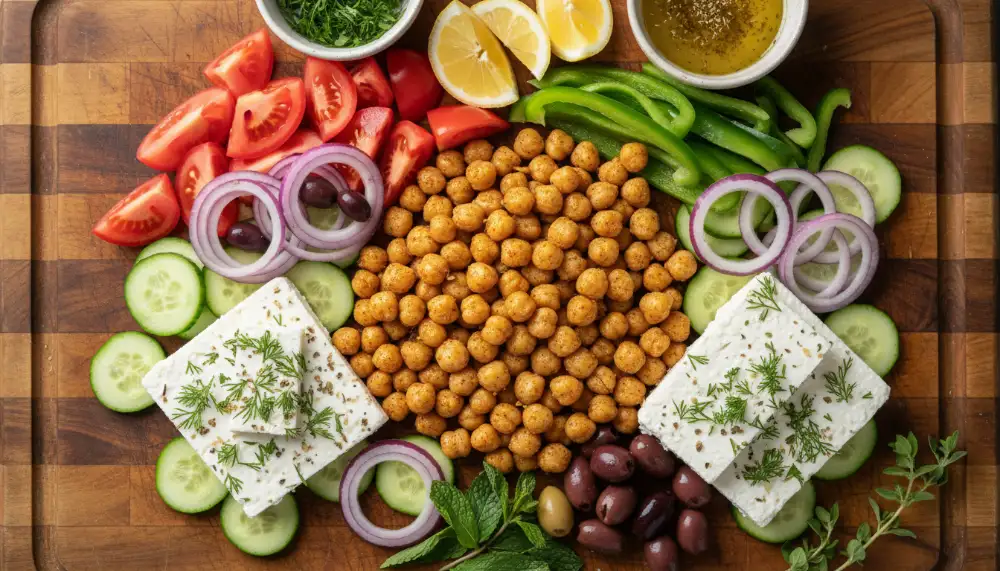
- 1 15oz can chickpeas, drained, rinsed, and patted dry
- 2 2 tbsp extra virgin olive oil
- 3 1 tsp smoked paprika and 1/2 tsp garlic powder
- 4 3 large vine-ripened tomatoes, chopped
- 5 1 English cucumber, diced
- 6 1/2 red onion, thinly sliced
- 7 1/2 cup Kalamata olives, pitted
- 8 1/2 cup plant-based feta crumbles (tofu-based)
- 9 3 tbsp lemon juice mixed with 1 tbsp apple cider vinegar
- 10 1 tsp dried oregano and sea salt to taste
Instructions
- 1 Preheat your oven to 400°F (200°C) or prepare your air fryer.
- 2 Toss dried chickpeas with 1 tbsp olive oil, paprika, garlic powder, and salt.
- 3 Roast for 20-25 minutes in the oven or 15 minutes in an air fryer until crunchy.
- 4 In a large bowl, combine tomatoes, cucumber, red onion, and olives.
- 5 Whisk the remaining oil, lemon juice, vinegar, and oregano for the dressing.
- 6 Toss the salad with the dressing, top with plant-based feta and roasted chickpeas.
The Historical Essence of the Plant-Based Greek Salad
The Plant-Based Greek Salad with Roasted Chickpeas is more than just a culinary trend, it is a modern, high-protein evolution of the traditional Greek Horiatiki. To understand this dish, one must look at the history of the Greek “Village Salad.” Historically, Horiatiki originated as a practical, seasonal meal for rural farmers in Greece. It was never intended to be an appetizer, it was the main event. Farmers would head to the fields with a few simple ingredients: tomatoes, cucumbers, onions, olives, and a slab of cheese, doused in olive oil and sprinkled with wild oregano gathered from the hillsides.
Interestingly, the tomatoes that we consider so vital to this salad were not native to Greece. They only became a staple in the early 19th century after being introduced from the Americas. Before their arrival, similar rustic salads relied on seasonal greens, vinegar, and salt-cured olives. By incorporating seasoned, roasted chickpeas into this profile, we are bridging ancient Mediterranean agriculture with modern nutritional needs. While chickpeas were not a traditional ingredient in the Horiatiki itself, they have been a cornerstone of Mediterranean agriculture for over 7,000 years. This contemporary development creates a substantial, nutrient-dense plant-based meal that honors its peasant roots while fueling a modern lifestyle.
A Deep Dive into the Nutritional Profile
When you consume a Plant-Based Greek Salad with Roasted Chickpeas, you are fueling your body with a carefully balanced ratio of macronutrients. Per average serving, this dish provides approximately 320 to 380 calories, making it a perfect light lunch or a satisfying dinner when paired with a side of whole-grain pita. The protein content is particularly impressive for a salad, ranging from 12 to 18 grams, primarily derived from the roasted chickpeas and plant-based feta alternatives.
The fiber content is equally high, providing 8 to 12 grams of high-density fiber from legumes and raw vegetables. This ensures long-lasting satiety and digestive health. Furthermore, the fats in this dish, approximately 18 to 22 grams, are predominantly heart-healthy monounsaturated fats sourced from extra virgin olive oil and Kalamata olives. Micronutrients are the hidden stars here. You will receive a high dose of Vitamin C from the bell peppers and tomatoes, Vitamin K from the cucumbers and fresh parsley, and essential Iron and Folate concentrated in the chickpeas. The base of fresh vine-ripened vegetables also provides a significant amount of Potassium, essential for heart health and muscle function.
Professional Ingredient Selection and Meal Prep
To achieve the best results, your choice of equipment and storage is vital. For those who enjoy meal prepping, using high-quality storage is a game changer. We recommend the Rubbermaid Brilliance Glass Storage Set of 9 (https://amzn.to/4oD0YkY) because they are leak-proof and stackable, keeping your chopped vegetables separate from your dressing until you are ready to eat. If you are preparing large batches of chickpeas, the FoodSaver Vacuum Sealer Machine (https://amzn.to/4qWgVnS) is perfect for keeping your ingredients fresh longer and preventing pantry waste.
Mastering the Roasted Chickpea
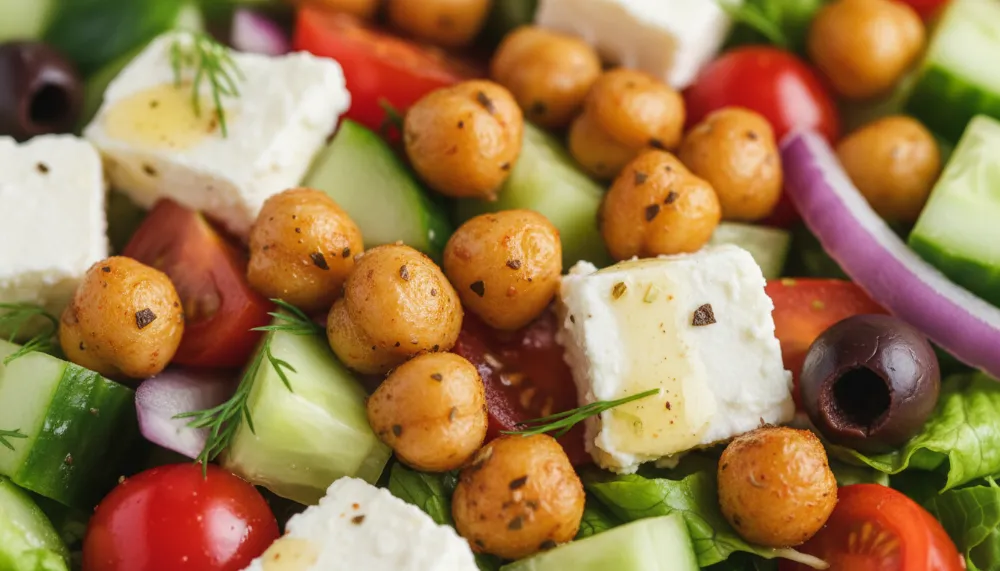
The secret to a world-class Plant-Based Greek Salad with Roasted Chickpeas lies in the texture of the legume. A soggy chickpea can ruin the experience, while a perfectly roasted, crunchy one provides the essential contrast to the juicy tomatoes and crisp cucumbers. To achieve that perfect crunch, you must ensure the chickpeas are completely dry before roasting. After rinsing, roll them between two kitchen towels to remove every drop of moisture.
For the roasting process, the Cosori 9-in-1 TurboBlaze Air Fryer 6 Qt (https://amzn.to/4hRWmVq) is highly recommended. It roasts chickpeas and vegetables perfectly with its rapid air circulation, providing a family-sized capacity that handles a whole can of chickpeas with ease. If you prefer a more traditional approach, a high-heat oven at 400°F will also work, but the air fryer yields a more consistent “pop” in every bite. Seasoning should happen before roasting to allow the oils and spices to penetrate the skin of the chickpea, creating a deep flavor profile that doesn’t just sit on the surface.
Professional Flavor Variations to Elevate Your Salad
To elevate this dish to a professional culinary standard, consider these three distinct flavor profiles for the roasted chickpeas and the salad assembly. Each variation uses specific ingredients to create a unique sensory experience while adhering to strict dietary guidelines.
1. The Zesty Za’atar Variation
In this version, the chickpeas are roasted with olive oil, za’atar, which is a blend of thyme, sumac, and sesame, and a touch of sea salt. The sumac provides a hidden citrusy tang that mirrors the salad’s dressing beautifully. For the salad base, add fresh mint and pomegranate seeds to create a sweet and savory contrast. The dressing for this variation should strictly use lemon juice and extra virgin olive oil, avoiding any wine-based vinegars to maintain a bright, clean profile. For the dressing, using the Ninja BN751 Professional Plus DUO Blender (https://amzn.to/3LCDyNR) is ideal because its 1000W motor creates a perfectly emulsified sauce in seconds.
2. The Smoky Aegean Variation
This profile is for those who crave depth. Coat your chickpeas in smoked paprika, garlic powder, and a pinch of cayenne. This adds a deep, savory “charred” flavor that contrasts beautifully with the cold, refreshing vegetables. To enhance the salad, include roasted red peppers and capers for an intensified briny profile. The dressing should utilize apple cider vinegar whisked with a teaspoon of Dijon mustard for emulsification and sharpness. For fast chopping and slicing of the peppers and onions, the Cuisinart 8 Cup Food Processor (https://amzn.to/47Nhbg8) is an essential meal prep tool.
3. The Herbal Goddess Variation
For a more garden-fresh approach, roast your chickpeas with dried oregano, rosemary, and cracked black pepper. The twist in this variation is the use of a “Tofu Feta” made from extra-firm tofu marinated in lemon juice, nutritional yeast, and oregano. Adding shaved fennel provides a crisp, anise-like finish that is incredibly refreshing. Instead of a clear vinaigrette, use a creamy tahini-lemon dressing. This adds a rich, nutty texture that coats every vegetable, making the salad feel more like a gourmet entree.
Mandatory Dietary Compliance and Ingredient Integrity
When preparing this Plant-Based Greek Salad with Roasted Chickpeas, it is important to adhere to specific dietary standards for maximum health benefits and universal appeal. This recipe contains no pork or animal-derived products, ensuring it remains light and plant-focused. Furthermore, we have avoided all alcohol and wine products in the dressings. In traditional recipes, red wine vinegar is common, but in this version, we replace it with apple cider vinegar or lemon juice. These alternatives provide the necessary acidity and brightness without the need for alcohol.
The integrity of the ingredients is paramount. Always look for “Extra Virgin” olive oil that is cold-pressed, as this retains the highest levels of polyphenols and antioxidants. For the tomatoes, vine-ripened varieties offer the best sugar-to-acid ratio. If you are making this during the winter months, cherry tomatoes are often more flavorful than larger hothouse varieties. For the cucumbers, the English or Persian varieties are preferred because their skins are thinner and their seeds are less bitter, eliminating the need for peeling or seeding.