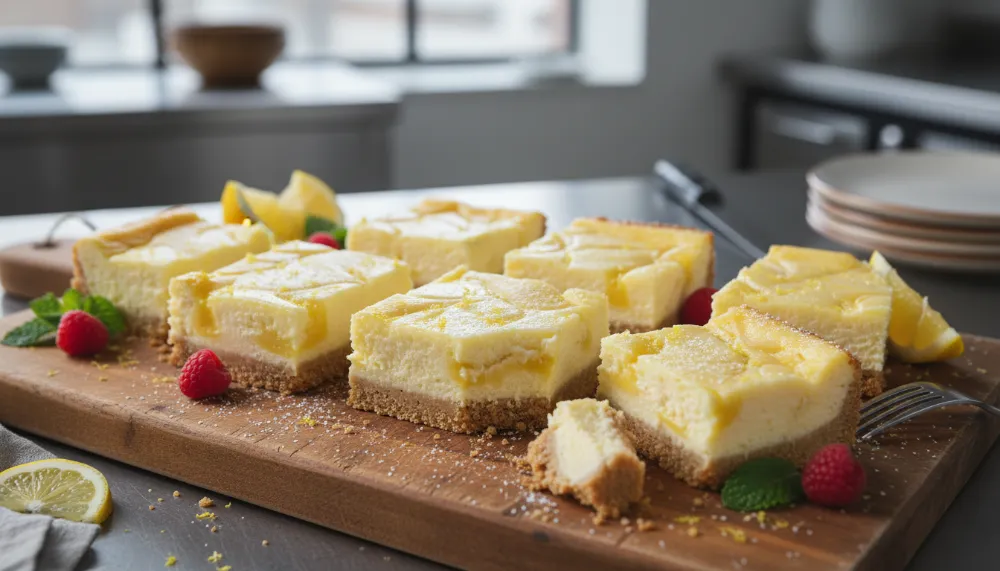

These Lemon Cheesecake Bars are the perfect marriage of a crisp, buttery crust and a velvety, citrus-packed filling. If you are looking for a dessert that balances decadence with a refreshing zing, this is the only recipe you will ever need.
Lemon Cheesecake Bars
Ingredients
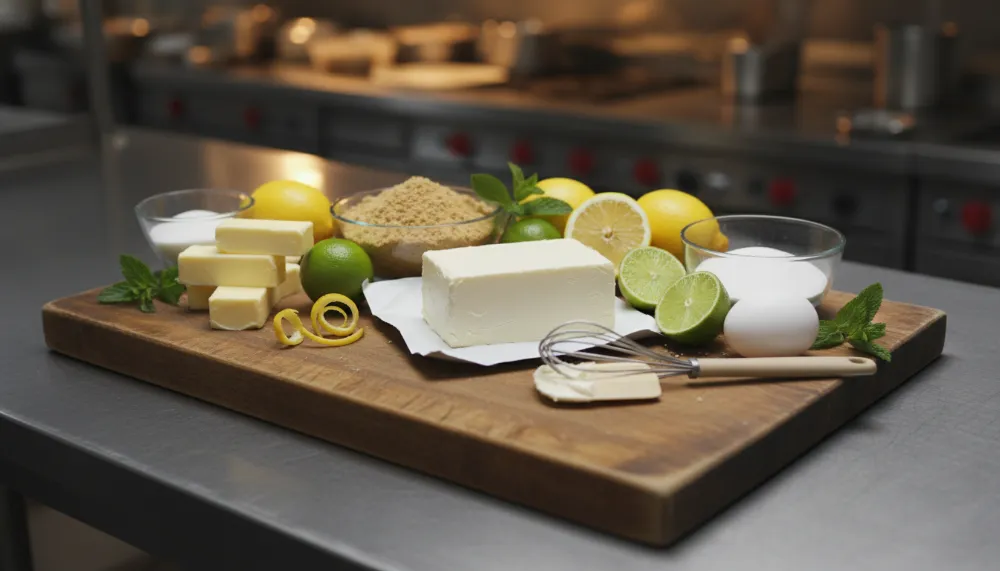
- ✓ 2 cups Graham cracker crumbs
- ✓ 1/2 cup Unsalted butter, melted
- ✓ 1/4 cup Granulated sugar (for crust)
- ✓ 16 oz Full-fat cream cheese, softened
- ✓ 3/4 cup Granulated sugar (for filling)
- ✓ 2 Large eggs, room temperature
- ✓ 1/3 cup Fresh lemon juice
- ✓ 1 tbsp Fresh lemon zest
- ✓ 1 tsp Alcohol-free vanilla bean paste
Instructions
- Preheat your oven to 325°F (165°C) and line an 8×8 inch baking pan with parchment paper.
- In a medium bowl, combine graham cracker crumbs, melted butter, and sugar. Press firmly into the bottom of the pan and bake for 10 minutes.
- Using a food processor or mixer, beat the softened cream cheese and sugar until completely smooth.
- Add eggs one at a time, mixing on low speed until just combined. Stir in lemon juice, zest, and vanilla bean paste.
- Pour the filling over the pre-baked crust. Bake for 30,35 minutes until the edges are set but the center still jiggles slightly.
- Allow to cool at room temperature for 1 hour, then refrigerate for at least 4 hours before slicing into bars.
The Fascinating History of Cheesecake and the Evolution of the Bar
The journey of the Lemon Cheesecake Bar is a culinary odyssey that spans thousands of years, evolving from ancient athletic fuel to a staple of the modern American bakery. While many associate cheesecake exclusively with the dense, New York style varieties found in high-end diners, the conceptual roots of this dessert go back to the island of Samos in ancient Greece around 2000 BCE. These early versions were far from the bars we enjoy today, they were simple mixtures of pounded cheese, honey, and wheat, baked on clay griddles. In fact, these nutrient-dense cheese cakes were served to athletes during the first Olympic Games in 776 BCE to provide sustained energy for competition.
As the Roman Empire expanded, they adopted the Greek cheese cake tradition, adding eggs and serving them warm. This version, known as libum, traveled across Europe, eventually landing in Great Britain and the Americas. However, the modern iteration of the Lemon Cheesecake Bar required two major innovations of the 19th and 20th centuries. The first was the accidental creation of cream cheese in 1872 by William Lawrence, a New York dairyman who was attempting to replicate the French Neufchâtel cheese. This new, richer cheese became the foundation for the creamy textures we love. The second innovation was the mid-century American trend of the bar cookie. In the 1960s, home bakers began looking for portable, easy-to-slice versions of classic cakes. By combining the zesty brightness of lemon bars with the creamy decadence of cheesecake, the Lemon Cheesecake Bar was born, offering a portable, sophisticated treat that quickly became a favorite for potlucks and bake sales.
The Science of the Perfect Set: Why Texture Matters
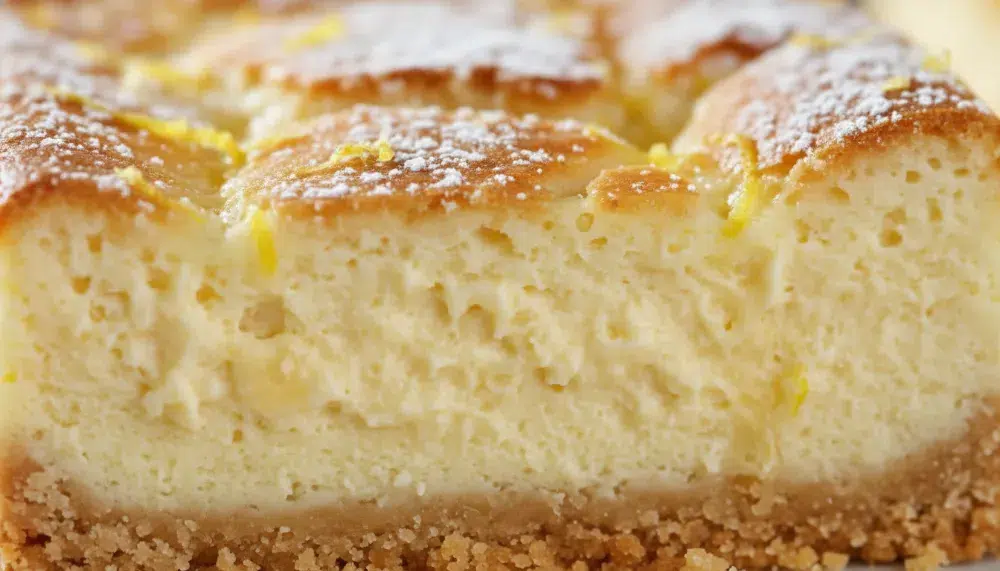
Creating the perfect Lemon Cheesecake Bars is an exercise in food science. Unlike a standard cake that relies on flour for structure, a cheesecake is essentially a custard. The structure comes from the coagulation of egg proteins and the stabilization of the cream cheese fats. When you introduce lemon juice, you are adding acid, which acts as a natural denaturant. This acid helps the proteins in the eggs and cheese to bond more firmly, which is why lemon cheesecakes often have a slightly denser, more velvety texture than plain versions. However, balance is key. Too much acid can cause the dairy to curdle, while too little will result in a bar that lacks that signature tartness.
To ensure your bars have a professional finish, you must manage the temperature of your ingredients. Room temperature cream cheese is non-negotiable. If the cheese is cold, it will form tiny clumps that no amount of mixing can fully erase, leading to a grainy mouthfeel. Furthermore, overbeating the eggs can incorporate too much air, causing the bars to puff up in the oven and then crack as they cool. For a perfectly smooth top, always mix on low speed once the eggs are added. For those looking to master the art of the smooth base, the Ninja BN751 Professional Plus DUO Blender: https://amzn.to/3LCDyNR is a fantastic tool for creating ultra-fine graham cracker crumbs, ensuring a crust that is sturdy yet melts in your mouth.
Professional Recommendations for Every Baker
To achieve bakery-quality results at home, having the right equipment is just as important as the ingredients themselves. Here are our top professional recommendations for making Lemon Cheesecake Bars and beyond:
- Cuisinart 8 Cup Food Processor: https://amzn.to/47Nhbg8 – Why Perfect: This is an essential meal prep tool that makes quick work of mixing your cheesecake filling, ensuring a perfectly smooth and aerated batter without the arm workout.
- Cosori 9-in-1 TurboBlaze Air Fryer 6 Qt: https://amzn.to/4hRWmVq – Why Perfect: While you might use a standard oven for the bars, this air fryer is incredible for pre-toasting nuts or preparing fruit toppings for variations, offering large family capacity and precision heat.
- Rubbermaid Brilliance Glass Storage Set of 9: https://amzn.to/4oD0YkY – Why Perfect: Cheesecake bars are notorious for absorbing fridge odors. These leak-proof, stackable glass containers are perfect for keeping your lemon bars tasting fresh and citrusy.
- FoodSaver Vacuum Sealer Machine: https://amzn.to/4qWgVnS – Why Perfect: If you want to make a large batch and save some for later, this machine prevents freezer burn and keeps the delicate fats in the cream cheese from degrading over time.
Exploring Professional Flavor Variations
While the classic Lemon Cheesecake Bar is a masterpiece on its own, the professional kitchen often explores variations to suit different palates. Remember to always use alcohol-free flavorings and vegetarian stabilizers to maintain the highest quality and dietary compliance. One popular variation is the Ginger-Snap Crust. By replacing the graham crackers with ground ginger biscuits, you introduce a sharp, warm spice that cuts through the creamy lemon filling. The heat of the ginger and the acidity of the lemon create a complex flavor profile that is highly sought after in gourmet bakeries.
Another sophisticated option is the Blueberry-Lavender Infusion. By steeping culinary-grade lavender in your lemon juice before mixing, you add a floral depth to the bars. Swirling in a fresh blueberry reduction (thickened with a vegetarian pectin rather than gelatin) adds a beautiful visual contrast and a burst of berry sweetness. For those who prefer a tropical twist, consider a Macadamia and Coconut Crust. The fatty, buttery crunch of macadamia nuts paired with shredded coconut provides a textured base that transports the classic lemon profile to the tropics. These variations show the versatility of the cheesecake bar format, allowing for endless creativity while keeping the core citrus identity intact.
Storage, Slicing, and Presentation Tips
The secret to those perfectly clean, sharp edges seen in professional food photography is all in the temperature and the knife technique. Never attempt to slice Lemon Cheesecake Bars while they are still warm or even room temperature. They must be thoroughly chilled for at least four hours, though overnight is preferable. To slice, use a thin, sharp knife and dip it in hot water between every single cut. Wipe the knife dry, make the cut, and repeat. This prevents the filling from sticking to the blade and dragging through the crust, ensuring every square is a work of art.
Storage is equally critical. Because of the high dairy content, these bars must remain refrigerated. Use the Rubbermaid Brilliance Glass Storage Set of 9 to protect them from the drying air of the refrigerator. If you find yourself with an abundance of bars, they freeze exceptionally well. Wrap individual squares in parchment paper and then use the FoodSaver Vacuum Sealer Machine to remove the air. When you are ready to enjoy one, simply thaw it in the refrigerator for a few hours. The texture remains remarkably consistent, making these a great make-ahead dessert for busy holiday seasons.
Common Troubleshooting for Lemon Cheesecake Bars
Even experienced bakers can run into issues with cheesecake. One common problem is the “cracked top.” This usually occurs because the bars were overbaked or cooled too quickly. To prevent this, turn off the oven when the center is still slightly wobbly and crack the oven door open for about 15 minutes before removing the pan. This gradual temperature change allows the proteins to settle without shrinking too rapidly. Another issue is a soggy crust. To avoid this, ensure your graham cracker crust is firmly pressed and pre-baked until it smells toasted. This creates a moisture barrier that prevents the creamy filling from seeping into the crumbs during the second bake.