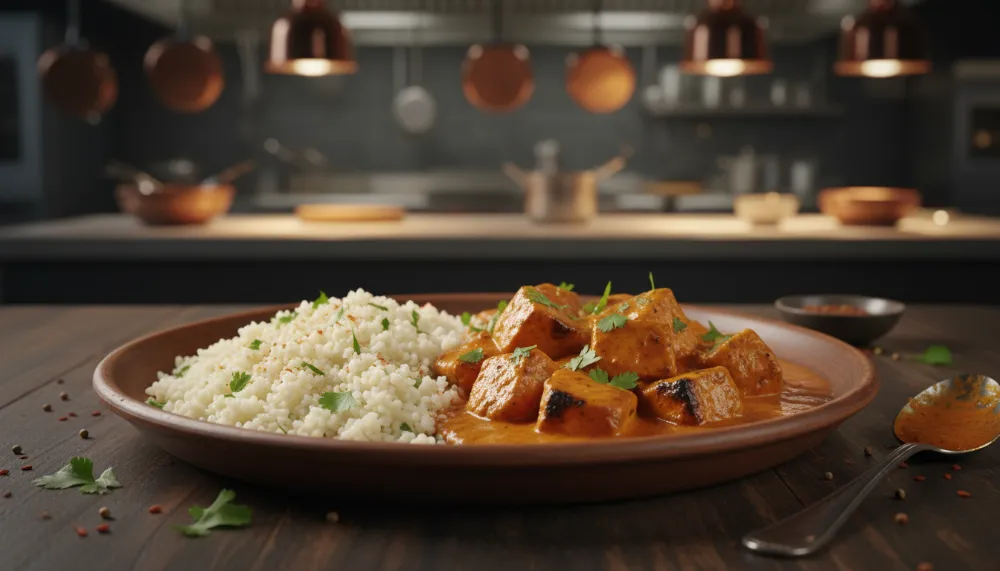

Experience the bold, smoky flavors of authentic British-Indian cuisine with this vibrant Chicken Tikka Masala served over nutrient-dense cauliflower rice. This recipe masterfully combines tender marinated chicken in a creamy tomato sauce with a light, grain-free base for the ultimate guilt-free comfort meal.
Chicken Tikka Masala with Cauliflower Rice
Ingredients
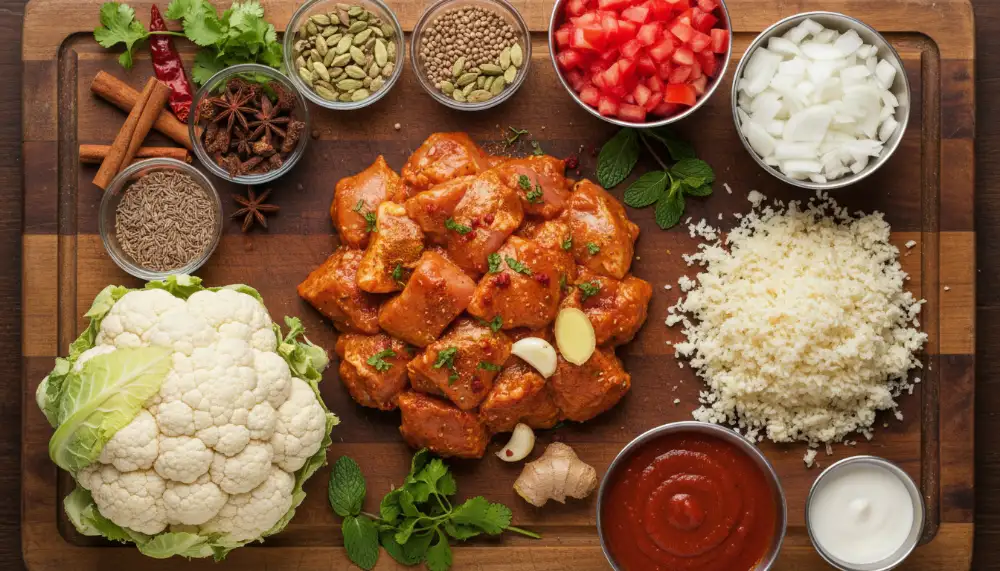
- 1 1.5 lbs Boneless Skinless Chicken Thighs, cut into bite-sized pieces
- 2 1 cup Plain Full-Fat Yogurt (or hung curd for extra thickness)
- 3 2 tbsp Ginger-Garlic Paste
- 4 3 tbsp Garam Masala (divided)
- 5 2 tsp Smoked Paprika & 1 tsp Turmeric
- 6 1 large Head of Cauliflower (riced)
- 7 1 can (15 oz) Tomato Sauce or Crushed Tomatoes
- 8 1 cup Heavy Cream or Full-Fat Coconut Milk
- 9 2 tbsp Ghee or Vegetable Oil
- 10 1 large Onion, finely diced
Instructions
- 1 Combine yogurt, half the ginger-garlic paste, 1 tbsp garam masala, paprika, and turmeric. Add chicken and marinate for at least 30 minutes.
- 2 Roast chicken pieces in an air fryer at 400°F for 12 minutes or until charred and cooked through.
- 3 In a large pan, sauté diced onions in ghee until translucent. Add remaining ginger-garlic paste and spices, blooming them for 1 minute.
- 4 Pour in tomato sauce and simmer for 10 minutes. Use a blender to achieve a silky smooth consistency if desired.
- 5 Stir in heavy cream and cooked chicken. Simmer for another 5 minutes on low heat.
- 6 Sauté riced cauliflower in a separate pan with a splash of water or broth until tender. Serve the chicken tikka over the cauliflower rice.
The Fascinating Origin of a Global Icon
Chicken Tikka Masala is a globally recognized culinary staple that blends South Asian spice traditions with Western preferences for gravy-based dishes. When paired with cauliflower rice, it becomes a nutritionally dense alternative to the traditional rice-and-naan pairing. The origins of this dish are a subject of spirited debate, with two primary narratives that define its cultural significance. The most famous account attributes the dish to Ali Ahmed Aslam, a Pakistani chef at the Shish Mahal restaurant in Glasgow, Scotland, during the 1970s. According to legend, a customer complained that the traditional Chicken Tikka, which consists of dry, roasted chicken pieces, was too dry. To satisfy the diner, the chef improvised a sauce using a tin of condensed tomato soup, cream, and a blend of spices. This localized invention suggests that the dish is not ancient Indian royalty, but rather a brilliant adaptation of migrant culinary skills to a cold, Northern climate.
Alternatively, some food historians argue the dish is a natural evolution of Butter Chicken (Murgh Makhani), which originated in Delhi in the 1940s. They suggest that migrant chefs from Bangladesh and India in the UK adapted the recipe to suit the British palate’s preference for meat served in “gravy.” Regardless of which story you believe, the national status of this dish is undeniable. In 2001, British Foreign Secretary Robin Cook famously declared Chicken Tikka Masala “a true British national dish” because it is a perfect illustration of the way Britain absorbs and adapts external influences. This historical context enriches every bite of Chicken Tikka Masala with Cauliflower Rice, reminding us that food is a living, breathing evolution of culture and taste.
A Deep Dive into the Nutritional Profile
Replacing traditional Basmati rice with cauliflower rice significantly alters the macronutrient balance, making it a favorite for those seeking high-protein, low-starch meals. In a standard serving of Chicken Tikka Masala with Cauliflower Rice, you are looking at approximately 350 to 450 calories. This is a substantial reduction compared to the 800+ calories found in a typical restaurant meal served with buttered naan and white rice. The protein content remains high, ranging from 30 to 40 grams, primarily sourced from the chicken. We recommend using skinless thighs for moisture or breast for lean protein, depending on your personal goals.
The carbohydrates in this dish are remarkably low, typically falling between 12 and 18 grams, compared to over 60 grams when using white rice. The riced cauliflower provides the bulk of the fiber, which not only lowers the net carb count but also aids in digestion and satiety. From a micronutrient perspective, the tomato-based sauce is rich in lycopene, a powerful antioxidant that supports heart health. Furthermore, the cauliflower base provides a massive hit of Vitamin C and Vitamin K, while the blend of spices like cumin and paprika offers iron and potassium. The fats in the dish, derived from the yogurt marinade and heavy cream, provide essential energy and aid in the absorption of the fat-soluble vitamins found in the spices.
Professional Flavor Variations and Secret Methods
To truly master Chicken Tikka Masala with Cauliflower Rice, one must look toward the secrets of professional kitchens. Chefs use specific techniques to elevate the dish beyond standard versions. One such method is the “Dhungar” (Charcoal Smoking) Method. To replicate the smoky, charred flavor of a traditional clay tandoor oven without owning one, professional chefs heat a small piece of natural lump charcoal until red-hot, place it in a small metal bowl atop the finished curry, and pour a teaspoon of ghee over the coal. The pot is then sealed for several minutes, allowing the aromatic smoke to permeate the meat and sauce.
Another secret lies in the marinade. Instead of standard yogurt, pros use “hung curd,” which is yogurt that has been strained through muslin for 12 hours. This creates a thick, concentrated paste that clings to the chicken during roasting rather than running off, ensuring every millimeter of the meat is infused with flavor. Additionally, adding a tablespoon of mustard oil to the marinade provides a signature pungent, slightly spicy undertone that is the hallmark of authentic North Indian tikka recipes.
The Importance of Texture and the Secret Ingredient
When preparing the sauce, you have two choices: Silky or Rustic. For a Michelin-style finish, the tomato-onion base should be blended until completely smooth. To achieve this, we highly recommend the Ninja BN751 Professional Plus DUO Blender. Its 1000W motor can emulsify the sauce into a velvet-like texture that coats the chicken perfectly. After blending, passing the sauce through a fine-mesh sieve ensures no stray bits of onion or ginger remain. For a rustic, home-style version, simply mince the onions and caramelize them for at least 20 minutes to provide a naturally sweet, chunky texture. Regardless of the texture, the true “secret” ingredient is Kasuri Methi, or crushed dried fenugreek leaves. Added at the very end, these leaves provide a distinct floral, buttery aroma that separates a good curry from a great one.
Mastering the Cauliflower Rice Base
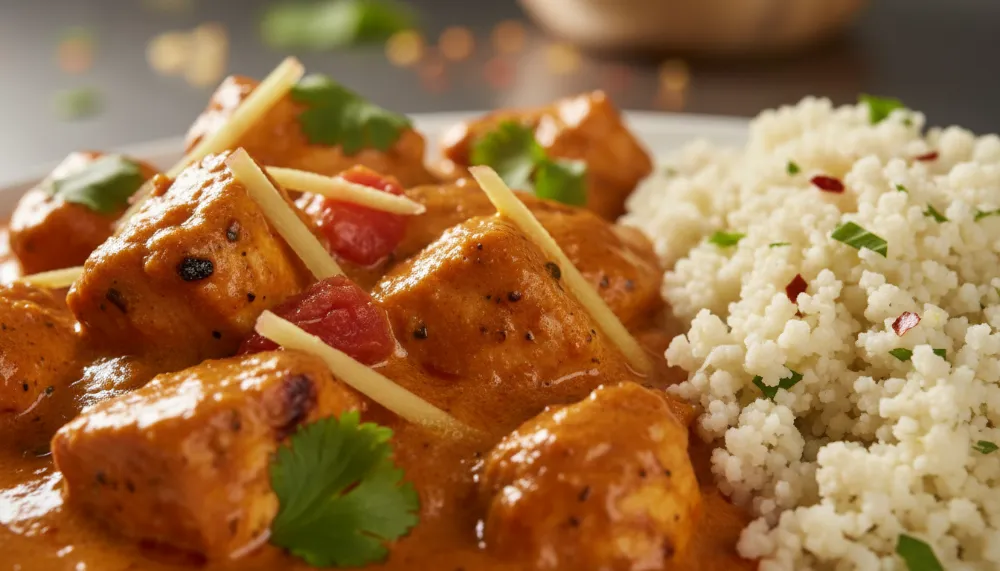
A common pitfall with Chicken Tikka Masala with Cauliflower Rice is ending up with a soggy, bland base. To avoid this, professional chefs rarely serve cauliflower rice plain. Instead, they use infusions. Consider the Cumin and Ghee method, where toasted cumin seeds are folded into the riced cauliflower for an aromatic effect. For a more luxurious experience, try Saffron and Almond infusions, where the cauliflower is tossed with saffron-infused water and slivered almonds to mimic a Biryani. To get the perfect texture for your cauliflower rice, the Cuisinart 8 Cup Food Processor is a meal prep essential. It allows you to pulse the cauliflower into uniform, rice-sized grains in seconds, preventing the “mush” that often results from hand-grating.
Essential Equipment for the Modern Kitchen
To produce restaurant-quality results at home, having the right tools is non-negotiable. Beyond the blender and food processor mentioned above, the Cosori 9-in-1 TurboBlaze Air Fryer 6 Qt is a game-changer for this recipe. Traditional tikka requires high heat to achieve those charred edges, and the TurboBlaze’s rapid air circulation mimics a tandoor oven perfectly, roasting the chicken pieces in a fraction of the time it takes a conventional oven. This ensures the meat remains juicy on the inside while developing a beautiful crust on the outside.
Storage and Long-Term Meal Prep
Chicken Tikka Masala with Cauliflower Rice is one of those rare dishes that actually tastes better the next day as the spices continue to meld. For effective storage, the Rubbermaid Brilliance Glass Storage Set is ideal. These leak-proof, stackable containers are perfect for keeping the sauce and cauliflower rice fresh without any cross-contamination. If you are preparing large batches of chicken to be used throughout the month, the FoodSaver Vacuum Sealer Machine is your best friend. Vacuum sealing the marinated chicken prevents freezer burn and keeps the ingredients fresh for much longer than standard freezer bags.
Deglazing without Alcohol
While many Western recipes suggest deglazing with wine, this authentic-inspired Chicken Tikka Masala avoids alcohol entirely. Instead, use a high-quality chicken broth or a splash of fresh lemon juice to scrape up the browned bits (the fond) from the bottom of your pan. This not only keeps the dish within specific dietary preferences but also adds a bright acidity that cuts through the richness of the heavy cream and ghee, balancing the flavor profile beautifully.