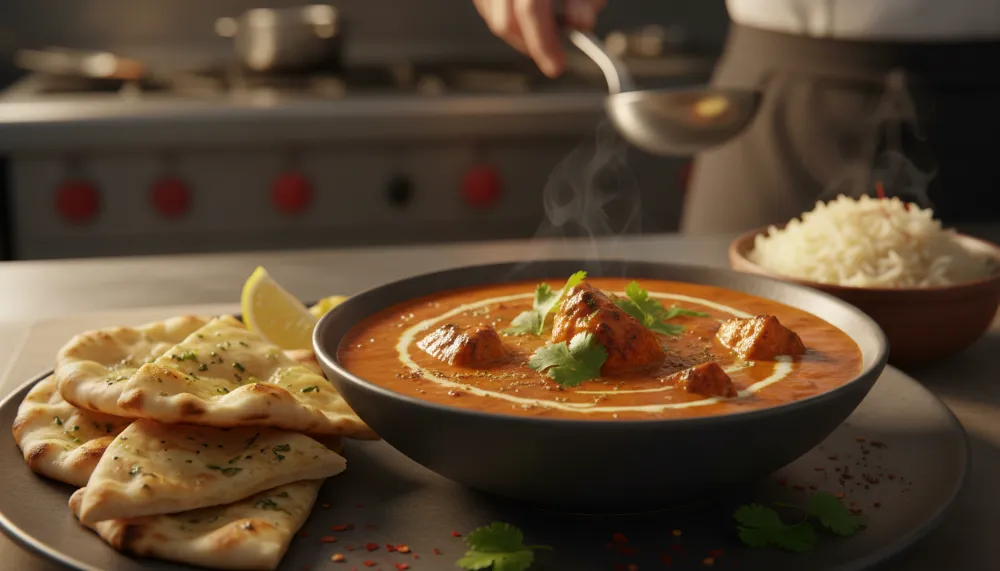

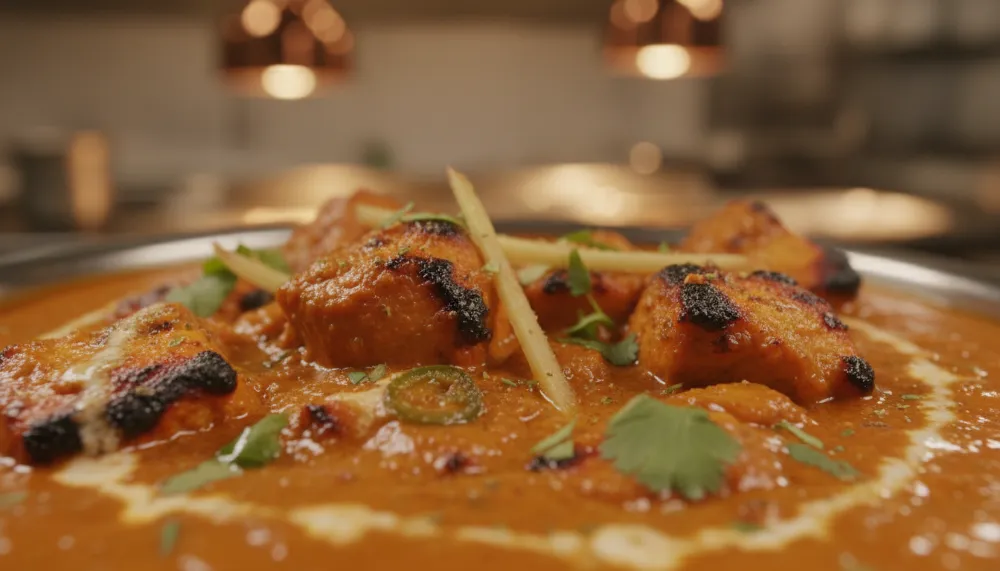
Experience the world’s most iconic curry with our definitive Classic Chicken Tikka Masala, featuring succulent charred chicken enveloped in a rich, velvety tomato cream sauce. This restaurant-quality masterpiece delivers a complex balance of smoky, spicy, and creamy notes that will elevate your home cooking to professional heights.
Classic Chicken Tikka Masala
Ingredients
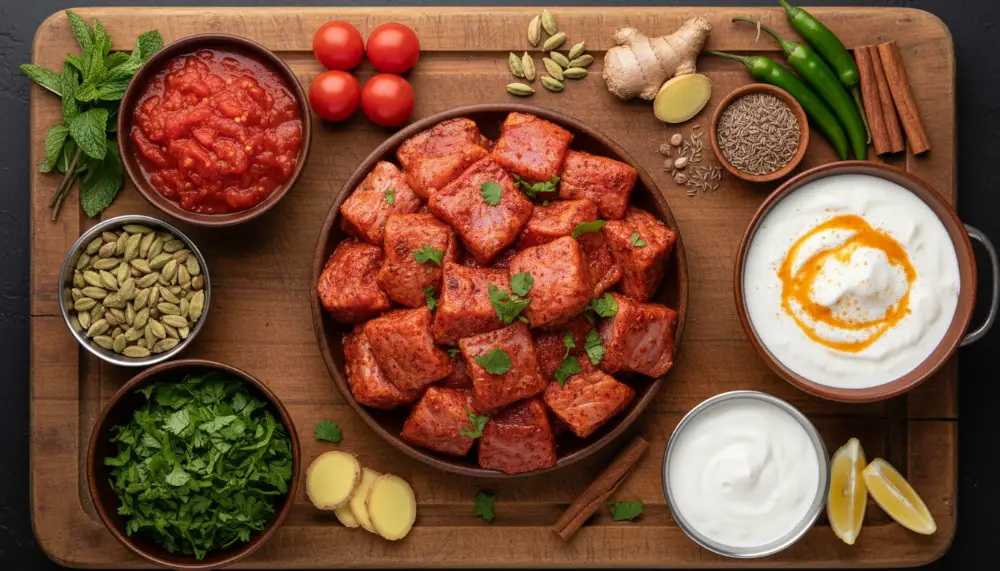
- 1 2 lbs Boneless Chicken Thighs, cut into bite-sized pieces
- 2 1 cup Plain Full-Fat Yogurt
- 3 2 tbsp Lemon Juice + 2 tbsp Ginger-Garlic Paste
- 4 2 tbsp Garam Masala + 1 tbsp Smoked Paprika
- 5 1 large Onion, finely chopped
- 6 1.5 cups Tomato Puree (Passata)
- 7 1 cup Heavy Cream
- 8 2 tbsp Butter + 1 tbsp Honey
- 9 1 tbsp Dried Fenugreek Leaves (Kasoori Methi)
Instructions
- 1 Whisk yogurt, lemon juice, ginger-garlic paste, and half the spices. Marinate chicken for at least 4 hours.
- 2 Grill or air fry chicken at 400°F until charred and cooked through (approx 15 mins).
- 3 Sauté onions in butter until golden. Add remaining spices, then tomato puree and simmer for 10 mins.
- 4 Stir in heavy cream, honey, and charred chicken. Finish with crushed fenugreek leaves and fresh cilantro.
The Fascinating History of Classic Chicken Tikka Masala
The origins of Classic Chicken Tikka Masala are a subject of significant culinary debate, with two primary theories dominating the landscape. The most popular legend attributes the dish to Ali Ahmed Aslam, the proprietor of the Shish Mahal restaurant in Glasgow during the early 1970s. According to local lore, a customer complained that his chicken tikka was too dry. Aslam allegedly improvised a sauce using a tin of condensed tomato soup, cream, and a blend of spices, birthing a British Indian Restaurant (BIR) legend. This narrative helped the dish secure its status in 2001, when British Foreign Secretary Robin Cook declared it “a true British national dish,” symbolizing the country’s multicultural identity.
However, many food historians argue that the dish is a natural evolution of Murgh Makhani (Butter Chicken), which was created at the Moti Mahal restaurant in Delhi in the 1940s. While Butter Chicken relies on a more mild, buttery profile, the Classic Chicken Tikka Masala is typically spicier and features more robust tomato acidity. Regardless of its exact birthplace, whether it was the streets of Delhi or the rainy docks of Glasgow, the dish has become a global phenomenon that represents the perfect marriage of Eastern spices and Western preferences for creamy textures.
The Science of the Perfect Marinade
To achieve the authentic texture of a Classic Chicken Tikka Masala, the marinade is non-negotiable. Using full-fat yogurt is essential because the lactic acid gently breaks down the protein fibers of the chicken without making it mushy, a risk often associated with harsh vinegar-based marinades. When preparing your chicken, using a tool like the Cuisinart 8 Cup Food Processor can help you create a perfectly smooth ginger-garlic paste in seconds, ensuring every piece of meat is evenly coated.
For the best flavor penetration, you should aim for a double-marination technique. Start with a rub of lemon juice and salt for 30 minutes, followed by the spiced yogurt mixture. This allows the seasoning to reach the core of the chicken. If you are preparing this for a large group or meal prepping, the FoodSaver Vacuum Sealer Machine is an incredible asset, as vacuum sealing the marinated chicken can accelerate the infusion process and keep the meat fresh for longer.
Techniques for Professional-Level Char
Traditional Indian restaurants use a clay tandoor oven that reaches temperatures exceeding 900°F. Since most home ovens cannot replicate this, we must get creative. A high-quality air fryer, such as the Cosori 9-in-1 TurboBlaze Air Fryer 6 Qt, is actually the secret weapon of modern home cooks. The rapid air circulation mimics the convection of a tandoor, providing those essential charred edges while keeping the interior of the chicken succulent.
If you prefer the stovetop, use a heavy-bottomed cast iron skillet. The key is to not crowd the pan. If you add too much chicken at once, the temperature drops and the meat begins to steam rather than sear. You want high-heat contact to create the Maillard reaction, which develops the complex savory flavors that define a Classic Chicken Tikka Masala.
Building the Masala Base: A Layered Approach
The “Masala” or sauce is the soul of this dish. It begins with “blooming” your spices in hot fat (butter or oil). This process releases the fat-soluble compounds in the cumin, coriander, and turmeric, intensifying their aromatic properties. A common mistake is adding the spices directly to the liquid, which results in a “raw” spice taste. Always toast them in the onion-butter mixture for 60 seconds until they become fragrant.
To achieve that silky, restaurant-style texture, the Ninja BN751 Professional Plus DUO Blender is indispensable. After simmering your onions and tomatoes, blending the sauce until it is completely smooth creates a luxurious mouthfeel that differentiates a professional curry from a rustic home stew. This blender’s 1000W motor can handle the fibers of the ginger and garlic with ease, ensuring no gritty bits remain in your final Classic Chicken Tikka Masala.
Professional Flavor Variations from the Masters
Renowned chefs have developed specific techniques to elevate the dish’s complexity:
- Gordon Ramsay: Ramsay emphasizes layering heat. He recommends flash-searing the marinated thighs at extremely high heat to mimic the tandoor before finishing them in the sauce.
- Heston Blumenthal: The master of scientific precision uses a brining process (salt and water) before marinating to ensure the chicken stays hydrated through the intense cooking process.
- Jamie Oliver: Oliver often incorporates ground almonds or cashew butter to thicken his masala, adding a subtle nutty sweetness that balances the tomato acidity.
- Maneet Chauhan: She emphasizes the use of Kasoori Methi (dried fenugreek leaves) and a touch of honey to create a floral, smoky aroma that is the hallmark of high-end Indian cuisine.
Nutritional Profile of Classic Chicken Tikka Masala
While often viewed as an indulgent treat, Classic Chicken Tikka Masala offers a robust nutritional profile, particularly when made with high-quality ingredients at home. A typical serving (approx. 350g-400g) provides a significant amount of lean protein and essential minerals.
| Nutrient | Average Amount |
|---|---|
| Calories | 450–650 kcal |
| Protein | 30g – 40g |
| Total Fat | 25g – 45g |
| Carbohydrates | 15g – 25g |
| Iron/Potassium | High (from spices and chicken thighs) |
Storage and Meal Prep Tips
One of the best characteristics of a Classic Chicken Tikka Masala is that it tastes even better the next day. As the dish sits, the spices continue to meld and the chicken absorbs more of the sauce’s depth. For storage, the Rubbermaid Brilliance Glass Storage Set of 9 is the perfect choice. These containers are leak-proof and do not stain from the turmeric and tomato base, which can often ruin plastic containers.
When reheating, avoid using the microwave if possible. Instead, place the curry in a small saucepan over low heat and add a splash of chicken broth or water to loosen the sauce. This prevents the cream from breaking and keeps the texture silky. If you have made a large batch, you can freeze the masala base separately from the chicken to maintain the best texture during long-term storage.
The Secret of Kasoori Methi
If there is one “secret” ingredient that separates a home-cooked curry from a restaurant-style Classic Chicken Tikka Masala, it is dried fenugreek leaves, or Kasoori Methi. These leaves have a distinct, maple-like aroma and a slightly bitter, smoky flavor. The trick is to crush them between your palms before sprinkling them over the dish. This friction releases the essential oils just before they hit the hot sauce, providing an instant aromatic lift that is unmistakable.
Pairing Suggestions
To complete the meal, serve your Classic Chicken Tikka Masala with long-grain Basmati rice, preferably flavored with whole cardamom pods and a bay leaf. Freshly made garlic naan is the traditional vessel for scooping up the extra sauce. For a lighter option, a crisp cucumber raita (yogurt dip) provides a cool contrast to the warm spices of the curry. Remember to garnish with a generous amount of fresh cilantro and a final squeeze of lime juice to brighten the heavy cream elements.