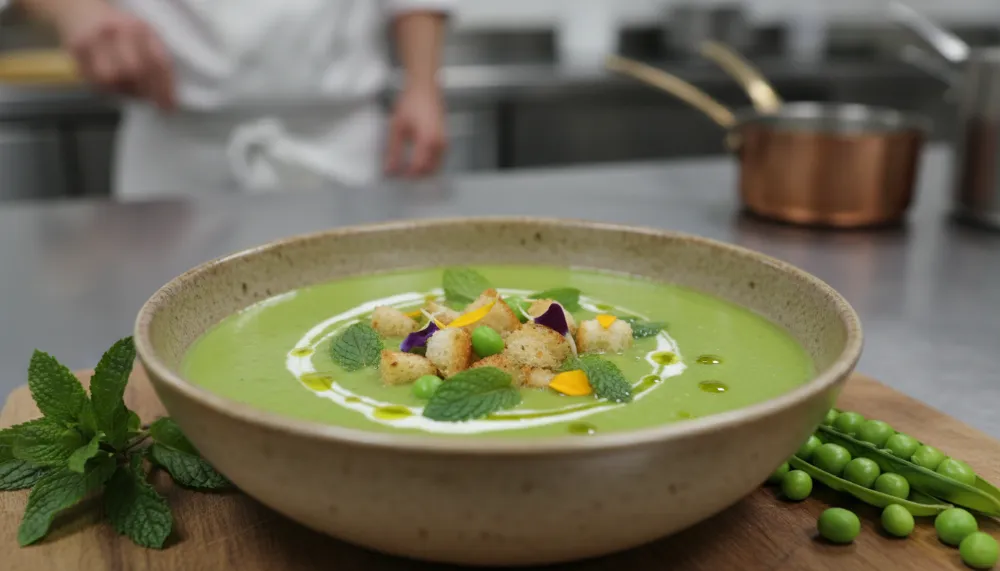

Experience the essence of spring in every spoonful with this vibrant, velvety Pea and Mint Soup: Fresh Spring Soup Recipe. This refreshing dish combines the natural sweetness of garden peas with the bright, cooling notes of fresh mint for a truly elegant starter or light lunch.
PEA AND MINT SOUP IMAGE
Pea and Mint Soup
Ingredients
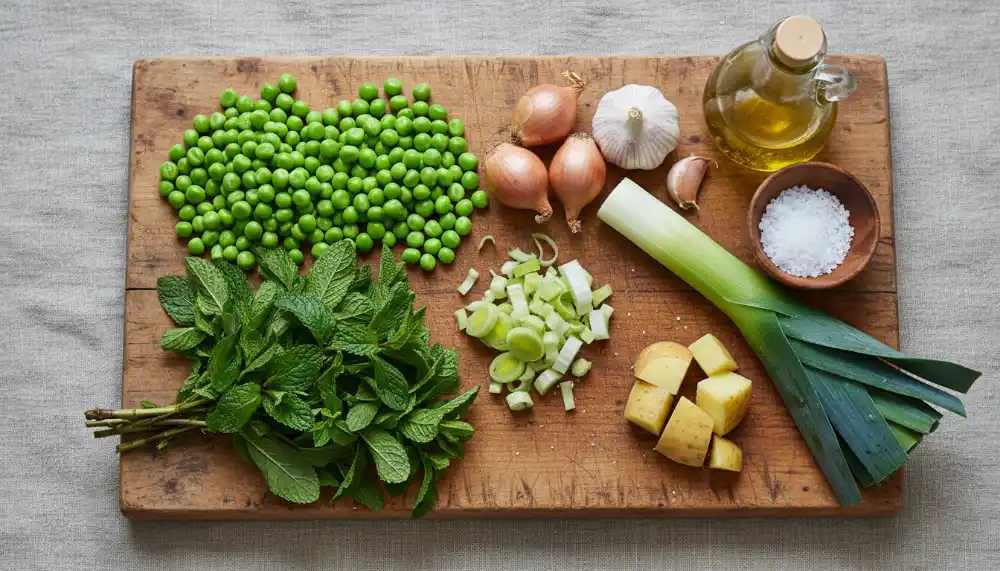
- 900g Frozen Petit Pois or Fresh Garden Peas
- 1 Large White Onion, finely diced
- 2 Garlic Cloves, minced
- 1.2 Liters High-Quality Chicken or Vegetable Broth
- 1 Large Bunch Fresh Mint Leaves (about 30g)
- 2 Tablespoons Extra Virgin Olive Oil
- 1 Tablespoon Lemon Juice (Acidity replacement)
- Salt and Freshly Cracked Black Pepper
- Optional Garnish: Toasted Beef Strips or Crispy Croutons
Instructions
- Heat olive oil in a large stockpot over medium heat. Sauté the onion and garlic for 5-7 minutes until translucent but not browned.
- Pour in the broth and bring to a rolling boil.
- Add the peas and return to a boil for exactly 3 minutes. Do not overcook to preserve the bright green color.
- Remove from heat and stir in the fresh mint leaves and lemon juice.
- Use a high-speed blender (like the Ninja BN751) to process the soup in batches until silky smooth.
- Season with salt and pepper to taste. Serve immediately with chosen garnishes.
The Historical Journey of the Pea and Mint Soup: Fresh Spring Soup Recipe
The history of pea soup is a fascinating narrative that transitions from ancient street food to a refined delicacy of the French courts. Long before it became the sophisticated Pea and Mint Soup: Fresh Spring Soup Recipe we recognize today, its predecessors were humble, thick, and strictly utilitarian. Historical records indicate that versions of pea soup were sold by street vendors in Athens as early as 500 BC. In these ancient times, the soup was made from dried, yellow, or green peas, providing a vital and affordable source of protein for the working classes. These dried peas were durable, making them the perfect staple for long winters and military campaigns, though they lacked the vibrant color and refreshing profile of modern spring versions.
The transformation into a seasonal luxury occurred during the 17th century in France. Under the reign of Louis XIV, the French court developed a fascination with “garden peas”, young, fresh peas harvested before they matured and dried. This led to the creation of Potage Saint-Germain, a soup named after the region where these peas were cultivated in cold frames to ensure an early spring harvest. This French influence shifted the culinary perception of peas from a “poor man’s pulse” to an aristocratic treat. The addition of fresh mint is largely attributed to British culinary traditions. In the United Kingdom, mint has long been used as a digestive aid and a natural flavor enhancer for spring lamb and vegetables. By the 19th century, the pairing of peas and mint became an established classic, celebrated for its ability to cut through the richness of dairy and provide a cooling contrast to warm spring days.
Nutritional Excellence: Why This Spring Soup is a Powerhouse
Choosing the Pea and Mint Soup: Fresh Spring Soup Recipe is not just a culinary win, it is a nutritional victory. Peas are often underestimated, yet they are one of the most nutrient-dense legumes available. A single serving of this soup is packed with Vitamin C, which is essential for collagen production and immune health. Furthermore, it provides a significant dose of Vitamin K, vital for bone health and proper blood clotting. Because this recipe uses fresh or flash-frozen peas, the nutritional integrity of the vegetable is maintained far better than in canned or long-dried alternatives.
Beyond vitamins, this soup is an excellent source of plant-based protein and dietary fiber. One bowl can provide up to 14 grams of protein, making it a satiating option for those looking to maintain muscle mass or manage weight. The high fiber content aids in digestion and helps regulate blood sugar levels. When we incorporate fresh mint, we add menthol, which has been shown to relax the muscles of the digestive tract. This combination of fiber and mint makes the soup incredibly gentle on the stomach. Furthermore, the absence of pork and alcohol in our version ensures that the soup remains light and easily digestible, avoiding the heavy saturated fats and caloric density often found in traditional pea soups that rely on ham hocks.
Professional Flavor Variations and Modern Twists
While the classic Pea and Mint Soup: Fresh Spring Soup Recipe is stunning in its simplicity, professional chefs often employ several variations to adapt the dish for different occasions or dietary needs. By understanding the core chemistry of the ingredients, you can elevate the flavor profile without compromising the integrity of the dish.
The French Elegance Variation
To mimic the traditional Potage Saint-Germain, you can add finely shredded Bibb or Little Gem lettuce to the onion and garlic sauté. The lettuce melts into the soup, adding a subtle earthy sweetness and a depth of green color that peas alone cannot achieve. Instead of deglazing with white wine, a splash of high-quality chicken broth mixed with a teaspoon of white wine vinegar provides the necessary acidity without the presence of alcohol. This maintains the “clean” taste that defines professional French cooking.
The Zesty Mediterranean Twist
For a brighter, more citrus-forward profile, add the zest of two lemons during the blending process. You can also substitute a portion of the mint with fresh flat-leaf parsley or a touch of basil. This variation is particularly refreshing when served chilled on a warm afternoon. To add a savory crunch that replaces traditional pork lardons, use the Cosori 9-in-1 TurboBlaze Air Fryer 6 Qt to roast chickpeas seasoned with smoked paprika and garlic powder. These provide the “smoke” and “crunch” often associated with bacon but in a much healthier, fiber-rich format.
The Science of the Perfect Puree: Tools of the Trade
The difference between a good home-cooked soup and a restaurant-quality Pea and Mint Soup: Fresh Spring Soup Recipe often lies in the texture. Achieving a silky, aerated consistency requires power. Professional chefs rely on high-wattage motors to break down the fibrous skins of the peas. The Ninja BN751 Professional Plus DUO Blender is the ideal tool for this task. Its 1000W motor ensures that the mint leaves and pea skins are fully emulsified, resulting in a soup that feels like velvet on the tongue. If you prefer a more rustic texture, or if you are preparing a large batch of aromatics, the Cuisinart 8 Cup Food Processor is essential for the initial prep, ensuring your onions and garlic are perfectly uniform for even cooking.
The Secret to the Vibrant Green Color
Have you ever noticed that some pea soups turn a dull, brownish-green? This is due to the breakdown of chlorophyll through overcooking or oxidation. To keep your Pea and Mint Soup: Fresh Spring Soup Recipe looking like a bright spring meadow, follow these two professional rules: First, do not boil the peas for more than three minutes. Second, add the fresh mint only after the soup has been removed from the heat. The residual heat is enough to release the mint’s oils without scorching the leaves. Blending immediately and then serving, or cooling the soup rapidly in an ice bath if storing, will lock in that signature neon-green hue.
Storage and Meal Prep: Keeping the Freshness Locked In
Because this soup relies on fresh, volatile flavors like mint and lemon, proper storage is critical. If you are meal prepping, you want to avoid air exposure, which will dull the flavor and the color. We recommend using the Rubbermaid Brilliance Glass Storage Set of 9. These containers are leak-proof and provide an airtight seal that is perfect for preserving the delicate aromatics of the mint. The glass construction also ensures that no odors are absorbed, and they are safe for reheating in the microwave or oven.
For long-term storage, this soup freezes exceptionally well because it does not contain heavy cream, which can sometimes separate upon thawing. To prevent freezer burn and maintain the vibrancy of the soup for up to three months, the FoodSaver Vacuum Sealer Machine is an invaluable asset. By vacuum-sealing individual portions in bags, you eliminate the air that causes ice crystals, ensuring that when you reheat your Pea and Mint Soup: Fresh Spring Soup Recipe in the depths of winter, it still tastes exactly like a spring morning.
Final Presentation and Garnishing Secrets
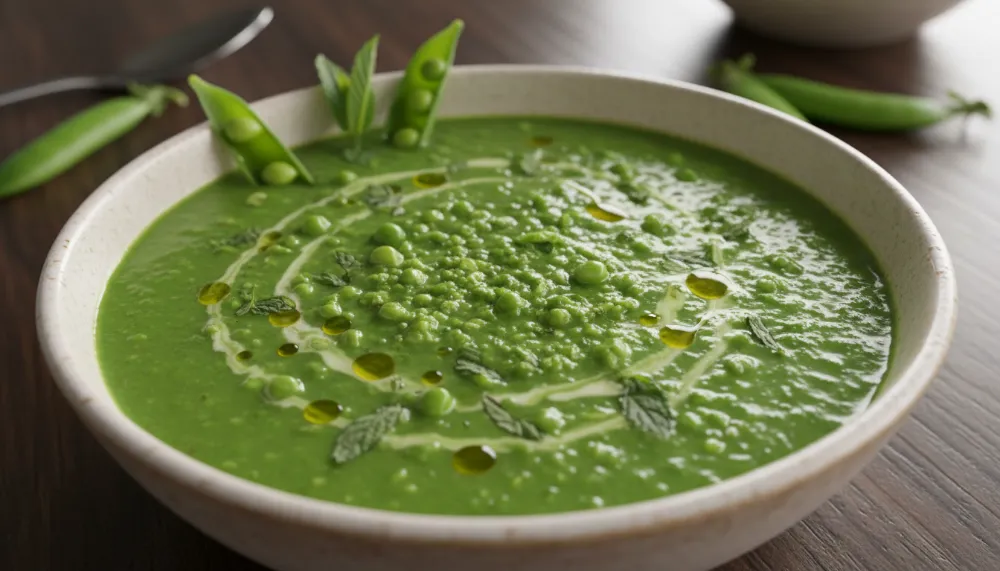
Presentation is the final step in mastering the Pea and Mint Soup: Fresh Spring Soup Recipe. Since we are adhering to a no-pork policy, we can get creative with garnishes that add texture and saltiness. Thinly sliced beef steak, seasoned and seared until crispy, makes a fantastic substitute for ham. Alternatively, a drizzle of high-quality extra virgin olive oil and a few reserved whole peas can create a minimalist, modern look. For a touch of creaminess without the weight, a dollop of Greek yogurt or a swirl of coconut cream provides a beautiful contrast against the green soup. Remember to serve your soup in warmed bowls to maintain the temperature, as the thin consistency of pureed vegetable soups tends to lose heat quickly. With these professional tips and high-quality tools, you are ready to serve a masterpiece that honors the best of spring’s bounty.