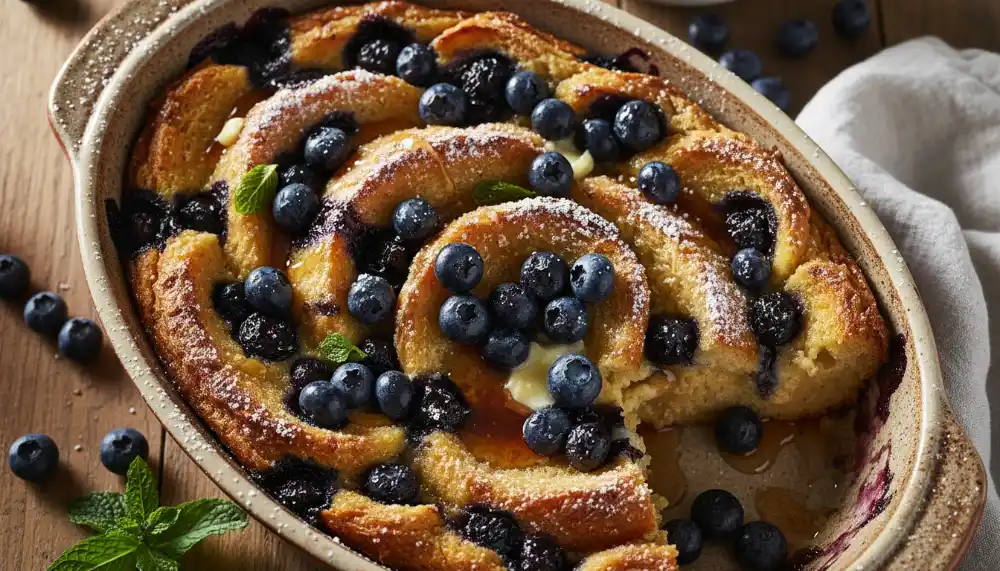

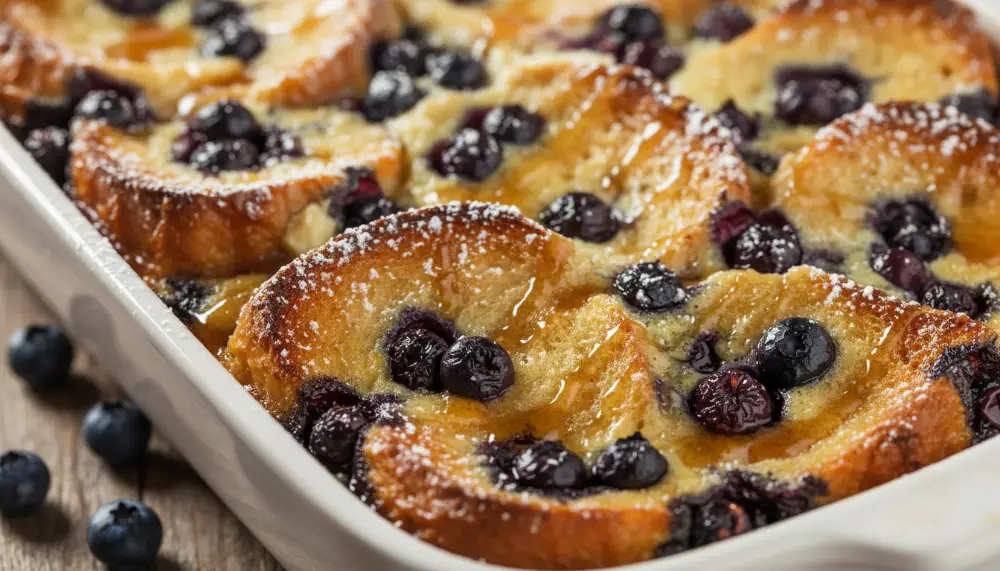
Experience the ultimate morning indulgence with our Overnight Blueberry French Toast Casserole, a dish that transforms simple ingredients into a gourmet feast. This make-ahead masterpiece ensures a stress-free morning while delivering a perfect balance of creamy custard and tart, bursting berries.
Overnight Blueberry French Toast Casserole
Ingredients
- 1 Loaf of crusty French bread or Brioche (cubed)
- 2 Cups fresh or frozen blueberries
- 8 Large eggs
- 2 Cups whole milk
- 1/2 Cup heavy cream
- 3/4 Cup granulated sugar
- 1 Tablespoon vanilla extract
- 1 Teaspoon ground cinnamon
- 1/2 Cup all-purpose flour (for crumble)
- 1/2 Cup cold butter (cubed for crumble)
Instructions
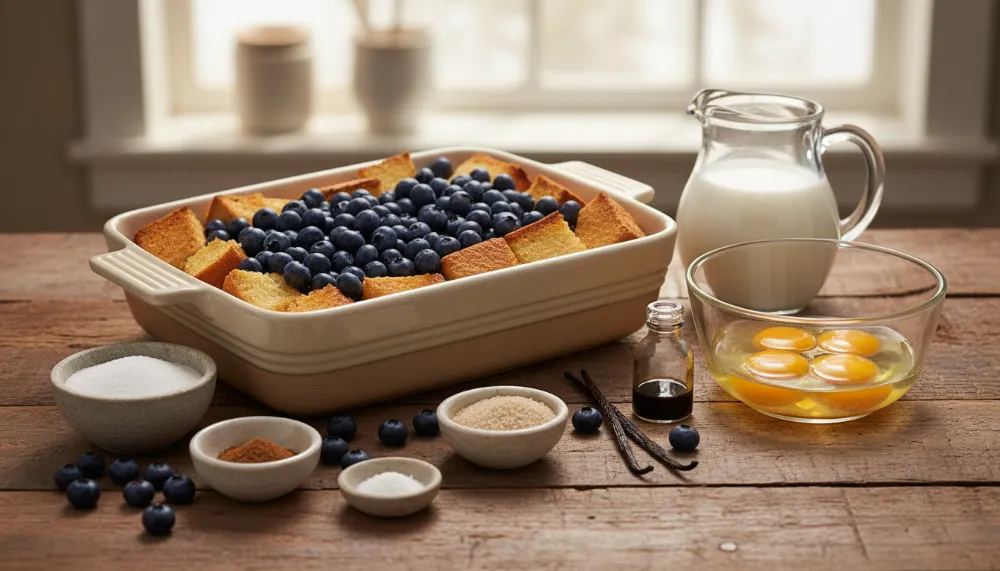
- 1 Grease a 9×13 inch baking dish and layer half of the bread cubes.
- 2 Sprinkle the blueberries evenly over the bread and top with remaining bread.
- 3 Whisk eggs, milk, cream, sugar, vanilla, and cinnamon until well combined.
- 4 Pour the custard over the bread, cover, and refrigerate for 4 to 12 hours.
- 5 Pre-heat oven to 350°F. Mix flour, cold butter, and brown sugar into a crumble.
- 6 Sprinkle crumble over the casserole and bake for 45 to 55 minutes until golden.
The Fascinating History of French Toast
The conceptual ancestor of French toast dates back to the 4th-century Roman Empire, a time when the preservation of food was as much an art as it was a necessity. A recipe titled Aliter Dulcia, meaning “Another Sweet Dish”, appears in the Apicius cookbook, describing crustless white bread soaked in milk and beaten eggs, then fried in oil and served with honey. This ancient technique was not just about luxury, it was a practical method to revive stale bread that would otherwise be wasted. During the Middle Ages, the dish spread across Europe as a dietary staple. In France, it became known as Pain Perdu, or “Lost Bread”, a poetic reference to the bread that was saved from the bin. Meanwhile, in England, it was known by the more prestigious name Poor Knights of Windsor. Contrary to popular belief, the name may not originate from France at all. Legend attributes the term to Joseph French, an Albany, New York innkeeper who served the dish in 1724. He reportedly omitted the apostrophe in “French’s Toast,” leading to the modern name we use today.
The Evolution into the Modern Casserole
The transition from individual pan-fried slices to an Overnight Blueberry French Toast Casserole represents a mid-20th-century shift toward convenience and communal dining. Unlike the traditional method that requires standing over a hot stove, the casserole method allows the bread to fully hydrate with custard. This prevents the sogginess associated with quick-dipped bread and provides a bread pudding texture that is vastly superior for serving large groups. This modern evolution is particularly beloved during holidays because it can be prepared the night before, allowing the host to enjoy the morning without being tethered to the kitchen. When you use a tool like the Cuisinart 8 Cup Food Processor, you can quickly pulse your butter and sugar for the perfect crumble topping, making the preparation even more seamless.
The Science of the Perfect Custard Soak
What makes an Overnight Blueberry French Toast Casserole truly exceptional is the science of hydration. When bread sits in a mixture of eggs and dairy for several hours, the starch granules in the bread swell and absorb the liquid. This process, known as starch gelatinization, occurs during the baking phase, but the preparation phase is where the foundation is laid. By allowing the mixture to sit overnight, the proteins in the eggs and the fats in the milk distribute evenly throughout the bread fibers. This results in a uniform texture that is creamy on the inside while staying crisp on the edges. To achieve the smoothest custard possible, many professional chefs utilize a high-powered blender. The Ninja BN751 Professional Plus DUO Blender is perfect for this task, ensuring that the cinnamon and vanilla are perfectly emulsified into the dairy before you pour it over your bread cubes.
Professional Flavor Variations and Protein Pairings
Chefs often elevate this dish by balancing the inherent sweetness of blueberries with aromatic spices and savory proteins. Since we avoid pork products in this gourmet approach, there are several high-quality alternatives that provide the necessary salty contrast. A popular choice is browning one pound of ground beef sausage seasoned with garlic powder, onion powder, and rubbed sage. Layering this into the casserole creates a complex profile where the saltiness of the beef cuts through the sweet blueberry juice. Another excellent option is sliced chicken apple sausage, where the natural fruit notes in the poultry complement the tartness of the blueberries.
Gourmet Sweet Enhancements
For those who prefer a purely sweet experience, consider infusing the custard with cardamom and ginger. Adding a half teaspoon of ground cardamom and a teaspoon of fresh grated ginger creates a “Zingy Blueberry” profile. Alternatively, the Lavender and Honey variation is a sophisticated choice for a formal brunch. By replacing refined sugar with honey and adding culinary-grade dried lavender to the milk while heating, you create a floral, nuanced dish. For the best results when reheating leftovers the next day, the Cosori 9-in-1 TurboBlaze Air Fryer 6 Qt is an essential tool, as it restores the crispness of the topping without drying out the center.
Non-Alcoholic Flavor Enhancers
In professional kitchens, acidity and depth are often added through spirits, but for a family-friendly and restricted diet, there are better alternatives. To replace the complexity of bourbon or orange liqueur, utilize apple cider vinegar for acidity or pure maple syrup for depth. Fresh orange juice can also be used to provide bright citrus notes without the need for alcohol. These substitutions ensure the dish remains vibrant and flavorful while adhering to dietary preferences. When tossing your blueberries, a small splash of balsamic vinegar can act as a professional secret, intensifying the berry flavor and providing a subtle savory undertone that makes the sweetness pop.
Nutritional Deep Dive
An average serving of Overnight Blueberry French Toast Casserole provides a robust nutritional profile. A single slice typically contains between 330 to 360 calories, with approximately 12 to 16 grams of protein. Because it uses eggs and fortified breads, it is high in Calcium and Iron. To make the dish lighter, you can replace whole milk with unsweetened almond milk and use a higher ratio of egg whites to whole eggs, which can reduce total fat by nearly 40 percent. The inclusion of blueberries adds a significant dose of antioxidants and dietary fiber, making this more than just a simple treat. It is a substantial meal that provides lasting energy for the day ahead.
Top Tips for Casserole Success
1. The Bread Choice: Always use a sturdy bread like a thick-cut French loaf or Brioche. Soft sandwich bread will disintegrate under the weight of the custard. 2. The Press Down: After pouring the custard over the bread, use a spatula to gently press the bread down into the liquid. This ensures every piece is submerged. 3. Temperature Matters: If you are taking the casserole straight from the fridge to the oven, let it sit on the counter for 20 minutes first. This prevents the glass dish from cracking and ensures even baking. 4. Fresh vs Frozen: Both work well, but if using frozen blueberries, do not thaw them first. Thawing causes the juices to bleed, which will turn your entire casserole purple. 5. The Crumble: Always use cold butter for the topping. If the butter is too soft, the topping will melt into a grease layer rather than forming those coveted crunchy bits.