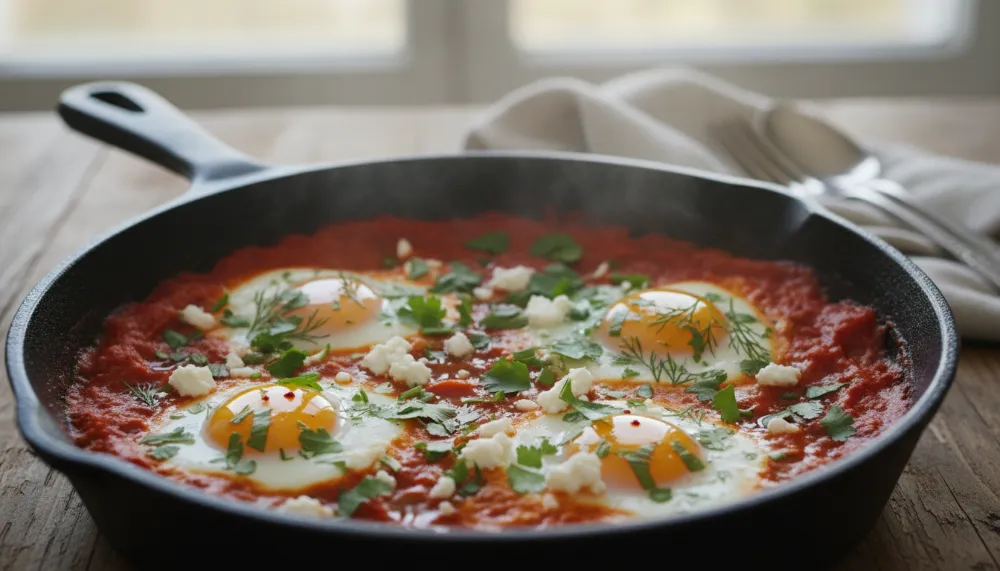

Wake up your palate with this vibrant Shakshuka with Feta and Fresh Herbs, a sizzling skillet of poached eggs nestled in a spicy, aromatic tomato sauce. It is the definitive brunch centerpiece that balances bold North African spices with the cool, salty tang of premium feta cheese.
Shakshuka with Feta and Fresh Herbs
Ingredients
- 1 2 tablespoons extra-virgin olive oil
- 2 1 large onion, finely diced
- 3 1 red bell pepper, seeded and diced
- 4 4 garlic cloves, minced
- 5 1 teaspoon ground cumin
- 6 1 teaspoon smoked paprika
- 7 1/4 teaspoon crushed red pepper flakes
- 8 1 can (28 ounces) crushed tomatoes
- 9 6 large eggs
- 10 1/2 cup crumbled feta cheese
- 11 1/4 cup fresh cilantro and parsley, chopped
Instructions
- 1 Heat the olive oil in a large deep skillet over medium heat. Add the onion and bell pepper, and cook until softened, about 5 to 7 minutes.
- 2 Stir in the garlic, cumin, paprika, and red pepper flakes. Cook for 1 minute until fragrant.
- 3 Pour in the crushed tomatoes. Reduce heat to low and simmer for 15 minutes until the sauce thickens slightly.
- 4 Use a spoon to make 6 small wells in the sauce. Gently crack an egg into each well.
- 5 Cover the skillet and cook for 5 to 8 minutes, or until the egg whites are set but the yolks are still runny.
- 6 Remove from heat. Sprinkle with crumbled feta and fresh herbs. Serve immediately with crusty bread.
The Rich History and Cultural Journey of Shakshuka
Shakshuka with Feta and Fresh Herbs is more than just a dish, it is a historical narrative served in a cast-iron skillet. Originating in the Maghreb region of North Africa, specifically within the cultural tapestry of Tunisia, Libya, and eastern Algeria, the dish’s name comes from the Amazigh word “shakshak,” which literally translates to “all mixed up.” This linguistic origin perfectly captures the essence of the dish, a beautiful chaos of vegetables and eggs simmered into a cohesive, flavorful masterpiece.
While the ancestral versions of this stew likely relied on regional greens and legumes, the Shakshuka we recognize today only took shape after the 16th century. This was when tomatoes and peppers were introduced to the Mediterranean and North African regions from the Americas. Over the centuries, the dish became a staple for both North African Muslim and Jewish communities, eventually traveling with immigrants to new shores. The addition of feta cheese and various fresh herbs is a later Mediterranean adaptation, adding a layer of creamy, salty complexity that bridges the gap between the heat of the Maghreb and the freshness of the Greek islands.
The Science of the Perfect Tomato-Pepper Base
The foundation of any great Shakshuka with Feta and Fresh Herbs is the sauce. This isn’t just a simple tomato sauce, it is a concentrated emulsion of aromatics and carotenoids. When you sauté bell peppers and onions in high-quality extra-virgin olive oil, you are initiating the Maillard reaction, developing sweetness and depth. The addition of garlic and dry spices like cumin and smoked paprika must be timed perfectly, they need just enough heat to “bloom” their fat-soluble flavor compounds without burning.
To achieve the perfect consistency for your homemade sauce or even a smooth tahini drizzle to top it with, the Ninja BN751 Professional Plus DUO Blender is an absolute powerhouse. Its 1000W motor can turn charred peppers into a silky harissa paste in seconds, which can then be swirled into your tomato base for added heat. For the primary vegetable prep, uniform dicing is the secret to an even cook, which is why I always rely on my Cuisinart 8 Cup Food Processor to handle the heavy lifting of slicing onions and peppers during busy meal prep sessions.
Nutritional Excellence: A Powerhouse Breakfast
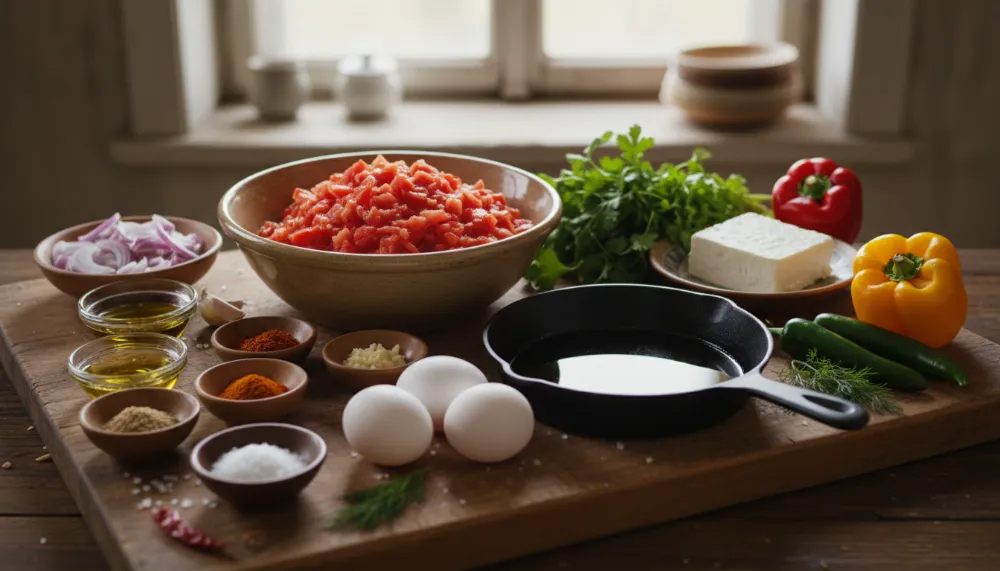
Shakshuka with Feta and Fresh Herbs is a nutritional heavyweight. Each serving is packed with high-quality protein from the eggs and feta, which supports muscle repair and satiety. The tomato and pepper base is a concentrated source of lycopene, a powerful antioxidant that becomes more bioavailable when cooked. Furthermore, the high vitamin C content in the bell peppers significantly enhances the absorption of iron found in the eggs.
If you want to add more fiber to this meal, consider serving it with roasted chickpeas. The Cosori 9-in-1 TurboBlaze Air Fryer 6 Qt roasts chickpeas or even sliced sweet potatoes to crispy perfection with minimal oil, making them the perfect gluten-free accompaniment to your Shakshuka. This air fryer’s large capacity ensures you can prep enough sides for the whole family in one go.
Professional Flavor Variations
While the classic red Shakshuka with Feta and Fresh Herbs is iconic, professional chefs often experiment with different flavor profiles and proteins to keep the dish exciting. Here are four high-level variations that adhere to strict dietary guidelines.
1. Savory Beef and Harissa Adaptation
For those seeking a heartier meal, browning ground beef or sliced beef sausages in the skillet before adding the vegetables creates a robust, meaty foundation. In this version, the tomato sauce is often deepened with a spoonful of harissa paste. If the sauce becomes too thick during the simmering process, professionals deglaze the pan with a splash of rich beef broth, which adds umami without the need for alcohol. Finish this version with a heavy hand of fresh cilantro and mint to cut through the richness of the beef.
2. Mediterranean Poultry and Spinach Twist
Using ground chicken or sliced chicken apple sausage provides a lighter protein alternative. In this variation, a large handful of fresh baby spinach is stirred into the sauce just before cracking the eggs. The spinach wilts instantly, adding a boost of Vitamin K and a beautiful green hue. The best herbs for this version are flat-leaf parsley and dill, which complement the milder flavor of the poultry and the tang of the feta.
3. The “Green” Professional Variation
This version eliminates the tomatoes entirely in favor of a base made from sautéed leeks, zucchini, and kale. To replace the natural acidity found in tomatoes, chefs use a splash of apple cider vinegar or fresh lemon juice. This version is intensely herb-forward, often featuring a blended pesto of basil and garlic swirled into the greens. The feta provides the necessary saltiness to balance the earthy greens.
4. Earthy Mushroom and Thyme Variation
Perfect for a sophisticated brunch, this version uses a mixture of cremini and shiitake mushrooms sautéed until golden and slightly crisp. Smoked paprika and fresh thyme are used to create an earthy, forest-floor flavor profile. Instead of water, use vegetable broth to thin the sauce, ensuring the dish remains deeply savory. This version pairs exceptionally well with a double-cream feta or even small dollops of goat cheese.
Technique: The Art of the Perfect Poached Egg
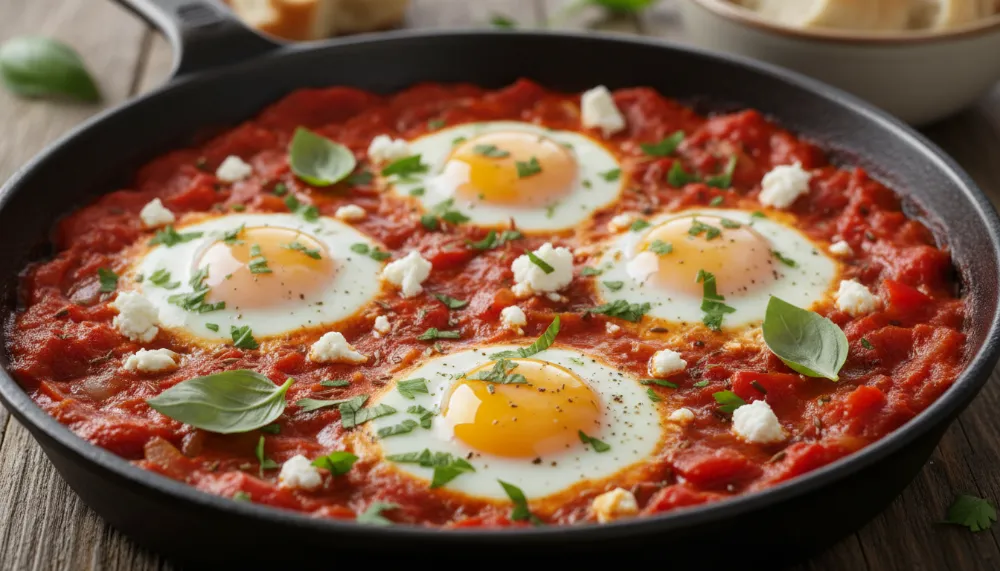
The true test of a Shakshuka with Feta and Fresh Herbs lies in the eggs. You want whites that are fully opaque and set, while the yolks remain liquid gold, ready to burst and enrich the sauce. The key is to create deep wells in the sauce using the back of a spoon. If the sauce is too thin, the eggs will spread and disappear, if it is too thick, they won’t cook evenly.
Covering the pan is non-negotiable. The trapped steam cooks the tops of the whites while the bubbling sauce cooks the bottoms. Professionals often pull the skillet off the heat 60 seconds before they think the eggs are done, as residual heat will finish the cooking process on the way to the table.
Common Mistakes to Avoid
One common pitfall is using under-ripe tomatoes. If fresh tomatoes aren’t in peak season, always opt for high-quality canned crushed tomatoes or San Marzano tomatoes, as they provide the necessary sweetness and acidity. Another mistake is overcooking the feta. Feta should be sprinkled on at the very end, if it cooks too long in the sauce, it loses its distinct crumbly texture and becomes overly salty.
Finally, don’t skimp on the fresh herbs. The cilantro and parsley aren’t just a garnish, they are a fundamental component of the dish’s flavor profile. They provide a necessary “lift” to the heavy, spiced sauce. Always use fresh, never dried, for the final topping.