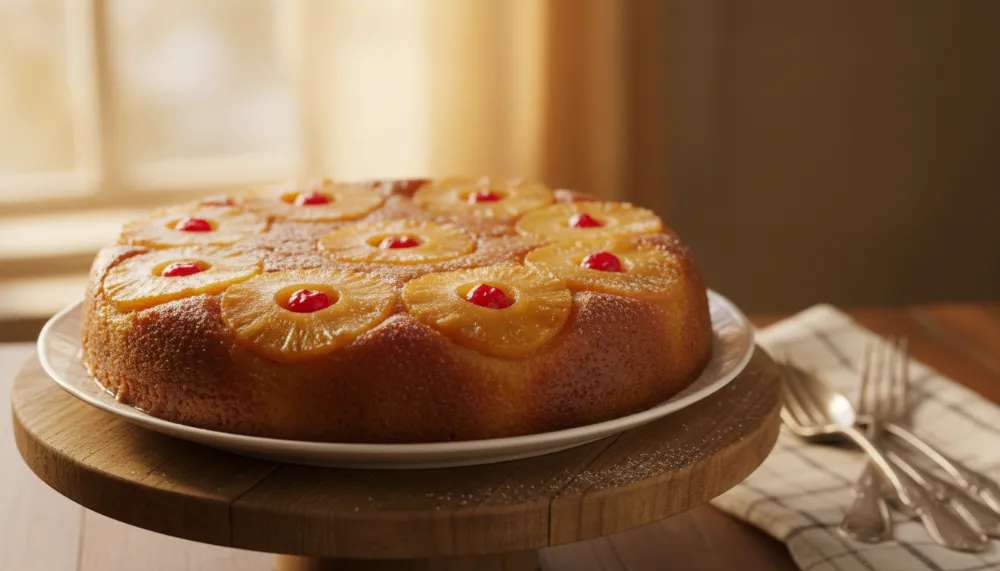

Experience the quintessential American classic with our Pineapple Upside Down Cake, a dessert that defines elegance through its caramelized fruit topping and incredibly moist, buttery crumb. This recipe transforms simple pantry staples into a show-stopping centerpiece that is as beautiful to look at as it is delicious to eat.
Classic Pineapple Upside Down Cake
Ingredients
- 1/2 cup unsalted butter, melted for the base
- 3/4 cup light brown sugar, packed
- 1 can (20 oz) pineapple slices in juice, drained (reserve juice)
- 7-10 maraschino cherries, stems removed
- 1.5 cups all-purpose flour
- 1 tsp baking powder
- 1/4 tsp salt
- 1/2 cup unsalted butter, softened for the batter
- 1 cup granulated white sugar
- 1 large egg, room temperature
- 1 tsp vanilla extract
- 1/2 cup reserved pineapple juice
Instructions
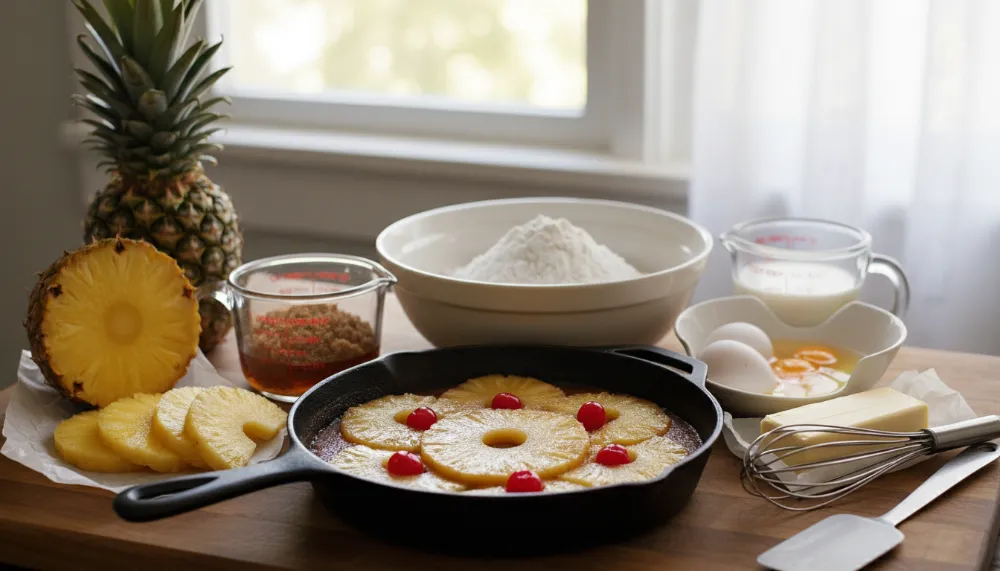
- 1 Preheat your oven to 350°F (175°C). Pour the melted butter into a 9-inch round cake pan or cast-iron skillet, ensuring the bottom is evenly coated.
- 2 Sprinkle the light brown sugar evenly over the melted butter. Arrange pineapple slices on top of the sugar layer. Place a cherry in the center of each pineapple ring and in the gaps between them.
- 3 In a medium bowl, whisk together the flour, baking powder, and salt. Set aside.
- 4 In a separate large bowl, cream the softened butter and granulated sugar until light and fluffy. Beat in the egg and vanilla extract.
- 5 Gradually add the dry ingredients to the creamed mixture, alternating with the pineapple juice. Mix until just combined, do not overmix.
- 6 Carefully spoon the batter over the arranged pineapples and smooth the top with a spatula. Bake for 40-45 minutes or until a toothpick inserted in the center comes out clean.
- 7 Let the cake cool in the pan for 10 minutes. Run a knife around the edges, then place a serving plate over the pan and carefully flip it over. Lift the pan slowly to reveal the caramelized topping.
The History and Heritage of Pineapple Upside Down Cake
The Pineapple Upside Down Cake is far more than a simple dessert, it is a culinary artifact that tells the story of early 20th-century industrial innovation. While the technique of baking cakes upside down in cast-iron skillets dates back to the Middle Ages, the specific pineapple iteration was born from a marketing revolution. In 1901, James Dole established the Hawaiian Pineapple Company, and soon after, he invented the machinery required to mass-produce perfectly uniform pineapple rings. This technological leap changed baking forever.
By 1925, the Dole company held a recipe contest that garnered over 60,000 entries. Of those thousands, more than 2,500 were for Pineapple Upside Down Cake. This sheer volume proved that the cake had already captured the American imagination. The contest cemented the recipe as a household staple, and the subsequent advertising campaigns made it the “it” dessert of the 1950s and 60s. Its popularity stems from its clever design, because the decoration is baked directly into the cake, there is no need for fussy frosting or additional garnishes.
Essential Tools for Baking Perfection
To achieve the perfect flip and a crumb that melts in your mouth, you need the right equipment. Using a high-quality food processor like the Cuisinart 8 Cup Food Processor is essential for fast chopping and slicing during meal prep if you are making fresh fruit variations. For the batter itself, achieving that light, airy texture requires precision. Some bakers prefer using a high-powered blender for specialized fruit-infused batters, the Ninja BN751 Professional Plus DUO Blender is perfect for creating smooth pineapple purees if you want to intensify the flavor profile beyond the traditional rings.
The Science of the Caramelized Topping
The magic of the Pineapple Upside Down Cake lies in the interaction between the butter, the brown sugar, and the fruit acids. When placed at the bottom of the pan, the butter and sugar undergo a process called caramelization and the Maillard reaction. As the cake bakes, the juices from the pineapple slices release and mingle with the melting sugar, creating a self-basting syrup that infuses the top layer of the cake batter. This creates a distinct textural contrast between the gooey, sweet fruit and the structural, buttery cake underneath.
To ensure this layer doesn’t become soggy, it is vital to drain your pineapple rings thoroughly. If using canned pineapple, pat them dry with paper towels. Any excess moisture will dilute the caramel, potentially resulting in a cake that is too wet to hold its shape upon flipping. For those who enjoy experimenting with modern techniques, the Cosori 9-in-1 TurboBlaze Air Fryer 6 Qt can actually be used to pre-roast fresh pineapple slices, intensifying their natural sugars before they ever hit the cake pan.
Choosing Between Fresh and Canned Pineapple
While purists may argue for fresh fruit, many professional bakers prefer canned pineapple for this specific recipe. Canned rings are consistent in size and thickness, ensuring that the cake cooks evenly and looks symmetrical. If you choose fresh pineapple, ensure it is fully ripe and slice it into uniform 1/4 inch rings using a sharp knife or a mandoline. Fresh pineapple contains an enzyme called bromelain which can break down proteins in the batter, though the heat of the oven typically neutralizes this effect.
Professional Flavor Variations
Once you have mastered the classic version, you can begin to explore more complex flavor profiles. Here are several ways to elevate your Pineapple Upside Down Cake using professional techniques:
- Tropical Coconut Infusion: Replace the pineapple juice in the batter with full-fat coconut milk. This adds a creamy, tropical depth that pairs beautifully with the acidity of the fruit.
- Spiced Ginger and Molasses: For a warmer, autumnal feel, add a teaspoon of fresh grated ginger and a tablespoon of molasses to the brown sugar base. Use a gingerbread-style cake batter for a sophisticated twist.
- Stone Fruit Medley: While pineapple is the star, you can supplement it with peaches or apricots. Using a honey-butter base instead of brown sugar can highlight the delicate flavors of stone fruits.
- Nutty Textures: Arrange pecan halves or sliced almonds in the gaps between the pineapple rings. The nuts will toast in the caramel syrup, providing a delightful crunch that contrasts with the soft fruit.
Mastering the Flip: Step-by-Step
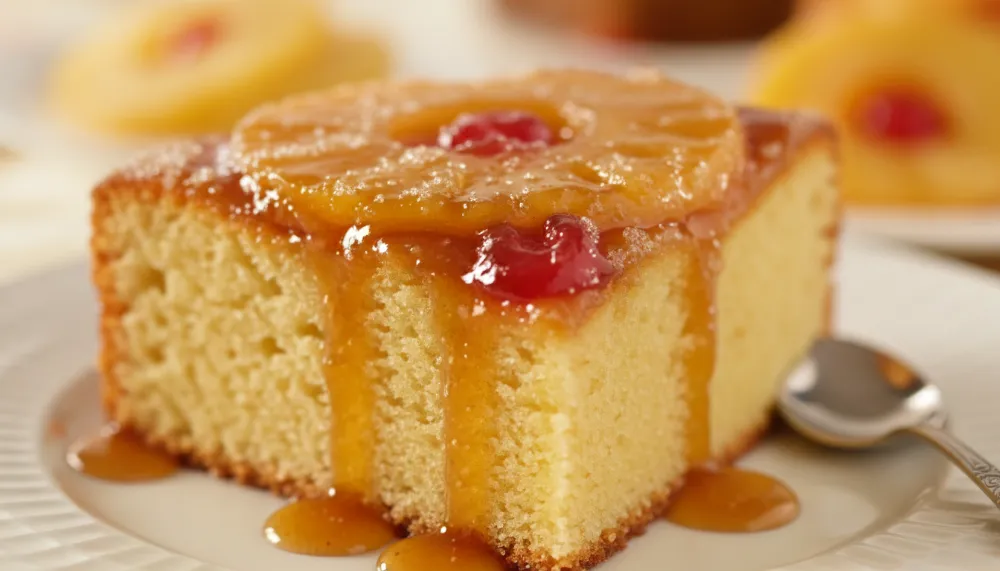
The most intimidating part of making a Pineapple Upside Down Cake is undoubtedly the flip. However, with the right timing, it becomes effortless. You must allow the cake to rest for exactly 10 to 15 minutes after removing it from the oven. If you flip too soon, the caramel will be too liquid and may run off the sides. If you wait too long, the sugar will cool and harden, causing the fruit to stick to the bottom of the pan.
Before flipping, run a thin offset spatula or a knife around the perimeter of the cake to ensure the edges are loose. Place your serving platter upside down over the cake pan. Using oven mitts, firmly grasp both the pan and the platter and invert them in one smooth, confident motion. Give the bottom of the pan a few gentle taps before slowly lifting it away. If a piece of fruit does happen to stick, simply peel it off the pan and place it back onto the cake, the warm caramel will act as a natural glue.
Storage and Serving Suggestions
This cake is best served slightly warm, which keeps the caramel topping in its most luscious state. It pairs exceptionally well with a dollop of unsweetened whipped cream or a scoop of high-quality vanilla bean ice cream. Because of the high fruit and moisture content, this cake should be stored carefully. If you have leftovers, keep them in an airtight container in the refrigerator for up to three days. To regain that fresh-baked texture, gently warm individual slices in the oven or microwave before serving.
For a sophisticated presentation, consider brushing the finished cake with a simple syrup reduction made from the leftover pineapple juice and a hint of lime. This adds a glossy sheen and an extra punch of citrus that balances the sweetness of the brown sugar. Avoid using any alcohol-based syrups or extracts to maintain the integrity of the flavor and adhere to dietary preferences.
Common Troubleshooting Tips
Even seasoned bakers encounter issues with this recipe. If your cake is too soggy, it is likely due to the pineapple juice not being drained well enough or the oven temperature being too low. Ensure your oven is fully calibrated using an external thermometer. If the cake is dry, you may have overbaked it, remember that the cake continues to cook slightly as it rests in the pan during that crucial 10-minute cooling period. Always use large, room-temperature eggs to ensure proper emulsification of the batter, which leads to a superior crumb structure.